Alternative firecrackers: Data shows emerging threat of gandhak and potash explosives
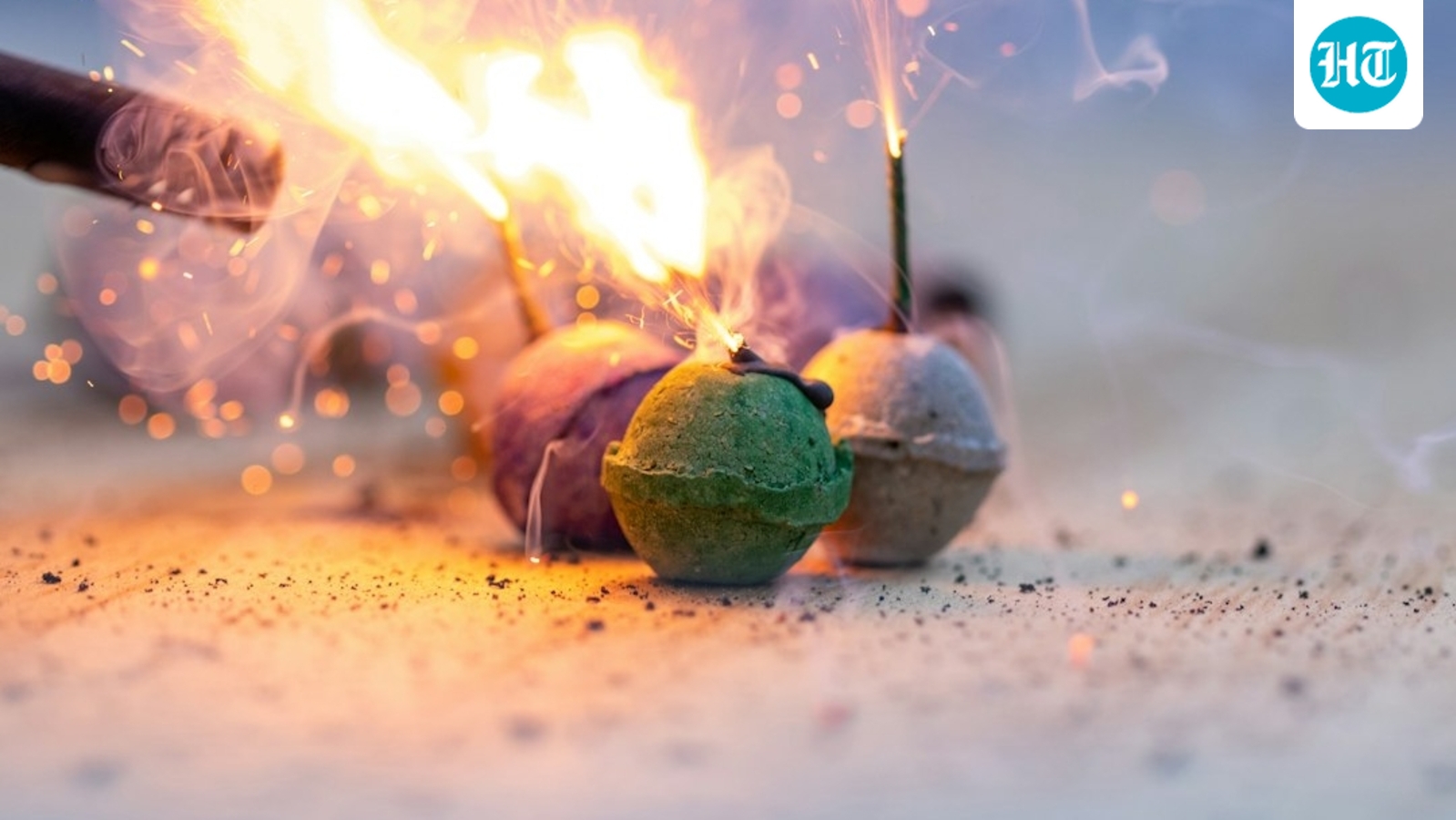
Homemade explosives made using potash (typically potassium chlorate) are emerging as an alternative to conventional firecrackers during Diwali, with AIIMS Delhi recording a significant number of potash-related burn injuries and injuries caused by alternative firecrackers over the past few years.
Doctors have called for preventive measures to address the growing concern. The injuries are associated with homemade explosive mixtures, often made using potassium nitrate, commonly referred to as potash, and sulphur, also known as gandhak, to make firecrackers at home.
Data sourced from the Plastic, Reconstructive and Burns Surgery department and the Dr Rajendra Prasad (RP) Centre for Ophthalmic Sciences department at AIIMS, for the last two years, show that apart from a huge number of burn injuries caused by conventional firecrackers during Diwali, the hospital has also been receiving cases linked to alternative firecrackers, including “potash-related” burns and “carbide gun-related” injuries during this period.
The data breakdown
According to the data, the department of Plastic, Reconstructive and Burns Surgery received 70 burn injury cases caused by firecrackers in 2024, while the hospital separately recorded 17 cases of "potash-related" burns.
In 2025, the department received 80 cases of burns caused by firecrackers, in addition to 10 cases of potash-related burns during Diwali.
“Earlier, the department would record data for burns caused by firecrackers, diyas and electrical burns during Diwali. However, we are noticing a separate increase in burns during Diwali due to potash-related mixtures, and for the last two years, the department has been recording potash-related burn cases separately,” an official said.
In a first, separately, in 2025, AIIMS's RP Centre for Ophthalmic Sciences recorded 40 cases of carbide gun-related injuries during Diwali, highlighting a growing concern over home-assembled explosive devices.
The RP Centre recorded a total of 200 eye injuries during Diwali in 2025, up from 160 in 2024. Of these, 40 were linked to carbide guns, according to data provided by the hospital.
“While during Diwali, we usually get eye injury cases caused by firecrackers, last year, for the first time, we received a huge number of eye injury cases caused by home-assembled carbide guns. Of the total injuries caused by carbide guns, most were severe (25%), ” a hospital official said, adding that most victims were boys aged seven to 15.
Most carbide gun injuries affect the face and eyes, as children usually bend close to the device while lighting it.
Separately, seven years of data from Safdarjung Hospital show that burn cases reported during Diwali rose from 145 in 2019 to 216 in 2024. The figures showed a decline during the Covid-19 years, before cases rose again. Firecracker injuries accounted for the largest share, followed by burns caused by diyas.
In 2025, Safdarjung Hospital's Burns and Plastic Surgery department reported 216 burn cases during Diwali, of which 198 were caused by firecrackers and 18 by diyas. The hospital did not provide separate data for potash-related burns.
Doctors have warned that homemade firecrackers can be particularly dangerous because their chemical composition, construction, and explosive force are not controlled as they are with regulated fireworks. Children and young adults are especially vulnerable when they attempt to assemble or ignite these devices.
Dr Radhika Tandon, professor of ophthalmology at AIIMS, said the injury patterns seen last year called for preventive action ahead of this Diwali.
“In the past, we have received burn cases caused by these carbide guns when they were more often used by farmers to scare away animals from fields. However, now we are witnessing these being made by children and even adults during Diwali as a replacement for regular firecrackers,” Dr Tandon said.
How such firecrackers work
HT found several videos circulating on social media platforms demonstrating how to make homemade firecrackers, including carbide guns. Some of these homemade firecrackers use potash and sulphur, which rely on chemical reactions that release energy rapidly. Potassium nitrate acts as an oxidising agent, helping a mixture burn more vigorously, while sulphur is combustible. When such mixtures ignite, the resulting heat, flames and pressure can cause severe burns.
Similarly, carbide guns operate through a simple but dangerous chemical reaction. When water comes into contact with calcium carbide, it produces acetylene gas, a colourless, highly flammable gas also used in industrial welding. When trapped inside a container, the gas accumulates. If a flame or spark is brought near the opening, the gas ignites violently, producing a loud explosion and sometimes a flash of fire.
HT also found multiple listings for carbide guns on popular Indian e-commerce platforms, often advertised as “monkey repeller guns”, with prices ranging from around ₹800 to ₹7,000.
Measures
Following a surge in serious eye injuries during the 2025 Diwali festivities, the Madhya Pradesh government imposed a statewide ban on the manufacture, sale, purchase, display and use of carbide guns. The order, issued under Section 163 of the Bharatiya Nagarik Suraksha Sanhita, also prohibited the sharing of related videos on social media to curb their spread among young people.
The action followed reports that nearly 300 people suffered vision-threatening eye injuries linked to the devices in cities including Indore and Bhopal.
Dr Tandon said preventive measures were needed to address both the physical availability of such devices and the online circulation of videos demonstrating how to assemble them.
“There have to be preventive measures taken by authorities to curb sales and even on social media where these homemade firecracker videos are circulating. There is also a need for guardians not to help children make these homemade Diwali crackers and to let their children do it, as they can be more harmful,” she said.
Doctors have urged parents to ensure that children do not handle explosive chemicals or attempt to assemble homemade firecrackers. They have also called for stronger monitoring of online content that encourages dangerous experiments with explosive mixtures.
KioskNews shows a cleaned-up reading view extracted from the publisher’s page — the original always lives on their site, not ours.