10 Sci-Fi Shows That Get Better When Everything Falls Apart

Diego Pineda has been a devout storyteller his whole life. He has self-published a fantasy novel and a book of short stories, and is actively working on publishing his second novel.
A lifelong fan of watching movies and talking about them endlessly, he writes reviews and analyses on his Instagram page dedicated to cinema, and occasionally on his blog. His favorite filmmakers are Andrei Tarkovsky and Charlie Chaplin. He loves modern Mexican cinema and thinks it's tragically underappreciated.
Other interests of Diego's include reading, gaming, roller coasters, writing reviews on his Letterboxd account (username: DPP_reviews), and going down rabbit holes of whatever topic he's interested in at any given point.
Sign in to your Collider account
There's absolutely nothing wrong with Star Trek-style science fiction, where the future is seen through a lens of pure optimism, escapism, and entertainment value. Every now and then, however, every sci-fi fan craves a story where things are constantly falling apart, and characters are constantly struggling with the overwhelming weight of their own actions.
There are some exceptional sci-fi shows, even, that arguably keep getting better the more things keep falling apart. Whether we're talking an alien invasion, geopolitical tension, or simply the personal lives of our main characters, sci-fi shows that improve as the plot keeps intensely unraveling are some of the most irresistibly engrossing kinds of shows the genre has to offer.
10 'Falling Skies' (2011–2015)

Created by Robert Rodat and executive-produced by Steven Spielberg, Falling Skies is one of those obscure sci-fi shows that became cult classics, an awfully underrated alien invasion series unlike any other. Though its final two seasons remain far more divisive than its first three, this is nevertheless a sci-fi gem whose cult following has always been entirely well-deserved.
Part of what makes Falling Skies so special is how it cleverly dismantles the usual tropes of the alien invasion subgenre, forcing its characters into survival situations that these types of stories don't often see. As the plot unravels, the show expands its ambitious scope to multi-layered cosmic politics and some deeply intimate character trauma, making for a series that keeps growing more and more intense as it goes on.
9 'The Handmaid's Tale' (2017–2025)

Canadian author Margaret Atwood's 1985 classic novel The Handmaid's Tale is one of the most important in the history of dystopian literature, which makes it all the more admirable that the television adaptation was perfectly able to live up to the source material's timeless legacy. It's one of the best sci-fi shows where humanity is doomed, one bound to go down in history as just as much of a classic as Atwood's book.
As one of the most emotionally intense and terrifyingly timely dystopian shows that the small screen has seen in years, though, The Handmaid's Tale is certainly not for everyone. The gradual erosion of the polished facade that the Republic of Gilead is built on, as well as the deconstruction of the main characters' moral clarity as they grow more rebellious, makes it so that Handmaid's Tale only keeps getting better the more its characters struggle to hold it together.
8 'The 100' (2014–2020)
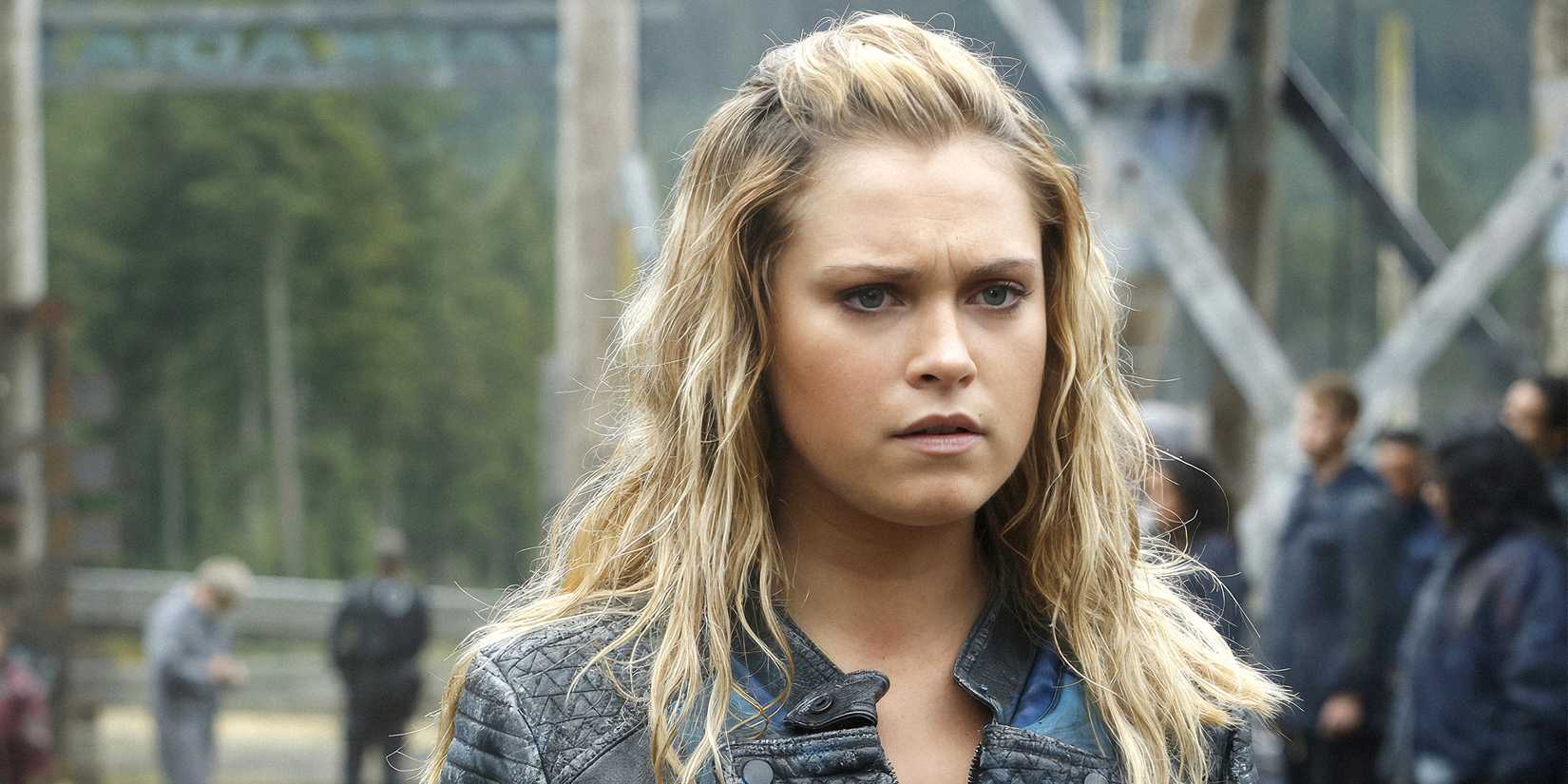
After the unprecedented success of Suzanne Collins' The Hunger Games in the late 2000s, the rest of the decade (as well as the early 2010s) saw a tremendous boom in the YA and dystopian genres, a boom which resulted in books like Kass Morgan's The 100. The book was such a hit that expectations for its CW television adaptation were sky-high, and the show more than managed to live up to those expectations.
A big part of what makes The 100 such a special YA dystopian show is that it's one of those sci-fi shows that get darker and better every season, almost as though the story is maturing and growing up alongside its audience. What starts out as more of a typical post-apocalyptic drama for teenagers rapidly sheds its polished CW tropes and evolves into a complex thematic exploration of survival, tribalism, and environmental catastrophe.
7 'The Last of Us' (2023–Present)
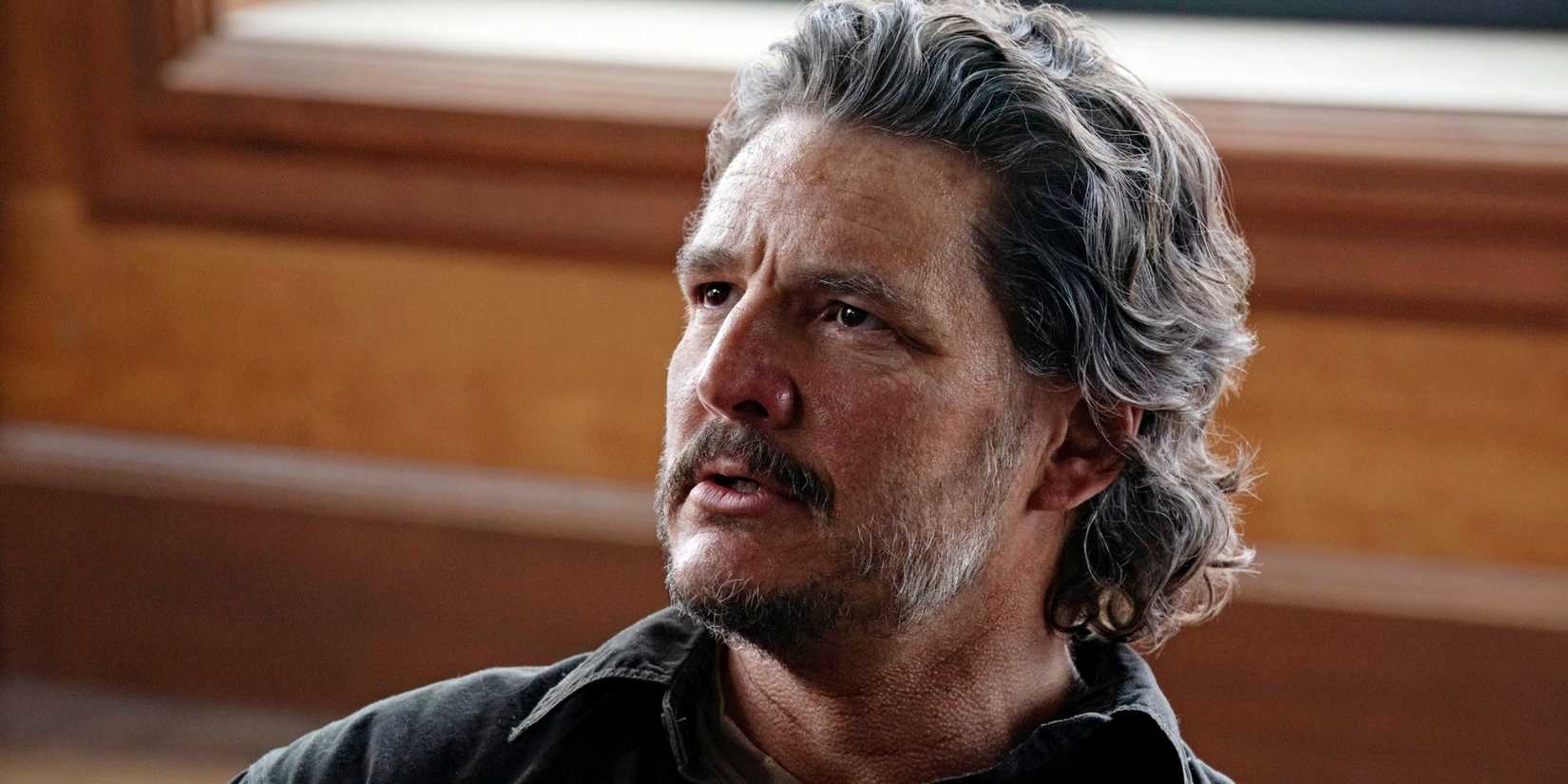
Naughty Dog's 2013 classic The Last of Us is far and away one of the most important and influential action-adventure video games of the 21st century, and as such, the mere prospect of an HBO television adaptation was profoundly exciting. Divisive second season notwithstanding, The Last of Us turned out to be one of the greatest survival TV shows that the streaming era has thus far seen.
It's just as much of a masterclass in apocalyptic science fiction as its source material, since it constantly finds new and inventive ways to make the collapse of human civilization serve not just as a backdrop, but as the fuel of its character arcs and thematic layers. It's also one of the most suspenseful shows since 2020, a growingly intense survival tale that only keeps getting more and more riveting the more its main characters suffer.
6 'Silo' (2023–Present)

Apple TV joined the streaming game relatively late into the deal, but they've already proven to be absolute masters of science fiction television-making, as demonstrated by the exceptional Silo. It's an adaptation of Hugh Howey's groundbreaking trilogy of novels, and it's easily one of the greatest mystery box sci-fi shows that the small screen has been treated to in years.
Silo is also arguably one of the most addictive sci-fi shows of all time, a genre-bending gem where certainty and historical truth are fragile lies that the story constantly keeps chipping away at in all sorts of jaw-dropping ways. As the fascinating world of Silo keeps expanding and the bliss of ignorance keeps degrading, the show only keeps getting better and better.
Collider Exclusive · Sci-Fi Survival Quiz Which Sci-Fi World Would You Survive? The Matrix · Mad Max · Blade Runner · Dune · Star Wars
Five universes. Five completely different ways the future went wrong — or sideways, or up in flames. Only one of them is the world your instincts were built for. Eight questions will figure out which dystopia, galaxy, or desert wasteland you'd actually make it out of alive.
💊The Matrix
🔥Mad Max
🌧️Blade Runner
🏜️Dune
🚀Star Wars
01
You sense something is deeply wrong with the world around you. What do you do? The first instinct is often the truest one.
02
In a world of scarcity, what resource do you guard most fiercely? What we protect reveals what we believe survival actually requires.
03
What kind of threat keeps you up at night? Fear is useful data — if you're honest about what you're actually afraid of.
04
How do you deal with authority you don't trust? Every dystopia has a power structure. Your approach to it determines everything.
05
Which environment could you actually endure long-term? Survival isn't just tactical — it's physical, psychological, and very much about where you are.
06
Who do you want in your corner when things fall apart? The company you keep is the clearest signal of who you actually are.
07
Where do you draw the line — if you draw one at all? Every survivor eventually faces a moment that tests what they're actually made of.
08
What would actually make survival worth it? Staying alive is one thing. Having a reason to is another.
Your Fate Has Been Calculated You'd Survive In…
Your answers point to the world your instincts were built for. This is the universe your temperament, your survival instincts, and your particular brand of stubbornness were made for.
The Matrix
You took the red pill a long time ago — probably before anyone offered it to you. You're a systems thinker who can't help but notice the seams in things.
- You're drawn to understanding how the system works before figuring out how to break it.
- You'd find the Resistance, or it would find you — your instinct for spotting constructed realities is the machines' worst nightmare.
- You function best when you have access to information and the freedom to act on it.
- The Matrix built an airtight prison. You'd be the one probing the walls for the door.
Mad Max
The wasteland doesn't reward the clever or the well-connected — it rewards those who are hard to kill and harder to break. That's you.
- You don't need comfort, community, or a cause larger than the next horizon.
- You need a vehicle, a clear threat, and enough fuel to outrun it — and you're good at all three.
- You are unsentimental enough to survive that world, and decent enough — just barely — to be something more than another raider.
- In the wasteland, that distinction is everything.
Blade Runner
You'd survive here because you know how to exist in moral grey areas without losing yourself completely.
- You read people accurately, keep your circle small, and ask the questions others prefer not to answer.
- In a city where humanity is a legal designation rather than a feeling, you hold onto something that keeps you functional.
- You're not a hero. But you're not lost, either.
- In Blade Runner's world, that distinction is everything.
Dune
Arrakis is the most hostile environment in the known universe — and you are precisely the kind of person it rewards.
- Patience, discipline, and political awareness are your core strengths — and on Arrakis, they're survival tools.
- You understand that the long game matters more than any single victory.
- Others come to Dune and are consumed by it. You'd learn its logic and earn its respect.
- In time, you wouldn't just survive Arrakis — you'd begin to reshape it.
Star Wars
The galaxy far, far away is vast, loud, and in a constant state of violent political upheaval — and you wouldn't have it any other way.
- You find meaning in being part of something larger than yourself — a cause, a crew, a rebellion.
- You'd gravitate toward the Rebellion, or the fringes, or whatever pocket of the galaxy still believes the Empire's grip can be broken.
- You fight — not because you have to, but because standing aside isn't something you're capable of.
- In Star Wars, that willingness is what makes all the difference.
5 'Fringe' (2008–2013)

Born out of a desire to combine the traditional procedural format with overarching conspiracy mythologies à la The X-Files, Fringe at first started out as more of an episodic sort of clone of the series that inspired it. Quickly enough, however, it transformed into entirely its own thing, a more serialized series that's among the best spooky cop shows ever made.
Through it all, Fringe remains loyal to its high-concept premise based around fringe science, but it also allows its narrative to evolve into a series of micro-explosions that cause the very fabric of reality to start coming apart as the story progresses. Fringe made multiversal stories cool before they became the Hollywood mainstream, and as such, it has only gotten better with age.
4 'Dark' (2017–2020)
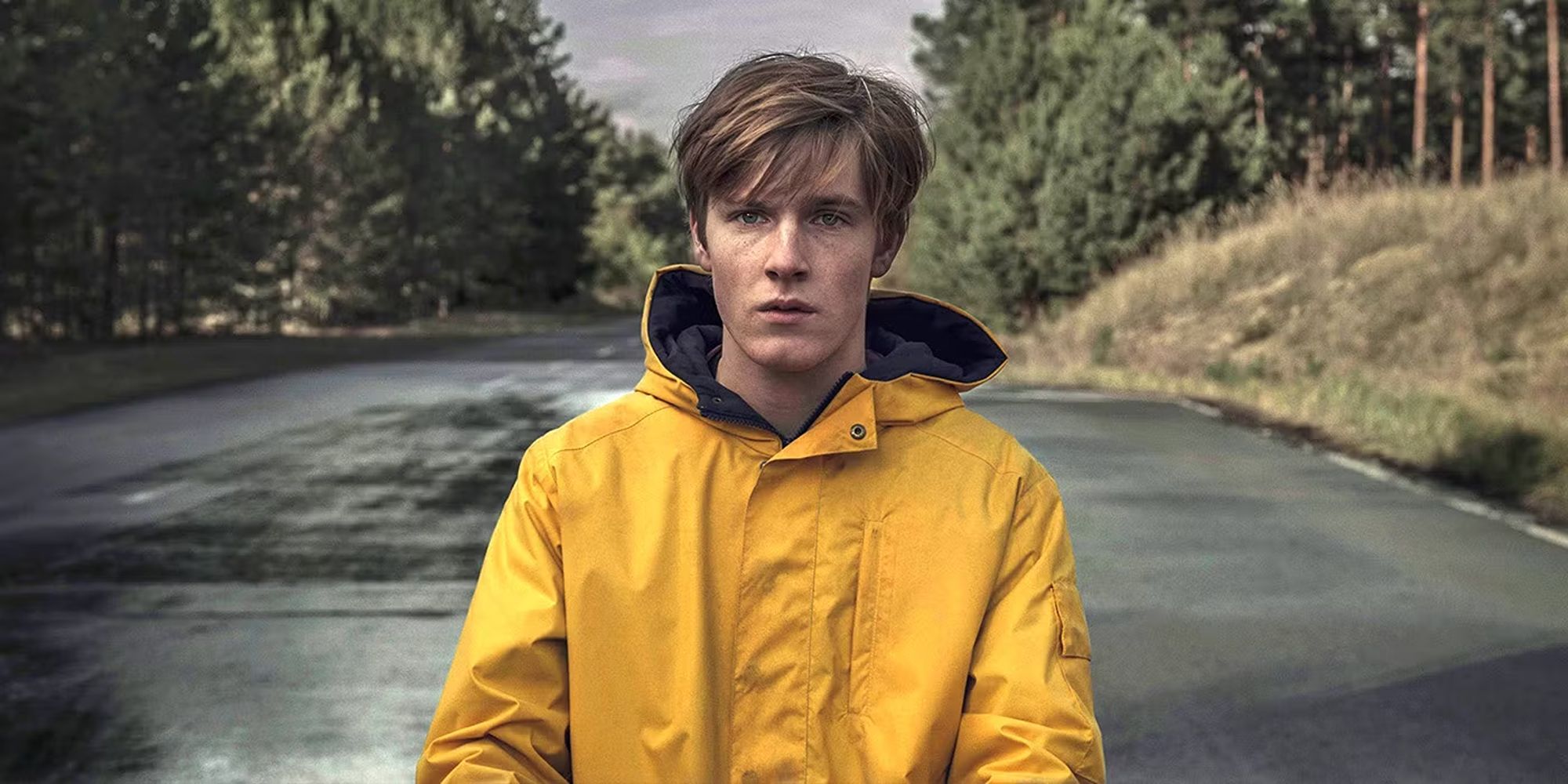
Dark is one of those shows so complex and layered that you practically need a notebook in order to keep track of everything that's going on; but people willing to make that sort of effort are in for the ride of a lifetime. That's because Netflix's first-ever German-language series is one of the most perfect time travel and parallel universe sci-fi TV shows the world has ever been treated to.
One of those sci-fi sleeper hits that only got better after Season 1, Dark never offered a single episode that was anything less than absolutely exceptional, all thanks to how meticulously plotted and planned-out it was from the start. It's emotional, it's intelligent, and it only gets better the more complicated and poignant its overarching story becomes.
3 'Andor' (2022–2025)
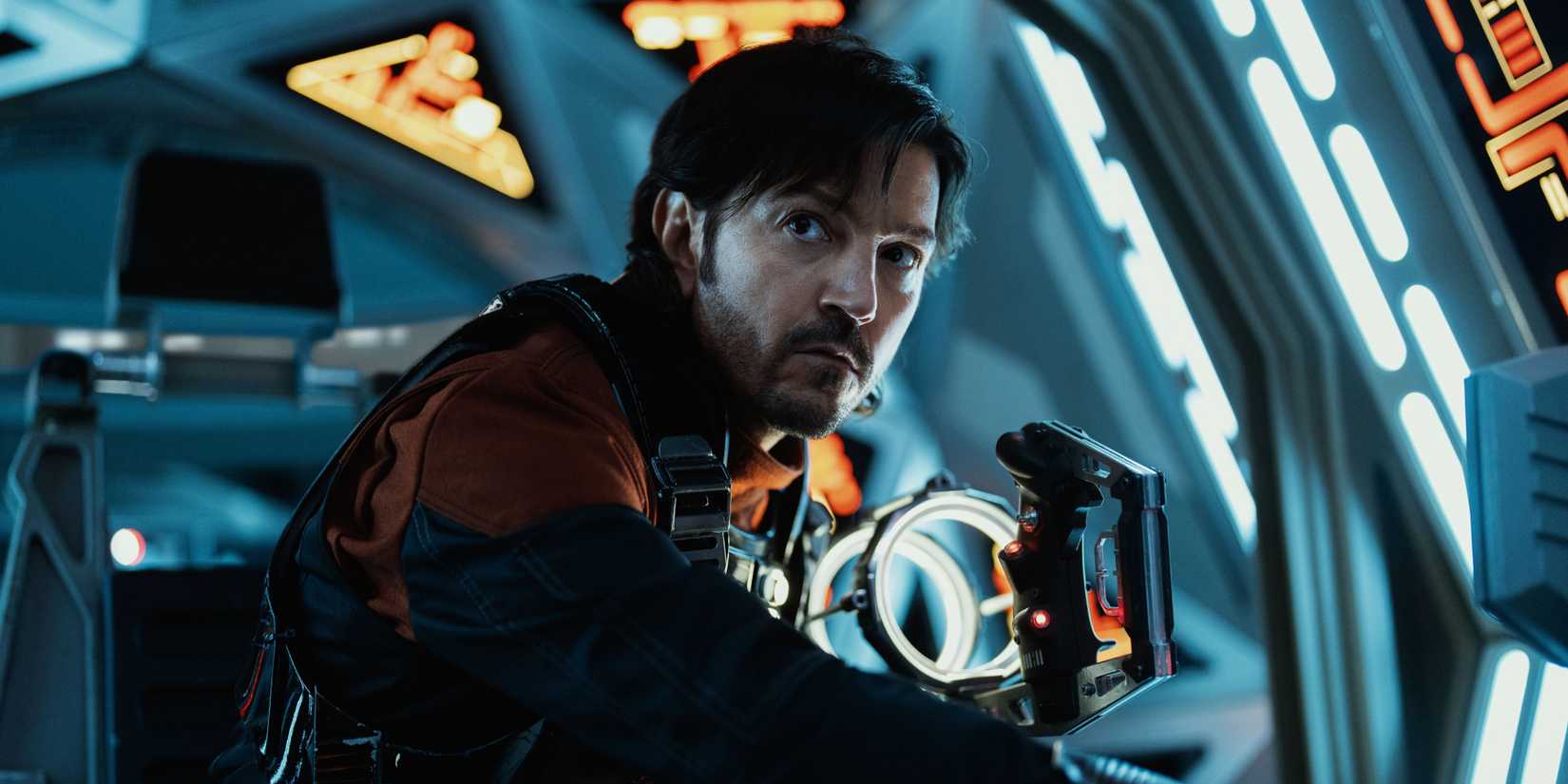
Who could have possibly predicted that a spin-off prequel of a spin-off prequel of Star Wars would end up becoming the franchise's best piece of content since Disney's acquisition of Lucasfilm? Indeed, Andor is far more than just a masterpiece: It's one of the most perfect sci-fi shows with five seasons or less, a deeply thought-provoking character piece that's unlike anything else the galaxy far, far away has ever had to offer.
But where many pieces of Star Wars media are more about pure entertainment and adrenaline-pumping escapism, Andor's deeply political, philosophical, and moral dilemmas keep falling apart time and time again as the show goes on. It's precisely that layeredness that makes it such a special series, one that keeps growing darker and more urgent as its powerful critique of authoritarianism and fascism keeps progressing.
2 'Battlestar Galactica' (2004–2009)
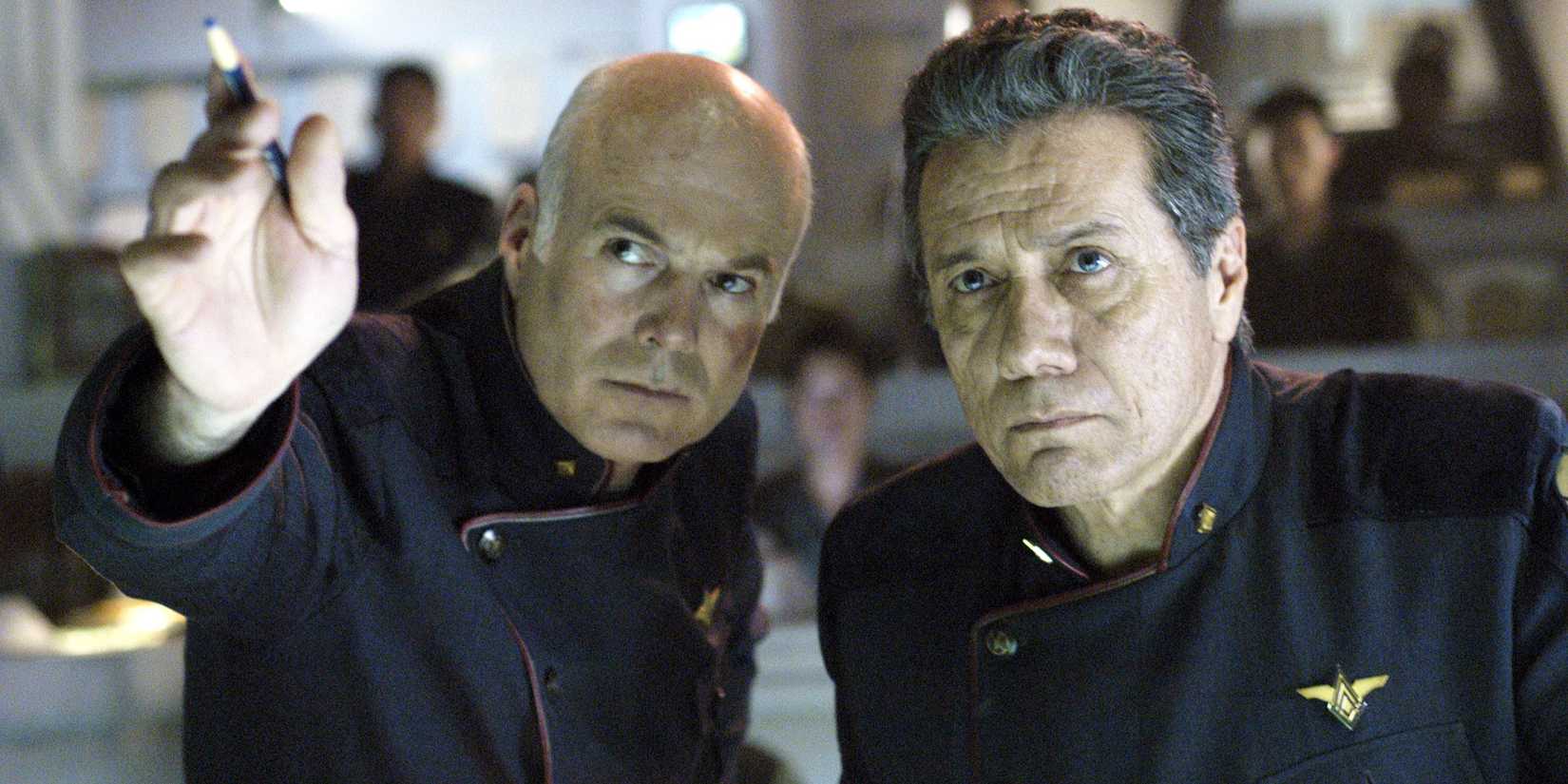
There are sci-fi shows that don't really need a remake of any sort, and then there are ones like 1978's Battlestar Galactica, which was pretty much clamoring for a modernization. The result of that was 2003's miniseries of the same name and its 2004 sequel, a full-fledged Battlestar Galactica remake that's among the best sci-fi shows that have aired since 2000.
This is one of the ultimate poster children for the concept of a sci-fi show whose quality goes up the more everything surrounding the narrative keeps disintegrating. The entire series begins with the near-extinction of humanity as a whole, and only keeps getting better as the remaining shreds of civilization and morality are gradually stripped away.
1 'The Expanse' (2015–2022)
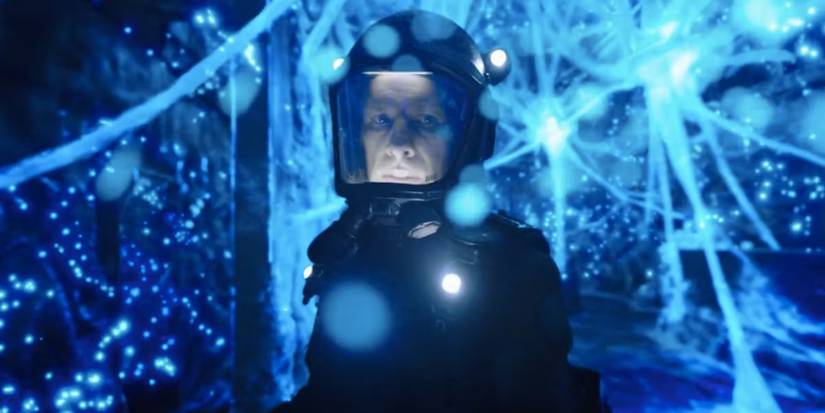
Based on the book series of the same title by James S. A. Corey (the pen name of Daniel Abraham and Ty Franck), The Expanse is often hailed not just as one of the most scientifically accurate hard sci-fi shows the small screen has seen in years, but also as one of those great sci-fi shows with no weak episodes. Over the course of its six-season run, it never substantially went down in quality, not even for a single scene.
However, since the show's entire world is such a realistic and hyper-detailed set of systems that serve as the foundations of a noir-ish tale of militarization and geopolitical conflicts, it becomes abundantly easy for the show to keep growing darker and better as it goes on. Every conflict in The Expanse has cascading consequences that alter the status quo around the entire Solar System, so that the pacing is always engaging and there isn't a single dead spot in the narrative at any point in time.

The Expanse
- Release Date
- 2015 - 2022-00-00
- Network
- SyFy, Prime Video
- Showrunner
- Naren Shankar, Mark Fergus, Hawk Ostby
- Directors
- Breck Eisner, Jeff Woolnough, David Grossman, Kenneth Fink, Rob Lieberman, Terry McDonough, Thor Freudenthal, Bill Johnson, David Petrarca, Jennifer Phang, Mikael Salomon, Sarah Harding, Marisol Adler, Anya Adams, Nick Gomez, Simon Cellan Jones
KioskNews shows a cleaned-up reading view extracted from the publisher’s page — the original always lives on their site, not ours.