Homecoming of sorts: Meeting the housing and care needs of Singaporeans as they age
SINGAPORE – After Rahimah Othman’s husband died in 2023, the 63-year-old Bedok resident was left with only her daughter as a companion.
However, her daughter, who is pursuing a diploma at Republic Polytechnic, spends most of the week staying with her aunt in Woodlands, leaving Rahimah alone at home.
To encourage Rahimah – who stopped working full-time more than two decades ago to take care of her daughter – to socialise and stay active, a friend suggested she attend activities at the nearby NTUC Health Active Ageing Centre.
The homemaker now spends most of her weekdays at the centre, where she gets to pursue her favourite activity, crocheting, as well as exercise and play games with other regulars.
“All of them are my kawan (friends),” she said, noting that she even volunteers to teach others skills such as cooking.
With her flat fully paid off, Rahimah said she has no intention of moving out of her Bedok Central home, where she has lived since 2007. Besides her friends and daily activities at the active ageing centre – a 15-minute walk from home – she also has her choice of eateries and amenities nearby.
“This is the only place I can live,” she told The Straits Times.
Rahimah is just one of many seniors here who would prefer to age in place, remaining in their current homes as far as possible.
In 2024, a study by the Singapore Management University’s Centre for Research on Successful Ageing found that 82.8% of older adults would prefer to age in their current homes, citing reasons such as wanting continuity and stability, as well as access to amenities and a sense of community.
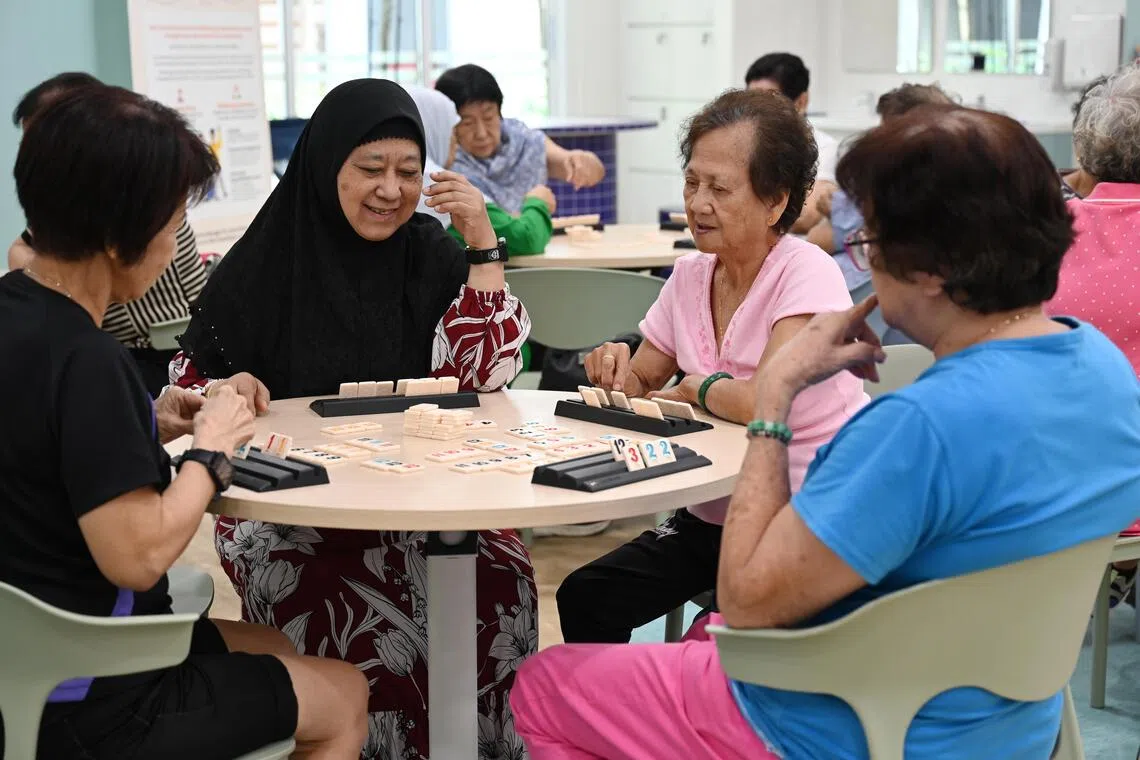
Rahimah Othman spends most of her weekdays at the NTUC Health Active Ageing Centre, where she gets to pursue her favourite activities with other regulars.
ST PHOTO: NG SOR LUAN
The comfort of staying put
This echoes findings in other countries. In Australia, for example, a 2022 study by Anglicare Australia, an umbrella network for Christian community service organisations, found that 87% of older people wish to live in their homes as they age.
Seniors naturally feel more comfortable in homes where they have lived for many years, given their familiarity with the neighbourhood and the social networks they have built up over time, said Nicholas Mak, chief research officer at geospatial property firm Mogul.sg.
Thang Leng Leng, a sociocultural anthropologist with the National University of Singapore, noted, however, that this desire to age in place requires the environment to cater to their needs.
“If I want to age at home, then my community, my surroundings and my neighbourhood must be conducive for me to be able to do so,” said Thang, who is also the co-lead for the purposeful longevity workstream under the Health District @ Queenstown Initiative – a pilot to help residents lead healthier and more productive lives.
In 2025, the Government introduced Age Well Neighbourhoods, which bring enhanced care services and senior-friendly infrastructure to towns with more seniors.
In May, Bedok – where 24.6% of residents are aged 65 or older – was announced as an Age Well Neighbourhood, together with Bukit Panjang and Tiong Bahru-Redhill. Senior-friendly enhancements in these neighbourhoods are expected to be introduced from 2027.
These three towns join Toa Payoh, which was announced as the first such neighbourhood a year earlier.
Age Well Neighbourhoods build on broader efforts under the Age Well SG national initiative, which aims to help seniors stay active and live more independently, said the Ministry of Health (MOH).
For retired public servant Chang Kim Yam, living in an Age Well Neighbourhood also provides an opportunity to give back to other seniors.
The 66-year-old volunteers at the Care Corner Active Ageing Centre near the three-room Toa Payoh flat she shares with her husband and daughter, where she does administrative work and calls socially isolated seniors to check in on them.
The work keeps her busy when she is not exercising or taking part in activities at the centre. She has no intention of moving out of her neighbourhood.
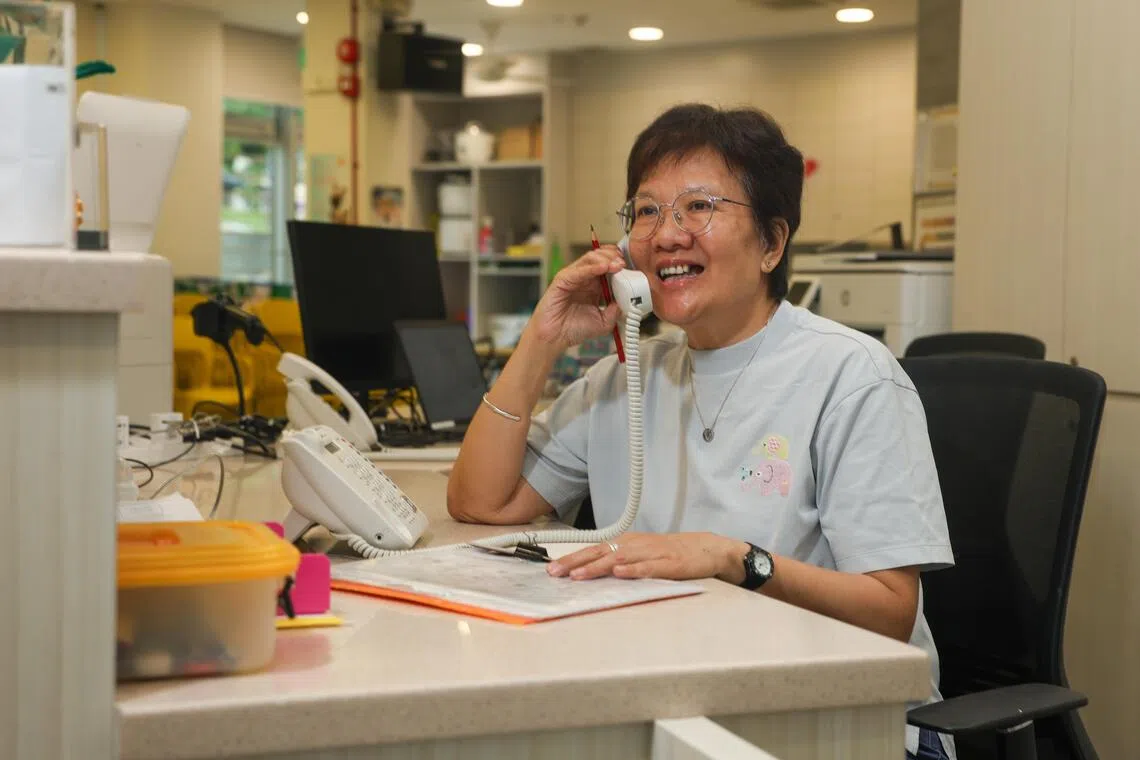
As a regular volunteer, Chang Kim Yam makes phone calls to residents in the area, inviting them to the centre to celebrate their birthdays.
ST PHOTO: JASEL POH
MOH said seniors in these neighbourhoods will benefit from more accessible active ageing centre touchpoints and enhanced community health posts, where they can get basic health services and manage chronic diseases closer to home.
They will also have access to expanded home-based care services and improved senior-friendly infrastructure, said a ministry spokesperson.
These are just some of the options the Government is providing to meet the needs and preferences of seniors as Singapore’s population ages rapidly.
According to the National Population and Talent Division’s latest Population In Brief report, Singapore officially became a super-aged society in 2026, with 21.4% of Singaporeans aged 65 or older.
By 2030, a quarter of all Singaporeans are projected to be aged 65 and above.
For many seniors, assistance with ageing in place might come in the form of a foreign domestic helper, hired by their families to help with household chores and other daily activities, said Thang.
She noted, however, that some seniors may be uncomfortable living with a stranger, while some helpers may lack the requisite training or experience in dealing with seniors, particularly those who require specialised care.
For seniors who need additional help, there are home-care services like enhanced Home Personal Care (HPC+), administered by the Agency for Integrated Care. The service assists seniors who are unable to do certain daily activities on their own and have no caregiver, or whose caregivers need support or a break.
Under HPC+, trained care professionals can assist with activities ranging from simple wound dressing and stoma care to helping with exercises prescribed by a therapist or doing household chores.
Seniors can also turn to centre-based services such as senior care centres, which provide comprehensive day care for them.
To help seniors age in place, the Enhancement for Active Seniors initiative (EASE) subsidises items such as grab bars, shower seats and handrails to improve mobility and safety within the flat.
EASE is offered as part of the Housing Board’s Home Improvement Programme (HIP), or via direct applications from seniors whose flats are not eligible for HIP or who want the upgrades earlier.
While many seniors prefer to remain in their familiar surroundings, others recognise that moving to a home with additional care services may better meet their needs.
When staying put is no longer enough
About two years ago, Lam Shaw Ying and his wife moved from a bungalow in Katong to Harmony Village in Bukit Batok, Singapore’s first community care apartments – a public assisted-living development where senior-friendly housing is integrated with care and social services.
The 90-year-old, who previously ran a school supplies company, said the couple did not mind moving across the island to a smaller home, as they no longer needed the additional space.
As both had health issues, he also appreciated the additional services provided at Harmony Village, which include a 24-hour emergency response service and shared caregiving for residents who need it.
“The staff here are all very friendly and very helpful,” he said.
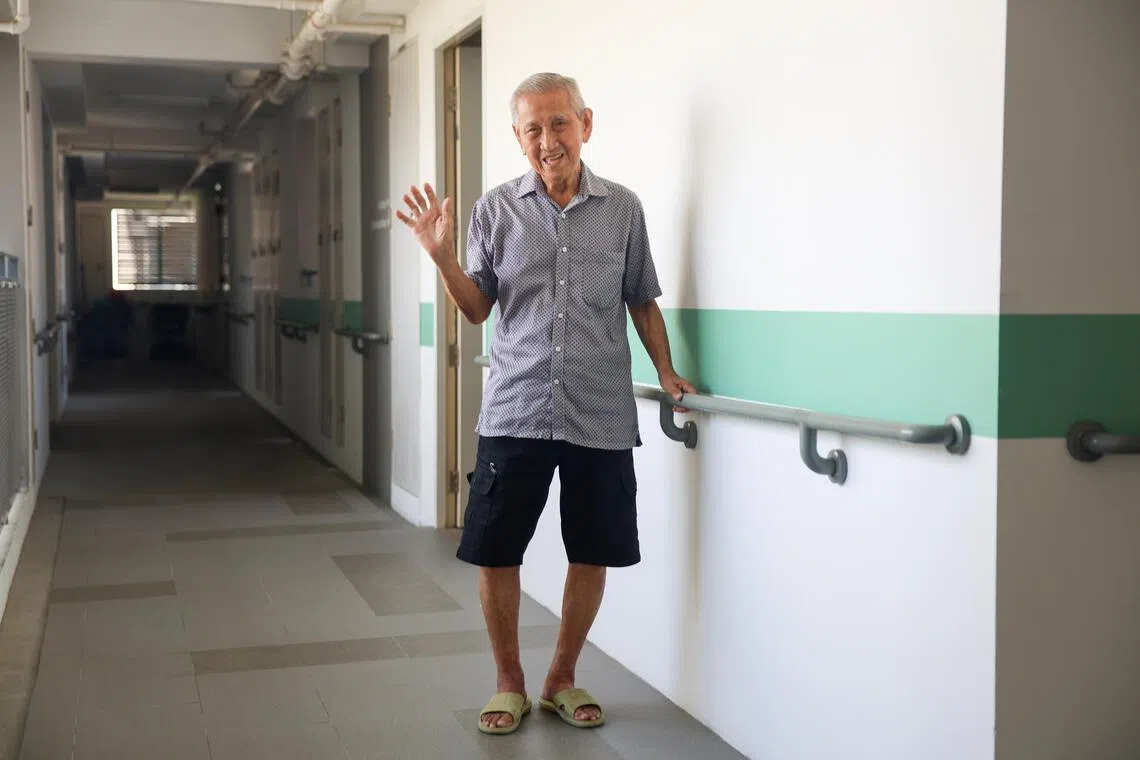
Lam Shaw Ying and his wife move to Harmony Village, which includes a 24-hour emergency response service and shared caregiving for residents.
ST PHOTO: JASEL POH
Others, however, needed more convincing. Rosemary Retnam was initially reluctant to move out of the Boon Lay flat she had called home for more than half a century. It was a stone’s throw from the Church of St Francis of Assisi, where she was a parishioner.
Her eldest son was concerned about her well-being, as she was living alone at the time, with only the family’s pet dachshund for company. He tried to convince her to consider moving into Harmony Village.
“I was so angry, I asked him, why do you want to send me to the old folks’ home?” recalled the 76-year-old former factory supervisor.
However, after reading up more about community care apartments, she changed her tune and now enjoys the exercise and karaoke sessions with other residents and has even found a nearby Catholic church to attend.
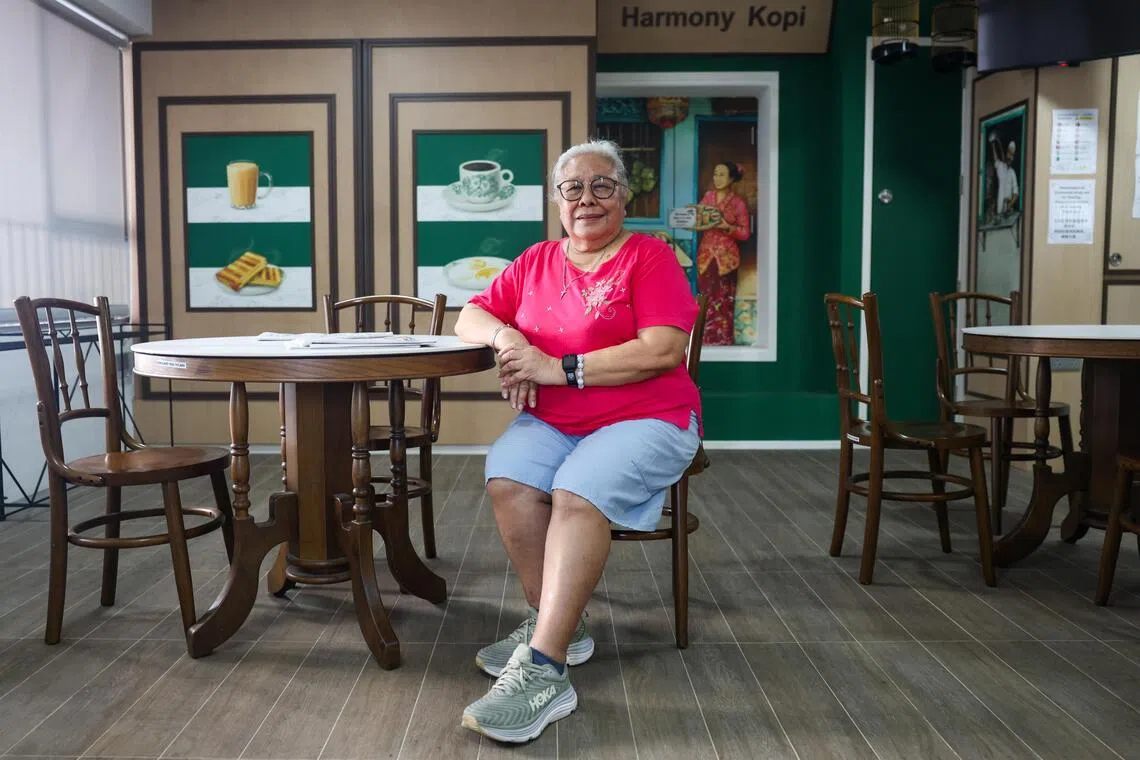
Rosemary Retnam was initially reluctant to move into Harmony Village, but she now enjoys the activities with other residents at the centre.
ST PHOTO: JASEL POH
Besides Bukit Batok, other community care apartments are in the works in Bedok, Geylang, Queenstown, Sengkang, Tampines and Toa Payoh.
Such apartments are among the affordable public housing options for seniors, alongside two-room flexi flats, which offer shorter lease options to help lower purchase prices.
Still, demand for some of these housing options appears to be limited. While the first two community care apartment projects were oversubscribed, some subsequent projects were undersubscribed.
This could be down to seniors wanting to maintain a sense of independence by continuing to live in homes they are familiar with, rather than moving to assisted-living flats elsewhere, said Mogul.sg’s Mak.
“If they are used to living in, say, Tampines, and suddenly, they are asked to uproot themselves, there will be resistance,” he said.
Following a review, it was announced in July that the basic service package fee for community care apartments would be lowered and services streamlined, while the minimum eligibility age would be reduced from 65 to 55.
Senior Minister of State for Health Tan Kiat How said in September that demand for these flats had moderated as more housing options and care services were brought closer to seniors.
Besides public housing options, private alternatives also exist. On the higher end of the scale is the $260 million Perennial Living project – Singapore’s first private assisted-living development for seniors – which offers in-house dietitians and is priced between $8,900 and $17,000 a month.
A less pricey option is shared stay-in senior caregiving services, in which a small group of seniors live together in a residence supported by trained caregiving staff. The model was recognised as a mainstream option in 2025.
Suzanne H’ng, 84, lives with three others in one such residence managed by provider Red Crowns Senior Living in a condominium unit in Bukit Panjang.
H’ng, who previously worked in the airline industry, began living in the apartment about three years ago after her children became concerned about her well-being, as she had no caretaker at her previous residence.
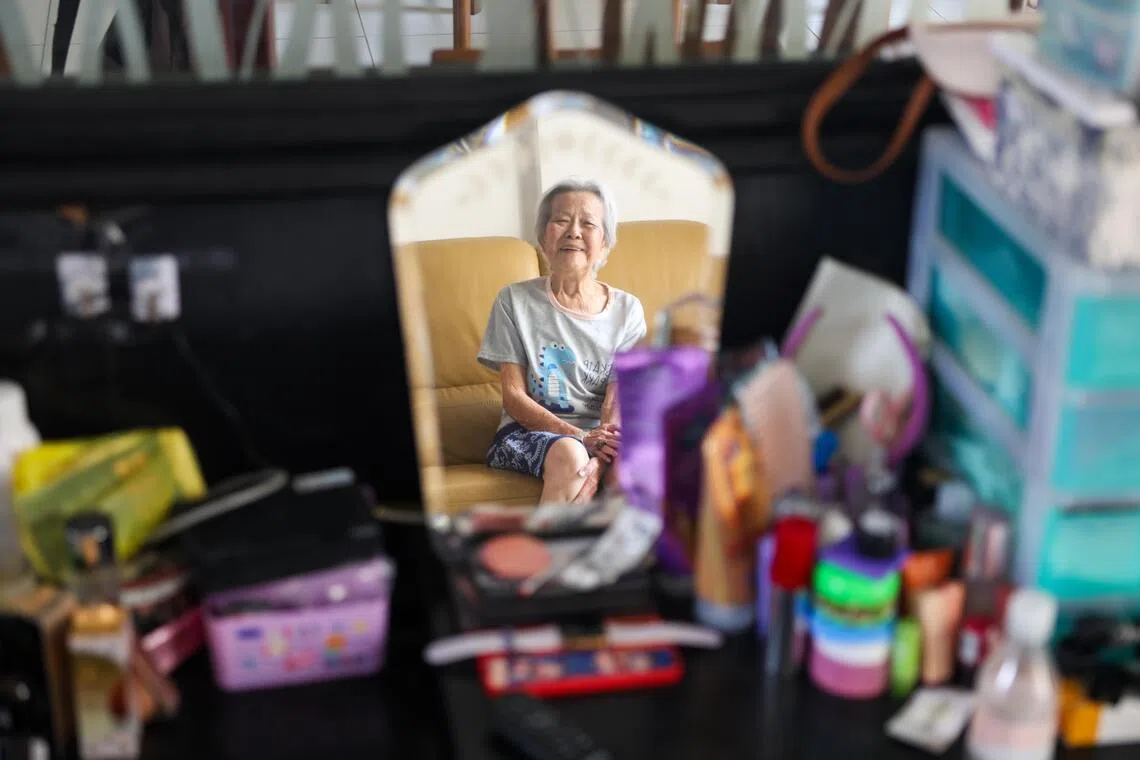
84-year-old Suzanne H’ng at her flat under Red Crowns Senior Living, a shared stay-in senior care-giving service, on Nov 11.
ST PHOTO: JASEL POH
The mother of four, who also has 14 grandchildren, said she gets along well with the other residents, with staff taking care of meals and accompanying them on visits to the doctor.
“I don’t ask for many things, but it’s all provided for,” she said.
Catering to evolving needs
With the various housing and care options introduced in recent years, Thang – who works with NUS’ Department of Japanese Studies – suggested that Singapore could take a leaf out of Japan’s book.
The East Asian nation, which became the world’s first super-aged society in 2006, has developed a number of housing and care models for the elderly. These include small-scale, multi-functional facilities within existing housing that provide services ranging from daycare to short-term care in a single location, she noted.
Responding to queries from ST, MOH said the country “continues to learn from relevant international approaches to supporting ageing populations”.
“However, the applicability of overseas models needs to be considered in Singapore’s context, together with our seniors’ needs and preferences,” said a ministry spokesperson.
There is ultimately no ideal mix of housing and care options for seniors, given their varied needs, said Thang.
However, she noted that having multiple housing options within a single town could cater to the evolving needs of seniors as they age, without having to relocate too far.
“This is helpful because if people want to move, they can still move within their neighbourhood.”
KioskNews shows a cleaned-up reading view extracted from the publisher’s page — the original always lives on their site, not ours.