Protect College Sports Act heads to final Senate vote: What to know as landmark bill reaches crucial phase
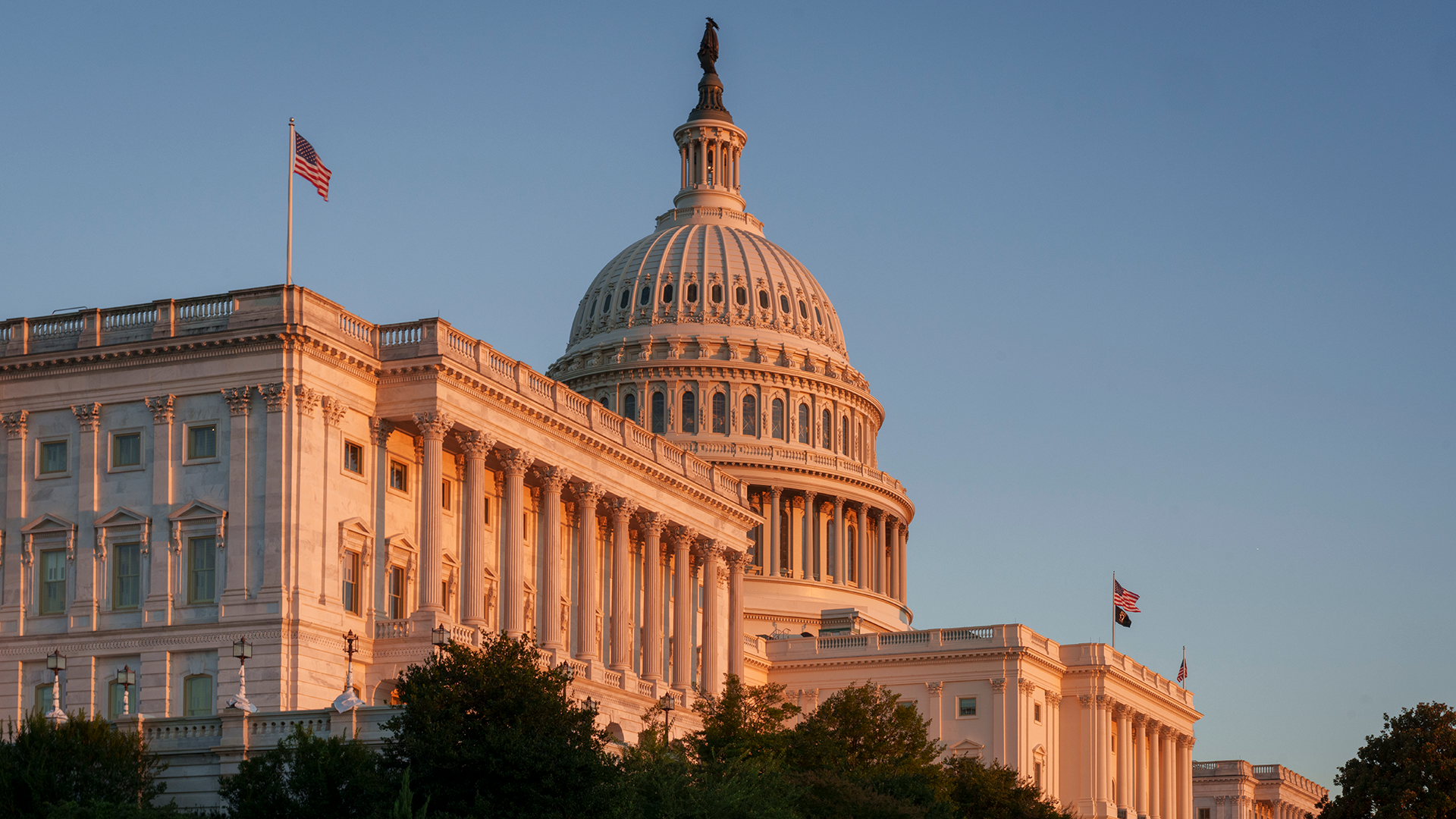
A coveted antitrust shield, transfer limits and up to $50 million in athlete compensation are at stake as the historic bill faces a crucial floor vote

• 5 min read
It's been more than six years since the NCAA was sued over rules that barred players from profiting off their names, images and likenesses.
On Monday, Congress could make a similar seismic move. The U.S. Senate is scheduled to vote on final passage of the historic bipartisan Protect College Sports Act, legislation designed to regulate college sports and codify the House v. NCAA settlement.
The vote caps a long, winding road for college athletics on Capitol Hill. More than 40 college sports bills have been introduced in Congress since 2020, with several facing endless debate and committee review before dying on the vine without ever reaching the floor of either the Senate or the House. One bill, the SCORE Act, was killed on the eve of its introduction on the floor. In July, the Big Ten and SEC requested changes to the PCSA before finally coming on board, as several deadlines passed.
Senators are scheduled to begin voting Monday at 5:30 p.m. ET. The bill is expected to pass with at least 70 votes in favor, after several procedural votes have already reached that threshold.
Still, big questions about the bill led by Sens. Ted Cruz (R-Texas) and Maria Cantwell (D-Wash.) loom. After passing the Senate, it faces a new set of obstacles in the House of Representatives, including expectations of further requested changes. Further complicating matters, the House is not expected to return to session until after the midterm elections in November.
Should representatives request changes, it could set up a back-and-forth between the chambers that delays a final vote in the House – further threatening passage before a new Congress is introduced in January.
Meanwhile, contingency plans are being developed outside Capitol Hill if the bill fails to pass before the New Year. Several power conferences are preparing to introduce new self-governance models under the House settlement, including player payments and potentially a larger pool of money (up to $50 million) to share with players.
For now, one thing is certain: the U.S. Senate will finally vote on the biggest piece of college sports legislation in years, and history will be made one way or another.
What the Protect College Sports Act does
The bill formally grants the NCAA and its members the prize they have pursued for a decade: a limited antitrust exemption. That legal shield would allow the industry to set and enforce eligibility and transfer rules without being challenged in court, as has often happened over the past several years.
Schools could pay athletes from three buckets: a $21.6 million revenue-sharing cap stemming from the House v. NCAA settlement, a new $22.5 million retention fund and $5 million reserved for Olympic and women's sports. The new compensation structure would put schools on the hook for up to $50 million each year, more than double what they faced the last two years under the House settlement.
"That's sort of where the market is," Sen. Eric Schmitt (R-Mo.) told CBS Sports.
Eligibility rules will also be clearer and legally enforceable. Athletes will get one transfer without sitting out, and the NCAA's new five-year eligibility clock will also become law. Football coaches will also be prohibited from moving midseason for another job. Conferences will also be allowed to pool TV rights if 75% of FBS schools agree, an unlikely expectation.
The bill also regulates agents acting on behalf of players, capping their fees at 5%.
But the biggest question that has hovered over college athletics for the last five years remains unanswered: whether athletes can be considered employees.
The last-minute changes
The final rewrite of the bill in September loosened conference realignment restrictions, a noticeable change that re-awakened fears in the industry. A school jumping between power conferences now waits three years instead of five, and the waiting period disappears entirely six years after the law takes effect. The 19-member cap and the super league ban stay, effectively barring private equity entities from entering the space to create a new league.
The bill also overrides fewer state laws than earlier versions.
The bill also tightened language throughout and introduced new expectations. Schools that miss graduation and academic benchmarks will lose access to their $22.5 million retention fund, which is designed to slow player movement in the transfer portal.
Injury, death and abuse lawsuits will also be allowed to go straight to court without a 30-day review.
The amendments that died
More than 35 amendments were filed, but it doesn't appear any received a roll call vote before Monday. The bill effectively remained untouched by anyone other than its co-authors.
Among the amendments that were shut down was a proposal from Florida Sen. Ashley Moody (R-Fla.) that would have allowed schools to switch power conferences without a waiting period if they left within 180 days of the bill becoming law. The filing was seen as a direct shot at the ACC, which battled members Florida State and Clemson in court over the conference's grant of rights in 2024 and 2025.
Concerns over rising coaches' salaries prompted Sens. Chris Murphy (D-Conn.) and Cory Booker (D-N.J.) to file an amendment limiting coach pay to $5 million a year, but that was also not addressed.
Sen. Rand Paul (R-Ky.) sought a blanket antitrust exemption for college athletics, but Senate Majority Whip John Barrasso (R-Wyo.) struck it down, objecting to the request for unanimous consent.
The pushback
Democrats remain split on the bill, according to last week's cloture vote, with 25 yeses and 22 noes. Republicans Moody, Rick Scott (R-Fla.) and Paul voted no on cloture Thursday.
The NAACP, the AFL-CIO and the Congressional Black Caucus oppose the bill. Athletes.org and the College Football Players Association also oppose the bill, arguing it shuts athletes out and stalls the movement for collective bargaining.
"This is a bill being made without athletes' input, and it reads like that," CFBPA executive director Jason Stahl told Fox Sports.
What's next
The real deadline for the PCSA to become law is Jan. 3, when a new Congress is sworn into power.
Both the Senate and House return for work Nov. 9, but face several hurdles, including the threat that government funding expires Dec. 11.
Front Office Sports reported earlier in September that House Republicans want an outright ban on athletes being classified as employees and a growing number also want to cap international players. If House representatives seek to change the bill, they would have to send it back to the Senate, delaying the bill's potential passage in the House and its path to becoming law.
KioskNews shows a cleaned-up reading view extracted from the publisher’s page — the original always lives on their site, not ours.