Are Australia’s native bees thriving or declining? We don’t know but can find out
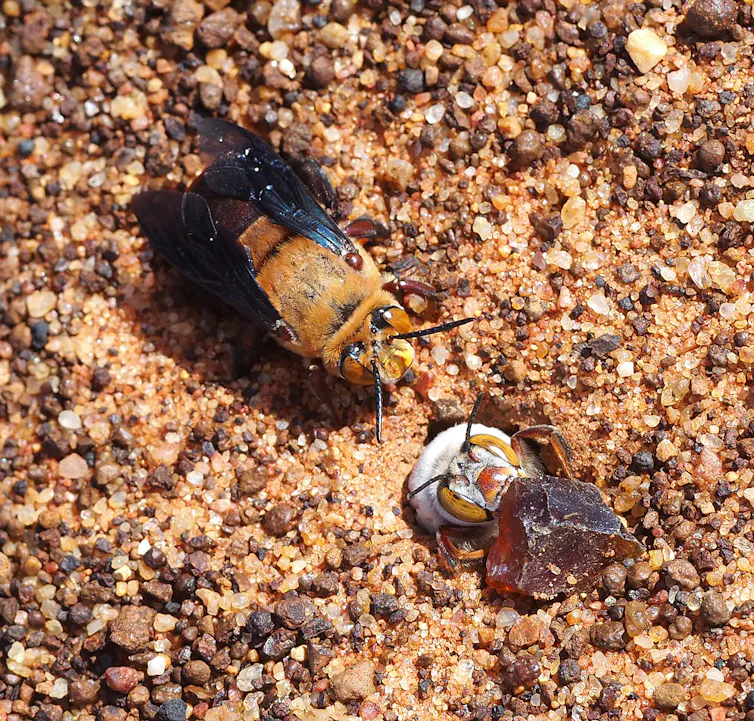
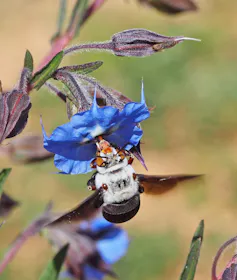
Each spring, thousands of solitary bees (Amegilla dawsoni), also known as Dawson’s burrowing bees, emerge from burrows scattered across Western Australia’s arid plains.
These bees, distinguished by their fluffy appearance and either white and maroon (females) or coffee (males) colouring, are on a quest to find flowers and a mate. They are just one of more than 1,700 native bee species that call Australia home – a figure steadily rising each year.
Tragically, Australia’s native bees face a conservation crisis. Wild bees are declining worldwide, under pressure from habitat destruction, invasive species, pesticide use and climate change. Due to a lack of funding and attention, few people recognise how much native bees are struggling. Even native bee researchers don’t have all the answers.
Our new study took a closer look at the major threats to Australia’s native bees and, by drawing on research from here and abroad, created a plan to conserve them.
Why wild bees matter
Native bees play an indispensable role in ecosystems across Australia.
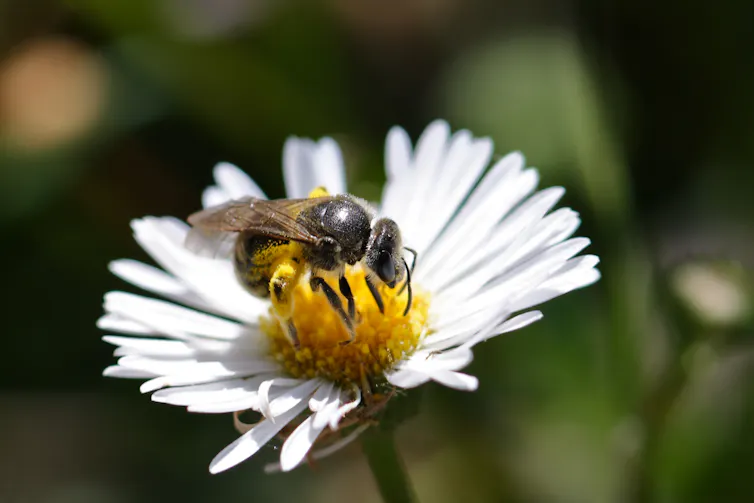
They pollinate many native plants that can’t be pollinated by introduced species, including valuable crops such as macadamias and mangoes. Native bees provide vital food and habitat for an array of Australian animals, including by pollinating eucalypts that feed koalas. In doing so, they help entire ecosystems thrive.
For First Nations communities, native stingless bees also hold significant cultural value. For thousands of years, First Nations peoples have used stingless bee honey and wax in gifts, food, and the making of tools. These bees also feature in many traditional stories such as The First Bees, an oral history from the Gunwinggu people of West Arnhem Land about ancient beings turning into stingless bees.
Read more: Move over, honeybees: Aussie native bees steal the show with unique social and foraging behaviours
Neglected for too long
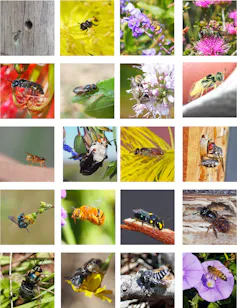
In Australia, scientists are discovering more native bee species each year, with more than 115 new species described last year. Examples include the devilish Megachile lucifer and 71 species of resin pot bees from the genus Megachile. Australia is also home to some of the tiniest bees in the world, including the miniscule Euryglossina clypearis, which grows to just 1.8 millimetres long.
However, conservation research is not keeping up. An influential paper from 2009 examined both the diversity of Australia’s native bees and the challenges they face. These include land clearing, disease, and competition with introduced plants and bees. But climate change and habitat loss remain the most pressing threats.
Since that study, research and funding for native bee conservation has been scarce. This lack of resources may be because few people recognise how important native bees are for keeping humans and ecosystems healthy.
While some native bees are crop pollinators, such as the buzz-pollinating Amegilla, many are not. Bees that do not pollinate crops typically attract less attention than other well known pollinator species, such as the introduced European honeybee (Apis mellifera).
However, bees that don’t pollinate popular food crops actually need the most help.
Read more: I discovered a new Australian native bee, but there are still hundreds we need to identify
What needs to change
To better protect our native bees, Australia must accurately identify how many species are on the brink of extinction. Only three native bee species are listed on Australia’s national threatened species list, compared to six different native species identified by the global International Union for Conservation of Nature (IUCN) Red List.
Based on how much bee habitat was destroyed during the 2019–20 Black Summer bushfires, 11 more species should sit on Australia’s threatened species list. However, listing requires us to have enough data on a species’ size and distribution, as well as a recognised scientific name. For many native bees we simply don’t have this information, so more research is urgently needed.
We must also invest in studies into native bee behaviour, such as how bees navigate, search for flowers, and identify their favourite plants. This information will help us understand how bees will cope with environmental threats such as climate change, and find ways to support them.
This increased knowledge will form the basis of conservation plans. Short-term plans may focus on regulating the use of pesticides that harm bees, or protecting native bushland. Long-term plans may rely on ongoing monitoring programs that bring together researchers, farmers, and community members. As bee researchers, we are also working on an Australian Native Bee and Pollinator Conservation Strategy with evidence-based guidance for everyone from landowners to local councils.
Community members can also spread the word about native bees. You could invite scientists to speak at your school, sport club, or community group. You can learn about flowering plants that support native bees in your local area by visiting council websites or reading books dedicated to Australia’s native bees. You may also make your backyard or garden more native bee friendly by building bee hotels, leaving bare ground for burrowing bees to nest in, or filling pots with rock gravel for nesting bees.
Read more: Native pollinators need more support than honeybees in Australia – here’s why
KioskNews shows a cleaned-up reading view extracted from the publisher’s page — the original always lives on their site, not ours.