10 Forgettable Movies That Somehow Won Oscars

Marcel is a writer who is passionate about most movies and series. He will watch anything that's good. He is a content manager by day and a videographer when needed. Marcel used to work at a major streaming service based in Asia Pacific as a Content Specialist and was the Distribution Manager for a local movie distribution company.
Sign in to your Collider account
Winning an Academy Award is supposed to be the ultimate achievement in cinema. Some Oscar winners become legendary in movie culture and among cinephiles. But not every film that takes home a golden statuette manages to achieve that kind of lasting recognition. There are middling movies that won the Oscars and eventually becomes memorable for how strange it was. It is still quite weird to say that Suicide Squad has more Oscars than 12 Angry Men, Dr. Strangelove and The Irishman combined.
Here, we take a look at forgettable movies that won Oscars. It's either you're surprised that this movie won an Oscar or you're surprised that this movie even existed, which makes this so fascinating. They aren't necessarily mediocre or terrible films, and some were even major critical or commercial successes when they were released. Yet despite winning one or more Academy Awards, they somehow do not have any cultural footprint.
'Fantastic Beasts and Where to Find Them' (2016)

Fantastic Beasts and Where to Find Them follows magizoologist Newt Scamander (Eddie Redmayne) as he arrives in 1926 New York with a suitcase full of magical creatures. When several of his creatures escape, Newt becomes involved in a larger conflict in the wizarding world with former Auror Tina Goldstein (Katherine Waterston), her sister Queenie (Alison Sudol), and muggle Jacob Kowalski (Dan Fogler). This is, curiously, the first film in the franchise to win an Academy Award, winning Best Costume Design.
Despite controversies surrounding its author, Harry Potter has become a cultural touchstone. The book and film series are beloved worldwide. The same cannot be said about this prequel series, which performed badly that it ended prematurely with three films instead of the planned five. Even though the film boasts a capable new ensemble and practically the same crew who made the generational franchise, the film does not have the same magic as the main series. Its attempt to connect it to the bigger conflicts in its universe falls flat. With veteran costume designer Colleen Atwood, the film managed to pull an upset against favorites like La La Land and Jackie.
'Driving Miss Daisy' (1989)

Driving Miss Daisy follows Daisy Werthan (Jessica Tandy), an elderly Jewish widow living in Atlanta, whose son hires an African-American chauffeur, Hoke Colburn (Morgan Freeman), after she gets into a car accident. While initially reluctant, Daisy and Hoke develops a close friendship as they spend decades together. The film was a major awards success, receiving nine Oscar nominations and winning four, including Best Picture, Best Actress for Tandy, Best Adapted Screenplay, and Best Makeup.
However, those wins do not diminish the fact that the film is an incredibly safe, conflict-free drama. Its take on the issues of prejudice and racism is, at best, surface-level. The story may have worked better as a play back then, but watching this film again today is quite jarring. This film won the trophy over heavyweights that have aged better like Dead Poets Society and My Left Foot. It was also released in the same year as Spike Lee's Do the Right Thing, which was not nominated for Best Picture. If it's any consolation, people might remember it as "that movie with Jessica Tandy and Morgan Freeman" rather than being a punchline like Green Book.
'Wonder Boys' (2000)

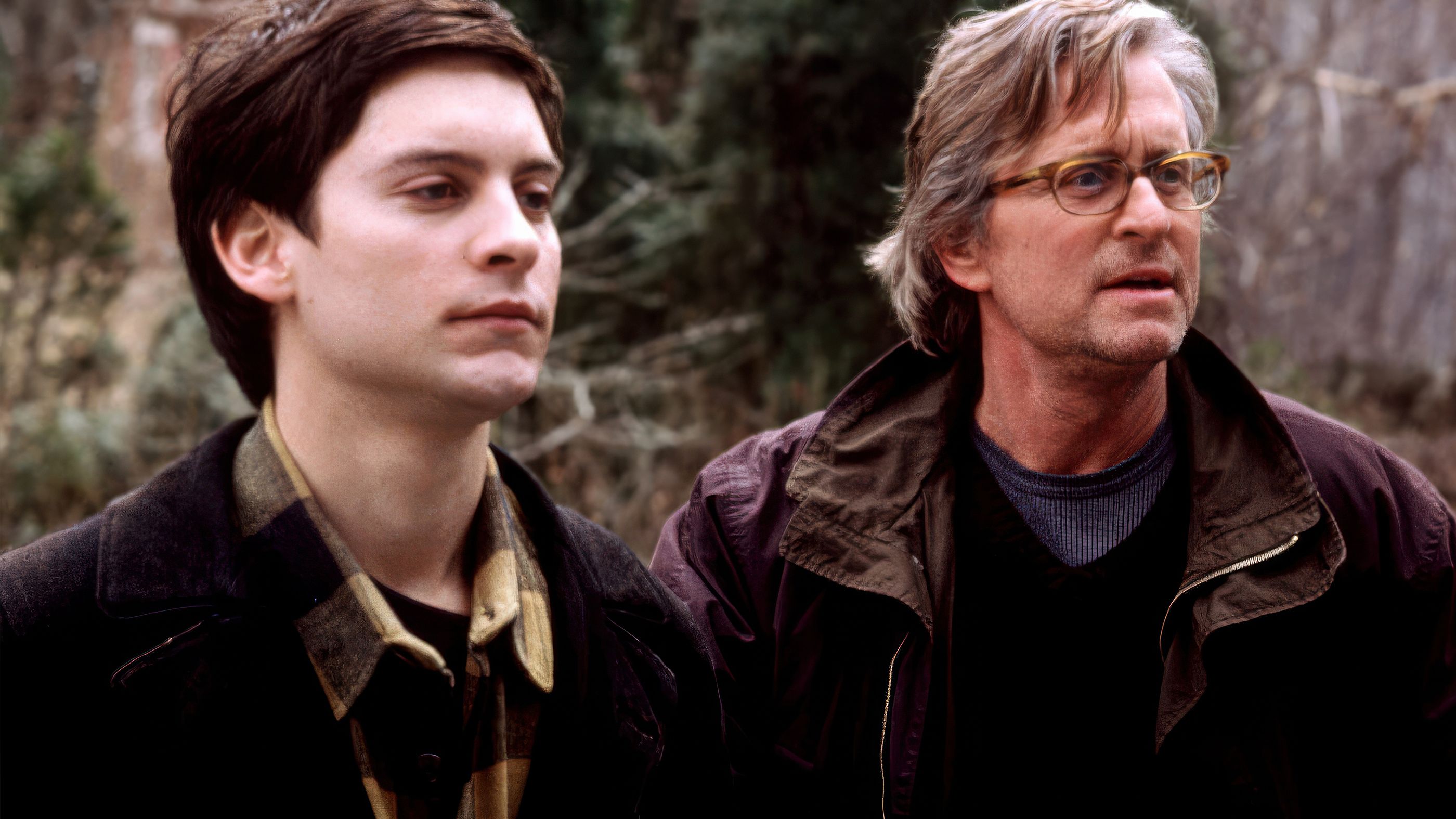
Wonder Boys follows Grady Tripp (Michael Douglas), a middle-aged English professor and once-celebrated novelist who has spent seven years failing to finish his second book. The film has a star-studded cast with Frances McDormand, Tobey Maguire and Robert Downey Jr. The film received three Academy Award nominations and won Best Original Song for Bob Dylan's “Things Have Changed.” It was also nominated for Best Adapted Screenplay and Film Editing.
Directed by Curtis Hanson who helmed L.A. Confidential, Wonder Boys did not do the numbers at the box office. The trailers and posters struggled to market the film to audiences. Released in February, it was quickly forgotten despite good reviews. When the film was nominated for the Oscars, the film was re-released again in November but it still failed to connect with audiences, which says a lot about how forgettable it was. Despite the great ensemble cast, the film is rarely mentioned in career retrospectives or throwbacks. Bob Dylan's Oscar-winning song manages to find a life on its own without being connected to the film.
'Judy' (2019)

Judy chronicles the final years of Judy Garland's life, focusing on her 1968 performances at London's Talk of the Town. With her career struggling and her finances in disarray, Garland takes the London engagement in an attempt to rebuild her life and provide for her children, while also flashing back to her traumatic experiences as a child star at MGM. Renée Zellweger plays Garland and won the film's sole Oscar from two nominations.
Zellweger went up against a rather strong competition during her year. However, the other nominees were either not showy enough for the Academy's tastes (Saoirse Ronan for Little Women and Cynthia Erivo for Harriet), or too showy for them (Scarlett Johansson for Marriage Story and Charlize Theron for Bombshell). Zellweger falls just right in the middle, and Judy is essentially the textbook example of an awards-bait biopic. That doesn't lessen the fact that Zellweger is a great actress who finally got her overdue recognition. It's just that it would be better if it were for another role. If you see her name being billed as 'Academy Award Winner Renée Zellweger' in marketing materials, you'd think twice or thrice to remember what movie she won for.
'What Dreams May Come' (1998)

What Dreams May Come follows Chris Nielsen (Robin Williams), after he dies in a car accident and discovers an afterlife shaped by his imagination. At first, Chris finds himself reunited with the people he loves, but everything changes when his wife dies by suicide and becomes trapped in Hell. So, Chris travels through the afterlife in an attempt to rescue her. It received two Academy Award nominations and won Best Visual Effects.
What Dreams May Come is probably remembered as 'that movie' that beat Armageddon at the Oscars. But the visuals in this film is objectively more unique than the Michael Bay blockbuster. The film's afterlife is built out of enormous fields of flowers, surreal landscapes, constantly shifting colors, and computer-generated environments that were remarkably ambitious for their time. The problem is that once you get past those visuals, the movie becomes much harder to remember. Robin Williams and Annabella Sciorra are great in this, but the film seems more interested in presenting its visuals rather than a compelling, meditative story that it promised.
Collider Exclusive · Oscar Best Picture Quiz
Which Oscar Best Picture
Is Your Perfect Movie?
Parasite · Everything Everywhere · Oppenheimer · Birdman · No Country
Five Oscar Best Picture winners. Five completely different visions of what cinema can be — and what it can do to you. One of them is the film that was made for the way your mind works. Ten questions will figure out which one.
🪜Parasite
🌀Everything Everywhere
☢️Oppenheimer
🐦Birdman
🪙No Country for Old Men
01
What kind of film experience do you actually want? The best movies don't just entertain — they leave something behind.
02
Which idea grabs you most in a film? Great films are driven by a central obsession. What's yours?
03
How do you like your story told? Form is content. The way a story is shaped changes what it means.
04
What makes a truly great antagonist? The opposition defines the protagonist. What kind of opposition fascinates you?
05
What do you want from a film's ending? The final note is the one that lingers. What do you want it to sound like?
06
Which setting pulls you in most? Where a film takes place shapes everything — mood, stakes, what's even possible.
07
What cinematic craft impresses you most? Every great film has a signature — a technical or artistic element that makes it unmistakable.
08
What kind of main character do you root for? The protagonist is the lens. Who you choose to follow says something about you.
09
How do you feel about a film that takes its time? Pace is a choice. Some films sprint; others let tension accumulate slowly, deliberately.
10
What do you want to feel walking out of the cinema? The best films leave a mark. What kind of mark do you want?
The Academy Has Decided Your Perfect Film Is…
Your answers have pointed to one Oscar Best Picture winner above all others. This is the film that was made for the way your mind works.
Parasite
You are drawn to films that operate on multiple levels simultaneously — that begin in one genre and quietly, brilliantly migrate into another. Bong Joon-ho's Parasite is a film about class, desire, and the architecture of inequality that manages to be darkly funny, deeply suspenseful, and genuinely shocking across a single extraordinary running time. Your instinct is for cinema that hides its true intentions until the moment it's ready to reveal them. Parasite is exactly that — a film that rewards close attention and punishes assumptions, right up to its devastating final image.
Everything Everywhere All at Once
You want it all — and this film gives you all of it. The Daniels' Everything Everywhere All at Once is one of the most maximalist films ever made: action comedy, multiverse sci-fi, family drama, existential crisis, and a genuinely earned emotional core that sneaks up on you amid the chaos. You are someone who responds to ambition, who doesn't want cinema to choose between being entertaining and being meaningful. This film refuses that choice entirely. It is overwhelming by design, and its overwhelming nature is precisely the point — because the feeling of being crushed by infinite possibility is exactly what it's about.
Oppenheimer
You are drawn to cinema on a grand scale — films that understand history not as a backdrop but as a force, and that place their characters inside that force and watch what happens. Christopher Nolan's Oppenheimer is a film about the terrifying gap between what we can do and what we should do, told with the full weight of one of the most consequential moments in human history behind it. You want your films to feel important without feeling self-important — to earn their ambition through sheer craft and the gravity of their subject. Oppenheimer does exactly that. It is enormous, complicated, and refuses easy comfort.
Birdman
You are drawn to films that foreground their own construction — that make the how of the filmmaking part of the what it's about. Alejandro González Iñárritu's Birdman, shot to appear as a single continuous take, is cinema examining itself through the cracked mirror of a fading actor's ego. You respond to formal daring, to the feeling that a film is doing something that probably shouldn't be possible. Michael Keaton's performance and Emmanuel Lubezki's restless camera create something genuinely unlike anything else — a film that is simultaneously about creativity, relevance, self-destruction, and the impossibility of ever truly knowing if your work means anything at all.
No Country for Old Men
You are drawn to cinema that trusts silence, that refuses to explain itself, and that treats dread as a form of meaning. The Coen Brothers' No Country for Old Men is a film about the arrival of a new kind of evil — implacable, arbitrary, and utterly indifferent to the moral frameworks we use to make sense of the world. It is one of the most formally controlled films ever made, and its controlled restraint is what makes it so terrifying. You want your films to haunt you, not comfort you. You are not interested in resolution if resolution would be dishonest. No Country for Old Men is honest in a way that most cinema never dares to be.
'BUtterfield 8' (1960)

BUtterfield 8 centers on Gloria Wandrous (Elizabeth Taylor), a Manhattan call girl who becomes involved with Weston Liggett (Laurence Harvey), a wealthy married man. Their relationship becomes increasingly destructive as Gloria struggles with her own troubled past and Liggett wrestles with his unhappy marriage. The film won Best Actress for Elizabeth Taylor, giving her the first competitive Oscar of her career.
A megastar of her time and a Hollywood legend, Elizabeth Taylor probably has fifteen other notable movies that cinephiles can name before reaching BUtterfield 8. Her Oscar win feels like a career-award, similar to how Leonardo DiCaprio or Jamie Lee Curtis winning recently. Many mentioned that the film has a weak story, and would not be as watchable if Taylor did not star in it. The film was a success at the time, also thanks to Taylor's reputation as arguably Hollywood's biggest star at the time. In other words, the Oscar was largely about Elizabeth Taylor, not BUtterfield 8.
'Belfast' (2021)

Kenneth Branagh's Belfast follows nine-year-old Buddy (Jude Hill) as he grows up in a politically unstable Northern Ireland in the late 1960s. The film also stars Caitríona Balfe, Jamie Dornan, Ciarán Hinds, and Judi Dench. The film received seven Oscar nominations, including Best Picture and Best Director, winning Best Original Screenplay for Branagh.
Unlike the other films on this list, there is nothing particularly wrong with Belfast. It was warmly received on release, winning rave reviews from critics and audiences alike. Belfast is one of the few semiautobiographical films by notable directors released post-COVID, the others being Steven Spielberg's The Fabelmans and James Gray's Armageddon Time. Aside from being Kenneth Branagh's movie about his childhood, it just doesn't resonate. The film can be overly sentimental, with some arguing that Branagh's childhood perspective reduces the political and social complexities of the time to the background of a nostalgic family story.
'The Duchess' (2008)

The Duchess tells the story of the Duchess of Devonshire, Georgiana Cavendish (Keira Knightley), an 18th-century aristocrat who has an unhappy marriage behind her lavish life. Forced to provide her husband, the Duke of Devonshire (Ralph Fiennes), with a male heir while enduring his infidelity, Georgiana becomes increasingly involved in politics and begins a relationship with politician Charles Grey (Dominic Cooper). The film received two Academy Award nominations and won Best Costume Design.
After the Pirates of the Caribbean trilogy and Pride and Prejudice, Keira Knightley was somehow typecast in period drama films. And amidst those notable films, The Duchess might be the most forgettable one. Its period setting, glamorous costumes, acclaimed British actors, and historical drama were entertaining to see. However, if it weren't for the beautiful dresses and the actors, there isn't much that distinguishes The Duchess from countless other prestige period dramas. In the late 2000s, the Academy really went in on rewarding period dramas with Best Costume Design trophies, with movies like Elizabeth: The Golden Age, The Young Victoria and Marie Antoinette winning back-to-back alongside this movie.
'The Greatest Show on Earth' (1952)

The Greatest Show on Earth follows the Ringling Bros. and Barnum & Bailey Circus. There's Holly (Betty Hutton) and The Great Sebastian (Cornel Wilde) who are competing for a spot as trapeze artists, and circus manager Brad Braden (Charlton Heston) who oversees the whole show. The film won Best Picture and Best Story at the Academy Awards, while also receiving nominations for Best Director, Film Editing, and Costume Design.
The film, however, does not match the lofty heights promised by its title. Directed by the legendary Cecil B. DeMille who directed The Ten Commandments and Cleopatra, the film is an overlong, empty spectacle. It won Best Picture over stronger films like High Noon and Ivanhoe. Many cited that this film is one of the worst Best Picture winners of all time. What makes it even forgettable is that it is not even named the worst one, an honor that goes to a 2005 film which everyone knows. Nevertheless, the film is memorable for at least one person, as Steven Spielberg stated that this was the film that made him want to make movies.
'Mank' (2020)

Mank follows alcoholic screenwriter Herman J. Mankiewicz (Gary Oldman) as he recuperates from an injury while racing to finish the screenplay for Citizen Kane. Directed by David Fincher for Netflix, this black-and-white period drama was nominated for ten Academy Awards, including Best Picture, Best Director, Best Actor, and Best Supporting Actress, ultimately winning Best Production Design and Best Cinematography.
Mank is another Netflix' desperate attempt at winning a Best Picture Oscar. Nevertheless, the film is a strange one. It never feels like a David Fincher film or important enough to be this pretentious. The film is so dependent on the audience caring about old Hollywood and Citizen Kane. Even its strong reviews acknowledged issues with its pacing and character development, while its audience reception has been considerably less enthusiastic. It is beautifully made and has a scene-stealing Amanda Seyfried performance, but that's about it. Its unappealing title also does not help the film's longevity.

Mank
- Release Date
- November 13, 2020
- Runtime
- 132 minutes
- Director
- David Fincher
- Writers
- Jack Fincher
-

Herman Mankiewicz
-

Marion Davies
-
Rita Alexander
-

Arliss Howard
Louis B. Mayer
KioskNews shows a cleaned-up reading view extracted from the publisher’s page — the original always lives on their site, not ours.