India and Vietnam aim to turn ‘China plus one’ rivalry into trade gains
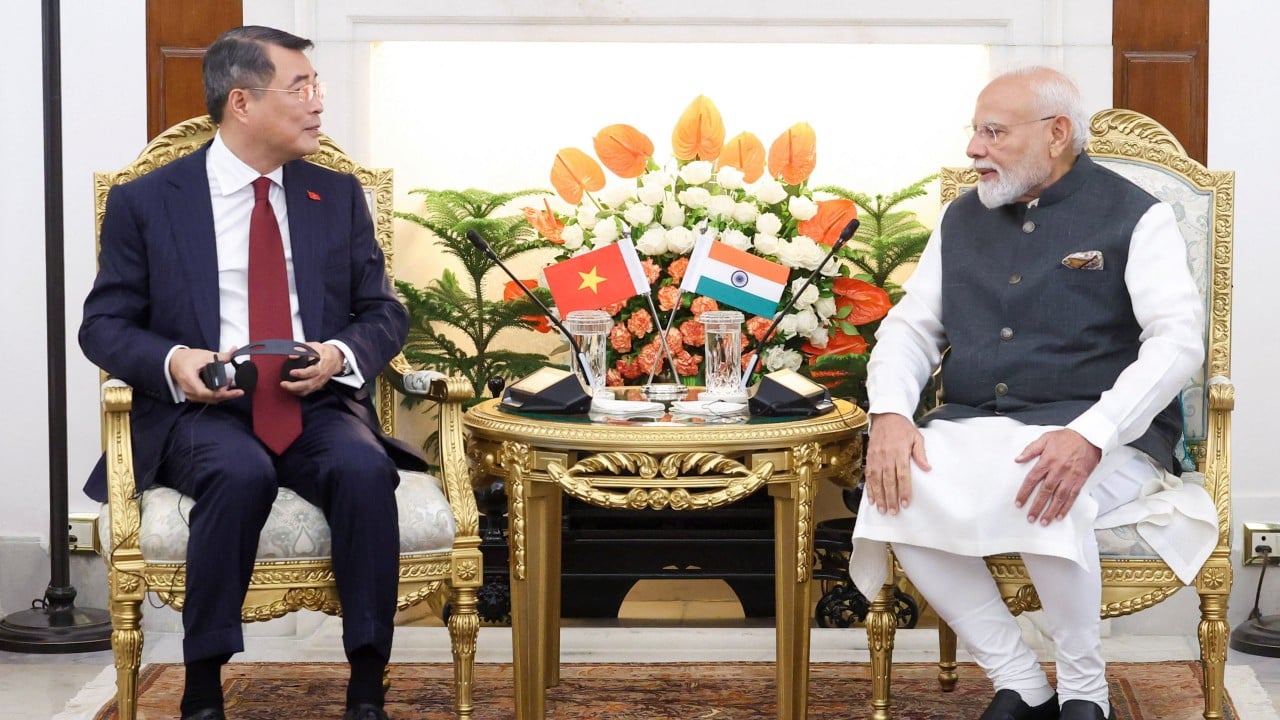
India and Vietnam could turn their competition for “China plus one” investments into a complementary partnership, analysts say, combining New Delhi’s scale and technology capabilities with Hanoi’s manufacturing agility and links to East Asian supply chains.
Such a shift could deepen both nations’ roles in global production networks across high-value industries – from electronics and pharmaceuticals to renewable energy – while giving companies reliable alternatives as they diversify supply chains beyond China.
The idea has gained momentum after Vietnamese Prime Minister Le Minh Hung called for closer economic integration with India, including new economic corridors and supply chains and a potential bilateral free-trade agreement.
During a meeting with Indian Prime Minister Narendra Modi in Delhi on Saturday on the sidelines of the Brics summit, Le urged both countries to accelerate a review of the Asean-India Trade in Goods Agreement – a pact launched in 2010 to lower tariff barriers between India and members of the Association of Southeast Asian Nations.
KioskNews shows a cleaned-up reading view extracted from the publisher’s page — the original always lives on their site, not ours.