Delhi SIR deadline revised for fourth time, final roll now on December 4
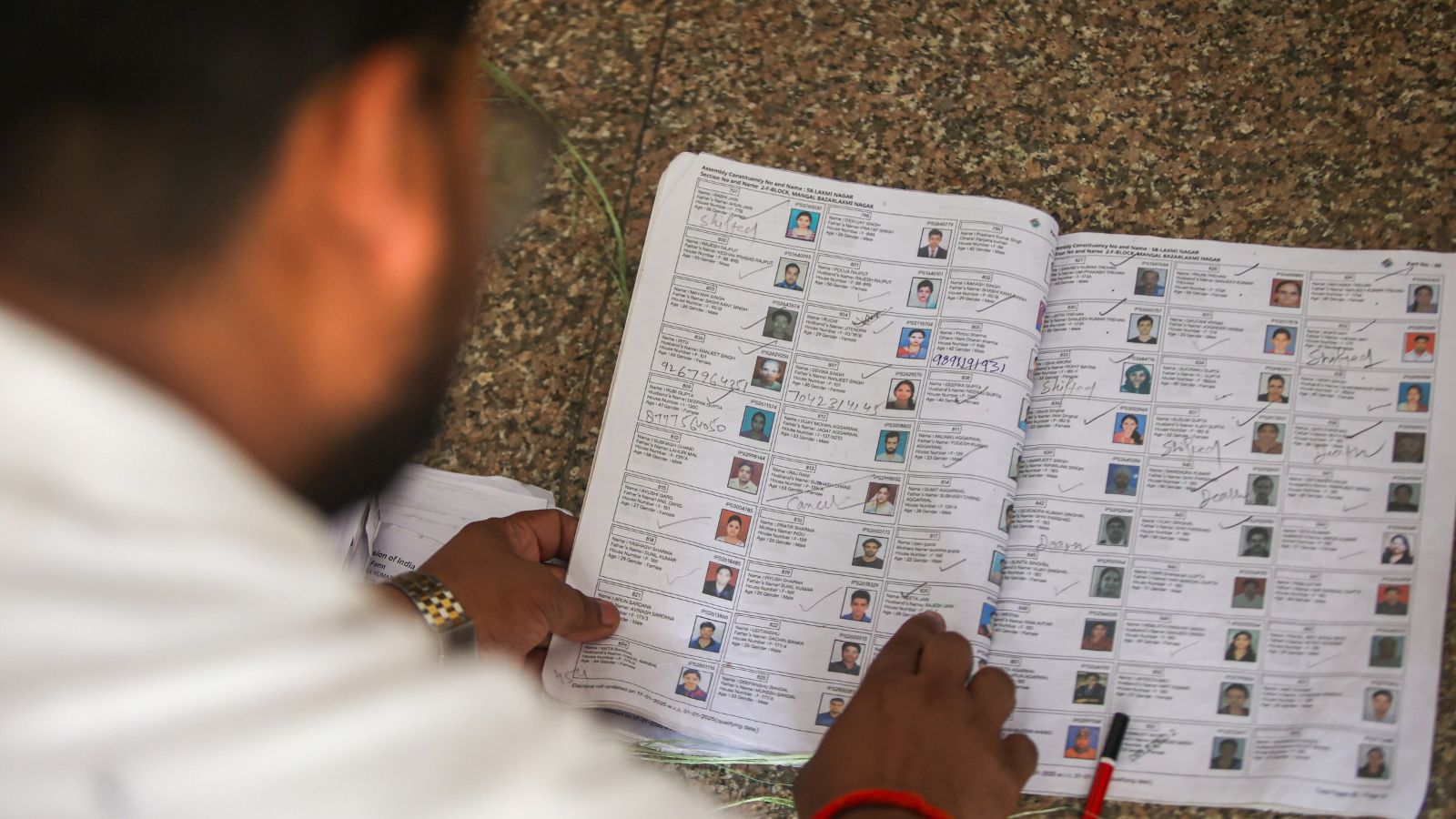
Residents can now file claims and objections until October 30, while the deadline for disposal of notices, claims and objections has been extended to November 30.
The deadline for the ongoing Special Intensive Revision (SIR) of electoral rolls in Delhi was revised for the fourth time on Saturday, with the Election Commission of India (ECI) pushing the publication of the final electoral roll from November 4 to December 4 and giving residents one more month to file claims and objections.
Residents can now file claims and objections until October 30, while the deadline for disposal of notices, claims and objections has been extended to November 30.
Also, the ECI eased the process for voters who have received notices over discrepancies in their records. From now on, they will not have to appear at an election office for a hearing but booth level officers (BLOs) will visit their homes to collect documents and upload them on the ECINet platform for a decision by the Electoral Registration Officer (ERO).
The revised schedule was issued “in view of the request received from CEO Delhi”, the ECI said. It followed a request from the Delhi Chief Electoral Officer (CEO) in a letter dated September 23, it added.
The latest change is the fourth revision of the SIR schedule since the exercise was ordered on May 14. The deadline to issue the final roll was earlier October 7, which was then revised to October 19, October 27 and November 4.
The extension comes as the claims and objections phase has seen a relatively low number of applications from people seeking fresh enrolment. Since the draft rolls were published on August 31, only 1.21 lakh Form 6 applications – used to seek registration as new electors – have been filed, according to Delhi CEO office data.
The figure assumes significance in the context of the number of deletions in the draft electoral roll.
Story continues below this ad
Delhi had around 1.45 crore electors before the exercise. Among them, 97.5 lakh were included in the draft electoral roll, while around 47.5 lakh electors were classified as “uncollectible” – after BLOs found them absent, shifted, dead or having duplicate entries, among other reasons – and were struck off the roll.
Among the 97.5 lakh who did make it to the draft roll, one-third or around 33.1 lakh electors were issued notices to prove that they are eligible to be on the final roll. While 13.79 lakh electors got notices because they could not link themselves to the electoral roll of the last SIR, 19.33 lakh were flagged for “logical discrepancies” in their enumeration forms.
Several prominent voters, including former deputy prime minister L K Advani, External Affairs Minister S Jaishankar, Delhi Chief Minister Rekha Gupta, Election Commissioner S S Sandhu, former Vice-President Jagdeep Dhankhar and former Delhi Chief Minister Arvind Kejriwal, have received such notices. Officials said the details of most had been validated through field verification and their names had been reserved for inclusion in the final roll.
Sources in the Delhi CEO’s office said the decision to seek more time was taken after a meeting with representatives of political parties earlier this week. “All parties requested that more time be given for filing claims and objections,” an official said.
Story continues below this ad
Further, the ECI directed district election officers to create adequate helpdesks and hold special camps for people living in night shelters, labourers, poor people and the homeless, as required. The Delhi CEO’s office has been trying to increase enrolment among vulnerable communities, including the homeless, sex workers, and transgender persons, through special camps at night shelters and other locations.
© The Indian Express Pvt Ltd

Devansh Mittal is a Correspondent at The Indian Express, based in the New Delhi City bureau. He reports on urban policy, civic governance, and infrastructure in the National Capital Region, with a growing focus on housing, land policy, transport, and the disruption economy and its social implications. Professional Background Education: He studied Political Science at Ashoka University. Core Beats: His reporting focuses on policy and governance in the National Capital Region, one of the largest urban agglomerations in the world. He covers housing and land policy, municipal governance, urban transport, and the interface between infrastructure, regulation, and everyday life in the city. Recent Notable Work His recent reporting includes in-depth examinations of urban policy and its on-ground consequences: An investigation into subvention-linked home loans that documented how homebuyers were drawn into under-construction projects through a “builder–bank” nexus, often leaving them financially exposed when delivery stalled. A detailed report on why Delhi’s land-pooling policy has remained stalled since 2007, tracing how fragmented land ownership, policy design flaws, and mistrust among stakeholders have kept one of the capital’s flagship urban reforms in limbo. A reported piece examining the collapse of an electric mobility startup and what it meant for women drivers dependent on the platform for livelihoods. Reporting Approach Devansh’s work combines on-ground reporting with analysis of government data, court records, and academic research. He regularly reports from neighbourhoods, government offices, and courtrooms to explain how decisions on housing, transport, and the disruption economy shape everyday life in the city. Contact X (Twitter): @devanshmittal_ Email: devansh.mittal@expressindia.com ... Read More
Stay updated with the latest - Click here to follow us on Instagram
KioskNews shows a cleaned-up reading view extracted from the publisher’s page — the original always lives on their site, not ours.