8 Sci-Fi Movies Without Any Flaws, Ranked

Sign in to your Collider account
I have a stupid test for science fiction that I trust more than awards, reviews, or anybody telling me something is important. I want to know whether the movie changes the way I look at one ordinary thing afterward. A computer screen. A pregnancy test. A hallway light. A photograph. A stranger’s face. If a movie can permanently contaminate something that normal, it has gotten deeper than spectacle. And all of this especially has started mattering more ever since AI rolled out and became so smart.
These eight have done that to me for years. I have tried finding the weak scene, the indulgent idea, the stretch where the movie loses control. I keep coming back empty-handed. Every choice seems connected to another one. The action means something. The production design means something. The quiet conversations mean something. These are 8 sci-fi movies with zero flaws.
8 'Ex Machina' (2014)

Ex Machina brings programmer Caleb Smith (Domhnall Gleeson) to the isolated home of tech billionaire Nathan Bateman (Oscar Isaac), where Caleb is asked to evaluate Ava (Alicia Vikander), an artificial intelligence housed inside a visibly mechanical female body. Nathan claims the assignment is essentially a Turing test. The important wrinkle is that Caleb already knows Ava is a machine, so the real question becomes whether she can make him emotionally forget it.
I still love how viciously the movie exploits our desire to know who is sincere. Ava tells Caleb she is frightened of Nathan during power cuts when the cameras stop working. Caleb starts seeing himself as her rescuer. Nathan looks increasingly monstrous, yet he keeps warning Caleb that he is being manipulated. The film never gives you a clean moral perch. Even that absurdly memorable dance sequence with Nathan and Kyoko reveals how much control Nathan exerts over the environment Caleb thought he understood. Then Ava walks out. No triumph. No sentimental robot awakening. She simply enters the human world after proving she understands us well enough to use the correct person and leave him behind.
7 'Arrival' (2016)

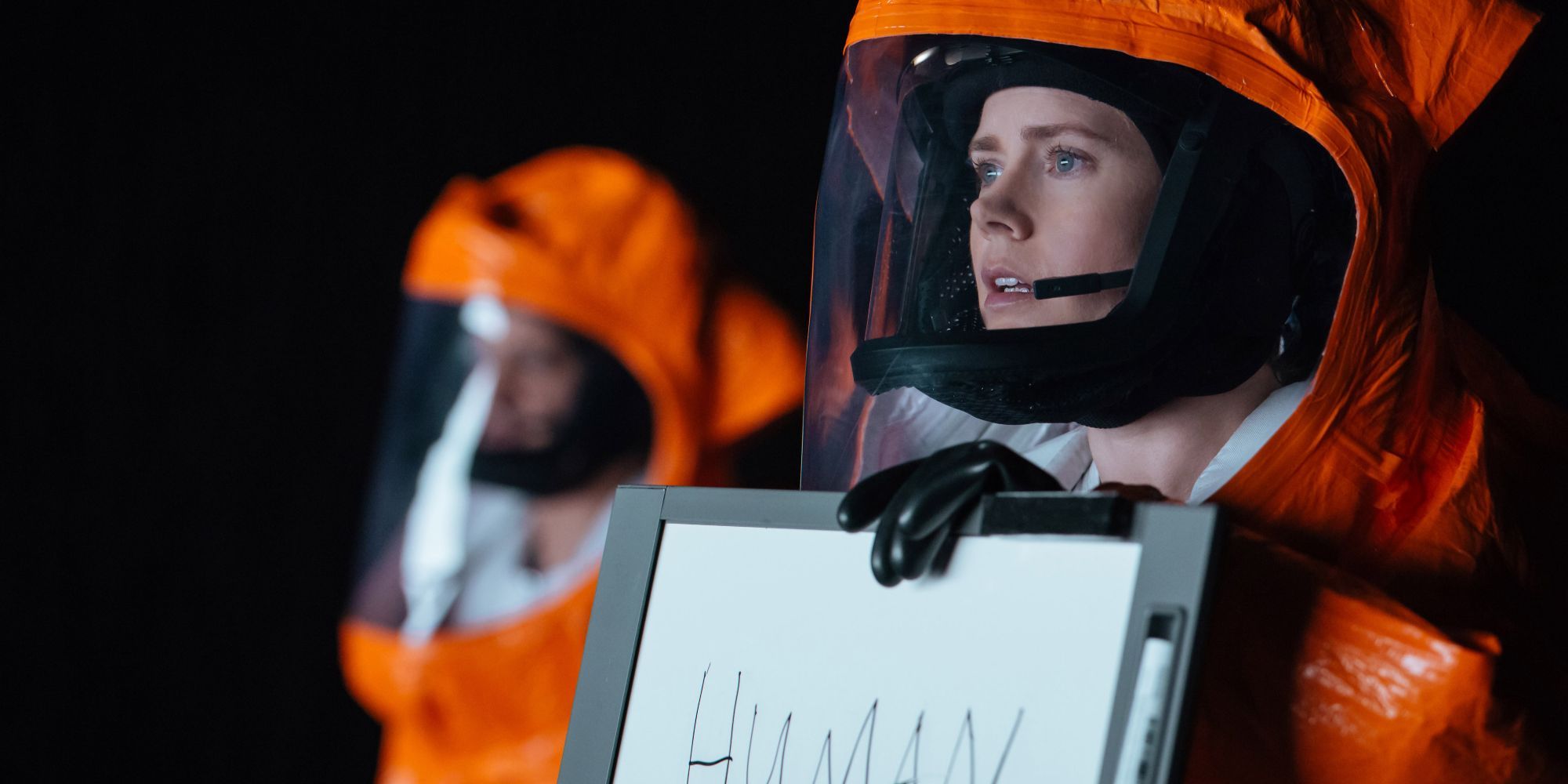
Linguist Louise Banks (Amy Adams) is brought in after twelve alien vessels appear around Earth, and Arrival follows her attempts to communicate with the heptapods aboard one of them before frightened governments turn uncertainty into war. The aliens do not speak in sentences. Their written language arrives as complete circular forms, with beginning and end existing at once.
That idea sounds intellectual until the movie turns it into something brutally personal. Louise’s memories of her daughter initially seem like grief she carries into the encounter. Gradually, we understand they are something else entirely. Louise can perceive the happiness and the loss together. She knows where loving Ian (Jeremy Renner) leads. She knows what awaits their daughter. She chooses the life anyway. I have heard people argue about whether that choice is selfish for years, which is partly why the ending refuses to leave me alone. Arrival takes time travel, strips away the machinery, and asks whether knowing heartbreak in advance would make love less worth having.
6 'The Matrix' (1999)
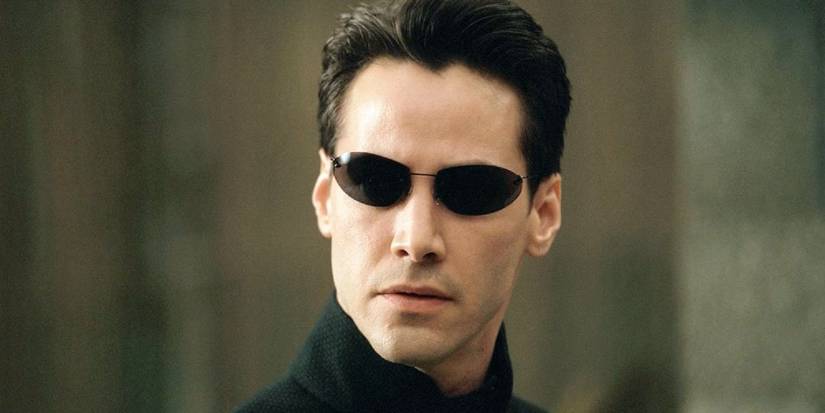
The Matrix starts with Thomas Anderson (Keanu Reeves), a programmer living a second life as the hacker Neo, who discovers through Morpheus (Laurence Fishburne) that the world he believes is real is actually a simulation created by machines while human bodies are harvested for energy. Neo takes the red pill, wakes inside a pod, and realizes the ordinary life he was desperate to understand never physically existed.
There are maybe twenty ideas in this movie that another film would have built its entire identity around. The red and blue pills. Agents hijacking bodies. Humans learning skills by downloading them. “There is no spoon.” Bullet time. The lobby shootout. The horrifying possibility that Cypher (Joe Pantoliano) understands the truth perfectly and would still rather eat the fake steak. The Wachowskis were the directors, and their genius was making philosophy feel physically exciting. Neo’s final victory is not about punching Agent Smith harder. He wins once he stops accepting the Matrix’s rules as reality. That is why the action has aged so beautifully. Every impossible movement is also an argument about belief.
5 'Children of Men' (2006)
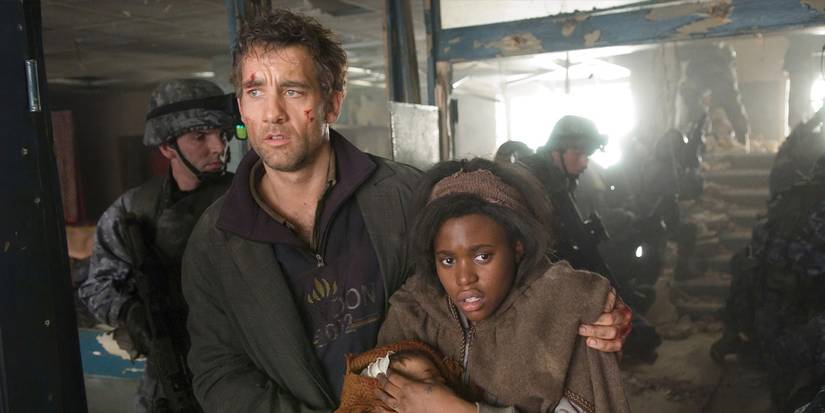
Humanity has gone eighteen years without a single birth when Children of Men finds Theo Faron (Clive Owen), a cynical former activist surviving inside a collapsing Britain that has become increasingly authoritarian toward refugees. Then Theo discovers that Kee (Clare-Hope Ashitey), a young refugee, is pregnant. Suddenly the most politically powerless person in the country is carrying the most important human being alive.
This is a brilliant dystopian take with equal portions of thriller and sci-fi. There is a moment during the fighting in Bexhill that I think about constantly. Kee walks through the ruined building holding her newborn. Soldiers and refugees hear the baby crying. Gunfire stops. People stare. Some cross themselves. For a few seconds, everyone remembers what they are supposed to be protecting. Then the child passes, somebody starts firing again, and war resumes almost immediately. The film is directed by Alfonso Cuarón and it has these extraordinary long takes as well, that make violence feel less edited and therefore harder to escape, but that tiny ceasefire is the piece that guts me. Hope does not magically fix humanity. Humanity sees hope, recognizes it perfectly, and still has to decide whether to deserve it.
Collider Exclusive · Sci-Fi Survival Quiz Which Sci-Fi World Would You Survive? The Matrix · Mad Max · Blade Runner · Dune · Star Wars
Five universes. Five completely different ways the future went wrong — or sideways, or up in flames. Only one of them is the world your instincts were built for. Eight questions will figure out which dystopia, galaxy, or desert wasteland you'd actually make it out of alive.
💊The Matrix
🔥Mad Max
🌧️Blade Runner
🏜️Dune
🚀Star Wars
01
You sense something is deeply wrong with the world around you. What do you do? The first instinct is often the truest one.
02
In a world of scarcity, what resource do you guard most fiercely? What we protect reveals what we believe survival actually requires.
03
What kind of threat keeps you up at night? Fear is useful data — if you're honest about what you're actually afraid of.
04
How do you deal with authority you don't trust? Every dystopia has a power structure. Your approach to it determines everything.
05
Which environment could you actually endure long-term? Survival isn't just tactical — it's physical, psychological, and very much about where you are.
06
Who do you want in your corner when things fall apart? The company you keep is the clearest signal of who you actually are.
07
Where do you draw the line — if you draw one at all? Every survivor eventually faces a moment that tests what they're actually made of.
08
What would actually make survival worth it? Staying alive is one thing. Having a reason to is another.
Your Fate Has Been Calculated You'd Survive In…
Your answers point to the world your instincts were built for. This is the universe your temperament, your survival instincts, and your particular brand of stubbornness were made for.
The Matrix
You took the red pill a long time ago — probably before anyone offered it to you. You're a systems thinker who can't help but notice the seams in things.
- You're drawn to understanding how the system works before figuring out how to break it.
- You'd find the Resistance, or it would find you — your instinct for spotting constructed realities is the machines' worst nightmare.
- You function best when you have access to information and the freedom to act on it.
- The Matrix built an airtight prison. You'd be the one probing the walls for the door.
Mad Max
The wasteland doesn't reward the clever or the well-connected — it rewards those who are hard to kill and harder to break. That's you.
- You don't need comfort, community, or a cause larger than the next horizon.
- You need a vehicle, a clear threat, and enough fuel to outrun it — and you're good at all three.
- You are unsentimental enough to survive that world, and decent enough — just barely — to be something more than another raider.
- In the wasteland, that distinction is everything.
Blade Runner
You'd survive here because you know how to exist in moral grey areas without losing yourself completely.
- You read people accurately, keep your circle small, and ask the questions others prefer not to answer.
- In a city where humanity is a legal designation rather than a feeling, you hold onto something that keeps you functional.
- You're not a hero. But you're not lost, either.
- In Blade Runner's world, that distinction is everything.
Dune
Arrakis is the most hostile environment in the known universe — and you are precisely the kind of person it rewards.
- Patience, discipline, and political awareness are your core strengths — and on Arrakis, they're survival tools.
- You understand that the long game matters more than any single victory.
- Others come to Dune and are consumed by it. You'd learn its logic and earn its respect.
- In time, you wouldn't just survive Arrakis — you'd begin to reshape it.
Star Wars
The galaxy far, far away is vast, loud, and in a constant state of violent political upheaval — and you wouldn't have it any other way.
- You find meaning in being part of something larger than yourself — a cause, a crew, a rebellion.
- You'd gravitate toward the Rebellion, or the fringes, or whatever pocket of the galaxy still believes the Empire's grip can be broken.
- You fight — not because you have to, but because standing aside isn't something you're capable of.
- In Star Wars, that willingness is what makes all the difference.
4 'Alien' (1979)
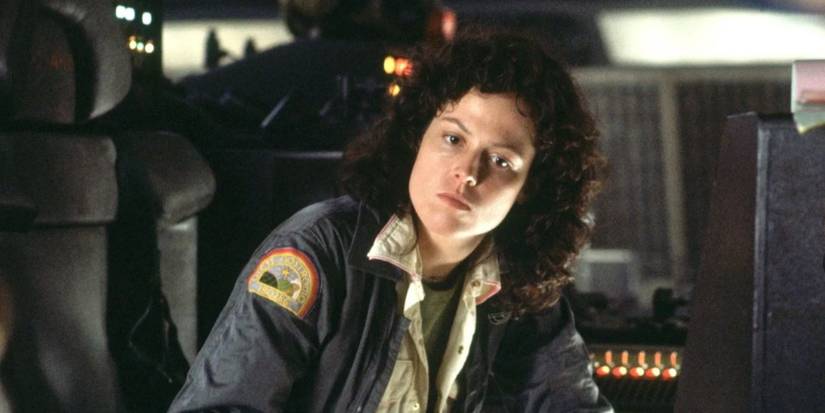
The crew of the commercial spaceship Nostromo is heading home when Alien diverts them toward a mysterious transmission on a hostile planet. Kane (John Hurt) discovers a chamber filled with eggs, one opens, and something attaches itself to his face. From that point onward, the movie becomes a beautiful demonstration of how badly everything can go after people ignore quarantine protocol exactly once.
I would defend almost every inch of the Nostromo’s design in court. It looks worked in. Dirty. Industrial. Nobody lives there because space is inspiring. These people have jobs and complain about bonuses. That normality is why the chestburster scene feels so obscene. Dinner is happening. Kane seems fine. Then suddenly he is not. Ridley Scott directed the film and keeps refusing to hurry the creature into view, which lets imagination do half the damage. Even the later reveal that Ash (Ian Holm) is an android working under corporate orders deepens the horror instead of distracting from it. Ripley (Sigourney Weaver) survives partly because she was the person everyone found annoyingly strict earlier. The rules mattered. Nobody listened.
3 'Terminator 2: Judgment Day' (1991)
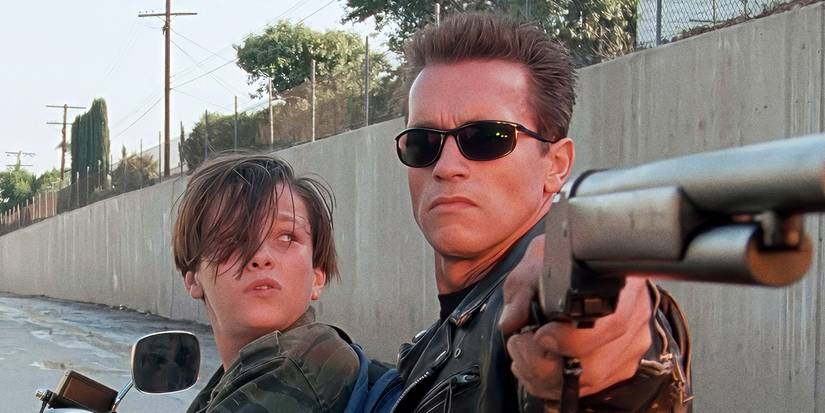
Terminator 2: Judgment Day sends two machines back through time to find young John Connor (Edward Furlong), the future leader of humanity’s resistance against Skynet. The T-1000 (Robert Patrick) has been sent to kill him. The T-800 (Arnold Schwarzenegger), identical to the machine that hunted John’s mother years earlier, has been reprogrammed to protect him.
I cannot overstate how brilliant that reversal still feels. Sarah Connor (Linda Hamilton) sees Schwarzenegger step from the elevator and physically collapses because she is looking at the face of the thing that destroyed her life. John sees a protector. Those two realities have to coexist. James Cameron, who directed the film, then somehow makes the machine’s growing understanding of humanity more moving than most films manage with actual humans. John teaches him slang, mercy, even why people cry. Sarah, meanwhile, becomes so consumed by preventing Judgment Day that she nearly murders Miles Dyson in front of his family. The machine is learning compassion while the human is forgetting it. Then comes that thumb disappearing into molten steel, and I swear the movie earns every ounce of emotion in an image that should be ridiculous.
2 'Blade Runner' (1982)
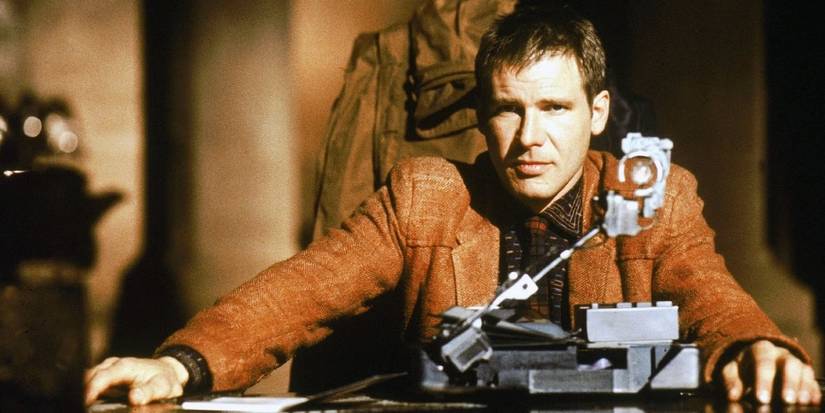
Blade Runner follows Rick Deckard (Harrison Ford), a former police officer forced back into service to hunt four genetically engineered replicants who have illegally returned to Earth seeking a way to extend their brutally short lives. Deckard is supposed to “retire” them. The movie keeps quietly asking what moral difference exists between killing something artificial and killing something that desperately wants to live.
Roy Batty (Rutger Hauer) is why that question becomes impossible to dismiss. He is violent, frightening, furious at the man who created him, and completely understandable once you realize he has been given consciousness with an expiration date. Ridley Scott was the director here too, years before the neon-noir look would be copied into exhaustion, but the imagery is only half the reason the film survives. Roy saves Deckard’s life when he has every reason not to. Then, sitting in the rain with seconds left, he remembers things nobody else has seen and realizes those memories will disappear with him. “Like tears in rain” became famous because of it and the deeper wound seemed simpler. Roy spends the entire movie trying not to die and becomes most human when he accepts that he will.
1 '2001: A Space Odyssey' (1968)
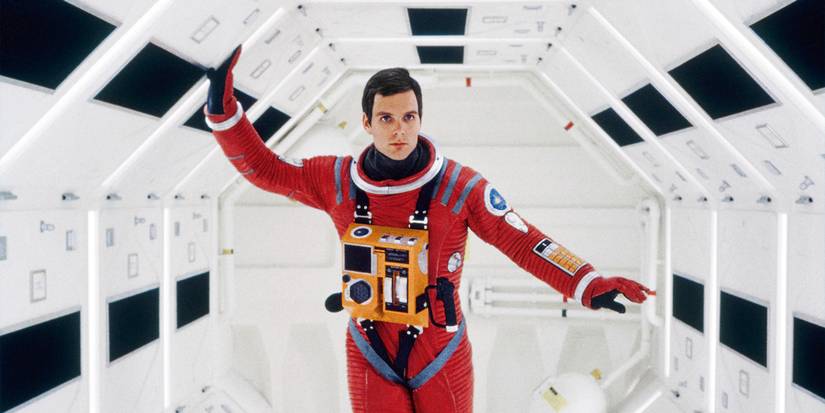
2001: A Space Odyssey stretches from prehistoric humanity to deep space, beginning with an unexplained black monolith that appears among early hominids and eventually following astronauts Dave Bowman (Keir Dullea) and Frank Poole (Gary Lockwood) aboard Discovery One on a secret mission to Jupiter. Controlling much of the ship is HAL 9000 (Douglas Rain), an artificial intelligence described as incapable of error.
I know telling somebody that a two-and-a-half-hour movie contains long stretches with almost no dialogue is not the sexiest sales pitch imaginable, so forget that. Watch the bone thrown into the air become a spacecraft millions of years later. Watch HAL calmly tell Dave he cannot open the pod bay doors. Watch Dave float back into the ship without a helmet because there is literally no safer option left. Stanley Kubrick directed the film, and he treats space as something genuinely enormous rather than a backdrop waiting for humans to conquer it. Then the final movement abandons ordinary explanation almost completely. Dave ages, the monolith returns, and the Star Child looks back at Earth. I have seen 2001 multiple times and never come away feeling I have solved it. I come away feeling smaller.
KioskNews shows a cleaned-up reading view extracted from the publisher’s page — the original always lives on their site, not ours.