In the end, the unhurried life of the imagination
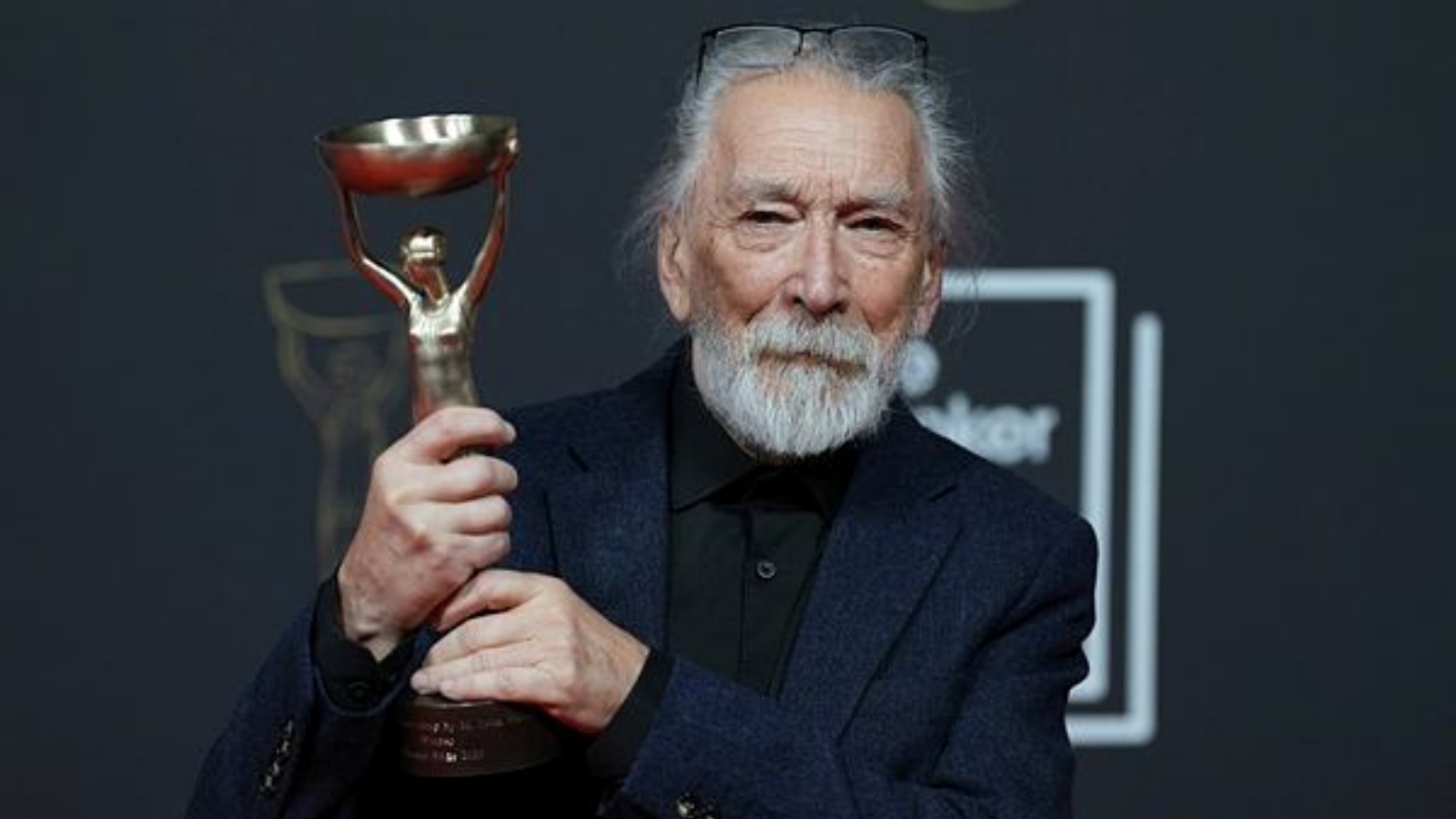
At 81, M John Harrison is the oldest writer to win the Booker for his genre-bending The End of Everything. As headlines beam this, I am mildly surprised at the ageist slant in the reporting. Does it matter especially if a writer is 81? Isn’t it charming that he has a blog on WordPress that he updates regularly, and where he recently captioned a selfie, clarifying that he was not Mike Johnson, the Republican with dodgy political views, but “just your common-or-garden English old hippy fiction prize candidate”? What is age but a number? The author of what will be the greatest hit in Indian publishing in recent years — Belonging — is 79 years old.
There is, of course, more to this. That I’ve been thinking about novelists in this time of youth and disruption and AI is ultimately whimsy. A couple of months ago, I’d spent a week reading Everything There Is (2024) and The Apparition (2026) by the great Indo-Canadian writer M G Vassanji. That was when I became seized with this matter.
Back in my MA days, Professor Harish Narang, the sole Africanist in our department, had taught us the Kenya-born, Tanzania-bred Vassanji’s formally inventive novel The Book of Secrets. The experience of reading that book in our austere classroom at JNU had stayed with me even when the particulars of the plot had faded. Now, Vassanji was about to visit Delhi for the launch of The Apparition and I was toying with the idea of inviting him to my Great Books class. To that end, ignoring the siren song of my many deadlines, I dived into the novels.
Everything There Is is about a celebrated Pakistani physicist at Imperial College, London, the possessor of both professional fame and personal happiness. But on a work trip, he falls in love. If I was riveted by it, The Apparition teleported me to the times of Alauddin Khilji. I — never quite a fan of speculative fiction — was unable to put it down.
Thus it comes to be that on a glorious September morning, Vassanji walks into my classroom. He has a shock of white hair and a wry sense of humour. He speaks softly and even with the mic on his lapel, the students have to strain their ears to listen. They ask questions; he responds. The myriad noises of the campus fall away from the clean hard shell of the classroom. As the conversation unspools, I worry if my students know they are in the presence of a great writer, I worry they may not quite understand why I — moved in my middle age by the extraordinary stamina of a fully-lived creative life — have invited this old man into their midst.
To hold an idea long enough to turn it into a book that stands as though entirely separate from its creator is the practice of slow living. If you divide life into two rivers, one serving the household and the world, and one serving the seed of an idea so it can germinate, sprout and bear fruit, you cannot elide over the process. I worry that my students, with AI at their fingertips, will excise from their lives the laborious process of uncovering what is within.
Because I cannot say all this without sounding uncool, I allow the great writer to speak — about Physics, which he’d studied, and religion, which he considers himself lapsed from, and Africa, which is “home”. Perhaps, one day, when my students are 42 and I am old, they will remember the mood of slowness in our classroom, and the humanity of an old master, who, at 76, was sanguine that his next book would be better. They will remember the lesson even when they have forgotten the particulars of the day.
Roy, an author, is assistant professor of writing, Ashoka University, Haryana
KioskNews shows a cleaned-up reading view extracted from the publisher’s page — the original always lives on their site, not ours.