AI a ‘growing concern’ at ASEAN’s parliamentary org, but no concrete measures yet
Already have Rappler+?
to listen to groundbreaking journalism.
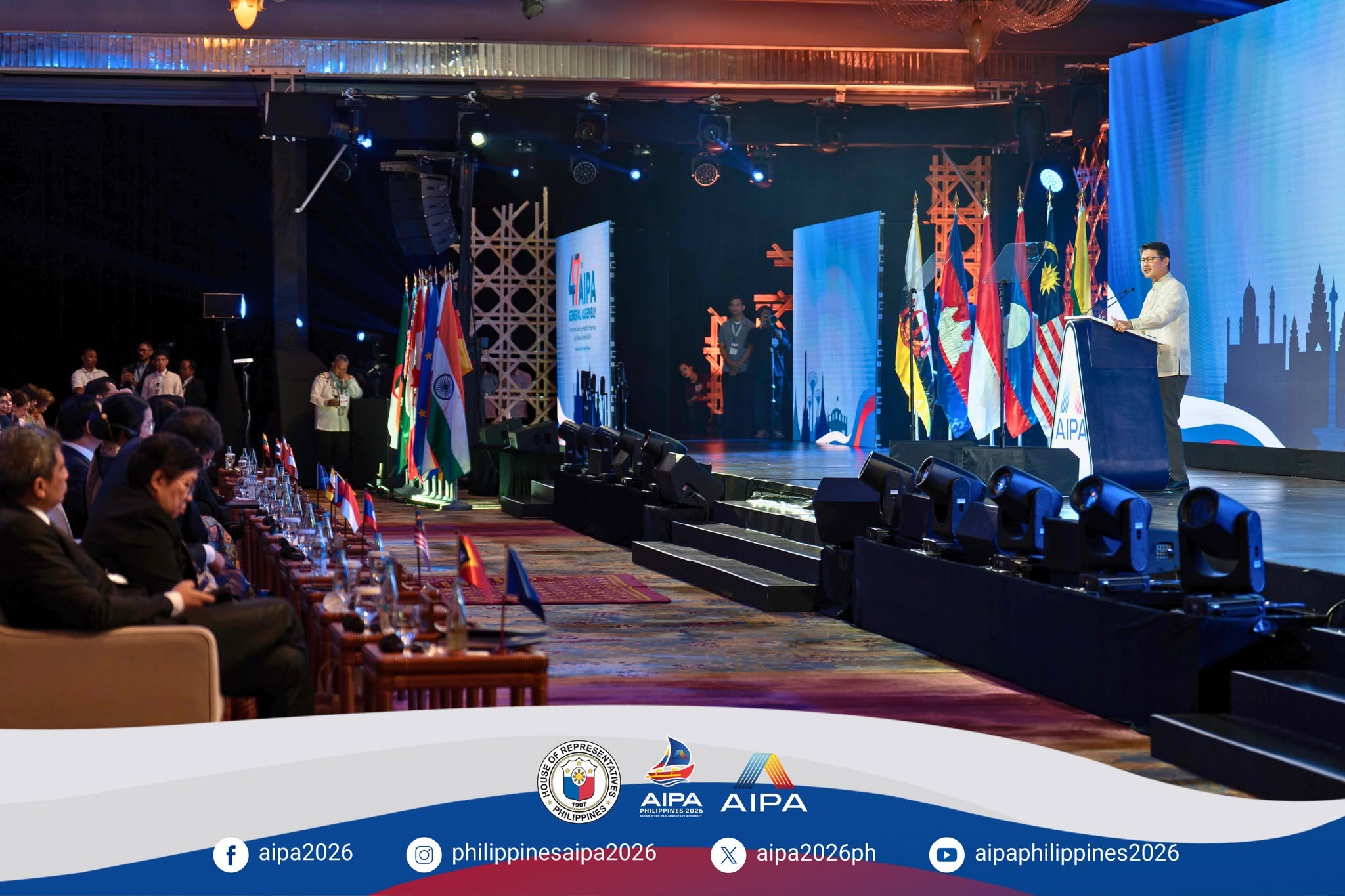
ADDRESS. House Speaker Bojie Dy delivers a speech at the opening ceremony of the ASEAN Inter-Parliamentary Assembly General Assembly in Manila on November 18, 2026.
AIPA Philippines 2026 on Facebook
'Artificial intelligence is advancing faster than many of our laws can keep pace with. No single parliament can manage these challenges alone,' House Speaker Bojie Dy tells ASEAN parliamentarians
AT A GLANCE
- The ASEAN parliamentary body is increasingly concerned about the rapid advancement of artificial intelligence and the need for a collaborative regional approach to address its challenges.
- While the ASEAN Inter-Parliamentary Assembly can influence member states to adopt regional commitments, any resolutions passed are non-binding and cannot enforce legislation.
This is AI-generated. Read the article for full context. Report any errors.
MANILA, Philippines – The persistent threat of artificial intelligence (AI) is a cloud hanging over the parliamentary body of the Association of Southeast Asian Nations (ASEAN), but uncertainty remains over any concrete measure to approach the subject.
“It’s a concern for everybody, it’s a growing concern, and I think it cannot be addressed by one country. It has to be a concerted effort among the regions and other countries to be able to make sure that this is not abused,” House Senior Deputy Speaker Ferdinand Hernandez, head of the Philippine delegation for the ASEAN Inter-Parliamentary Assembly, said on the sidelines of the AIPA on Wednesday, November 18.
“Artificial intelligence is advancing faster than many of our laws can keep pace with. No single parliament can manage these challenges alone,” House Speaker Bojie Dy, current AIPA president, also said in his opening speech.
Hernandez, however, sidestepped questions about whether a resolution on AI was being drafted during the AIPA general assembly, but said any effort will be “patterned on what transpired in the ASEAN.”
In 2025, the ASEAN adopted a declaration in Kuala Lumpur establishing an ASEAN AI Safety Network, a regional mechanism aimed at promoting collaboration among member states and addressing cross-border AI risks.
AIPA, as a regional parliamentary bloc, is not as powerful as the European Parliament. Any resolution passed during the general assembly is non-binding, which means it cannot force member parliaments to pass legislation back home.
AIPA, however, can still exercise influence by encouraging member parliaments to adopt regional commitments in their own countries.
Concerns about AI come as the Philippines’ hosting of ASEAN was met with massive protests against the US-led initiative Pax Silica, which will lead to the construction of a 1600-hectare AI industrial hub in New Clark City. The project is feared to displace hundreds of indigenous peoples and farmers, according to Human Rights Watch.
Only Singapore and the Philippines are ASEAN signatories to the Pax Silica initiative so far. – Rappler.com
KioskNews shows a cleaned-up reading view extracted from the publisher’s page — the original always lives on their site, not ours.