Despite Serbia’s political earthquake, China hopes ties will stay rock solid
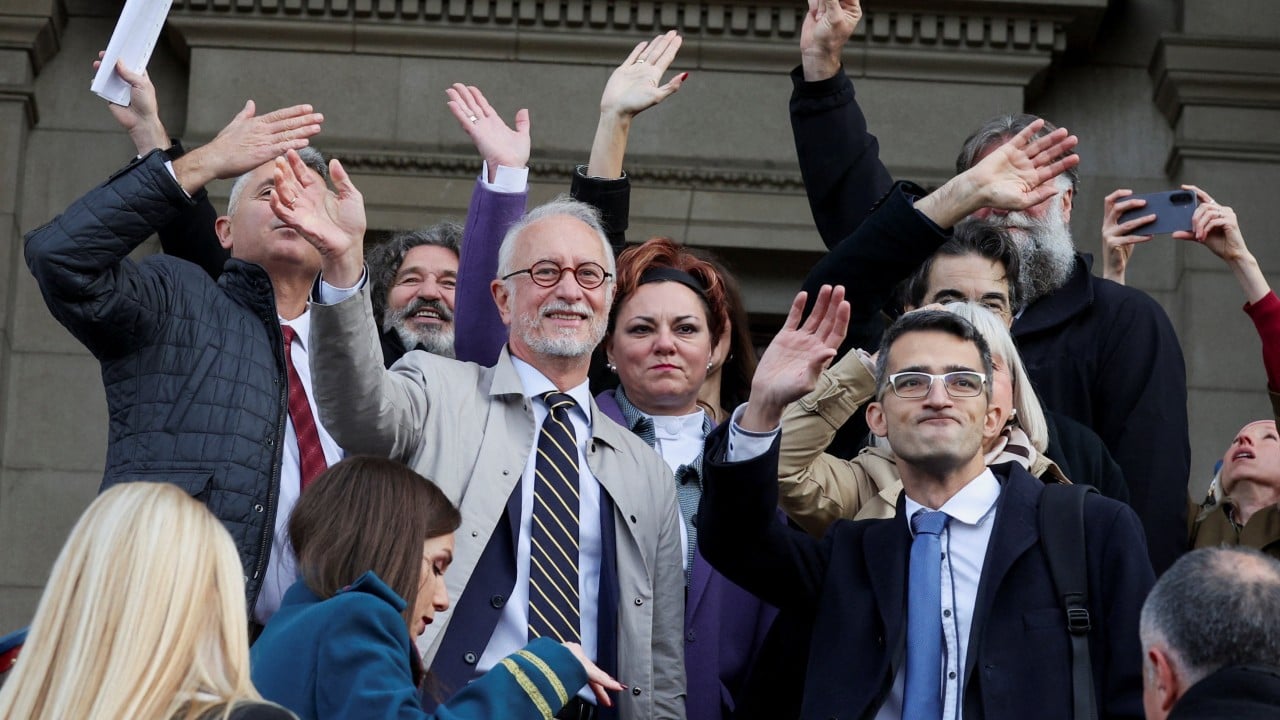
Beijing has signalled its readiness to maintain close ties with Serbia’s new government, as the victorious Student List prepares to take power and scrutinise major public projects, including those involving Chinese firms.
The message was delivered by Li Ming, China’s ambassador to the country, in an interview published last weekend by the Belgrade-based newspaper Politika.
The two nations were “ironclad friends”, Li said, stressing that China had always approached its relations with Serbia from a long-term perspective.
“We are ready to work together with Serbia’s new government, on the basis of mutual respect, equality and mutual benefit, to nurture our traditional friendship, consolidate mutual political trust and expand practical cooperation,” the ambassador said.

He also highlighted China’s contributions to Serbia’s economic development, calling on Belgrade to continue providing a fair and transparent business environment for foreign investors.
Dragan Pavlicevic, an associate professor specialising in Sino-European relations at Xian Jiaotong-Liverpool University, said Li’s statements reflected Beijing’s desire to maintain the relationship’s momentum while guarding against potential headwinds.
He said the comments indicated China’s hope that the new government would “neither make a strategic turn away from China nor politicise and target Chinese projects under international or domestic pressure”.
Li’s remarks came after Student List said it would review major public projects, including those involving China, and just ahead of the group’s representatives’ entry into parliament.
China is the only one of Belgrade’s four traditional foreign policy interlocutors with which Student List has yet to hold talks, after its representatives met with European Union, Russian and American officials, according to the group’s official website.
Student List, a group whose representatives were chosen by student assemblies, secured 140 seats in Serbia’s 250-member parliament in the October 25 elections, compared with 104 for Aleksandar Vucic’s right-wing Serbian Progressive Party.
That ended 14 years of rule by the strongman leader and foiled his bid to become prime minister after he resigned as president in September. His second term as president would otherwise have ended next year and he is constitutionally barred from seeking a third.
Student List started as a grass-roots protest movement against corruption and government mismanagement following the deadly collapse of a railway station canopy in the northern city of Novi Sad in 2024.
Its election manifesto explicitly called for full transparency in public procurement and audits of state projects. The pledge is further detailed in its programme for government, which outlines its plans and priorities across 21 fields, including the economy, infrastructure and foreign affairs.
03:51
Xi Jinping hails ‘new chapter’ for China’s relations with Serbia as Belgrade backs his global vision
In the document, Student List vows to immediately declassify and publish contracts for major public projects upon taking office. It also states that an independent commission will be established within six months to review these investments and recommend whether each project should be continued, modified or scrapped.
The programme specifically mentions the Expo 2027 Belgrade and other projects previously declared to be of “national interest”.
The venue for the exposition, which will be hosted in Belgrade next year, is being built by the state-owned Power Construction Corporation of China.
China is Serbia’s second-largest trading partner and a major source of foreign direct investment, while Belgrade serves as an important gateway for Beijing’s economic engagement with Europe.
Serbia was one of the first European countries to join China’s Belt and Road Initiative, which aims to build infrastructure connecting Asia with Europe and Africa.
These close bilateral ties are marked by extensive Chinese involvement across major infrastructure, energy and industrial projects in Serbia.
Beyond the exposition venue, the two countries’ cooperation includes the acquisition of the Smederevo steelworks by the Chinese state-owned HBIS Group – a facility also flagged in the Student List programme.
02:49
Chinese internet users weigh in on French protests
The document’s section on the environment reads that “the state will not approve a project with an unacceptable risk to the environment and local communities”, citing the steelworks as a project to which this standard would be applied.
In his interview with Politika, Li said that cooperation with China on projects such as the Smederevo steelworks had “saved thousands and thousands of jobs”.
Another project linked to Chinese contractors was the Novi Sad station, where the deaths of 16 people in a canopy collapse two years ago marked the country’s political transformation.
Both Vucic and Beijing have stated that the collapse was unrelated to the renovation work carried out by Chinese companies.
However, prosecutors last year charged several people over alleged invoice inflation involving the project’s Chinese contractors – China Railway International Co and China Communications Construction Co. The scheme is alleged to have cost the state US$115.6 million and netted the consortium US$18.8 million.
In May, Beijing’s embassy in Belgrade dismissed allegations that Vucic had promised that the Chinese consortium responsible for reconstructing the station would be shielded from accountability over the deadly incident.
Pavlicevic said the reviews were aimed at domestic governance reform rather than Beijing, noting they would cover all major public investments regardless of foreign involvement.
He added that the incoming administration still intended to maintain strong economic ties with China, though the form of cooperation could change.
“Any cooperation in infrastructure development under the Student List is likely to be structured based on a different model ... involving open tenders, transparent bidding, monitoring and reporting procedures, as well as feasibility and cost evaluation and controls,” Pavlicevic said.
The Student List programme also pledges to develop a “comprehensive strategic partnership” with China, expanding cooperation from economic, infrastructure and industrial sectors to hi-tech investments.
Pavlicevic said Belgrade had strong strategic reasons to maintain good relations with Beijing beyond economic ties.
“China is an important supporter of Serbia’s stance on the status of Kosovo, which is regarded as a core issue for the incoming government,” he said.
Kosovo declared independence from Serbia in 2008. Serbia and China have refused to recognise its independence, while the broader international community is split on the issue.
KioskNews shows a cleaned-up reading view extracted from the publisher’s page — the original always lives on their site, not ours.