HIGH-STAKES SEAS : As COP31 sounds climate warnings, SA’s coastal communities fight to survive
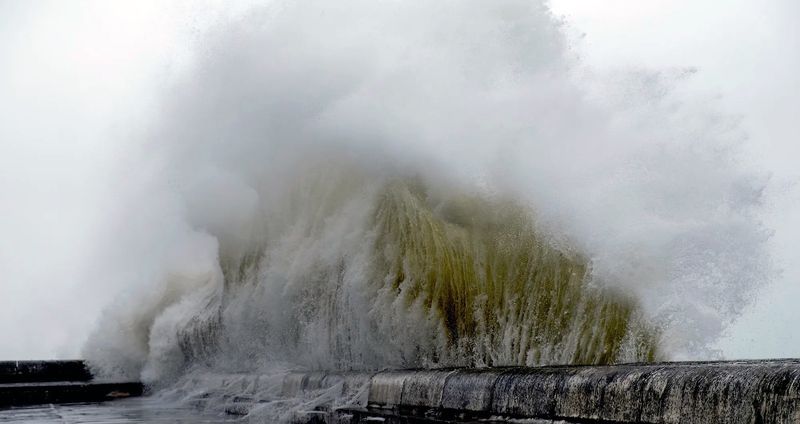
At the 2026 UN Climate Change Conference (COP31), increased concern over the ocean has led countries to commit more than $1-billion in new funding to coastal ecosystems, such as coral reefs and mangroves. However, despite the impact already felt on the ground, financing and protecting coastal communities have not seen the same level of mobilisation.
Oceans, marine ecosystems and coastal zones are included in South Africa’s Nationally Determined Contribution and the National Adaptation Plans under adaptation, disaster risk reduction and sector-specific resilience.
The country has committed to support fisheries in adapting to warmer, windier ocean conditions and shifting marine species distribution, and to scale up ecosystem-based adaptation across marine, coastal and estuarine environments to protect biodiversity, natural heritage and ecosystem services that coastal livelihoods hinge on.
However, the country would need access to adequate adaptation finance to implement this goal.
One of the key things South Africa, as part of the African Group of Negotiators, has been pushing for at this year’s COP31 is tripling adaptation finance to at least $120-billion per year by 2035, which would help developing nations adapt to the consequences of rising global temperatures.
However, there has been increased pushback on this front from developed nations, who have attempted to block it from the final text.
This is despite the fact that South Africa remains one of the lowest emitters of fossil fuels in a global context, although it is among the biggest emitters on the African continent.
The climate talks went into overtime over the weekend, with the increase of adaptation finance and strong language on the phase-out of fossil fuels being direct drivers.
However, while COP31 might have stalled on key issues, vulnerable communities cannot become casualties of diplomatic deadlocks over the decarbonisation of major industries and making money available to adapt to the climate crisis.
Local communities feel the impact
“The ocean is like a mother to us. It provides for us not only to make a living, but we also have a spiritual connection to it,” Monwabisi Cromwell Sonjica told Daily Maverick, explaining what the ocean means to his community.
Sonjica has spent almost his entire life in the rural coastal village of Xolobeni in the Eastern Cape, a community with deep ties to the ocean. However, as the years pass and the consequences of a changing climate intensify, it is altering the relationship Sonjica and many other communities living along South Africa’s coastlines have with the ocean.

Sonjica’s lived reality is an example of the warnings scientists repeatedly issued during the UN climate conference in Antalya, Turkey. Throughout COP31, two key reports have been quoted heavily in panel discussions and negotiations.
Global science meets local reality
The United Nations Environment Programme’s Limiting Overshoot report found that breaching the 1.5°C warming limit was now virtually unavoidable, and that the overshoot would bring worse extreme weather events, ecosystem collapse and economic losses.
The accompanying report, Overshoot and the Cryosphere, by the International Cryosphere Climate Initiative (ICCI), found that from the poles to the mountains, the world’s frozen regions are destabilising, with polar ice sheets melting six times faster than in the 1990s.
“People often wonder why this is relevant to Africa, because only a fraction of countries have any ice, yet the impacts of the loss of ice on the cryosphere have massive impacts on Africa because it leads to sea level rise and also impacts global weather,” Dr James Kirkham, chief scientist at the ICCI and lead coordinator of the cryosphere overshoot report, told Daily Maverick.
Kirkham said that global sea level rise over the past century has already quadrupled the frequency of extreme coastal flooding events. What had once been a once-in-a-century event now occurred at least once a decade.
Coastal communities in South Africa are already experiencing this reality. Over the past five years the country’s coastal communities have been hit by seven major disasters.
“This year we’ve seen the World Meteorological Organization confirm that ocean heat content is at a record high, with this monstrous El Niño, which has been pumped up by the steroids of climate change, causing massive damage, and sea levels are also at a record high,” Kirkham said.
Ocean acidification was also becoming a big concern because of the impacts acidity levels had on shell-building organisms, which were the foundation of marine food webs.
“That has big implications on food chains and local fisheries and economically important activities.”
Shrinking catches and unexplained die-offs in Xolobeni
Sonjica has already started experiencing these impacts on the ground. He told Daily Maverick that over the past couple of years he has noticed a concerning decline in marine life along the Xolobeni coastline. The subsistence fisher and environmental activist said the fishing communities’ indigenous knowledge allowed them to anticipate which marine species to expect in a given season.
“We have caught less and less fish over the past two or three years than we did 10 years back. We cannot find the sizes or the amount of fish we used to,” he said.
One of the most recent and concerning incidents was the spontaneous die-off of 18 giant kingfish in the Mtentu River estuary in late October, where the species is known to gather during their summer migration.
“We always know to expect the giant kingfish to travel from Mozambique to our river during this time. So it was concerning to just see 18 of them floating dead. We are beginning to see a lot of damage, and this is a challenge to our community who fish to make money and feed their family,” Sonjica said.
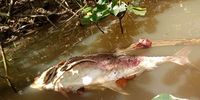
He added that residents were still unsure of the cause of the sudden die-off and had called on local authorities to conduct testing, but no action had been taken by the time of publication.
Sonjica said the decline in the marine fish population was further compounded by worsening weather conditions that have increasingly cut fishing days short.
“Our fishing routine has had to change because of the weather conditions. The wind has gotten worse, and when it’s windy there are big waves and you cannot fish. This is a challenge we are facing now that wasn’t always there. We cannot predict the sea as we used to before,” he said.
“We have to adjust to the situation whether we like it or not because there is no other way to survive,” Sonjica said. DM
KioskNews shows a cleaned-up reading view extracted from the publisher’s page — the original always lives on their site, not ours.