Decoding Japan PM Takaichi’s ‘important neighbour’ message to China - what it means for ties
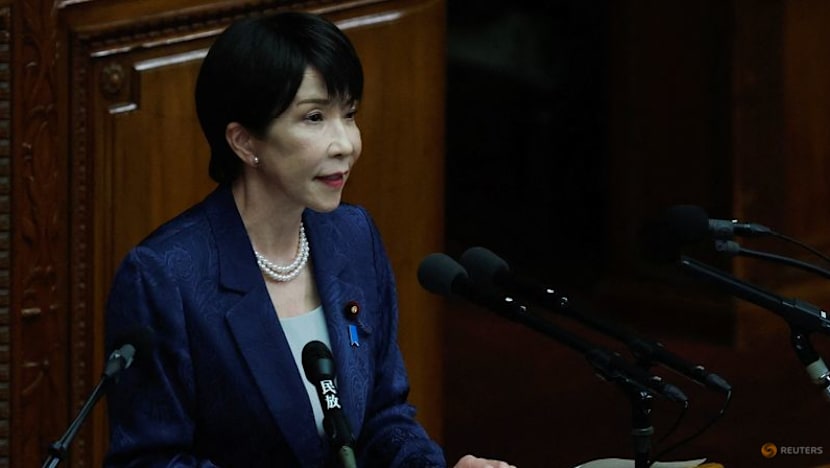
SINGAPORE: In a major policy speech on Monday (Oct 5), Japanese Prime Minister Sanae Takaichi laid out her government’s priorities for a 69-day parliamentary session.
But it was her choice of words on China that drew observers’ attention.
Describing the country as an “important neighbour”, Takaichi also pledged to build a stable relationship between the two nations.
“We will work to ensure communication on shared challenges, promote dialogue to safeguard our national interests, and build a constructive and stable relationship,” she said in her address.
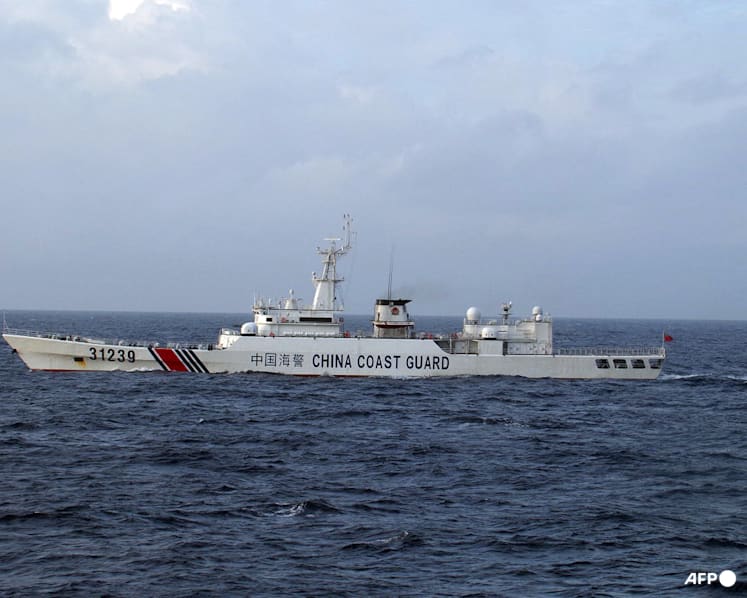
At the same time, she drew a firm line - listing a series of concerns including disputes in the East and South China Sea, along with “Chinese military activity around Japan”.
Another subject conspicuously absent from Takaichi’s speech was Taiwan, though analysts said the omission was unsurprising and does not suggest any change in her position on the island.
“It is rare for a Japanese prime minister to mention Taiwan, with which Japan has no diplomatic relations, in an inaugural address or a policy address,” said Shin Kawashima, a professor of international relations at the University of Tokyo.
“Rather, it appears to be intended to convey that her remarks last November do not signify a change in policy toward China,” he said, adding that her administration has also “explicitly stated that there has been no change in Japan’s policy toward Taiwan”.
Those remarks last November had triggered a major diplomatic rupture, after Takaichi suggested that a Chinese attack on Taiwan could constitute a threat to Japan’s survival and potentially warrant a military response from Tokyo.
Beijing reacted angrily, demanding that she retract the comments - something Takaichi has refused to do - as tensions spilled over into trade, tourism and other areas of the bilateral relationship.
Against that backdrop, CNA looks at what Takaichi said, what she left unsaid, and whether her latest remarks signal a shift in her approach to Beijing - or an attempt to stabilise a relationship that has been under severe strain without changing Japan’s underlying positions.
WHAT DID TAKAICHI SAY ABOUT CHINA?
Only a relatively small portion of Takaichi’s wide-ranging speech focused on relations with China - with much of her address instead devoted to the economy.
But the language was still carefully balanced, observers said.
“China is an important neighbour, and despite difficulties, we have built up a long-standing relationship over the years,” Takaichi told parliament.
At the same time, she also made clear that Japan would “firmly assert our country's positions”.
“We will continue to assert Japan’s position on various issues in the East and South China Sea, Chinese military activities around Japan, coercive measures, safety of Japanese citizens in China and human rights concerns, and we will strongly demand responsible action,” she said.
“She was largely reiterating Japan’s longstanding policy stance towards China,” said Sarah Soh, an associate research fellow with the Regional Security Architecture Programme at the S Rajaratnam School of International Studies (RSIS).
“It might reflect some effort to temper tensions, but this diplomatic language is par-for-the-course given that it forms part of her broader policy speech.”
Inhwan Oh, senior research fellow and executive director at the East Asia Institute in Seoul, described Takaichi’s remarks as “a form of de-escalation within certain limits” - reflecting competing domestic and diplomatic considerations.
“(While) the Japanese government’s current position on Taiwan is politically popular, Japanese businesses may hope that bilateral relations will be managed differently from political ones,” Oh said.
Japanese academic Kawashima noted that Takaichi had also previously described China as an “important neighbour” after taking office last October - before her meeting with Chinese President Xi Jinping.
The phrase has since appeared in various official Japanese foreign policy documents, Kawashima said, suggesting that its use in this week’s speech did not represent a new approach towards Beijing.
Takaichi’s tone “reciprocates” that of Chinese foreign affairs minister Wang Yi, who last week said that ties with Tokyo were “waiting to be normalised again”, noted political scientist Chong Ja Ian from the National University of Singapore (NUS).
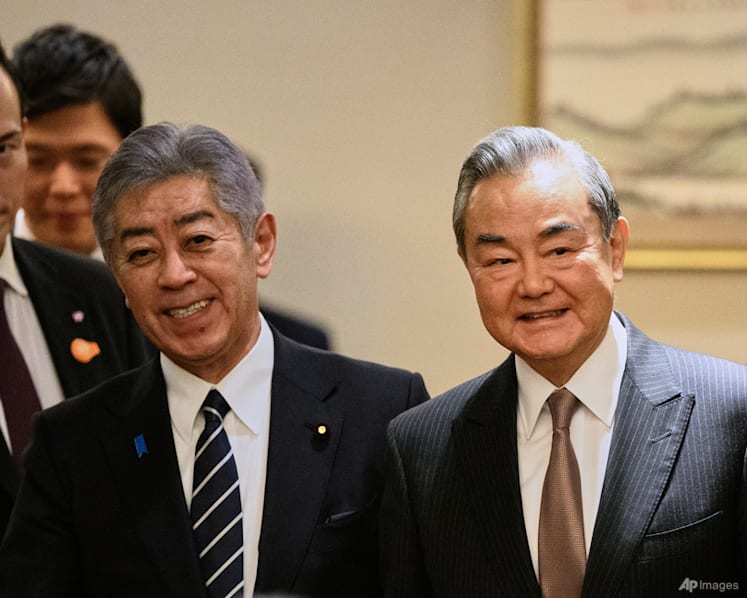
Wang and Chinese Vice-Premier He Lifeng had met with former Japanese foreign minister Takeshi Iwaya in Beijing in late September - the highest-level reception by Chinese officials for a visiting Japanese politician in nearly a year.
Iwaya led a 50-member business delegation of corporate executives, in a trip aimed at restoring stability.
“Even though it was non-governmental, the fact that there was a high-level Chinese reception of a Japanese delegation is some indication that Beijing wants to smooth relations even if it does not want to change its position,” said Chong.
Taiwan was not mentioned during Takaichi’s Oct 5 speech.
Beijing claims the island as part of its territory and has not ruled out using force to take it.
To date, Takaichi has not retracted her controversial remarks suggesting that a Chinese attack on Taiwan could prompt a military response from Tokyo.
“It is unsurprising that Taiwan was not mentioned in her speech,” said Soh from RSIS, adding that “the fundamental source of tension remains unresolved”.
“China wants Takaichi to retract her statement on Taiwan and she cannot do so without risking political reputational damage, so a retraction is thus unlikely,” Soh said.
Chong from NUS said: “She did not disavow her previous statement, which at any rate was in response to a question rather than volunteered through prepared remarks.”
WHAT’S NEXT FOR CHINA-JAPAN RELATIONS?
For now, signals remain mixed, experts said.
“A genuine thaw is less likely because Japan's position on Taiwan is unlikely to change,” said Oh from the East Asia Institute.
Ren Xiao, a professor of international relations at Fudan University, similarly said Beijing was unlikely to see Takaichi’s latest remarks as signalling a fundamental shift “as long as she does not adjust her position drastically”.
The differences had “placed a ceiling” on how far relations could improve, he added.
Chong from NUS said that “both sides are testing the water right now after a period of friction, while maintaining their original positions”.
“I expect both Tokyo and Beijing to take things slowly,” he added.
During his meeting with Iwaya, Wang urged Japan to “correct (Takaichi’s) erroneous words and deeds” over Taiwan, China’s foreign ministry said in a statement.
Chinese state media have also struck a sceptical tone following Takaichi’s Oct 5 speech.
In a commentary piece published on Oct 5, Chinese state broadcaster CGTN accused Takaichi of “diplomatic hypocrisy”, arguing that her conciliatory language towards Beijing was at odds with Tokyo’s actions on security and Taiwan.
“The fundamental problem is not a lack of diplomatic vocabulary. It is the widening contradiction between what Takaichi's administration says about China and what it does toward China,” wrote CGTN columnist Xu Ying.
Her “perfunctory remarks” were a “response to pressure both at home and abroad”, Lu Chao from the Liaoning Academy of Social Sciences told the state-owned Global Times newspaper.
“Takaichi is attempting to ease domestic pressure by making verbal gestures of easing tensions and providing an explanation to Japan's business community,” Lu said.
01:18 Min
China's Foreign Minister Wang Yi said the future of Beijing's ties with Japan depends on Tokyo’s choices. Relations have been frosty since Japanese Prime Minister Sanae Takaichi's remarks on Taiwan last year. She had suggested that Japan may deploy its military if China attacked the self-ruled island, as that would be a "survival-threatening situation" for Tokyo. Mr Wang also criticised Taiwan's ruling Democratic Progressive Party's pro-independence rhetoric as the root cause of instability in the strait. He warned that Taiwan never was and will never be a country.
Beijing, in turn, has sharply criticised Tokyo’s changing security posture as well as its positions on Taiwan and wartime history.
It has also taken a series of steps to curb economic ties with Japan - from warning citizens against travel to tightening export curbs on dual-use goods, with restrictions affecting rare earths.
“In terms of what else to watch, I would also see if Beijing quietly removes the trade and tourism restrictions on Japan and slowly changes its rhetoric,” said Chong from NUS.
So far, there has been little indication that Beijing is ready to unwind those measures, experts add.
“At present, there are no signs of change in China’s economic sanctions against Japan, restrictions on people-to-people exchange, or pressure on Japan through both words and actions,” said Kawashima from the University of Tokyo.
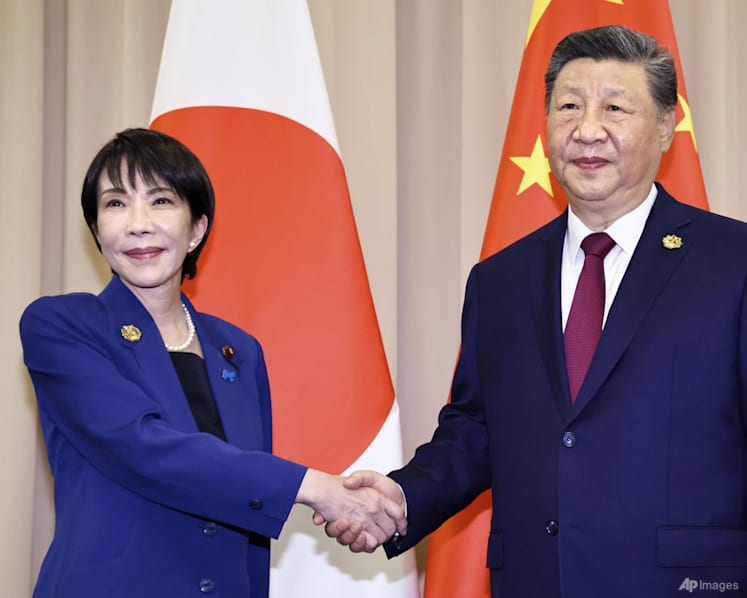
Still, he pointed to recent visits to China by Japanese lawmakers and other groups as attempts to improve relations, with attention now likely to turn to the upcoming Asia-Pacific Economic Cooperation (APEC) Summit in Shenzhen, which Takaichi is expected to attend.
“We might want to see what sort of reception she receives although there is currently no indication that either Beijing or Tokyo is pushing hard for some sort of big breakthrough,” said Chong.
Other analysts similarly cautioned that recent developments have yet to translate into a broader diplomatic thaw.
“There have been some attempts at re-engagement, but this has been conducted largely through parliamentary and business channels,” said Sarah Soh from RSIS.
High-level engagement, whether between the countries’ leaders or ministers, would be “a clearer indicator of a thaw in relations”, she added.
“The APEC meeting in November could serve as a barometer,” Soh said, pointing to whether a meeting between Xi and Takaichi takes place, as well as any ministerial meetings on the sidelines.
KioskNews shows a cleaned-up reading view extracted from the publisher’s page — the original always lives on their site, not ours.