Cocoa farmers hope for March recovery after season starts poorly
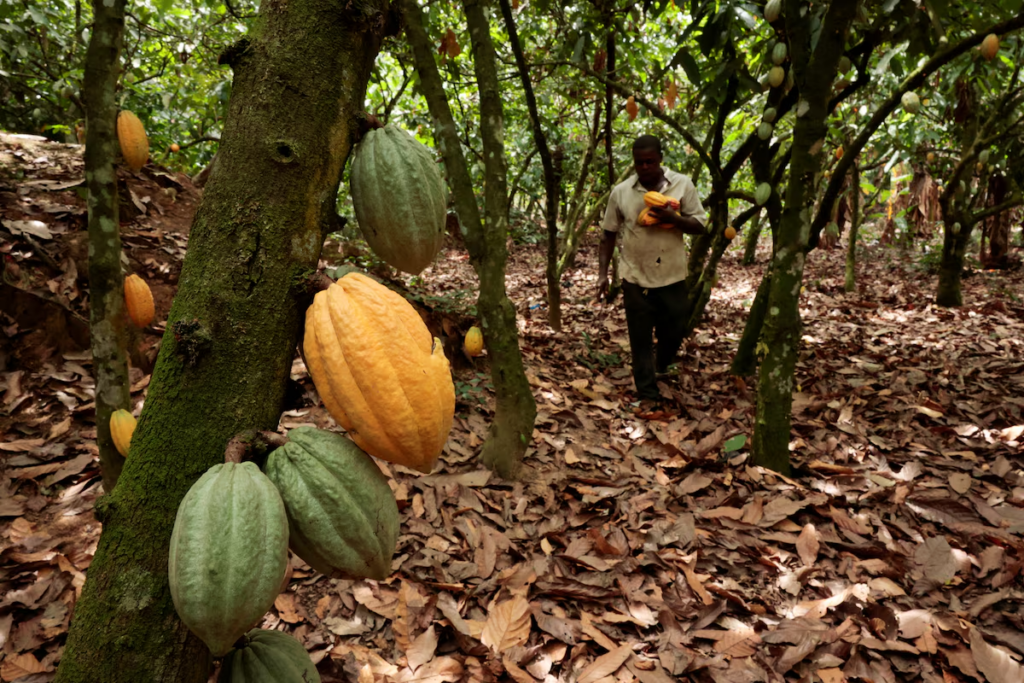
Cocoa farmers hope for a recovery in March harvests after a poor start to the season, driven by heavy rains in some areas and drought in others.
Some farmers complained of heavier-than-usual rain that prevented pods from developing during the stage when cocoa trees flower. Others said pods did not develop because of too little rain and a long, hot, dry spell.
Overall, harvests have fallen sharply relative to the previous year.
Joseph Agbeko, a cocoa farmer who has harvested just five bags since the season began, down from 31 bags, or two tons, last year, said production would likely fall sharply this season.
"It has now started raining, so we are looking forward to an improved harvest by March next year," he said.
UNPREDICTABLE SEASON AHEAD
The Ghana Cooperative Cocoa Farmers and Marketing Association, an umbrella body for farmer cooperatives, said it was too early to predict whether harvests would indeed improve by March.
Moses Djan Asiedu, the administrator, said farm visits in four cocoa-growing regions showed a mixed picture in which heavy rains in some areas caused flowers to fall, preventing pods from developing, while a lack of rain in others left flowers to wither and die.
“If the rains come in the right quantities, fruiting will start again. If the harmattan does not set in heavily in January, we could see some improved harvest from March. But this is not predictable,” Asiedu said.
The seasonal harmattan wind sweeps in from the Sahara Desert between December and March, typically bringing dry conditions.
He also cautioned that fertiliser was distributed later than usual and some farmers have yet to receive it. Fertiliser is usually applied between March and May, but arrived months later in August. Some farmers are still waiting.
COCOBOD did not immediately respond to questions about why fertiliser distribution, which often suffers bureaucratic delays, took so long this season.
OUTPUT EXPECTED TO FALL THIS SEASON
Ghana's cocoa regulator COCOBOD told Reuters in July that output was expected to fall by at least 16% this season, citing factors including the El Nino weather pattern and excessive rain in May and June. The regulator did not respond to a request for an updated forecast.
The Ghana Meteorological Agency in a statement on Sunday confirmed a strong El Nino, warning that conditions could expose parts of the country to prolonged dry spells, potentially affecting agricultural production.
Ghana produced 771,000 metric tons last season, against a target of 650,000. COCOBOD has not announced a target for this season.
DISCLAIMER: The Views, Comments, Opinions, Contributions and Statements made by Readers and Contributors on this platform do not necessarily represent the views or policy of Multimedia Group Limited.
Tags:
DISCLAIMER: The Views, Comments, Opinions, Contributions and Statements made by Readers and Contributors on this platform do not necessarily represent the views or policy of Multimedia Group Limited.
KioskNews shows a cleaned-up reading view extracted from the publisher’s page — the original always lives on their site, not ours.