Country diary: This is Dorset’s worst-located stone circle – but Nine Stones is well worth a visit | Sara Hudston
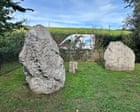
The Nine Stones at Winterbourne Abbas have an inglorious setting. Hard by the A35, there are only slim iron railings and a small ditch to shield the circle from the heavy traffic rumbling west. And for about six months of the year the ditch flows with water (the winter bourne), often overspilling and flooding the road.
Yet the surroundings used to be even less picturesque. Until a few years ago, a line of high‑voltage electricity pylons looped across the valley, humming and sizzling a few hundred metres from the monument.
In 2022, the lines were buried out of sight. Today, the path to the circle crosses the underground cables, passing two small enclosures, each containing a pair of grey metal cabinets. Stern and mysterious, connected to hidden power, these modern installations echo the bronze age megaliths beyond.
The circle itself sits in a wooded glade, which would be peaceful were it not for the lorries clattering by. The individual stones are markedly different from each other, varying in size from knee-high to 1.5m, some squat, some broad, and one like a tall, cloaked figure. An old beech tree stump, rotted and streaked with moss, acts as a tenth, more temporary, marker.
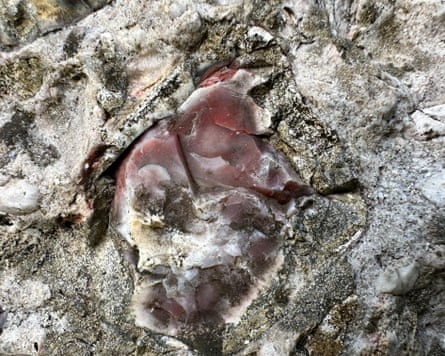
From a distance, the monoliths look like typical sandstone sarsens found across southern chalk downland, grey and slightly bulbous. Viewed up close, a surprise reveals itself. The largest are made of a conglomerate of pebbles, flint and quartz held together with fine-grained sediment. It’s hard to believe that this mix – known locally as “puddingstone” – occurred naturally because it looks uncannily like a rough aggregate stirred into concrete.
Some of the chunks of flint are flushed pink, an unusual effect caused by the presence of iron elements. The colour is diffused through layers of rock flakes, like strawberry juice frozen in ice. This oddity offers a clue about where the sarsens came from. Less than two miles away is the Valley of Stones, a scattering of large boulders left at the end of the last ice age, many of which contain the same rosy flint nodules. Material from there was used locally in other ritual settings from the Neolithic onwards.
KioskNews shows a cleaned-up reading view extracted from the publisher’s page — the original always lives on their site, not ours.