No COP31 cover decision leaves India’s equity, finance demands unresolved
The failure of countries to adopt the overarching cover decision at COP31 in Antalya on Sunday, in what was the longest COP ever, leaves India’s key demands on climate finance, equity and nationally determined energy transitions without a new negotiated political agreement, even as it said its interventions shaped parts of the proposed text and it remains committed to consensus-based multilateralism.
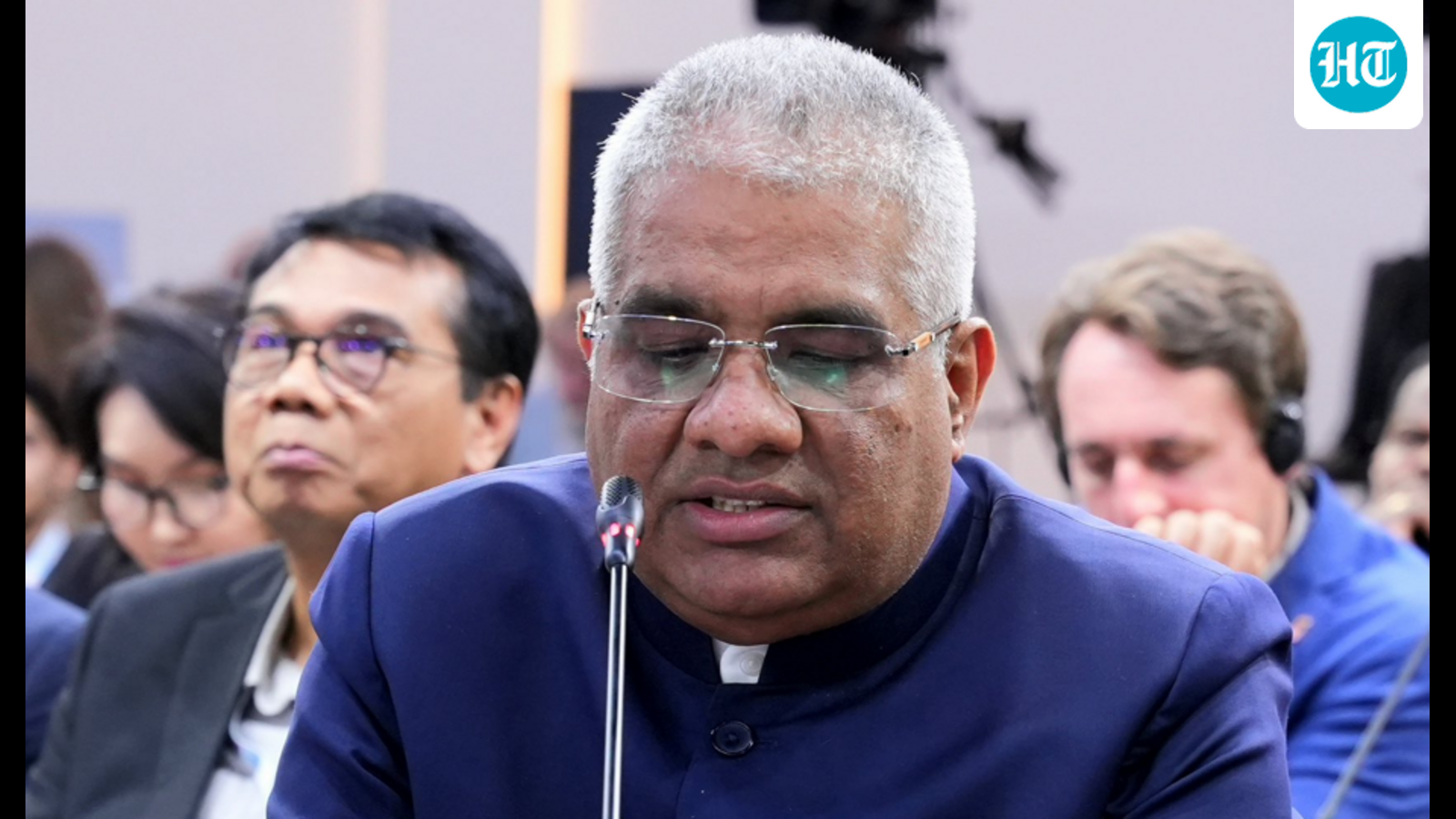
Union environment minister Bhupender Yadav, in his first response after the climate conference ended without consensus on Sunday, said India engaged constructively until the final stages, working with BASIC and Like-Minded Developing Countries (LMDC) partners for an outcome which was rooted in equity, the principle of common but differentiated responsibilities and respective capabilities (CBDR-RC), climate finance and adaptation.
“Climate ambition must go hand in hand with means of implementation. Energy transitions must be nationally determined, just and equitable, backed by finance, technology and capacity-building for developing countries,” Yadav said on Sunday, reacting to the cover not being adopted.
The outcome is significant for India, not only because of its own demands, but since it also acts as a voice for the Global South and LMDCs. At the core of it, India’s key demands ahead of Antalya remain unresolved: predictable and concessional climate finance from developed countries, protection against uniform global mitigation targets, technology transfer and recognition of historical responsibility for emissions.
India outlined these priorities ahead of the conference too. At the Pre-COP31 meeting in Fiji in October, Yadav called for equal attention to adaptation, mitigation and means of implementation, stressing that there could not be a “one-size-fits-all” approach to climate action. In a November 3 briefing, he said India would seek predictable climate finance, party-driven mitigation and adaptation outcomes, technology transfer and a just transition.
India has specifically called for climate finance to be largely public and concessional, without adding to developing countries’ debt burden. It also wanted mitigation and the Global Stocktake to remain facilitative, non-punitive and party-driven, ruling out new top-down targets.
On adaptation, India opposed making access to finance conditional on meeting global indicators, while calling for scaled-up support.
Equity and historical responsibility
At COP31, Yadav reiterated that developing countries could not be expected to bear the burden of historical emissions in the name of higher climate ambition. In India’s national statement on November 18, he argued that two centuries of industrialisation and economic growth in some countries, fuelled by greenhouse gas emissions, contributed disproportionately to global warming.
He said equitable access to the remaining global carbon budget was non-negotiable and that developing countries could not be asked to choose between climate action and their legitimate right to development, decent living standards, health and education.
India raised these concerns on behalf of the LMDC during the closing negotiations. Additional secretary in the Union environment ministry Amandeep Garg said the group was uncomfortable with parts of the proposed cover decision, particularly the inadequate reflection of equity and CBDR-RC in paragraphs introducing new global targets.
“At the threshold of crossing 1.5 degrees C warming, we had raised a fundamental point – we need to reflect why we are here. Whose emissions? Both past and continuing, have exhausted the global carbon budget.”
He flagged what India described as a dilution of developed countries’ historical responsibility and obligations and said developing countries were told that climate finance was “dead in the water”, despite their growing needs.
The absence of an overarching decision means there is no new consensus text resolving these differences. India added that its interventions shaped the draft, including recognition of food security, livelihoods and cultural practices in methane-related action, a reference to developed countries’ obligations under Article 9.1 of the Paris Agreement, and the inclusion of equity and CBDR-RC in implementation.
The Article 9.1 reference is particularly important for developing countries because it establishes the obligation of developed countries to provide financial resources to developing nations. At the same time, the draft did not attach new quantified commitments to that obligation. The proposed $120 billion annual adaptation-finance figure was dropped, while the call to triple adaptation finance by 2035 remained without an agreed baseline or delivery pathway. This means there remains uncertainty on the quantum of any finance ahead and, more importantly, when it comes.
Gap between obligation and delivery
Climate policy experts said the restoration of Article 9.1 was important, but would need to be followed by a clearer financing mechanism. Aarti Khosla, director of Climate Trends, said the reference to the obligation of developed countries to provide climate finance was not backed by any concrete process.
“Developed countries ensured there is no measurable responsibility for financing the transition, while major fossil fuel producers have blocked stronger mitigation language,” she said, adding that the outcome reinforced an inequitable climate regime for India.
Ajay Mathur, India’s lead negotiator at the Paris climate conference and former director general of the International Solar Alliance, offered a more qualified assessment. He said the reference to Article 9.1 and the proposed adaptation-finance roadmap were progress, even though the text did not specify an amount.
“On finance, developing countries came to Antalya asking who pays, how much, and on what terms. The text gives them an explicit reference to Article 9.1 and a roadmap for adaptation finance, which is real progress. It does not give them a number, and the baseline for tripling adaptation finance stays open until November 2027,” Mathur said.
Energy transition and India’s national pathway
The proposed cover text addressed the global energy transition, including an aspiration to increase electricity’s share of global energy consumption to 35% by 2035, alongside stronger grids, energy storage and system flexibility. It did not provide specific financial commitments to support these measures. Though not mandatory, the cover decision not being adopted means the 35x35 electrification pledge is not a mandate as of now.
India opposed a uniform international target for electrification, maintaining that countries must be able to determine their own energy pathways based on national circumstances and development needs. Yadav reiterated that energy transitions must be nationally determined, just and equitable, and supported by finance, technology and capacity-building.
Mathur said the recognition of electrification and grid modernisation had pointed in the right direction, as the next stage of the energy transition would require investment beyond renewable energy capacity.
Adaptation Fund decision
The failure to adopt the cover decision did not mean that all climate negotiations at COP31 ended without outcomes. Separate decisions, including those on the Just Transition Work Programme and the Adaptation Fund, were adopted.
Mathur pointed to these decisions as evidence that progress on individual issues remained possible despite the failure to reach consensus on the overarching text.
The Adaptation Fund is a separate financing mechanism that supports concrete adaptation projects in developing countries. Its decision at COP31 dealt with arrangements for its transition to exclusively serving the Paris Agreement and called on developed countries to substantially increase their contributions. It does not amount to a new financial allocation for India, though.
This is distinct from the proposed Antalya-to-Addis Ababa roadmap on adaptation and resilience finance, which was part of the unadopted cover decision. The roadmap was intended to address the wider question of mobilising finance for adaptation in developing countries. Its provisions did not secure consensus at COP31. Experts said it remains to be seen how the adaptation fund will function.
Unresolved finance and fossil-fuel questions
The failure to adopt the cover decision leaves several questions for the next round of negotiations at COP32 in Addis Ababa in 2027. These include how the obligation under Article 9.1 will translate into measurable financial commitments, the baseline and quantum for tripling adaptation finance by 2035, and how developing countries will access predictable and concessional support.
The proposed adaptation-finance roadmap also remains unresolved, as does the wider question of stronger commitments on the transition away from fossil fuels.
Mathur said the baseline for tripling adaptation finance would remain open until November 2027, adding that the next task was to turn procedural provisions into actual commitments. “A text that works for many blocs earns its value only when its procedural hooks become commitments. That is the work of 2027,” he said.
Yadav said the absence of a cover decision will not pause India’s climate action and has ultimately reiterated the country’s commitment to consensus-based multilateralism ahead of COP32.
KioskNews shows a cleaned-up reading view extracted from the publisher’s page — the original always lives on their site, not ours.