Why the manner of Gokul win has rankled sections of BJP, Shiv Sena
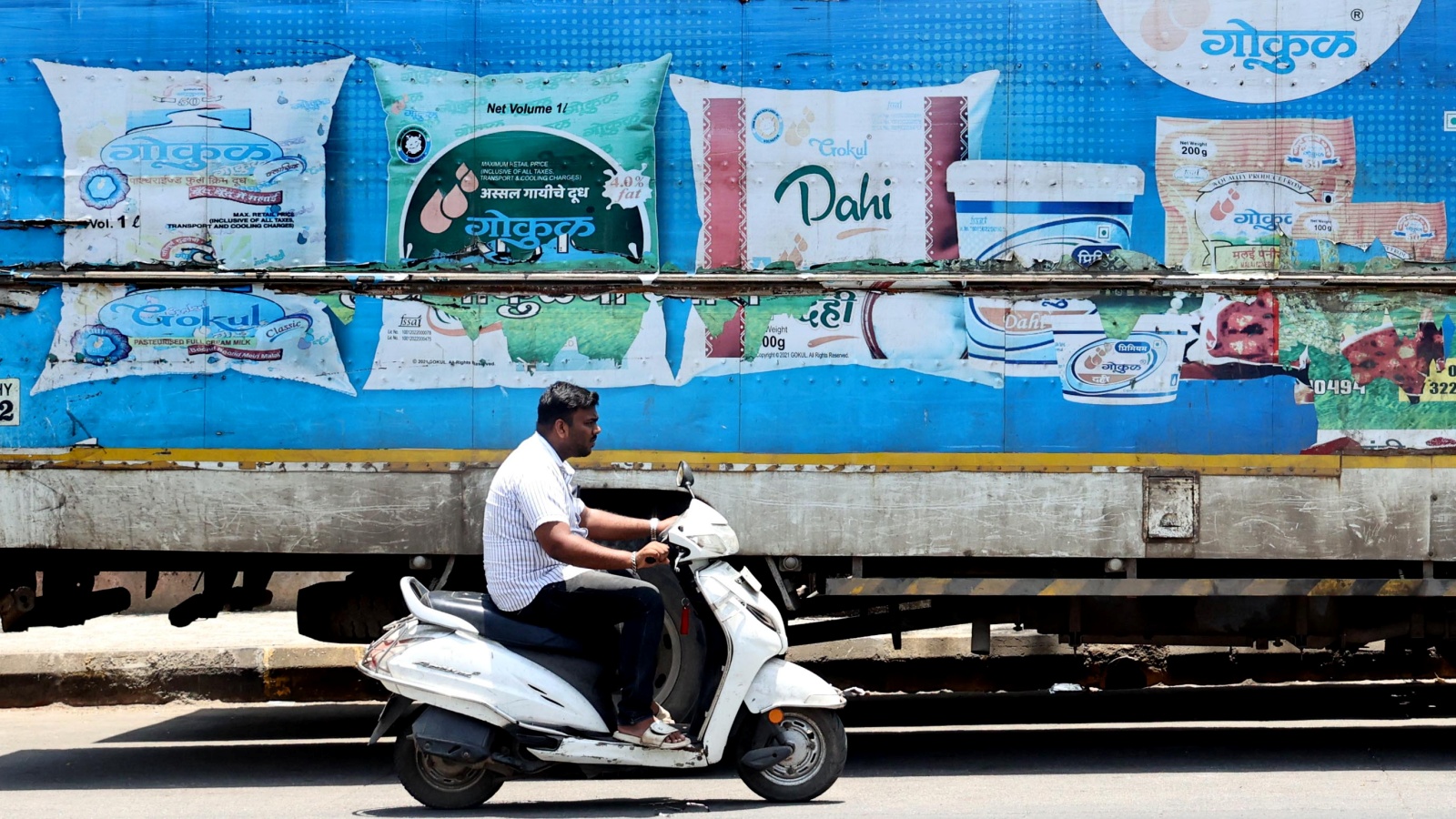
The Mahayuti’s recent win in Maharashtra’s biggest dairy Gokul — weeks after it lost an election there to the Opposition — has not gone down well in sections of both the BJP and ally Shiv Sena.
Nationalist Congress Party (NCP) leader Rajesh Patil was elected Gokul’s chairman 16 votes to 13 on November 10, days after the government passed an ordinance giving four directors nominated by it voting rights. These votes helped the ruling alliance overcome the vote deficit that had seen it lose the election to the dairy’s board 12 votes to 13 on October 19.
While the concern among some in the BJP, especially the local leadership, is that the developments in Gokul may dent the party’s image and that the NCP cannot be trusted — The Indian Express spoke to a dozen party leaders, including ministers, office-bearers, and grassroots activists — many Sena leaders are worried about the consequences it will have on its organisation in western Maharashtra. The dairy is located in the region’s Kolhapur district.
“The consensus that emerged from the discussions in the party on Gokul is that CM Devendra Fadnavis unnecessarily allowed himself to get embroiled in the issue under pressure from the NCP. At the end, the BJP emerged badly bruised and beaten. Moreover, the Congress capitalised and turned a local issue into a national one by alleging vote chori,” said a senior BJP functionary.
“In Gokul, the party appeared more focused on maintaining the alliance’s unity than on consolidating its own influence,” said a senior office-bearer.
“Securing control of a cooperative institution and strengthening one’s own political organisation are two different achievements. In Gokul, the Mahayuti secured the former, but the BJP fell short on the latter. It calls for balancing between alliance politics, grassroots leadership, and independent party groups,” said a party insider.
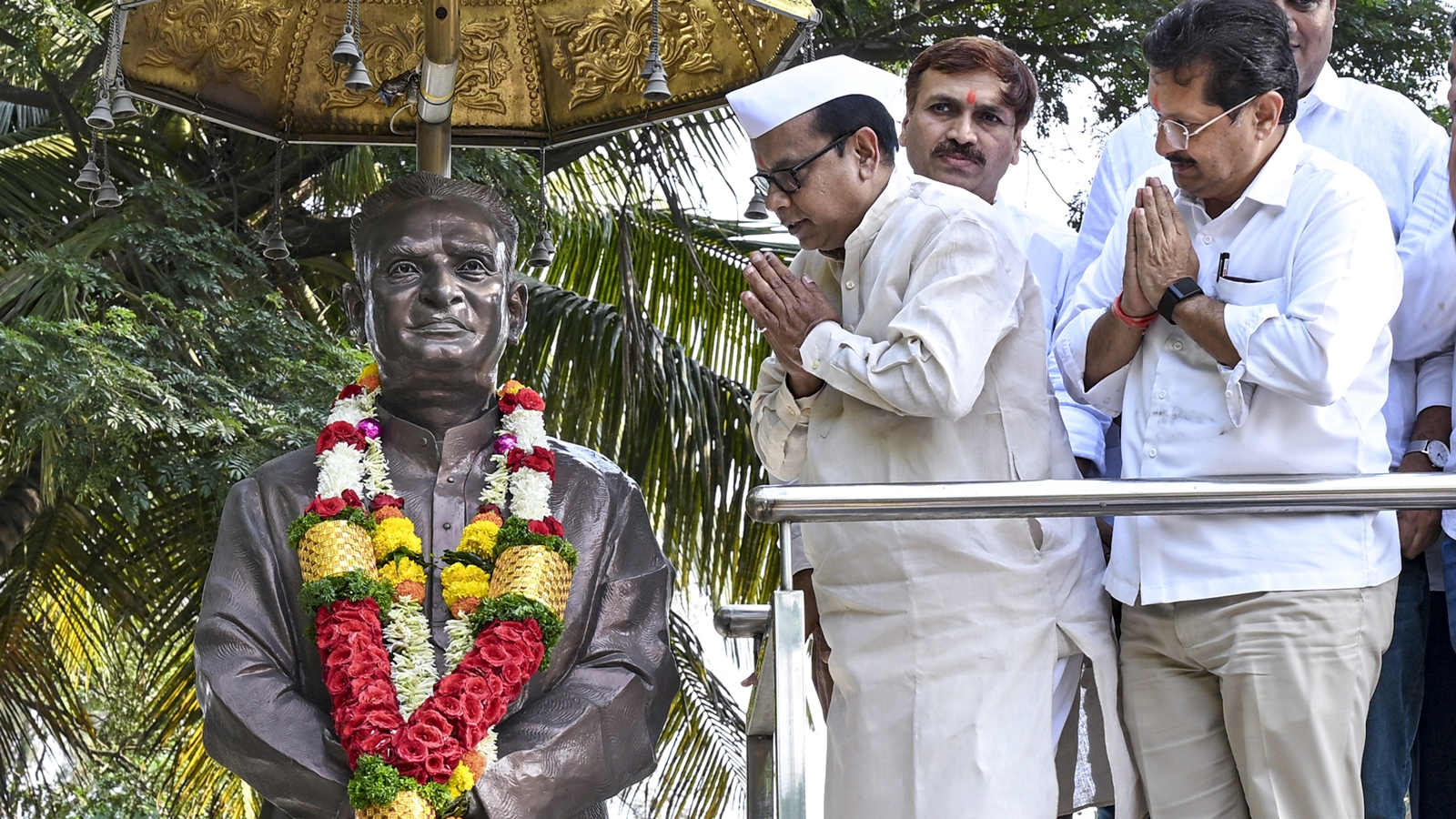 Newly elected chairman of Gokul dairy Rajesh Patil in Kolhapur, Tuesday. (PTI)
Local BJP’s complaints
Local BJP leaders pointed fingers at senior Cabinet Ministers Chandrakant Patil of the BJP and Hasan Mushrif of the NCP, saying their dominance drove the contest and grassroots leaders were ignored. They pointed to how a Gokul director in the previous tenure, Shoumika Mahadik of the BJP, had been ignored this time. Shoumika is married to Rajya Sabha MP Dhananjay Mahadik, whose family wields massive influence in Kolhapur.
“For five years, Shoumika Mahadik raised issues concerning the union’s functioning and helped the BJP establish a political presence in the cooperative sector. But during the election campaign, she was not projected prominently as the party’s principal local face. The emphasis on senior leaders overshadowed the politics,” said a local BJP functionary.
This time, Shoumika lost by 121 votes, with several BJP insiders saying that the party’s failure to convert her five-year struggle into broader organisational strength is a significant aspect of its electoral setback. “This reflects a larger weakness in the BJP’s approach to nurturing and empowering local leadership,” said a leader.
Some local BJP leaders questioned Chandrakant Patil, blaming his spat with Congress MLC Satej Patil — whose panel lost to the Mahayuti in the chairman election — for diverting attention from voters’ concerns such as milk procurement prices, cattle-feed costs, collection systems, and the financial interests of affiliated societies. The Opposition focused on promises of higher milk prices, reduced cattle-feed costs, and retaining local control over Gokul, thereby managing to win the board election, they said.
Though Independent MLA Shivajirao Patil, who is supported by the BJP, cautioned the party against taking decisions on Kolhapur politics based on the advice of outsiders — his criticism was directed at ally Jan Surajya Shakti Paksha’s (JSSP) state president Vinay Kore, who hails from Sangli — he was not heeded, claimed some local BJP leaders.
Of the 12 director seats that the Mahayuti won in the October 19 election, two were bagged by the BJP (out of seven it contested); the NCP and the Sena won four each (they contested nine and seven seats, respectively); and two went to the JSSP. The BJP subsequently blamed its allies for its defeat in five seats.
“The BJP was bound to ensure the Mahayuti’s victory. In that sense, CM had to go with the advice of alliance partner NCP, which made it a prestige issue. But our local BJP sentiments cannot be overlooked, as they feel that after all this drama, the NCP and the Sena benefitted the most,” said a BJP minister.
Mushrif said the government decision was taken to remove the deadlock and there was no other interest. “Now this matter is closed,” he said, clarifying that the focus would now be on expanding Gokul and figuring out how to compete with Amul. Mushrif alleged that some leaders in the alliance were trying to create rifts and that “care must be taken to ensure no disputes arise among the three parties”.
Gokul has an annual turnover of thousands — nearly Rs 4,000 crore in 2024-’25 — and its network connects the cooperative leadership with village-level societies and thousands of milk-producing families across the state. The cooperative is associated with nearly 4.41 lakh milk producers, collecting milk through 8,009 village-level primary societies in an estimated 1,810 villages. This makes it a crucial financial as well as political institution and the BJP cannot ignore any discontent among its rank and file in the region.
The local BJP leadership is also unhappy with the party leadership for not addressing their concerns about suspected bogus milk societies. “There was a sharp increase in the number of member institutions,” said a source. “Gokul had approximately 3,600 institutions in its first 50 years, but nearly 1,800 additional institutions were registered in the subsequent years. This unprecedented growth raised concerns about the need for a thorough scrutiny of their eligibility and authenticity, particularly to identify institutions established primarily to secure voting rights.”
BJP leaders said many of these institutions were allegedly set up when Satej Patil, Mushrif, and Sena leaders were in control of Gokul and part of the Opposition Maha Vikas Aghadi alliance, starting in 2021. This led to concerns about possible cross-voting driven by individual interests rather than alliance commitments, but the BJP leadership did not pursue a stringent scrutiny process in order to fix the potential vulnerabilities in the electoral process, local party leaders said.
Sena’s concerns
Some Sena leaders said going against the interests of those associated with the dairy could affect the party’s electoral prospects in the region.
“Gokul has nearly five lakh milk producers associated with it. Its network reaches villages across the district. Hurting the interests of these people could affect our electoral prospects. It would also send a wrong message across Maharashtra that the ruling alliance cannot even accept one defeat and is willing to go to any extent to take control of a dairy,” a Sena leader said.
“Also, if a message goes across that the BJP and ruling alliance wishes to snatch Gokul and hand it over to a Gujarat-based large cooperative like Amul, it may raise an issue of Marathi asmita (pride) that the party cannot afford to ignore,” said a leader.
A senior Sena leader said even Deputy CM Eknath Shinde was not in favour of interfering in the matter. “The party performed well in the 2024 Assembly elections and managed to win three seats in Kolhapur district. This episode could harm the Sena’s connection with people at the grassroots level in rural western Maharashtra,” he said.
The Sena won Radhanagari, Karvir, and Kolhapur North in the 2024 Assembly polls — Kolhapur has 10 Assembly constituencies — and retaining this rural support is important as it tries to strengthen its presence in western Maharashtra.
The discomfort in the Sena had also found public expression through party MLA Ravindra Dhangekar, who told The Indian Express on November 7, “There should be no attempt to forcibly capture power at Gokul. We should live up to democratic norms.”
Sena leader and Kolhapur Guardian Minister Prakash Abitkar, however, denied there was any discontent in the party over the developments in Gokul, saying the Mahayuti remains united.
KioskNews shows a cleaned-up reading view extracted from the publisher’s page — the original always lives on their site, not ours.