Olive Ridley hatchlings freed in Tayabas Bay
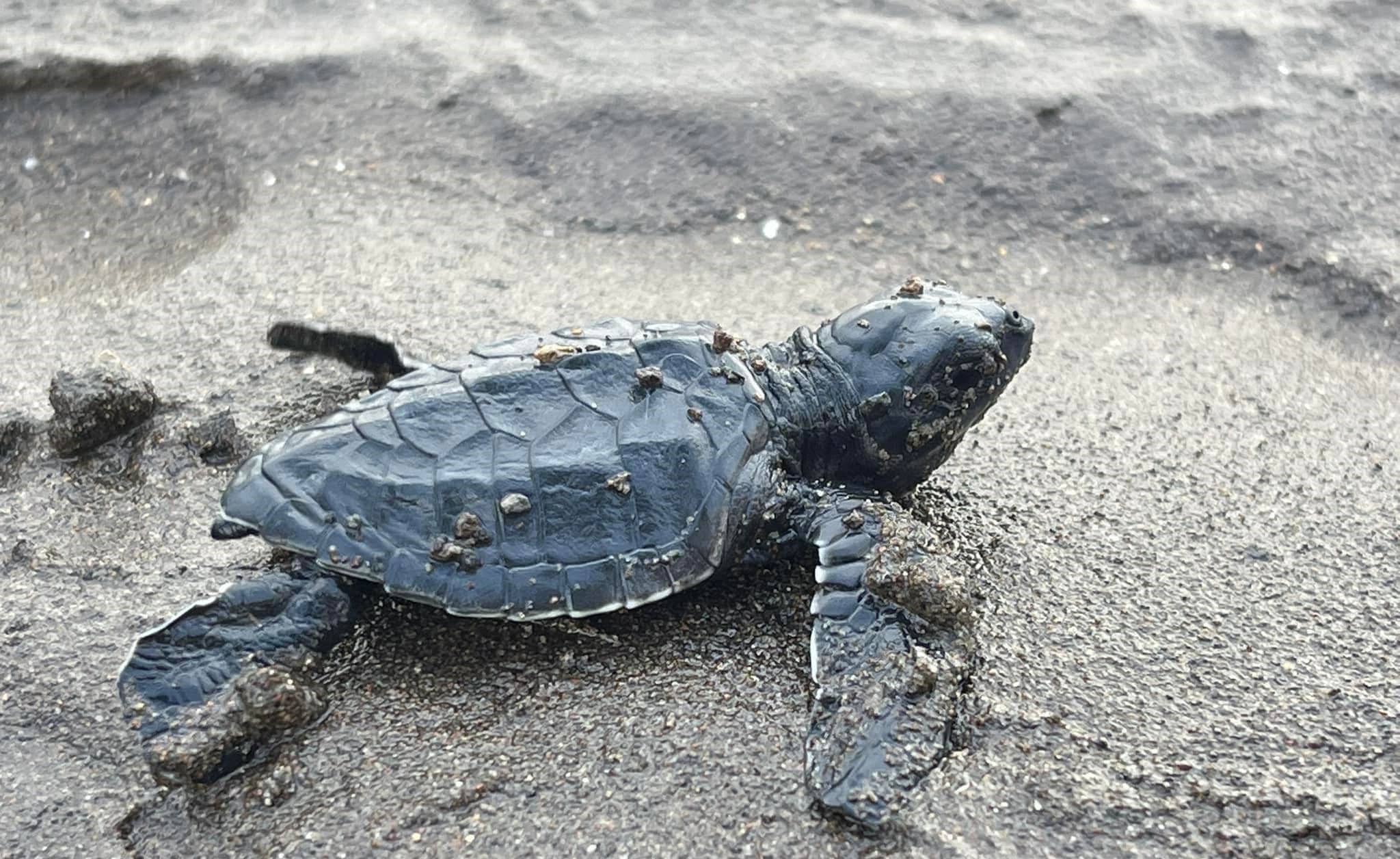

LUCENA CITY – As many as 83 Olive Ridley (Lepidochelys olivacea) sea turtle hatchlings, locally known as “pawikan,” were released into Tayabas Bay off Sariaya, Quezon, on Wednesday, marking the first batch released this nesting season.
The hatchlings were released at 4:30 p.m. along the shoreline of Barangay Bignay 2, drawing cheers from fishermen and their families, local and barangay officials, and tourists who witnessed the event.
“Another batch of 100 Olive Ridley hatchlings is scheduled for release on Nov. 27,” Edwin Frias, a deputized “bantay dagat (fish warden) member, told the Inquirer in an online interview.
Article continues after this advertisement
READ: 78 Olive Ridley turtle hatchlings return to sea in Calapan
FEATURED STORIES
NEWSINFO
NEWSINFO
NEWSINFO
On Nov. 12, a total of 224 freshly laid eggs were recovered on the coastline of Barangay Bigay 2.
Since Sept. 24, Frias and his group of sea turtle conservation volunteers have recovered 1,650 eggs along the Sariaya coastline.
Local fishermen, pawikan conservation volunteers, civic organizations, and government agencies work together to protect turtle eggs in nesting sites in Barangays Bignay 2 and Guisguis until they hatch and the baby turtles are ready for release into the sea.
Aside from Olive Ridley turtles, other marine turtle species, including the Hawksbill (Eretmochelys imbricata) and Green Sea Turtle (Chelonia mydas), also lay their eggs along the shores of Tayabas Bay. Nesting activity generally takes place from October to December.
Article continues after this advertisement
Sea turtle eggs typically hatch after an incubation period of 45 to 60 days.
Tayabas Bay stretches from San Juan, Batangas, across several coastal towns in Quezon, including Sariaya, Pagbilao, Padre Burgos, Agdangan, Unisan, Pitogo, Macalelon, General Luna, Catanauan, Mulanay, and San Francisco, as well as Lucena City.
Article continues after this advertisement
READ: 72 Olive Ridley turtle hatchlings released in Mindoro
Environmentalist priest Fr. Warren Puno described the release of the hatchlings as welcome news and a beacon of hope for the environment.
With more than 1,600 sea turtle eggs currently being protected at nesting sites, Puno said Sariaya’s coastlines continue to serve as vital breeding grounds for threatened marine creatures.
“But alongside our joy comes a serious reminder and challenge. Let us not wait for the day when the sea turtles we are releasing will have no beaches left to return to and lay their eggs because of unchecked development and the destruction of their natural habitats,” said Puno, director of the Ministry of Ecology of the Diocese of Lucena, in an online interview.
The priest expressed concern over ongoing development activities along the Sariaya coast.
“I appeal to our government officials, particularly local government units and agencies responsible for issuing permits for coastal projects, to ensure that development does not come at the expense of our oceans and the living creatures that depend on them,” Puno said.
Aside from coastal development, destructive fishing practices and habitat degradation continue to threaten marine turtle populations.
One major threat comes from large stationary fish traps known as “baklad,” which were installed in parts of Tayabas Bay. Several sea turtles have reportedly been found dead after becoming entangled in these structures.
Dynamite fishing, which is a prohibited and destructive practice, also poses a serious threat to marine life.
READ: DENR records highest marine turtle nesting in Occidental Mindoro
The illegal trade in sea turtle eggs and meat remains another major concern. Some people seek these products because of their supposed aphrodisiac properties, allowing them to command high prices in illegal markets.
Sea turtles are classified as an endangered species by the Switzerland-based environmental authority, the International Union for Conservation of Nature. Republic Act No. 9147 (the Wildlife Resources Conservation and Protection Act, enacted in 2001) protects them in the Philippines.
Available data indicate a decline in the number of hatchlings released over the past two years.
In January 2024, more than 5,200 baby sea turtles were released during the nesting season.
Your subscription could not be saved. Please try again.
Your subscription has been successful.
According to Frias, more than 3,000 hatchlings were released into Tayabas Bay last year./coa
KioskNews shows a cleaned-up reading view extracted from the publisher’s page — the original always lives on their site, not ours.