Mao, memes and Mbappé: Chinese brands drop soccer star in fury over ‘dictator’ joke
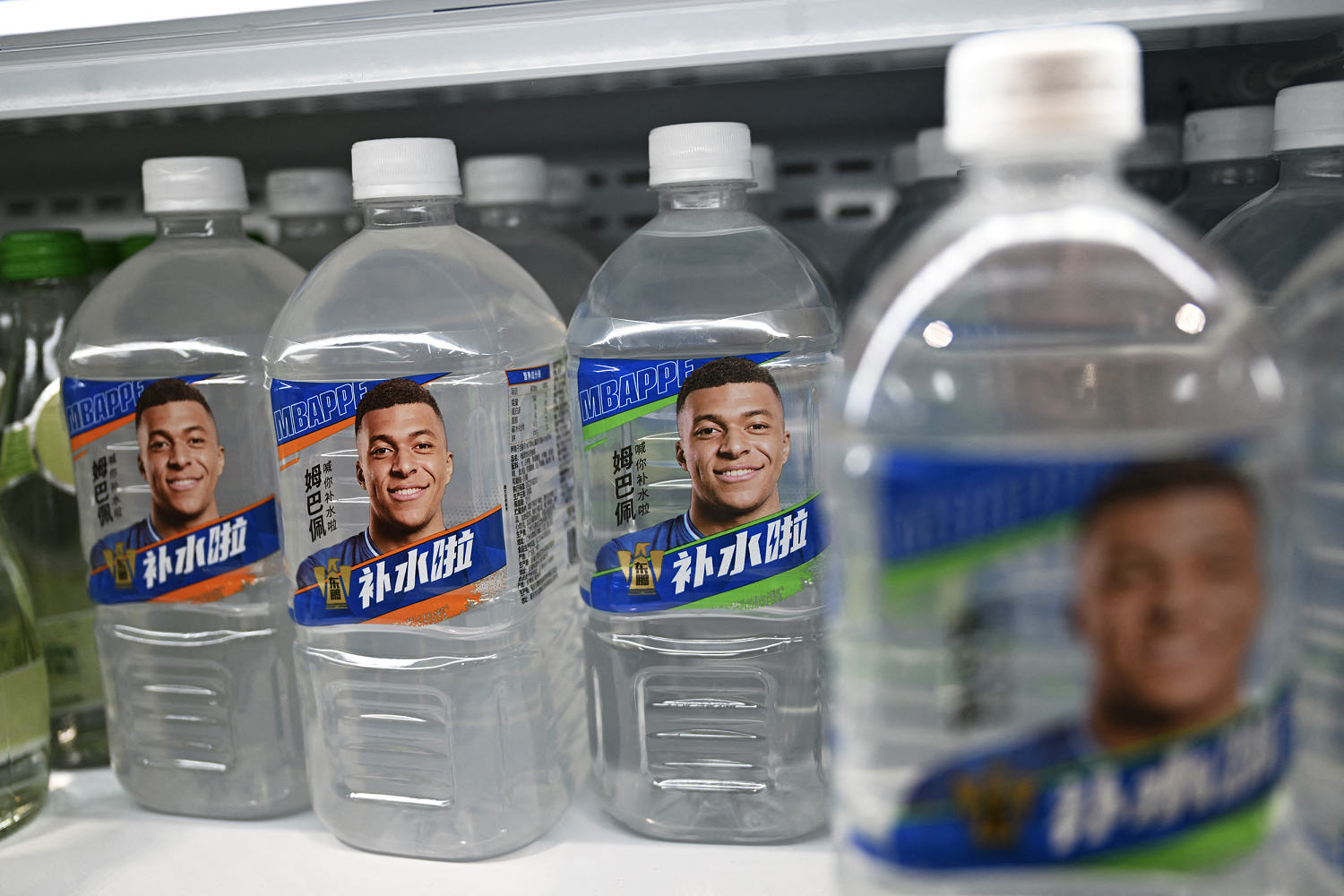
HONG KONG — He’s one of the world’s most popular athletes, but Kylian Mbappé is suddenly paying the penalty for being on the wrong side of China’s fervent nationalism.
The French soccer star’s own goal? Suggesting that Mao Zedong, the founding leader of communist China, was a dictator, in comments that revolved around memes portraying Mbappé as an authoritarian figure.
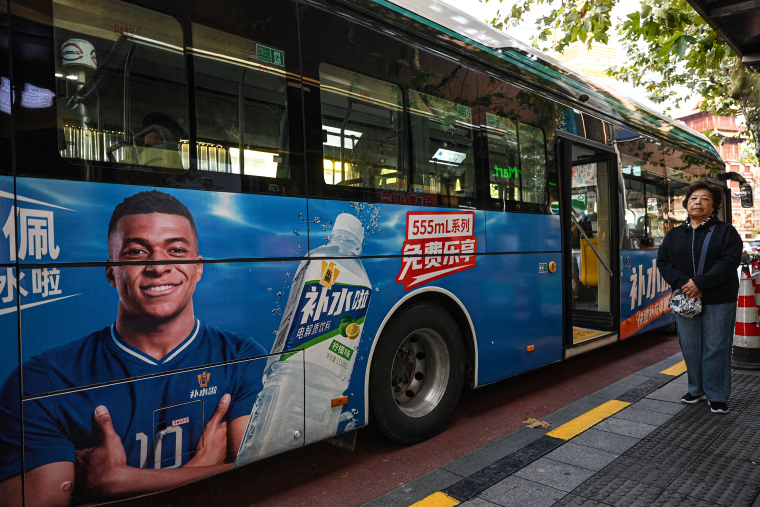
A host of Chinese brands said Tuesday that they were cutting ties with the French captain, the latest example of how rapidly celebrities can go from having their faces plastered in subway stations and on drink bottles to drawing condemnation over political sensitivities that are little understood outside China.
The scale of the backlash prompted La Liga, the Spanish league of which Mbappé is the leading light, to apologize and distance itself from his remarks. Mbappé himself then apologized “to everyone my words have upset,” saying that his “comment was ill-judged.”
The swift apologies aimed to head off what had been a wave of outrage.
Dongpeng Beverage, known for its energy drinks, Inner Mongolia Mengniu Dairy, one of China’s largest dairy producers, and cheesemaker Milkground all issued similarly worded statements early Tuesday announcing that they were terminating their ties with Mbappé.
“Our company firmly opposes and adopts a zero-tolerance policy toward any behavior that hurts the feelings of the Chinese people,” Dongpeng Beverage said in its statement on the Chinese social media platform Weibo.
Dongqiudi, the popular Chinese soccer platform, said it could not translate Mbappé’s remarks because “his comments involve statements that hurt China.”
The Chinese social media platform Xiaohongshu also distanced itself from Mbappé, saying its contract with him had ended after he appeared in a 2024 ad for the platform that went viral. On Tuesday, a note on Mbappé’s Xiaohongshu account, which had more than a million followers, said it had been suspended “for violating community guidelines.”
The companies did not specify Mbappé’s missteps, but the statements came after a clip circulated widely on social media Monday showing an interview last spring with the French online talk show “The Bridge.”
Mbappé is often depicted jokingly online as a dictator because of his outsize presence on and off the field. Fans have created memes comparing him to a number of authoritarian historical figures, including Mao.
In the clip, Mbappé was asked which meme was his favorite.
“A video someone made of a guy… I think he was a Chinese dictator,” he said. The clip then shows Mbappé’s face superimposed on an image of Mao, whom Mbappé did not mention by name.
His comments drew fury in China, where he was accused of insulting a country that has been a lucrative source of income for him.
“Words and actions that hurt the feelings of the Chinese people will naturally be met with a collective boycott by all sectors of Chinese society,” Foreign Ministry spokesperson Guo Jiakun said Tuesday at a regular briefing in Beijing.
Foreign athletes have run afoul of Chinese sensitivities in the past, sometimes with profound economic consequences for major sports leagues. NBA games were largely suspended from Chinese broadcast for years in 2019 after a Houston Rockets manager expressed support for anti-government protests in the Chinese territory of Hong Kong, and in 2023 former NBA star Dwight Howard drew controversy when he referred to the Beijing-claimed island of Taiwan as a country.
According to a commentary Tuesday by Global Times, a state-backed nationalist tabloid, sporting events and advertisements involving Mbappé have also been suspended from broadcasting.
“Mbappé is not an isolated case. He has now paid the price, and deservedly so,” the commentary said. “His experience should serve as a clear red line for all foreign public figures seeking to enter the Chinese market.”
After reports that broadcasts of the Spanish league, where Mbappé plays for Real Madrid, had been suspended in China, the league distanced itself from the remarks.
“We deeply regret” the comments “that have caused discomfort and offense in China,” La Liga President Javier Tebas said in a post on social media. “We cannot allow an individual’s action to tarnish” La Liga and its clubs’ relationship with China, Tebas said, adding that it was working with its partners in China to “overcome the situation.”
In his own apology, also posted to social media, Mbappé said that “during a recent interview, I reacted to an image of myself. My comment was ill-judged, and I now understand that it hurt many people in China and in Chinese communities around the world.”
He added: “I apologize to everyone my words have upset. This was absolutely not my intention. I have deep respect for the Chinese people and their history, and I am sincerely sorry.”
Mbappé came a close second Monday for soccer’s prestigious Ballon d’Or award.
He has criticized the dictator memes in the past, telling the French sports newspaper L’Équipe last month that while he knew they were meant to be humorous, they also showed “a lack of political and human awareness.”
Mao has a deeply mixed legacy in China, which he led for more than a quarter-century until his death in 1976.
In 1949, Mao’s communist forces won China’s drawn-out civil war, unifying the country after a century of foreign invasion and domestic turmoil. In the decades that followed, Mao oversaw sweeping reforms that included the “Great Leap Forward” — a radical industrialization campaign that contributed to famines that are believed to have killed tens of millions of people — as well as the “Cultural Revolution,” a violent anti-capitalist movement that stirred political and social chaos for the last decade of his rule.
China’s ruling Communist Party has acknowledged Mao’s role in those events but maintains that his achievements outweigh his mistakes. His stature within the party remains high, and his portrait appears on the 100-yuan bill, the largest denomination of Chinese currency.
Mao also continues to be a source of inspiration for some young people frustrated by China’s slowing economy and fiercely competitive society, and Mbappé’s comments drew online criticism.
“I don’t care what exactly he said. If it was insulting to China, then it hurt my feelings. I support boycotting him,” read one comment on Weibo.
Others simply didn’t know what exactly Mbappé had said that was so insulting given China’s strict censorship controls.
“It’s a pretty peculiar social phenomenon,” another Weibo user said. “We all know he supposedly made some anti-China remarks, yet on the Chinese internet you can hardly find what he actually said.”
Mark Dreyer, author of a book on China’s sports industry, said the episode was the latest involving China in which a story fuels outrage that forces brands to take action to protect commercial interests no matter the context or truth.
“The ultimate result is that sports stars and global celebrities will become increasingly cautious about engaging with China,” Dreyer said. “It’s hard to see how this outcome benefits China or its sports fans in the long run.”
KioskNews shows a cleaned-up reading view extracted from the publisher’s page — the original always lives on their site, not ours.