Isaac Asimov Meets The Wire In Prime Video's 62-Episode Sci-Fi Masterpiece

Cathal Gunning has been writing about movies, television, culture, and politics online and in print since 2017. He worked as a Senior Editor in Adbusters Media Foundation from 2018-2019 and wrote for WhatCulture in early 2020. He has been a Senior Features Writer for ScreenRant since 2020.
While it might sound impossible to mix the hard sci-fi of Isaac Asimov’s writings with the gritty realism of The Wire, one iconic Prime Video masterpiece managed just that. There’s a fascinating shared history between science fiction and detective fiction. Both genres have their earliest literary antecedents as far back as the 1800s, but became mainstream sensations in the early 20th century. Both genres were also instrumental to mainstream television’s development as a medium after the Western fell out of favor in the ‘60s.
Only a few years after early police procedurals like Dragnet became network TV staples, early sci-fi shows like The Twilight Zone became equally popular. While Star Trek: The Original Series took viewers into the future to explore the galaxy, cop shows offered a more grounded and realistic, but equally thrilling and action-packed, form of dramatic storytelling. Both genres also underwent a massive transformation around the turn of the millennium.
Influenced by the success of morally ambiguous masterpieces like The Sopranos, crime shows like The Shield began to offer a more critical, nuanced depiction of the police. The apotheosis of this approach came in HBO’s five-season masterpiece The Wire, a complex, sprawling depiction of inner-city life that explored the lives of the media, politicians, cops, gangs, and civilians who made up the drug trade. Around the same time, Battlestar Galactica’s ambitious reboot saw the sci-fi genre attempt a similarly ambitious, multifaceted epic story.
The Expanse Took The Wire’s Storytelling Style To Space

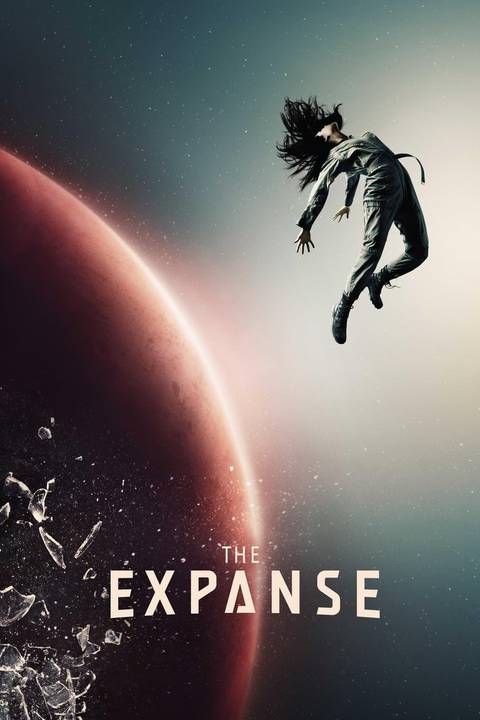
However, while Battlestar Galactica might be an all-time classic that paved the way for even better, more ambitious space operas, it wasn’t the show that brought The Wire’s writing style to space. That honor belongs to The Expanse, a six-season Prime Video space opera based on a novel series by author James S.A. Corey, a pseudonym for the sci-fi writers Ty Franck and Daniel Abraham.
Set in a version of the future where the rest of the solar system's planets have been colonized by humanity, The Expanse initially focuses on political disputes between the United Nations of Earth and Luna and the Martian Congressional Republic on Mars. With a polyphonic narrative that takes in dozens of main characters across the social spectrum, instead of focusing only on a few crew members on a single spaceship, the show’s epic story feels less like a standard space opera and more like an immersive glimpse into the future of society.
The Expanse and The Wire’s Stories Started Out The Same

While The Expanse season 1 almost feels like Ridley Scott's Blade Runner thanks to its focus on Thomas Jane’s embittered detective and his thwarted investigation into a shadowy political conspiracy, the show has this in common with The Wire, too. Both series begin in season 1 with relatively self-contained, conventional police investigations that then eventually sprawl out into much more grandiose, ambitious stories that touch on every level of their fictional societies and civilizations.
The Expanse Engaged With Isaac Asimov’s Ambitious Sci-fi Writing

It’s clear from this outline alone that The Expanse’s critical success came in part from taking the ambitious approach of The Wire, which looked at entire social systems instead of individual heroes and villains, and applying this to the space opera format. Say shows like Star Trek: The Next Generation and Firefly were the equivalent of procedurals like Law & Order and CSI.
In this framework, The Expanse was sci-fi’s answer to The Wire. However, by interrogating how existing social and economic systems would adapt to new technologies, the show also took a lot of influence from the writings of Isaac Asimov. Asimov’s own Foundation novels were later adapted by Apple TV’s Foundation, but The Expanse also owed a creative debt to the author.
Many earlier sci-fi shows offered a standard issue utopia or dystopia where every technological advance simply makes things better or worse, without fail. Instead, sci-fi’s answer to The Wire saw The Expanse explore exactly how imagined technological developments and advancements would play into the existing social and cultural divisions and hierarchies of human society.
- Release Date
- 2015 - 2022-00-00
- Network
- SyFy, Prime Video
- Showrunner
- Naren Shankar, Mark Fergus, Hawk Ostby
-

Steven Strait
Jim Holden
-

Dominique Tipper
Naomi Nagata

- Directors
- Breck Eisner, Jeff Woolnough, David Grossman, Kenneth Fink, Rob Lieberman, Terry McDonough, Thor Freudenthal, Bill Johnson, David Petrarca, Jennifer Phang, Mikael Salomon, Sarah Harding, Marisol Adler, Anya Adams, Nick Gomez, Simon Cellan Jones
- Writers
- Georgia Lee, Robin Veith, Hallie Lambert, Matthew Rasmussen, Ty Franck, Naren Shankar, Mark Fergus, Hawk Ostby, Daniel Abraham, Dan Nowak
- Franchise(s)
- The Expanse
KioskNews shows a cleaned-up reading view extracted from the publisher’s page — the original always lives on their site, not ours.