‘I have to dodge them all the time’: Rome locals incensed by rise in golf cart tours
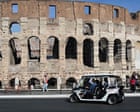
On the edge of Piazza Navona, one of the grandest squares in central Rome, Barry and Linda, visitors from Texas in the US, stepped out of a golf cart. They planned to cross the square on foot, perhaps stopping to admire Lorenzo Bernini’s 17th-century Fountain of the Four Rivers, before being picked up by their driver at the opposite end.
The couple had already done a walking tour on day one of their trip, and had been so exasperated by a stifling three-hour shuffle along a corridor towards the Sistine Chapel on day two that by the third day they wanted to give their tired feet a rest.
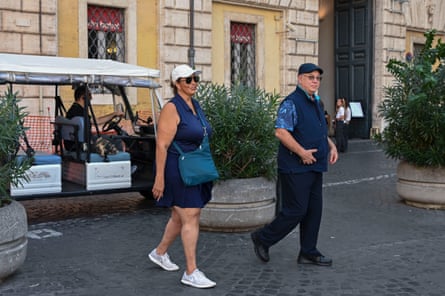
“When I first heard you could do golf cart tours in Rome, I thought to myself: that sounds a little weird,” said Barry. “But then we decided to try it out.” He said the most enjoyable thing about the experience was “feeling the breeze”.
Rome is a difficult city to navigate, noted Linda, especially its ancient narrow streets in the centre. “There are no sidewalks,” she said. “Our feet were hurting and we needed a break.”
For visitors, golf cart tours offer respite from the heat, crowds and cobbles. For residents, however, their proliferation in recent years has become another source of frustration in a city already wrestling with traffic and overtourism.
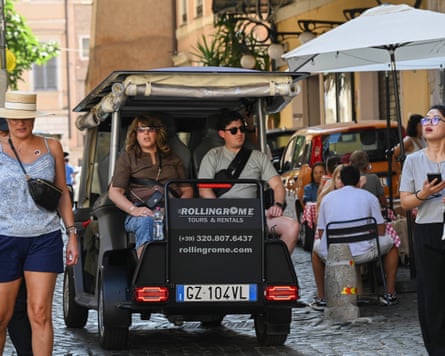
Taxi drivers are especially incensed, accusing golf cart operators of stealing their business, while one local newspaper said the city had been “taken hostage” by the vehicles.
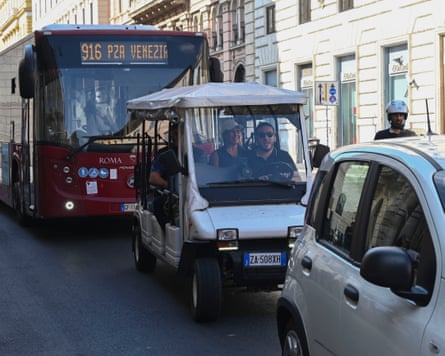
Now Rome authorities are cracking down on the burgeoning trade. Police intensified checks this week after the news agency Adnkronos reported that 90% of the roughly 500 golf carts circulating in the city were operating without authorisation.
In recent days, police stopped 131 carts around Piazza Navona, the Pantheon, Circo Massimo and the Spanish Steps, issuing €38,000 of fines for offences ranging from unlicensed driving to illegal parking.
Rome’s leaders are pushing for regionwide measures to properly regulate an activity that “risks spiralling out of control”, Eugenio Patanè, a councillor for mobility, told the news agency Adnkronos.
Prices vary based on the type of tour and duration, but the cost per person can start at €100 and exceed €400 for a half-day trip. Barry and Linda paid €310 for their three-hour ride. “But it’s worth it,” said Barry.
Rome’s traffic problem is hardly new. Julius Caesar tried to tackle the issue more than 2,000 years ago by banning private vehicles and commercial carts from the city’s streets during the day. Today, pedestrians, cars, scooters, delivery vans and the occasional rogue horse-drawn carriage all jostle for space.
Tourists can also take tours in Fiat 500s, on Vespas with sidecars, and even in tuk-tuks. But the golf carts seem to have drawn a special kind of wrath.
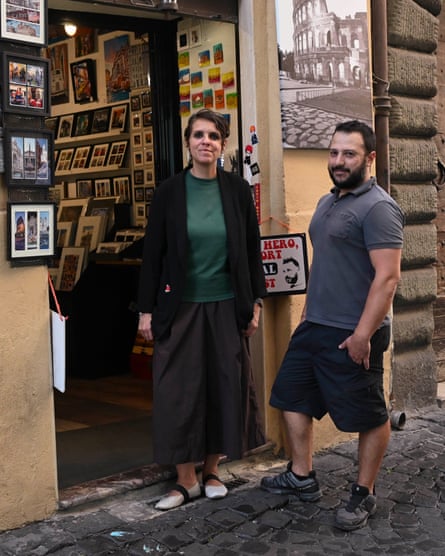
“There are too many of them,” said Nora Fahmi, who works at Trevimage, an art photography shop behind the Pantheon. “We’ve had this shop for 13 years and have seen all sorts of things, but the golf cart situation is kind of wild.”
Nearby, two teenagers from Israel were taking a rest on a parked cart. “We just want a lift to the Colosseum but you have to book online,” said their mother, Miri. “Rome is too crowded and it’s difficult to walk.”
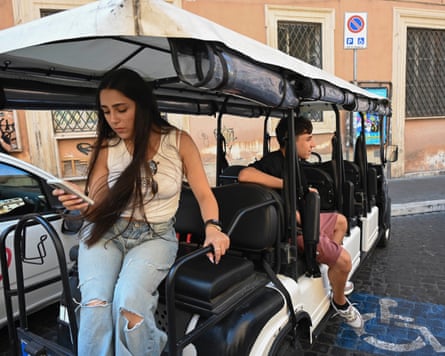
Elisa Isacco, who lives in the Monti area, spares no sympathy for the weary tourists. “What do they actually see or learn about Rome when they are on one of these things?” she said. “I find myself having to dodge them all the time – Rome is chaotic, it’s like a jungle.”
Amid the clampdown, several golf cart tour operators have banned staff from speaking to the press. But Leo Pavoncello, a driver for an operator in the Jewish Ghetto area, was happy to publicly defend the trade.
“Golf carts are silent and eco-friendly,” he said. “Rome is not an easy city to visit but these vehicles allow people with disabilities and families with children to see the sites in a comfortable way. On top of that, they provide jobs for young people.”
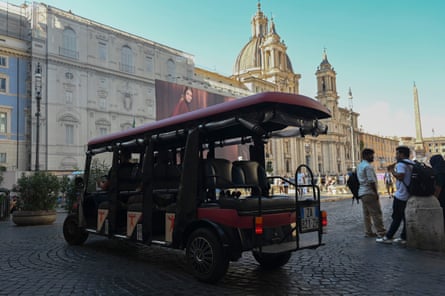
Pavoncello, who was subjected to the police checks and was found to be operating fully legitimately, argued that a few rotten apples were giving the business a bad name.
“I don’t understand why they are targeting us,” he said, although he suspects “taxi lobbies” are piling on the pressure. “But Rome is a touristic city that has always been full of traffic, and the golf carts are simply another mode of transport.”
KioskNews shows a cleaned-up reading view extracted from the publisher’s page — the original always lives on their site, not ours.