Inside Delhi’s parks after dark: No CCTV, dark corners, security gaps that are hard to miss
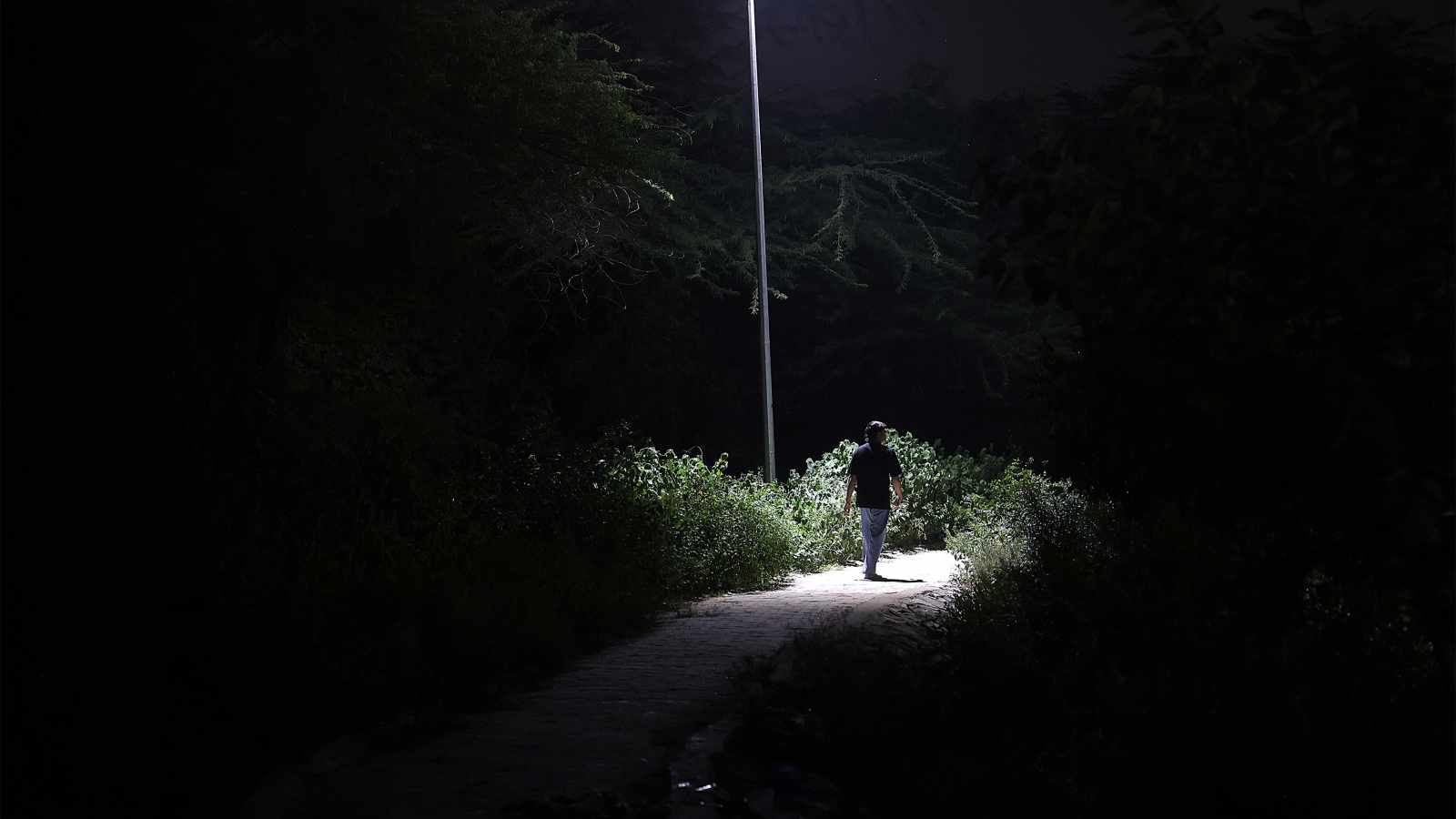
The three gates were locked. Each was manned by two guards. A police van was stationed a few hundred metres away. None of it mattered.
At 10:30 pm on September 24, three men reached one of the steel gates of the Delhi Development Authority park in Hauz Khas, which had been closed since 8 pm. They climbed over it in seconds, disappearing into the darkness at a dead sprint.
Their sprint was cut short about 100 metres in, when two guards stopped one of them. “How did you enter the park? Who are you?” Guddu, one of the guards, asks.
With a curly head of hair and a lanky frame, one of the men responds, “We are Baljeet’s friends. We are here to meet him.”
As the men walk away after the cursory exchange, the guards quickly call Baljeet, a park staffer. He flatly denies knowing them. Guddu summons his colleagues, and a quick chase follows, but to no avail.
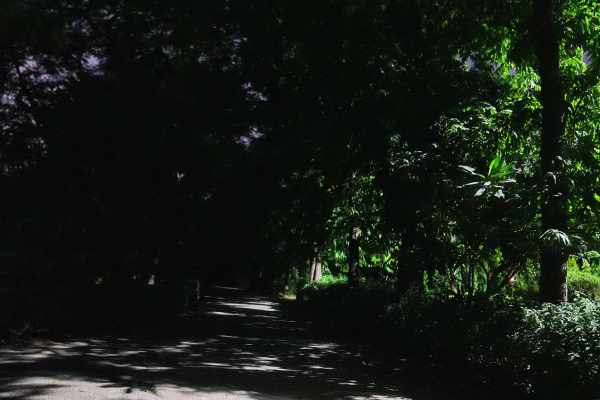 A park near North Campus, New Delhi, (Express photo by Abhinav Saha)
“This happens every night. If something happens now, we will be blamed. They will be hiding in some corner, smoking ganja, and then leave,” says Guddu, who has been working the night shift at the park for over five years. His tone is one of helplessness. “We only have one stick to guard the entire park. What are we supposed to do if they pull out a knife?” he says.
The 149-acre district park has street lamps almost every 50 to 100 metres. The guards say patrolling in the park has increased over the past year. The reason: last year, a boy was found hanging from a tree inside the park. But there are darker corners, owing largely to the dense stretches of intermingled trees and shrubs. Night-time patrolling around parks, the guards point out, has become a necessity only recently, after a 17-year-old girl was gang-raped by three men in Astha Kunj Park in southeast Delhi.
Story continues below this ad
Still, a glaring security gap remains. Despite the lighting, the park-goers complain that the park does not have CCTV cameras in the vicinity to capture suspicious movements or illegal activity. “The park is mostly visited by students, including school children. They are vulnerable. If something happens to them inside the park, who will know? There is not a single CCTV camera in the vicinity,” the guard says, sounding worried.
A brighter park, but little sense of safety
The park was lit up after Shraddha Walkar’s murder made headlines. Years later, it still has no guards or CCTV cameras, and park-goers say little else has been done to make it safer at night.
Maidangarhi Forest Park, built around a lake near IGNOU in South Delhi, is reached by a dark, unpaved path winding through wild keekars. Inside, the park is brightly lit.
A middle-aged woman, the only woman in the park, explains why. The lake was embanked and lights were installed after the 2022 Walkar case, in which Walkar was allegedly murdered by her live-in partner, who is accused of disposing of her body parts in the forest.
Story continues below this ad
But the lighting has not brought real security. Park-goers say that even the police post just a few metres away does little to deter trouble.
On September 26, around 9 pm, Shivank, 25, a management professional from Neb Sarai, returned to the park for a walk after staying away for several months. Soon after he arrived, he noticed a group of men who appeared to be using drugs in an unlit part of the park. He walked over to the nearby police post and asked officers to intervene.
“There were men sitting on a bench, and I asked the police to ward them off,” he said.
Vishal, who runs a horse stable next to the park, said he had grown used to scenes like this. “There are no guards. I warn young couples when they come at night not to stay long. Drunkards sit on the benches there,” he said.
Story continues below this ad
The security concerns are not confined to the park itself. On the road leading to the entrance, a man on a motorcycle stopped to offer a warning about phone snatchings.
“Don’t take this path. It’s not safe. Take the other one,” he said. “My phone was snatched here. I never got it back,” said Niranjan, a labourer who has lived in the area for more than a decade.
A park without guards, cameras
No guards. No cameras. Just teens, phones, and the dark.
At around 9 pm, Eidgah Hauz Rani Park, adjacent to Max Hospital in Saket, has no guards in sight, even as minors continue to use the park late into the evening.
Story continues below this ad
On a Thursday night, a group of eight school students – five boys and three girls – had gathered in a dimly lit corner, absorbed in a heated game of PUBG on their phones. With no one around to keep watch, a cigarette was passed freely among the minors, smoke drifting through the darkness. Few street lamps illuminated the park, and there were no CCTV cameras or guards at its single entrance.
The only visible camera was mounted on a building in the adjoining Press Enclave colony. It appeared to cover only the farthest corner of the park, leaving much of the grounds outside its view.
“We have been coming here for years. We come with friends, so it is safe for me. But I haven’t seen any police or guards here,” a 17 year old says.
Guards at the gates, dark spots beyond
On the other extreme of the city, Delhi University’s North Campus – home to colleges including Hansraj, Ramjas and Hindu – sits beside the Northern Ridge.
Story continues below this ad
At the expansive Bonta Park, the seven gates are shut by 7 pm. A guard is posted at each entrance, while CCTV feeds from the gates flicker across four screens in a makeshift room that doubles as a guard station. But there are no cameras covering the inside of the park, said Narender, one of the guards.
“Even after the gates are locked, students from the university sometimes climb over the walls and remain inside until 1 am,” he said.
Lately, though, the park has grown quieter at night. “Fewer students have been slipping inside, particularly young women,” Narender said. The rape reported at Astha Kunj has unsettled the area.
“The Astha Kunj incident has been all over the news,” Narender said. “We have also increased patrolling. If I see any students near the gate, I warn them that I will call the police.”
Story continues below this ad
As he spoke, three boys rode through the park on a motorcycle, their voices carrying across the grounds as they hooted loudly.
For some students, the unease extends beyond Bonta Park. Aranya Rathore, 25, a B.Ed. student at Shyama Prasad College in Punjabi Bagh, said she had stopped visiting parks around North Campus alone.
Rathore works with the Disha Foundation and frequently travels through the Vijay Nagar area, near the university. But she said she had begun avoiding the parks unless she was with a group of friends.
“I work with Disha Foundation, so I am in the Vijay Nagar area near North Campus a lot,” she said. “But I have now started to avoid going to these parks unless I’m with a group of friends. Most of them are poorly lit.”
Story continues below this ad
However, the concerns go beyond poor lighting and late-night access.
Deepa, a master’s student in the Department of History at Delhi University, recalled an incident in one of the parks near North Campus that took place in broad daylight.
“Most of the parks have bad lighting. In Hakeekat Park, two students were sexually harassed. Catcalling is normal here,” she alleged. She recalled visiting the park with a group of about 20 to 25 women at around 3 or 4 p.m. Even then, she said, a man approached them and began making comments.
The concerns also extend to public parks and open spaces around the paying guest accommodations where many women live.
“I live in the Mukherjee Nagar area. There are street lights here, and sometimes you also see PCR vans. But there are still multiple dark spots here. In a congested area like this, it still feels very unsafe to cross certain paths,” a student at the Miranda House College in North Campus says.
KioskNews shows a cleaned-up reading view extracted from the publisher’s page — the original always lives on their site, not ours.