New Green Card rules from September: Categories affected and those exempt
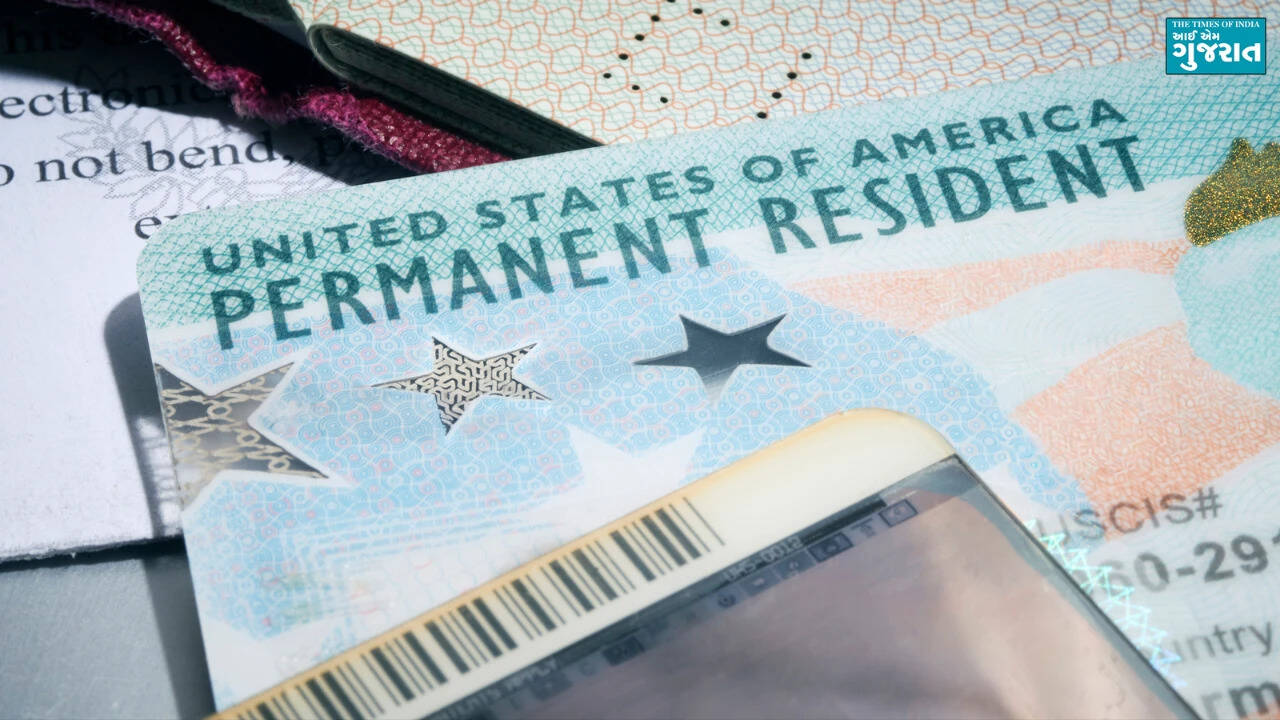

Starting this month (September, 2026) the US Citizenship and Immigration Services (USCIS) implemented new guidance on the public change inadmissibility determination. The rules expanded the requirement for most Green Card applicants to demonstrate financial independence, while exempting humanitarian categories such as refugees and victims of trafficking.
The new rules apply to a wide range of applicants, particularly those seeking permanent residency through family or employment pathways.
New Green Card rules: Categories subject to the new change
Most people applying to adjust their status to lawful permanent residence remain subject to public charge review under the new guidance. This includes spouses, children, and parents of U.S. citizens and lawful permanent residents, as well as other qualifying relatives; fiancé(e)s of U.S.
citizens; priority workers, professionals with advanced degrees, and individuals of exceptional ability; skilled workers, other professionals, and general workers under employment-based categories; investors; religious workers; and diversity visa immigrants.
USCIS has specifically reiterated that children are not exempt from the public charge ground of inadmissibility, closing off a potential point of confusion for family-based applicants.
Categories exempt
Humanitarian and special categories remain unaffected by the new rules. Exempt groups include:* Refugees and asylees* Victims of trafficking (T visas) and qualifying criminal activity (U visas)* Special immigrant juveniles* VAWA survivors* Afghan and Iraqi interpreters or nationals employed by the U.S. government* Cuban, Haitian, Nicaraguan, and Central American entrants* Certain diplomats, broadcasters, and applicants under special immigration laws.
What role the I-864 affidavit still plays
The Form I-864, Affidavit of Support, continues to play an important role in the process, though USCIS has clarified that submitting a qualifying I-864 alone does not automatically establish that an applicant isn't inadmissible on public charge grounds. For family-based immigrants and certain employment-based immigrants, failing to submit a sufficient I-864 can itself result in a public charge inadmissibility finding, and officers may also evaluate whether the sponsor listed is realistically able and willing to provide the financial support they've committed to.USCIS has also noted that a few individual circumstances shouldn't, on their own, trigger a negative public charge determination — periods of unemployment, age, and disability are not supposed to automatically count against an applicant, particularly if the individual is otherwise healthy and willing and able to work.
Which filing date determines which rules apply
Perhaps the most important practical detail for applicants is the transition timeline, since USCIS adjudicates based on when an application was postmarked or submitted electronically, not when it's reviewed:* On or after September 18, 2026: The new 2026 guidance applies, with its broader list of considered benefits.* December 23, 2022 through September 17, 2026: The narrower 2022 Final Rule and its more limited benefits list apply.* Before December 23, 2022: The original 1999 Interim Field Guidance applies.This means the exact same set of facts — for example, a green card holder's spouse who received SNAP benefits several years ago — could lead to a different outcome purely depending on which filing window the application falls into, making the submission date itself a significant factor for applicants navigating the new system.
A bond option remains available
If USCIS determines an applicant is inadmissible solely on public charge grounds, the agency retains discretion to allow the individual to post a Public Charge Bond using Form I-945 as a financial guarantee, rather than being automatically denied — an option that predates the current changes but remains part of the updated guidance moving forward.
KioskNews shows a cleaned-up reading view extracted from the publisher’s page — the original always lives on their site, not ours.