Inside story: Divers rescue man trapped in unexplored underwater cave
On Aug. 4, 2026, two cave divers in Playa del Carmen, Harry Gust and Rosalino Rivera, received a call from the president of Uxpanapa, Veracruz, located deep in the heart of the rugged, dense Selva Zoque, the largest expanse of tropical rain forest remaining in Mexico.
They were tasked with recovering the body of Erasto Crisanto Valdez, a 31-year-old man who had gone spearfishing in a local cenote on July 23 and had not come back out. Divers had searched for him, but had found nothing.
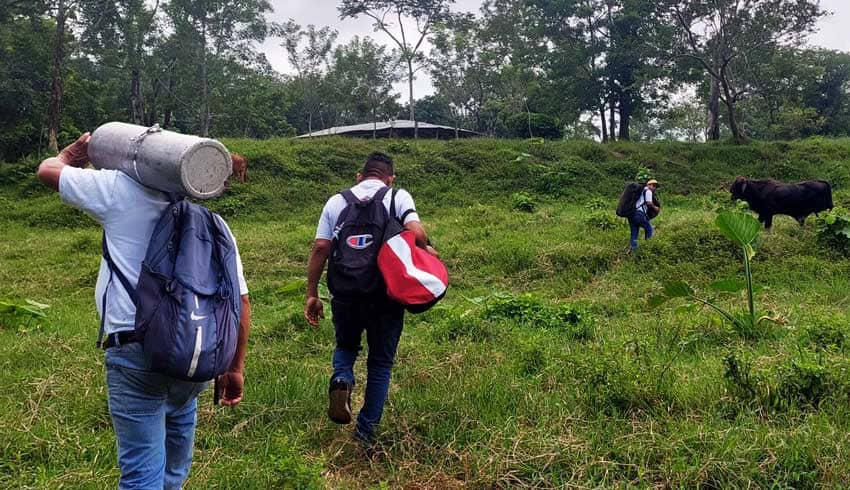
‘Just an easy walk’
“It took us two days to drive all the way to Uxpanapa,” Gust, a professional cave-diving instructor and explorer, told me. “The next morning they told us we only had to walk 900 meters to reach what they were calling a cenote. The local people were really great about helping us carry our gear, but there were lots of surprises.”
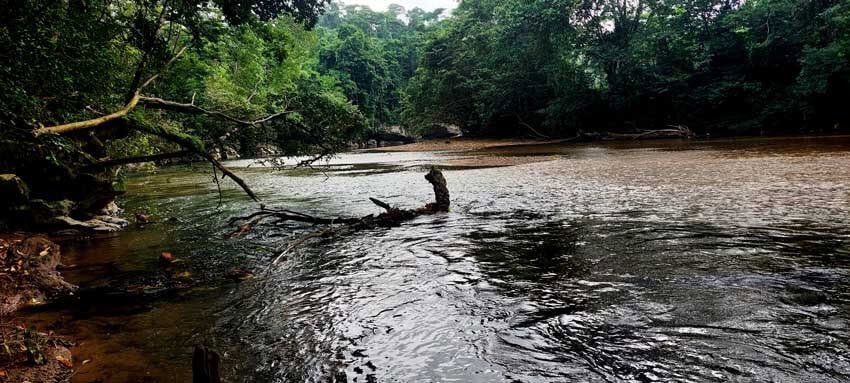
According to Gust, he and Rivera had to use a canoe to cross a river that was much larger than they expected.
“The river turned out to be 100 meters wide, and the canoe was a wee bit overloaded,” Gust said. “Another 10 centimeters and we would have been underwater.”
He adds, “What people were calling a cenote was actually a spring pouring out of a hillside, locally known as La Cueva. And we discovered we were now in the state of Oaxaca.”
Despite the long, difficult trek, they eventually made it to their destination.

Rocks as sharp as knives
The cave divers suited up. For safety reasons, Gust went in first while Rivera waited outside.
“The average depth of the cave passage was 6 meters,” Gust told me, “and the visibility was less than a meter. So I went inside, trailing a line behind me, but there was nothing in there that I could tie on to for directional changes.”
Gust said the “almost razor-sharp” rocks on the floor of the passage were anywhere from 30 centimeters to a meter long, and “pointed up like kitchen knives.”
“All you had to do was pull the line across one of them, zigzag twice, and your line is cut through, gone,” Gust said. “Normally you would say this is insane, forget this.”
But then Gust made his call.
“I said, ‘Okay, I’m going for it.’ So I went down the center about 50 meters into the cave and came back out. Couldn’t find anything. I went back low, then high, and next I followed the right wall. Nothing. Finally, I did the left side, and at about 75 meters in, I found a small spare air tank on the floor.”
Gust said he also found a small bag and three rocks for “buoyancy control,” which Gust believes the diver dropped when he ran out of air.
“But the rocks were spread out like breadcrumbs,” Gust said, “showing me which way he went.”
At that point, low on gas and mentally tired, Gust said he “tied off on a small mushroom-shaped rock that had sharp edges on its stem, but not as bad as the others.”
Believing this was a body recovery, he left the cave and returned the next morning.
‘Anybody in here?’
The following day, Gust searched beyond the spare air tank he had found. There, he stumbled upon a D-size flashlight battery lying on the floor of the passage.
“Now I knew I was heading in the right direction,” Gust said. “As I looked up, I saw there was an air space above me, and as I continued forward for 4 meters, I encountered a very strong flow that I couldn’t swim against.”
Gust said he surfaced and noticed a “large dry cave with a creek of water flowing in the middle of it.”
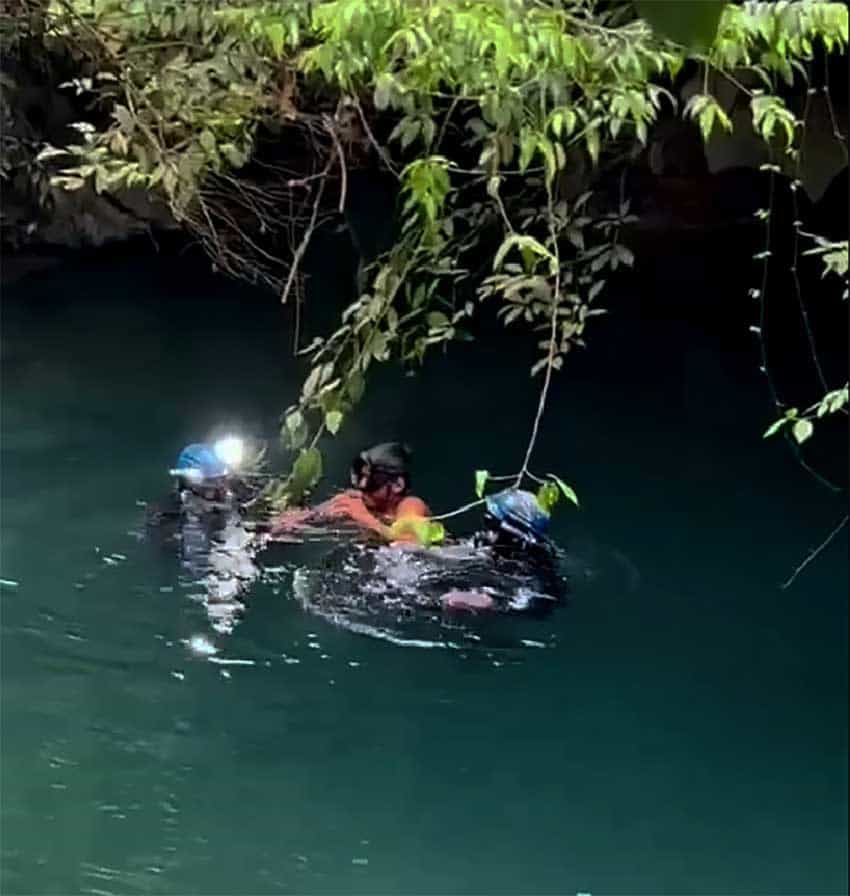
“I muscled myself up out of the water, side-mount tanks and all, and I yelled into the cave in Spanish if there was anybody in there,” Gust said. “And to my utter astonishment, I heard a faint ‘Sí.’”
Gust said he couldn’t believe what was happening.
“I ask him his name, and it’s Erasto — and I say, ‘You’ve been here for two weeks?’ and he said, ‘Yeah.’”
Gust told Crisanto Valdez to hold tight, saying he would be back to complete the rescue.
“‘Your family is waiting outside,’” Gust told the stranded diver.
‘Erasto is alive!’
Gust exited the cave and told the people gathered outside that Crisanto Valdez was alive. As Gust recalled, he had to convince everyone that he was serious.
He told Rivera to suit up so that they could join Crisanto Valdez.
“‘We’re going in so this guy won’t be alone, and if he can move just a little bit, we’re going to take him out,’” Gust told his rescue partner.
“So we went to the dry cave. Rosalino took off his tanks and talked a bit to Erasto, who had been sitting in a niche next to a stream of crystal-clear, drinkable water. He seemed lucid. Then the two of them slowly walked 10 meters to where I was,” Gust said.
While Rivera attached his tanks, Gust talked and joked with Crisanto Valdez to gauge his mental state.
“In his favor was the fact that he knew how to use a diving mask and breathe from a second-stage regulator,” Gust said. “We did a quick checkout, and there he was, breathing the second-stage regulator from Rosalino, supplied by a long hose.”
“Once Erasto was comfortable,” Gust added, “we started the exit.”
Quick exit
Gust said Crisanto Valdez didn’t have any fins, but that didn’t stop a speedy exit.
“We got out in record time,” Gust said. “Maybe five minutes.”
Upon exiting the cave, Crisanto Valdez was nearly blinded by the sunlight. Then, as his adrenaline level dropped, Gust said he “went limp like a baby.”
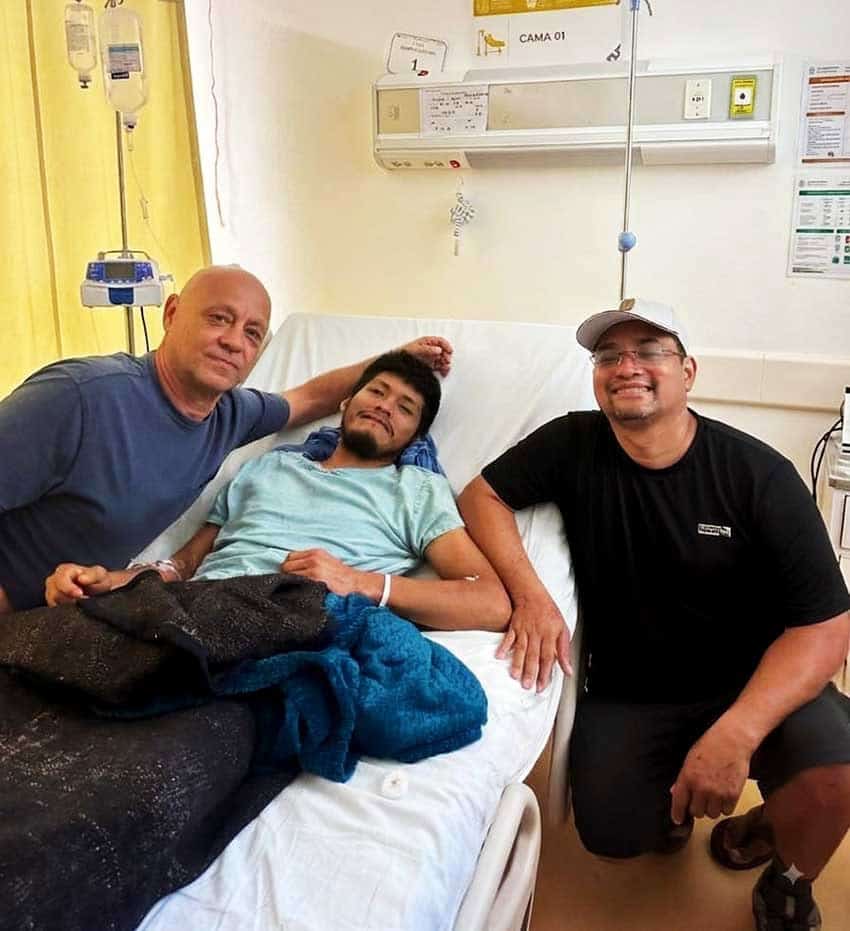
Sometime later, Gust and Rivera visited Crisanto Valdez in the hospital, where he was recuperating nicely.
Then, still a bit dazed and trying to process what had happened, they started the long drive back to Playa del Carmen.
John Pint has lived near Guadalajara, Jalisco, for more than 30 years and is the author of “A Guide to West Mexico’s Guachimontones and Surrounding Area” and co-author of “Outdoors in Western Mexico.” More of his writing can be found on his website.
KioskNews shows a cleaned-up reading view extracted from the publisher’s page — the original always lives on their site, not ours.