Why it's important to never plug power strips into each other
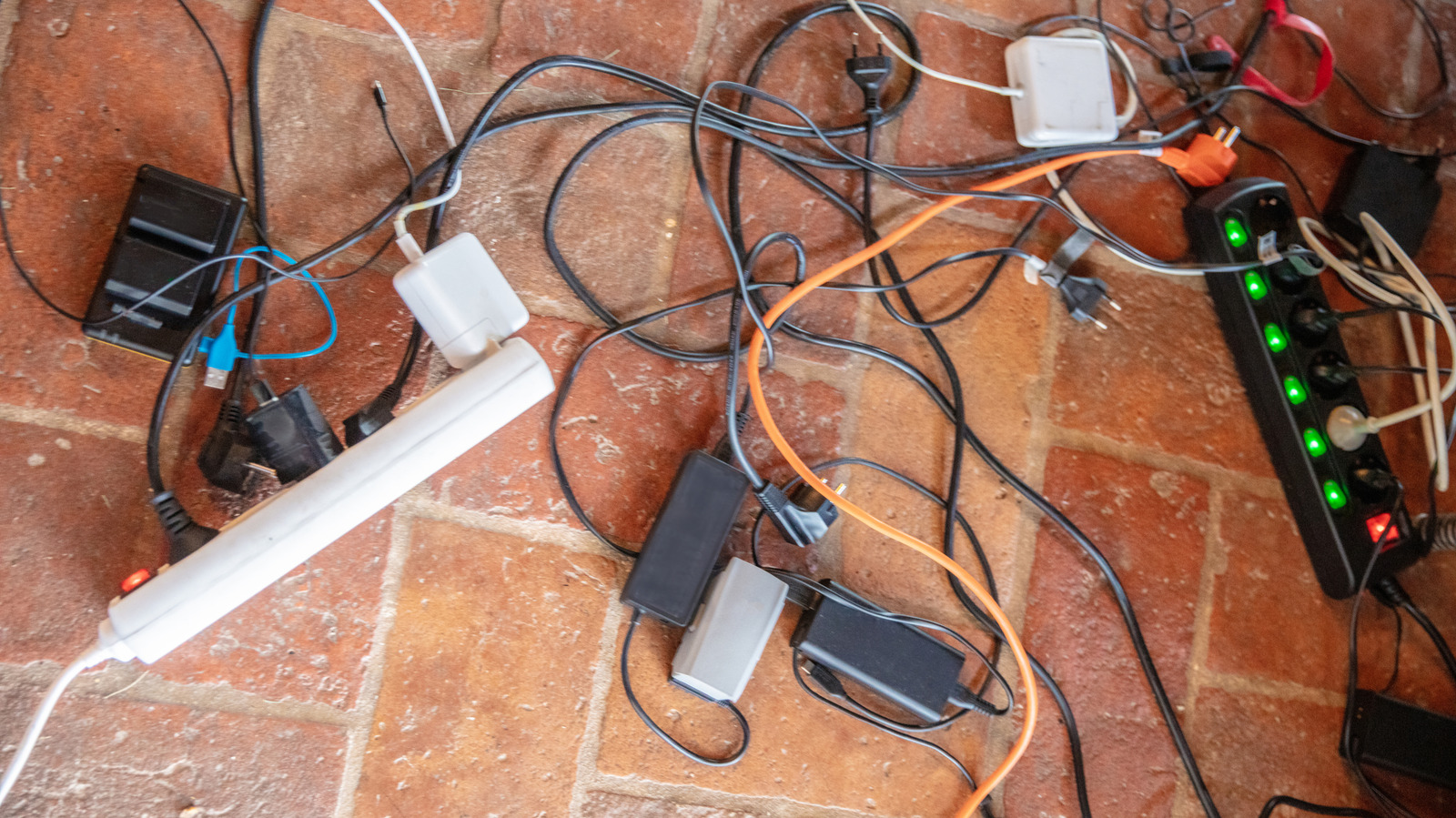
Your power strip needs a wall outlet and not another power strip.
Simonskafar/Getty Images
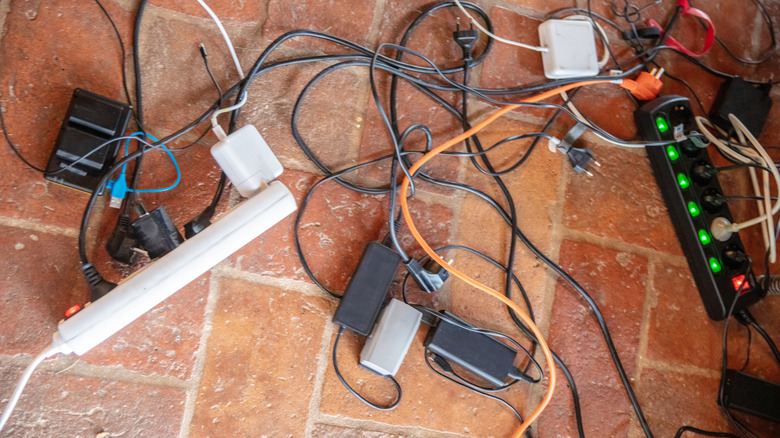
There are so many work-from-home devices nowadays that running a home office or a gaming area easily turns into a charging and power-consumption nightmare of tangled cords, ports and outlets. The idea of stringing power strips together by plugging one into the other (daisy-chaining) is a convenient, understandable solution. More outlets and ports mean more organization and power for each device. Unfortunately, it's not the greatest of ideas, especially if tripped breakers and house fires aren't on your to-do list.
The first problem is that adding sockets doesn't increase electrical capacity. Everything connected to the second strip draws electricity through the first strip's plug and internal components. The first strip is now carrying the combined load of the devices plugged into the second strip. The second problem is each strip's maximum rating, typically expressed in amps. If a second power strip is plugged into the first and the first is maxed out, the second strip could be the straw that breaks the proverbial camel's back, drawing too much and overheating the first strip.
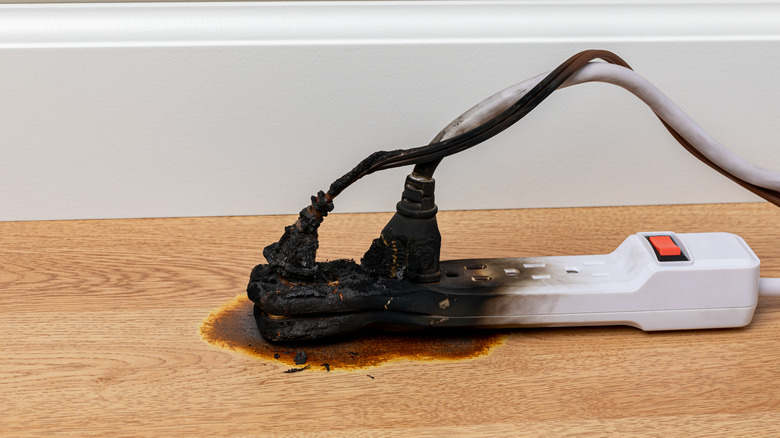
Pushing too much current through the internal wiring and components of the first power strip generates "resistive heating." Given enough time, it can melt the casing and wire insulation, possibly igniting nearby materials. In the aforementioned home office scenario, flammable materials are abundantly present in most cases.
What to do when one power strip is no longer enough?
What to do when one power strip isn't enough depends on what you need. Do you need more sockets? Ports? More reach or more electrical capacity? Where low-power electronics are concerned, a single power strip that's more generous with its number of outlets is your best bet. Just make sure that the total load remains within the power strip's rating. A strip with 8 outlets doesn't necessarily supply more power than a strip with only 4 outlets. It's a separate consideration you have to be wary of.
If distance is the issue, find a strip with a longer cord. Don't reach for an extension cord as a matter of convenience. NFPA explicitly advises folks to avoid that arrangement, since extension cords have their own ratings and too many devices plugged in at once can exceed those ratings. Of course, you can do the math based on the cord's rating, the strip and everything plugged into it, but most people aren't aware of the limitations.
If a single strip is tripping the breaker, adding a new one and dispersing the devices won't solve the problem. In fact, treat it as a warning that requires your immediate attention. Never use a strip with damaged casings, scorch marks or loose connections. It's not something you can wrap in half a roll of electrical tape and call it a day.
What should you never plug into a power strip?
Jj Gouin/Getty Images
As it happens, plugging a power strip into a power strip isn't the only thing you should avoid. High-power appliances can easily overload a power strip if it's not rated to handle it. Space heaters are a common one in this regard. They draw a fairly substantial amount of current and should only be plugged into a proper wall outlet. Microwaves and refrigerators are other prime examples.
For the safest route, use ordinary power strips with ordinary devices like PCs and printers, or to charge your phone. Also, six outlets doesn't mean it needs six devices plugged into it at once. Check the devices and match them against the power strip's ratings. They may seem like it, but power strips are not all-purpose devices for whatever needs power at the moment.
Lastly, a surge protector doesn't change the dynamics here. Surge protection deals with sudden voltage spikes but, like power strips, it won't magically conjure more energy capacity. Basic safety guidance for surge protectors also advises against daisy-chaining. The potential consequences warrant a repeat: check the surge protector's or power strip's rating and what you're plugging into it. If it's not enough, simply use another outlet or purchase a separate power strip and use another wall socket to run it.
KioskNews shows a cleaned-up reading view extracted from the publisher’s page — the original always lives on their site, not ours.