Interpol assembly to examine fugitive framework, ‘silver notice’ and AI crime

Interpol’s general assembly in Hong Kong will examine a global fugitive apprehension framework, a new “silver notice” to freeze criminal financial assets and AI-assisted crimes, drawing more than 740 representatives from 160 member states when it opens on Monday.
Wu Ying, Interpol’s executive director for capacity building and innovation, said on Sunday that police chiefs and senior officials from across the world would discuss the global policing body’s annual plans and directions for international cooperation at the 94th annual meeting.
“[The attending officials] will discuss how to tackle transnational crime and shared safety threats, as well as the strengthening of policing capabilities, and look into common strategies against these threats,” Wu said.
An Interpol spokesperson said that, as of Sunday, more than 740 delegates from about 160 of the body’s 196 member states had confirmed they would attend the four-day assembly, including 66 police chiefs. The assembly, Interpol’s supreme governing body, adopts resolutions on major policies, resources, working methods and financial matters.
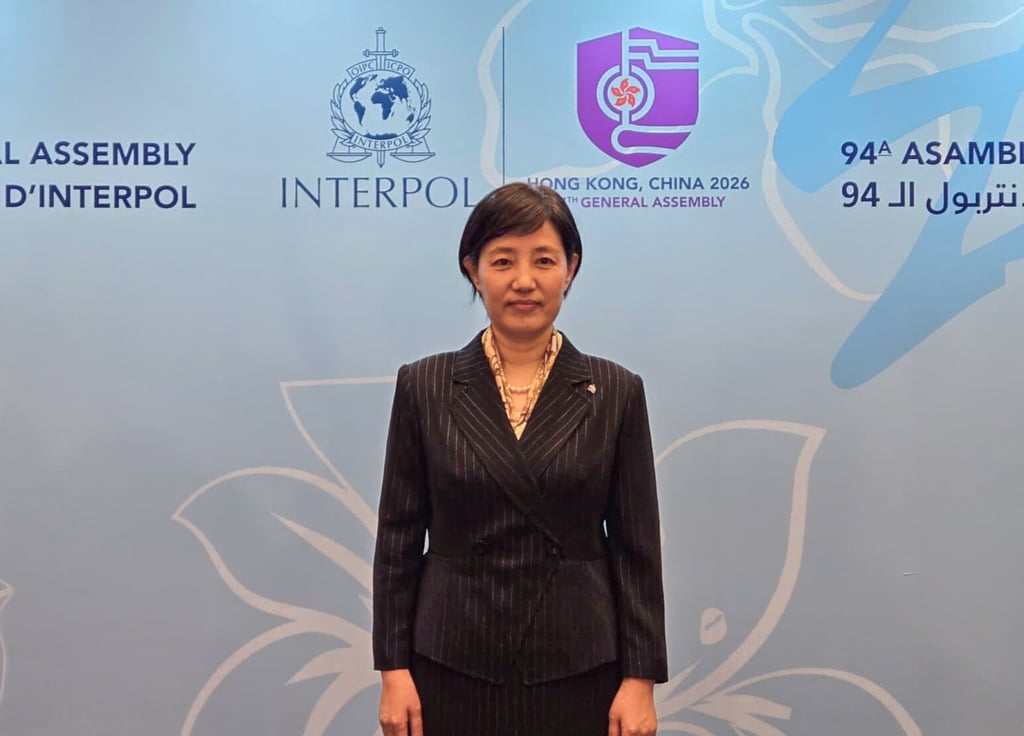
Hong Kong is hosting Interpol’s annual assembly for the first time, while China is acting as host for the third time. Beijing previously hosted the general assembly in 1995 and 2017.
The assembly would discuss the new silver notice, which targets criminals’ financial assets, and a new task force model for the global policing body to focus on specific criminal issues and regions, Wu said.
Valdecy Urquiza, Interpol’s secretary general, said in an earlier interview that the silver notice would enable the identification and seizure of financial assets belonging to criminals.
He said that with the system having been tested for two years, the notice could help prevent criminals from reorganising their enterprises and recruiting new members while law enforcement agencies were conducting investigations and arrests.
The silver notice will join Interpol’s colour-coded notice system. It includes the well-known “red notice”, a request for law enforcement agencies worldwide to locate and arrest a person pending extradition or surrender.
Aside from these issues, delegates will also discuss a number of law enforcement and security matters in breakout sessions on the second and third days of the assembly, on Tuesday and Wednesday.
Wu said issues to be discussed on the second day would include a global framework on fugitive apprehension, Interpol’s encrypted inter-agency messaging platform Nexus and how to apply its silver notice system.
On the third day, delegates will discuss the use of artificial intelligence (AI) in law enforcement, the body’s new task force model and how to prevent and investigate gender-based crimes, particularly those affecting women.
On the final day of the assembly, delegates will vote on a global framework on fugitive apprehension, measures to protect child victims of crime and steps to tackle AI-assisted crimes and terrorist acts.
An election for the Commission for the Control of Interpol’s Files, an independent body that oversees the body’s databases and can correct information logged there, such as whether a person should remain under the red notice, will also be held.
An agreement between Interpol and the European Union will also be signed, but its contents have not been disclosed ahead of the meeting.
KioskNews shows a cleaned-up reading view extracted from the publisher’s page — the original always lives on their site, not ours.