Dynamic US vs ossified Europe? Not so fast

Some American politicians and business leaders have grown fond of pronouncing Europe’s decline. “Is Europe … just a museum that is a relic of the past?” Matthew Whitaker, the US ambassador to Nato, asked in December 2025. Jamie Dimon, the head of JPMorgan Chase, was even more blunt, saying that “they’ve driven business out, they’ve driven investment out, they’ve driven innovation out.”
The standard narrative contrasts a dynamic United States with an ossified Europe. The evidence usually offered is growth rates, stock market valuations and the tech giants that dominate them: none of the world’s 20 most valuable companies are European. The usual conclusion is that the US holds the cards, and Europe has to take whatever terms it is offered.
Europe’s economic problems, from the sluggish growth to the absence of any European Google or Anthropic, are real. However, the American and European economies are increasingly intertwined and complement each other more than they compete. The US leads in code, but Europe still holds many of the hardware cards.
The artificial intelligence (AI) boom shows this most clearly. The models are American, but much of the hardware that makes the chips and powers the data centres is European. Beyond the Dutch firm ASML, the sole maker of the extreme ultraviolet lithography machines needed for the most advanced chips, the European Union supplies nearly half of the power-generation equipment the US imports and a third of its high-voltage switchgear and chipmaking equipment.
These figures understate Europe’s role, since firms such as France’s Schneider Electric or Germany’s Siemens build much of their equipment in American and Mexican plants. Schneider alone earns more from data centres than its biggest American rival, Vertiv.
These flows show up in the trade balance. Last year, the EU exported €195 billion (US$214 billion) of hi-tech products to the US and ran a surplus of about €64 billion. That surplus rests on pharmaceuticals, a substantial share of them made by American companies in Ireland for tax reasons and shipped home, which only shows how intertwined the two economies are. The US, in turn, runs a large surplus in services.
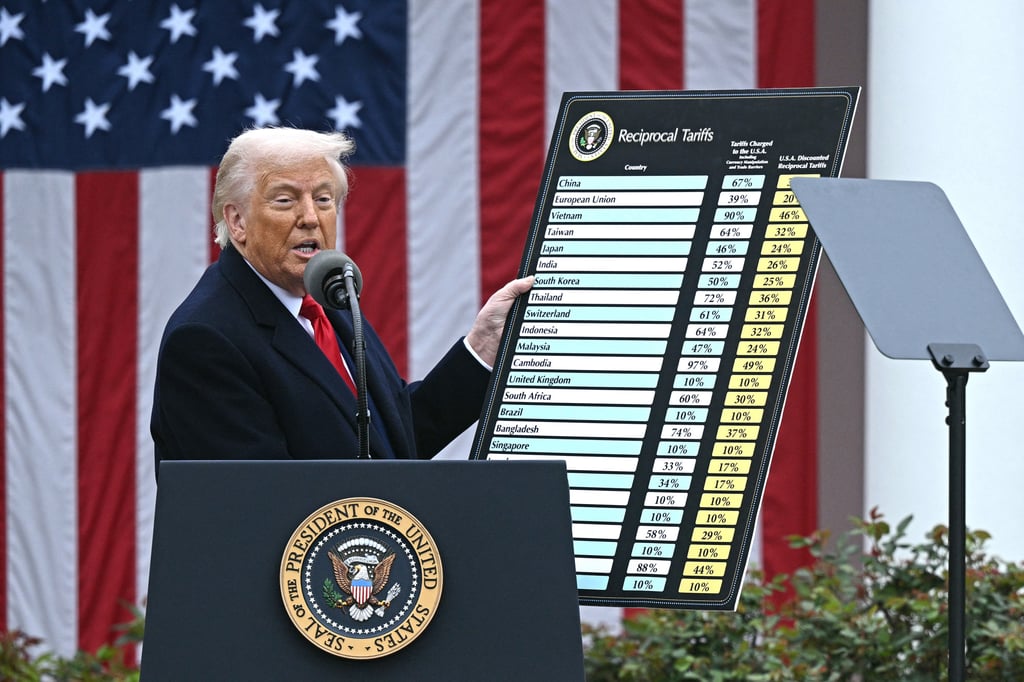
Europe’s goods surplus, one of the targets of US President Donald Trump’s tariffs, has fallen to about 0.6 per cent of gross domestic product, the smallest in more than a decade. However, this reflects less an American manufacturing revival than lower pharmaceutical shipments after the stockpiling triggered by his tariff threats and Europe’s growing purchases of American energy as it replaces Russian gas.
According to French research centre CEPII, the US depended on the EU – meaning it bought mostly from Europe and had few alternatives – for 91 products worth US$53 billion in 2022. In the opposite direction, the EU depended on the US for just 21 products worth US$5 billion. More than half of US dependence is medicine, from insulin to vaccines; the rest ranges from handguns to specialised machinery. Europe’s reliance on the US lies in services, energy and defence. Both depend far more on China: the US for 199 products, the EU for 250.
Unlike their politicians, US companies do not act as if they believe in European decline. Europe accounts for almost half of their output abroad and more than half of their foreign research spending. The flow runs both ways. European companies employ more than 5 million Americans, including 1.7 million factory workers, about one in eight in the country.
Much of the money Europe earns from its surplus flows back into American assets. Excluding custodians that merely hold assets for others, investors in Europe owned around US$10 trillion of American assets in 2023, a recent Brookings study estimates. Roughly US$4.5 trillion of Europe’s holdings were in shares, nearly a tenth of the American stock market at the time, and part of the money behind the tech giants’ towering valuations.
Another US$2.5 trillion was in bonds. While EU government debt has stayed at around 81 per cent of GDP since 2010, US debt has climbed from 96 to 124 per cent. Nearly a fifth of all foreign-held US Treasuries are held in the euro area, though some of them belong to others, including China’s central bank.
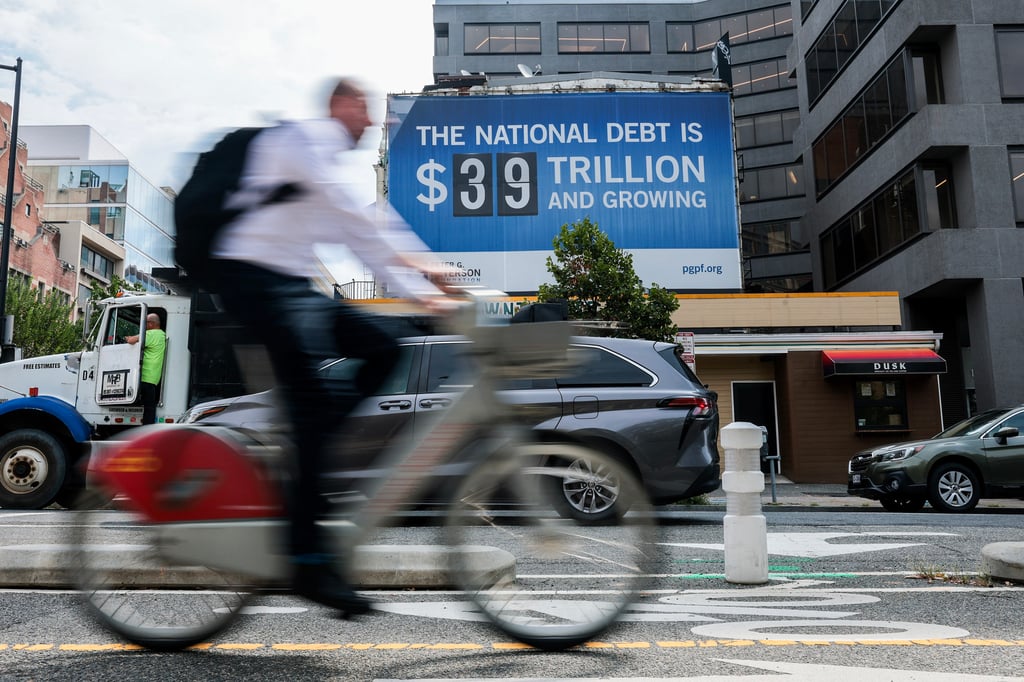
The arrangement binds both sides: a European sell-off would raise American borrowing costs, but it would hurt European savers, too. It also reflects a European weakness in that the continent’s capital markets remain too fragmented to put its own savings to work at home.
The political and economic sides of the transatlantic relationship are pulling apart. The political drift will probably outlast Trump, even if it becomes more polite: putting national interests before what some voters see as costly internationalism is simply too popular.
However, the economic ties underneath point the other way. In the short run, tariffs can redirect some trade, as pharmaceuticals and energy show, but they cannot undo decades of specialisation. An America that has spent half a century moving away from manufacturing cannot reindustrialise overnight, and its AI buildout needs European equipment.
The bigger mistake would be to underestimate how intertwined the two economies are, as Europeans did in 2008, when they dismissed the financial crisis as an American problem until it engulfed their own banks. Each side needs the other more than its politics admits. At a time of growing geopolitical tension, both would lose if those ties unravelled and would have to lean more heavily on other large partners, such as China.
Europe’s leaders would do well to remember how much leverage they hold. Washington would do well to remember that a weaker Europe would hurt the US, too.
KioskNews shows a cleaned-up reading view extracted from the publisher’s page — the original always lives on their site, not ours.