‘Beyond priceless’: how a halt to dredging saved the seas of Scotland’s Summer Isles
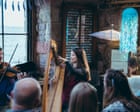
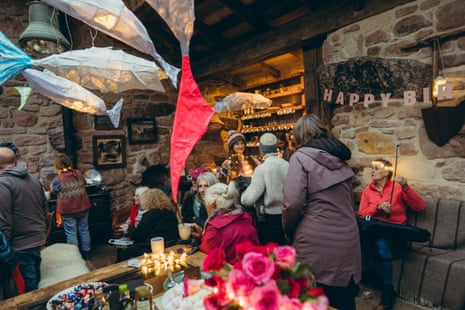
Inside a bothy overlooking the Summer Isles, in the north-west of Scotland, the lilting tones of a traditional Gaelic duo fill a room full of musicians, storytellers, artists, local people and revellers, hung with fish-shaped lanterns and “Happy Birthday” signs.
It’s no ordinary birthday. The people in the small cabin have come together, on a windy night in Achiltibuie, a string of coastal hamlets and villages north of Ullapool, to celebrate an important milestone in the community’s history: a hard-won battle to protect their waters from the ravages of scallop dredging.
The coastline here, a metallic grey seen through the bothy’s windows, is dotted with beds of one of the UK’s most biodiverse and carbon-rich habitats, a 9,000-year-old pink seaweed called maerl, two of which are a mile long. This rare, fragile and threatened seaweed produces hard, chalky, coral-like skeletons that provide nurseries for scallops and fish.
Now, 10 years after local people, divers, activists and creel fishers ran a successful campaign to have scallop dredging banned by law in a 600 sq km (150,000 acre) zone now designated a marine protected area (MPA), they say they have already witnessed a dramatic revival of marine life. The transformation of a seabed damaged by decades of dredging has allowed the recovery of scallop populations and ended the fractious territorial battles between the industrial dredge fishing boats and the smaller, more sustainable creel boats, local people say.
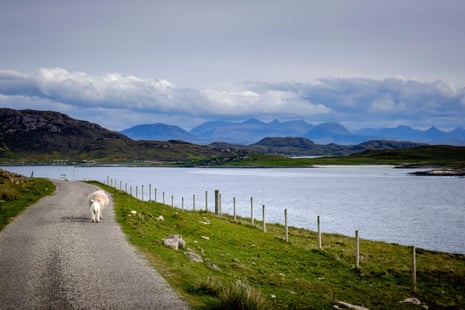
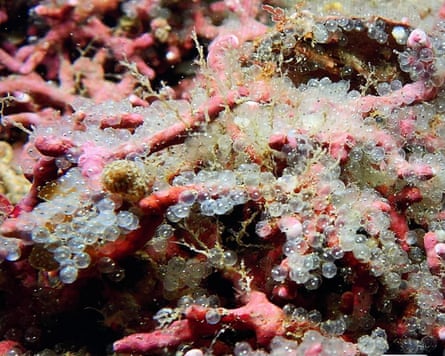
The community rowing club and nearby tour operators report increased sightings of whales, porpoises and dolphins. A large spawning ground for herring, once plentiful here but since overfished, has been spotted nearby and in prawn and lobster creels, or pots, which are laid on the seabed.
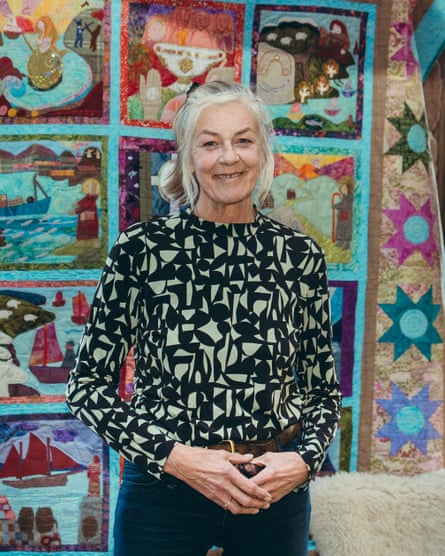
Diyanne Ross, 65, the local artist who made the lanterns, is part of the Blue Hope Alliance (BHA), a coalition of groups using citizen science to protect marine ecosystems in the north-west Highlands. She says the community’s achievements in protecting underwater habitats was the “most amazing thing to happen to the Summer Isles. It is an archipelago that is made in heaven for breeding fish.”
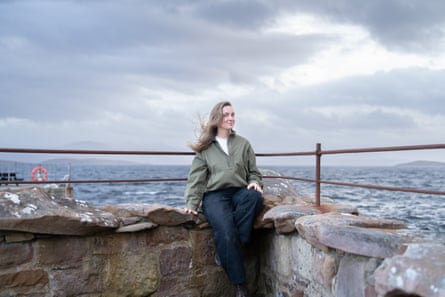
As a child, Ross remembers going out to sea for “boxes” of haddock, ling, pollack and cod – before populations declined. But she has seen recent signs of recovery. “There is more variety of fish being caught here than before,” she says. – anglers are catching haddock and cod.”
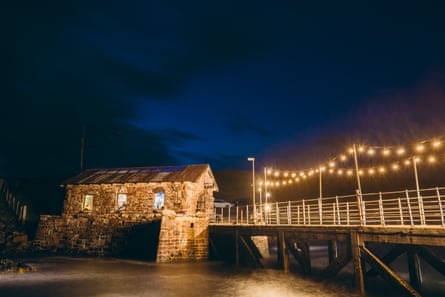
Outside on the pier, a hardy angler on holiday from Glasgow who has braved the wind to catch what he can, is rewarded by three fresh mackerel.
The recovery of scallop stocks, says Alasdair Hughson, a scallop diver, Scottish Creel Fishermen’s Federation (SCFF) chair and one of the BHA’s founders, has been “massive” and the seabed transformation like “night to day”. A decade ago, a boat supplying hand-dived scallops to his company, Keltic Seafare, would spend just two weeks in the Summer Isles.
Hughson, whose firm supplies shellfish to UK restaurants, admits his business stands to gain from the dredge ban, but says hand-diving is more sustainable, a claim backed up by research from Open Seas. The marine conservation organisation found low-impact fishing methods, such as diving and creeling, are not only more sustainable than dredging or trawling but that more of the revenue generated stays in the local economy.
Now, the Donna Marie creel boat, skippered by Ullapool-based Gary Lewis, runs to the Summer Isles almost all year. Lewis, who used to have to travel farther, to Skye and the Western Isles, before the dredge ban, says: “It’s not just the catch that’s improved, but the general health of the seabed.”
Central to the weekend-long Maerl-Herring festival celebrations, which includes storytelling, artworks and film, is the public launch of a BHA report spanning a decade of citizen science studies.
Jason Hall-Spencer, a professor of marine biology at Cyprus University of Technology, who wrote the report, says it shows the dredge ban in Wester Ross’s MPA, set up to protect the slow-growing maerl habitats and other marine features, has done its job. It has “protected the maerl to a massive extent” he says.
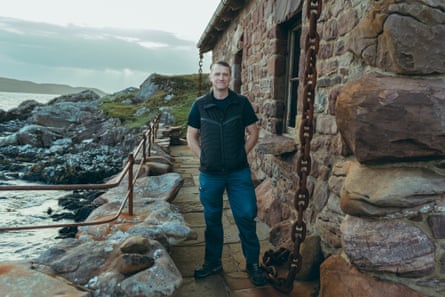
Author of the Conservation Status of Maerl Habitats in north-west Scotland, partly funded by NatureScot, Hall-Spencer has carbon dated the maerl in the bay as 9,000 years old.
“If scallop dredgers had spent the last 10 years going up and down here, the habitat would be obliterated,” he says. A single pass of heavy towed gear such as that used by scallop dredgers can crush or bury up to 70% of maerl. “The seabed is now incredibly rich. Maerl is a very important habitat, chock full of bivalves which provide food for skates and rays.”
Peter Drake, 73, a retired prawn fisherman from Polbain, a hamlet that is part of Achiltibuie, was part of Sea Change Wester Ross, a campaign group supported by SCFF, which grew into BHA. “It’s good to remember what we have achieved here” says Drake. “There’s already an improvement in fish populations, but it will take time.”
Orfhlaith McDevitt, 25, who has lived here for two-and-a-half years and runs Coigach Community rowing club, says: “People from the club say they see more minke whales, dolphins and porpoises than they did 10 years ago.”
Years before Ocean, David Attenborough’s documentary, sparked outrage by showing footage of scallop dredgers bulldozing the seabed, causing damage that could be seen from space, Sea Change and the SCFF compiled a body of evidence of the devastation scallop dredgers were doing to fishing grounds and seabeds in Wester Ross.
The dossier was presented to Scottish ministers in parliament. In 2016, despite fierce opposition by the dredging lobby, scallop dredging was forbidden by law in the Wester Ross MPA, now the biggest protected area in the world for maerl. Prawn trawling is permitted in designated areas, while hand-diving for scallops and creel fishing by local boats under 150 gross tons, is also permitted.
The maerl’s three-dimensional structure allows high levels of oxygen, essential to scallops, and emits a chemical that attracts them.
But threats to the ecosystem remain: the BHA surveys, also highlighted damaged maerl in some locations – from illegal dredgers and from invasive algal growth that scientists believe could be caused by nutrients from salmon farms.
“We know that salmon farms put more nutrients into the water,” says Sara Nason, a journalist and documentary maker who founded Sea Change, which later became the BHA and organised the Maerl-Herring festival.
The BHA has now launched a three-year project with more than £153,000 of support from the National Lottery Heritage Fund and additional funding from members of the North & West District Salmon Fishery Board, to continue its work.
Elsehere, the battle for Scotland’s sea rages on. The Scottish government, which was criticised in June by the independent watchdog Environmental Standards Scotland for not fulfilling its legal duty to restore and protect the seabed, has launched a public consultation on improving protections for marine habitats and species inside and outside the MPA network.
Theresa Ross, who runs Achiltibuie Stores for the community of about 250 people living along this stretch of coastline, says the MPA is “fully supported” by local people as it “ensures fishing is more sustainable”.
But for a rural coastal community, where the sea supports livelihoods and few jobs exist, there are competing concerns, she says.
“There are more people working on the fish farm here than fishermen,” says Ross, whose husband is one of about six fishers in the village, while her son is one of 10 working on the farms.
“I support the status quo. But the fish farms are full-time jobs, guaranteed employment and well paid,” she says. “They are not weather dependent, like fishing.”
Nevertheless, Nason is one of many who are delighted that the end to dredging has been such a success, describing the protection of the maerl beds as “beyond priceless … We’ve achieved recovery of the whole ecosystem.”
KioskNews shows a cleaned-up reading view extracted from the publisher’s page — the original always lives on their site, not ours.