One year of weight-loss drugs in India: What happened to the ‘Mounjaro brides’?

Down a narrow lane in Lajpat Nagar, South Delhi, half hidden by low tree branches, is a small white door with silver lettering: “Weight Loss Clinic.” Behind it is a basement.
A silver aluminium partition divides the space in two. On one side is a small, brightly lit waiting area. On the other is the doctor’s desk. Nearby hangs a banner meant to reassure: “Obesity is a chronic disease. It has genetic, lifestyle and environmental components, and it is not a reflection of who you are.”
In the waiting area is a woman with her mother, a few others sit on a bench. They have all come for weight-loss consultations, and some have a date by which to do it: an impending wedding.
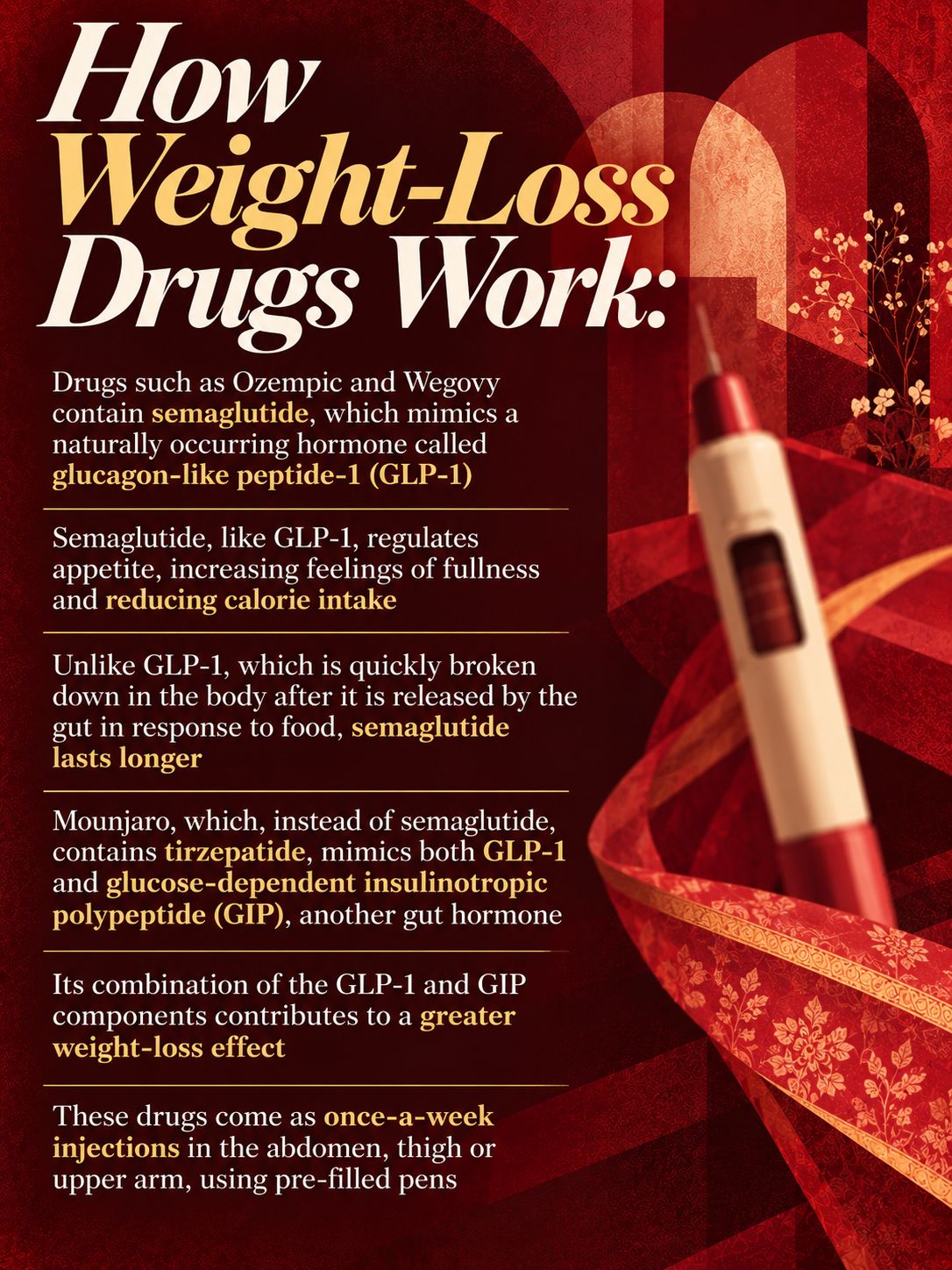
The clinic is one of a growing number in South Delhi that sell weight-loss programmes built on GLP-1 drugs, a class of medications first developed for diabetes and since approved for obesity. They include semaglutide, which Novo Nordisk sells as Ozempic and Wegovy, and tirzepatide, which Eli Lilly sells as Mounjaro — drugs that entered the Indian market last year.
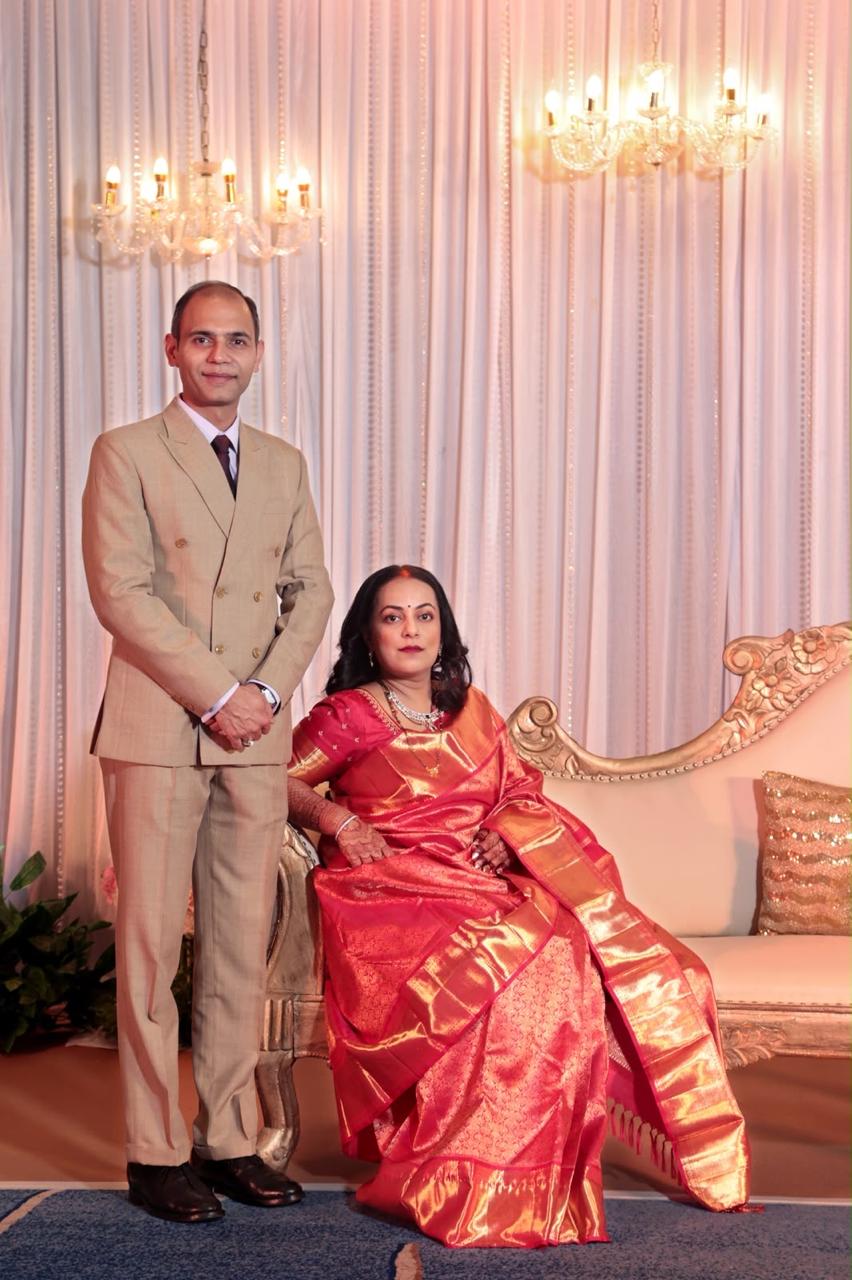 Akanksha Sadekar Chauhan with her husband Prakhar Narain Singh Chauhan on their wedding day
Since then, despite limited data on its effect on Indian patients, the drugs are among the most sought-after, by value, in India’s pharmaceutical market.
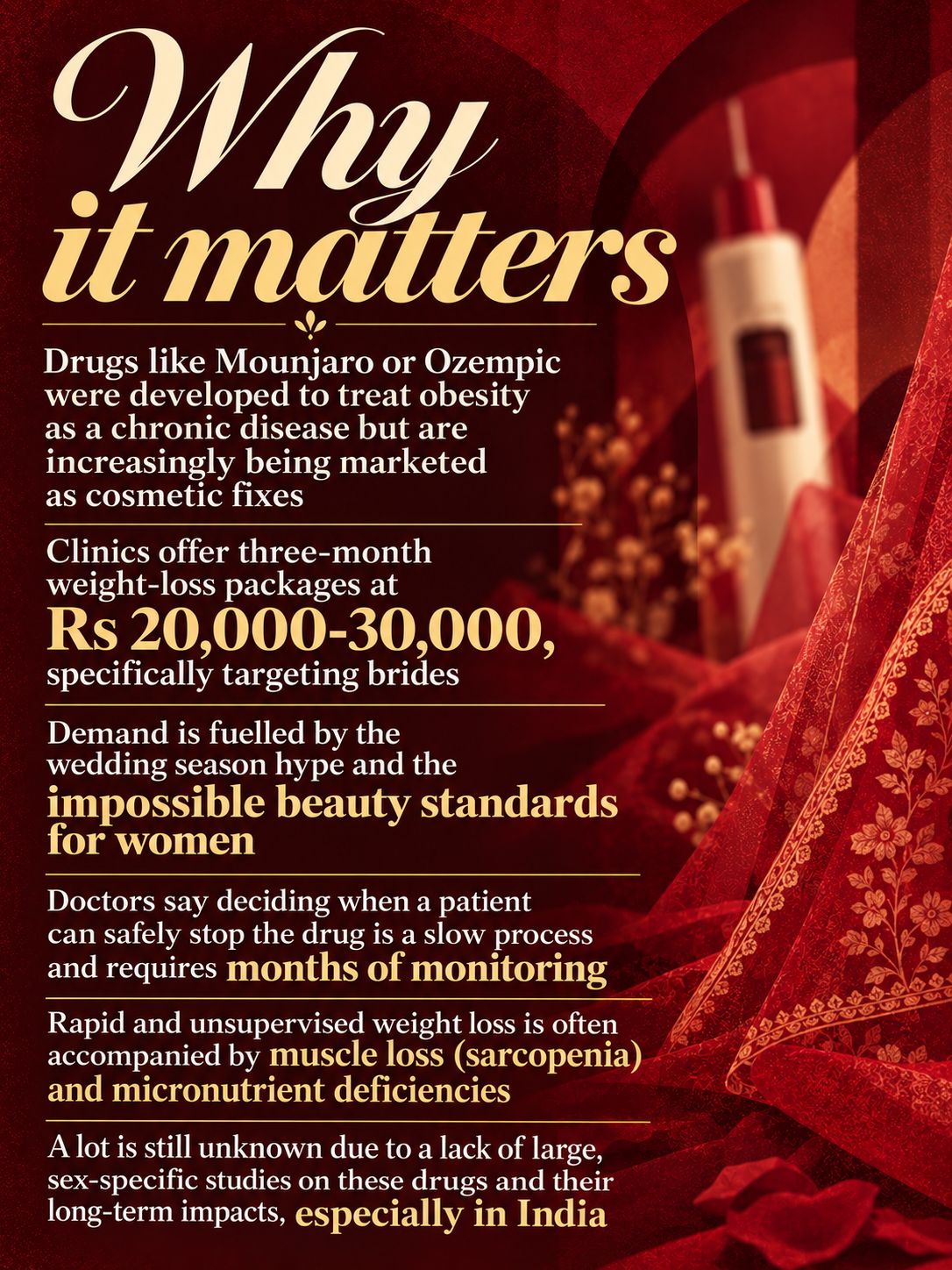
There have also been reports of the drug being used for cosmetic reasons, and of clinics offering “Mounjaro bride” packages to those aiming for quick-fix weight-loss before the big day. Now, a year into that trade, there are harder questions to tackle.
Doctors have increasingly been treating obesity as a chronic disease, not something that requires a cosmetic fix. But when the GLP-1 drugs for obesity treatment, which work by altering the body’s hunger signals, are used merely for cosmetic reasons, it raises a different set of questions. What happens after the immediate weight goal is reached, say, a wedding? Do the lost kilos stay away, or do appetite and weight bounce back once the three-month package runs its course?
Story continues below this ad
Interviews with clinics offering weight-loss programmes on tight deadlines, leading endocrinologists and patients who were on GLP-1 drugs ahead of their weddings shine some light on the risks that come with going down the path of quick-fix weight loss packages.
Inside a weight-loss clinic
The Lajpat Nagar clinic’s offer is simple. The programme promises “Mounjaro-assisted weight reduction” in three months for Rs 30,000. The price covers consultations with the doctor, a complimentary dietitian, and the injections themselves, which patients take home the day they pay.
“You’ll be added to a dietitian group,” a staff member explains. “They regulate your diet, and in three months, you’ll lose weight.”
A senior member of the staff says, “Most of our clients come ahead of their wedding. In the last one year, we have helped close to a hundred brides reach their desired weight.”
Story continues below this ad
 ⠀
⠀
It’s a tidy pitch by the clinic: three months to the wedding, three months to lose weight. Endocrinologists, however, point out that obesity keeps no such calendar.
“None of these is meant to be used for cosmetic, short-term use,” says Dr Ambrish Mithal, chairman of endocrinology at Max Hospital. “The drugs are for long-term use. Most, but not all, patients require a maintenance dose to keep the weight off.”
On the face of it, many clinics make the pitch sound reassuringly medical. A Hauz Khas clinic promises a supervised weight-loss programme, overseen by an “AIIMS-trained doctor”. But there is a catch. The doctor is a dermatologist, not an endocrinologist. A few kilometres away, another clinic, better known for facial aesthetics, makes a similar promise: a “doctor-supervised” Mounjaro package.
Mithal says there is a reason brides are the target. “Brides are the perfect commodity for predatory companies to sell their weight-loss drugs. A bride is the most vulnerable before their wedding, owing to the public scrutiny they go through. When an event like a marriage or a festival gets tied to the use of this drug, it trivialises the drug itself.”
Story continues below this ad
Deciding when a patient can safely stop the drug is a slow process, says Dr Mithal, requiring months of monitoring to determine whether weight loss has been sustained, metabolic markers have normalised and lifestyle changes are strong enough to hold without the drug.
He says that even those who start on the drugs with a wedding-date goal in mind would do well to consult an endocrinologist, someone who can monitor the patient’s health not only in the run-up to the event, but beyond it.
In their desperation, not many take that route.
Losing more than just kilos
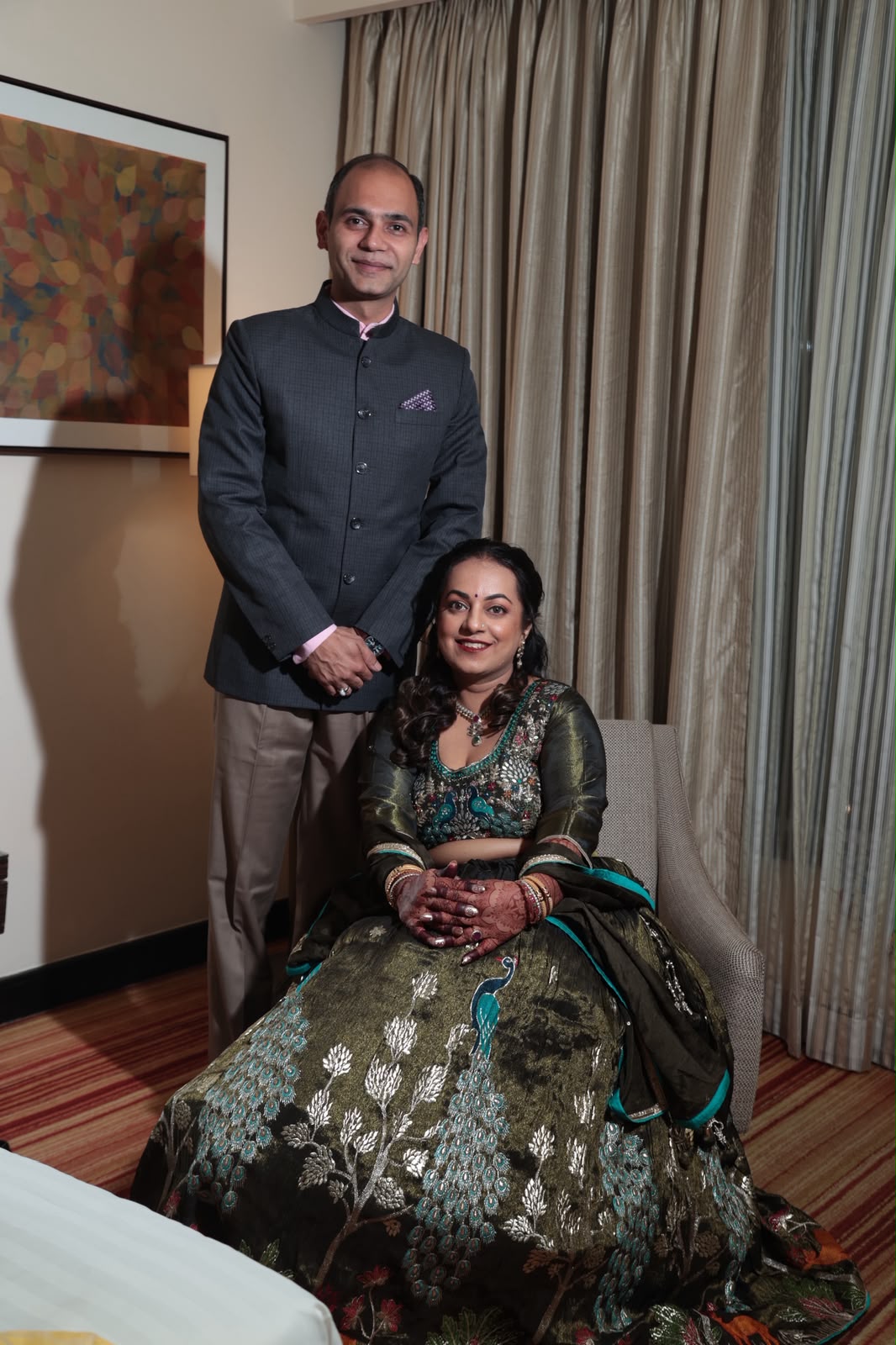 By the time Akanksha stood in her olive green lehenga, she had reached the weight she had been aiming for
Six months ahead of her September 2025 wedding, the 23-year-old science graduate from Ludhiana decided she needed to shed some of her 108 kg.
“The push came from both social media and a cousin,” says a Delhi-based endocrinologist who would eventually treat her.
Story continues below this ad
The cousin had taken a weight-loss injection before her own wedding and lost 50 kg, a transformation that was the topic of family conversations before the bride decided to try the drug herself. She found a local clinic that was willing to give her a weight-loss package.
“On her very first visit, she was handed Mounjaro in bulk, no questions asked about her medical history, no baseline tests run. She paid Rs 20,000 for a three-month course and walked out with the injections in hand,” says the endocrinologist, who works at a health start-up in Delhi and agreed to speak on condition of anonymity.
The Ludhiana clinic had offered the 23-year-old no tests. There was no gradual build-up of the dose, no monitoring, no plan for her and little contact with a doctor.
“The clinic asked her to self-inject Mounjaro and kept escalating the dose until she was at 12.5 mg, close to the maximum. She lost around 20 kg in 40 days,” says the doctor.
Story continues below this ad
Through it all, the patient remained unaware of the other half of the treatment: diet and lifestyle changes such as exercise and strength training.
Almost two months before the wedding, she travelled to Delhi for her lehenga trials and jewellery appointments. But by then, the side-effects of the drug were severe enough for her to visit the endocrinologist in Delhi.
“When she visited us, she had nausea, exhaustion, hair fall, menstrual changes and mood shifts, and she had lost a massive amount of muscle mass. Acne flared up on her face,” the doctor recalls. “During the consultation she looked anxious, jittery.”
He says his first concern was not how much weight she had lost.
Story continues below this ad
“We wanted to understand what was happening to her body during the process. Was she eating enough? Was she getting adequate protein? Was she losing muscle along with fat? How was her digestion and energy?” the doctor says. “The bigger conversation was about ensuring that weight loss was not coming at the cost of her metabolic and nutritional health.”
A full workup followed, and it found more than a lighter body.
“When we ran a full root-cause analysis, we found her hormones to be completely off, her periods were irregular, she had abnormalities in her metabolism, her thyroid was abnormal. And with all this, she was on unsupervised Monjaro,” says the doctor.
The drug had done what it was sold to do. The weight was gone. But she was left with a lot more to grapple with.
Story continues below this ad
“She visited us twice after her health checkup. We gave her a proper diet chart, exercises to do, and a gradual dosage reduction of Mounjaro, till the maintenance dose, to wean off the drug’s effect. She got married, but she never returned for a follow-up,” the doctor says.
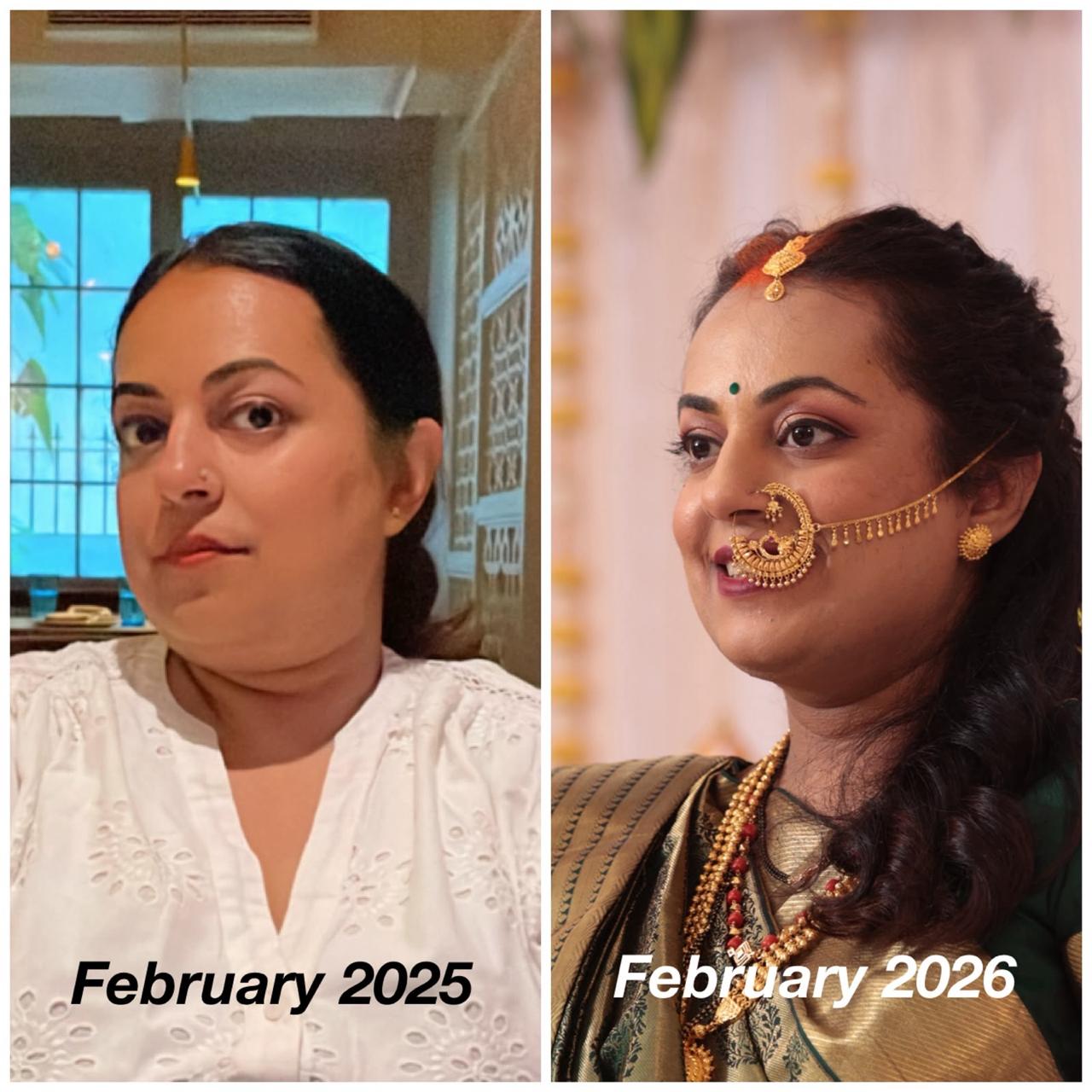 Akanksha’s weight loss journey sprung constant surprises, not all of it pleasant
Three months to February
Akanksha Chauhan did most of it right, with her weight loss monitored by an endocrinologist. Yet, the journey sprung constant surprises, not all of it pleasant.
It all began in December 2024, when Chauhan, a petroleum engineer who lives in the UK, turned 35, and “seriously started considering” whether she wanted to be a mother.
Her gynaecologist suggested she freeze her eggs, but he was concerned about her weight. “He told me he wasn’t sure about the quality of the eggs we would retrieve,” she says, adding that he advised her to shed some of the 99 kg that she weighed then.
“That was an alarm bell. I didn’t want to go into a three-digit number,” she says.
The gynaecologist referred her to an endocrinologist, who put her on Ozempic.
Her first dose was on March 25, 2025. Three days later, she met the man who would become her husband on a dating app. He was a practising lawyer, lean and athletic; she recalls being embarrassed about her weight. “I told him that in the next three months I was going to transform. I was almost trying to impress him,” she says, laughing at the memory.
But the next few months were difficult as Chauhan lived with the side effects of the drug.
“From April to August, I was in China on work. Suddenly, my appetite dipped, and had become zero. Along with that, I could hardly find anything that I could eat. It was mostly watermelon,” she says. Then, in the middle of the trip, nausea took over.
By November, the couple decided to get married and chose a February date for their wedding.
It was around this time that Chauhan decided to stop the drug for a month. She weighed 58 kg then. Within days, the scale began to move the other way. “Suddenly, I could see that there was some weight coming back,” she says.
 ⠀
⠀
It was also the time she began shopping for her wedding. She recalls walking into a store in Lucknow and settling on two outfits: a deep olive-green lehenga, and a green-and-gold silk saree. The outfits would take three months to arrive. For Chauhan, those months were a countdown, not only to the wedding but to the lehenga and its tailored blouse. “The only thing that was constantly running through my head was that I had to fit into that gorgeous lehenga and blouse,” she recalls.
She consulted her endocrinologist. “Because I was getting married in February and I had only three months, I went back on the highest dose that I had stopped at,” she says.
By the time she stood in her olive-green lehenga, she had reached the weight she had been aiming for. The lehenga fitted. So did the blouse. “I received compliments from everyone that day. They said I looked like I was 30 or 31, not 36. I felt so good that day. It was perfect,” she says, smiling.
But the wedding was the start of another chapter. On medical advice, in February, Chauhan stopped the drug again, this time for three months. She conceived, but the pregnancy ended in a miscarriage.
“When I got it tested, my gynaecologist said everything was normal and that my miscarriage was not related to the weight-loss drugs,” she says.
In June, she restarted the drug in the United Kingdom. “My Indian doctor was on a holiday,” she recalls. She decided to restart the dose herself, without the doctor’s advice. “It was a big mistake,” she says.
The consequence was swift — severe vomiting and dehydration. She spent three days in the ICU.
Chauhan is now back on Mounjaro, under her doctor’s supervision. “I will continue it for the next six months, just to maintain my weight, and then we will try to conceive next year,” she says.
From the consultation room
Dr Anoop Misra, executive chairman of Fortis C-DOC Hospital for Diabetes and Allied Sciences, is among the city’s leading endocrinologists. He has watched the boom in GLP-1 drugs unfold from his consultation room.
“We are seeing particularly strong demand among urban women, including women with post-pregnancy weight gain, PCOS-associated obesity and metabolic problems around the perimenopausal period. There is also considerable social pressure on women to achieve a particular body shape, and this creates a risk of medicalising cosmetic weight loss,” he says.
There is a message he now repeats to his patients.
“The most important message is that obesity is a chronic disease, not simply a temporary excess of weight. GLP-1 drugs should therefore not be viewed like a short course of antibiotics,” he says.
For many patients, Dr Misra says, treatment will need to be long term, especially if the underlying tendency to obesity remains.
“When treatment is stopped, appetite generally returns and substantial weight regain is common. A recent analysis of 37 studies has found that cardiometabolic benefits progressively diminish after stopping anti-obesity medication, with GLP-1 drugs associated with relatively rapid weight regain,” he says.
That does not mean the drugs can’t be stopped. In his experience, some patients can hold on to their weight loss with intensive dietary changes, more protein, physical activity and resistance training.
“The emerging consensus is therefore shifting from the question ‘When can I stop the injection?’ to ‘What is the appropriate long-term treatment strategy for this individual’s obesity?’,” he says.
But Dr Misra “draws a clear line” at using these drugs mainly for cosmetic weight loss.
While the immediate side effects of the drugs are well recognised — nausea, vomiting, constipation, diarrhoea and reduced appetite — with excessive or rapid weight loss, there are broader concerns, he says, including loss of muscle and lean tissue, nutritional deficiencies, gallbladder disease and potentially loss of bone mass.
Early observational data on bone outcomes need more confirmation, he adds, and should not yet be read as proof of cause.
“For Indian patients, I am particularly concerned about sarcopenia and micronutrient deficiency because a person can become lighter without necessarily becoming metabolically or physically healthier. This is especially relevant to women and older adults,” he says.
Dr Misra clarifies that his concern is not about the drugs themselves. “They are a major advance in obesity and metabolic medicine. My concern is using a powerful medical therapy for the wrong indication,” he says.
A word of caution
Chauhan has learned that the hard way. Despite the many turns in her weight-loss journey, she has had doctors monitoring her every step of the way.
She has also become an informal adviser to other women weighing GLP-1 drugs before their weddings. In a WhatsApp support community, brides on weight-loss GLP-1 drugs often reach out to her, and she tells them what she wishes more people understood: this is not another item on a pre-wedding checklist.
“I tell them about the reality: this is not like a bridal skin package or a hair package. It’s great to start before your wedding, but remember, it’s a long-term thing,” she says.
KioskNews shows a cleaned-up reading view extracted from the publisher’s page — the original always lives on their site, not ours.