What the circled "Z" on Google Maps means
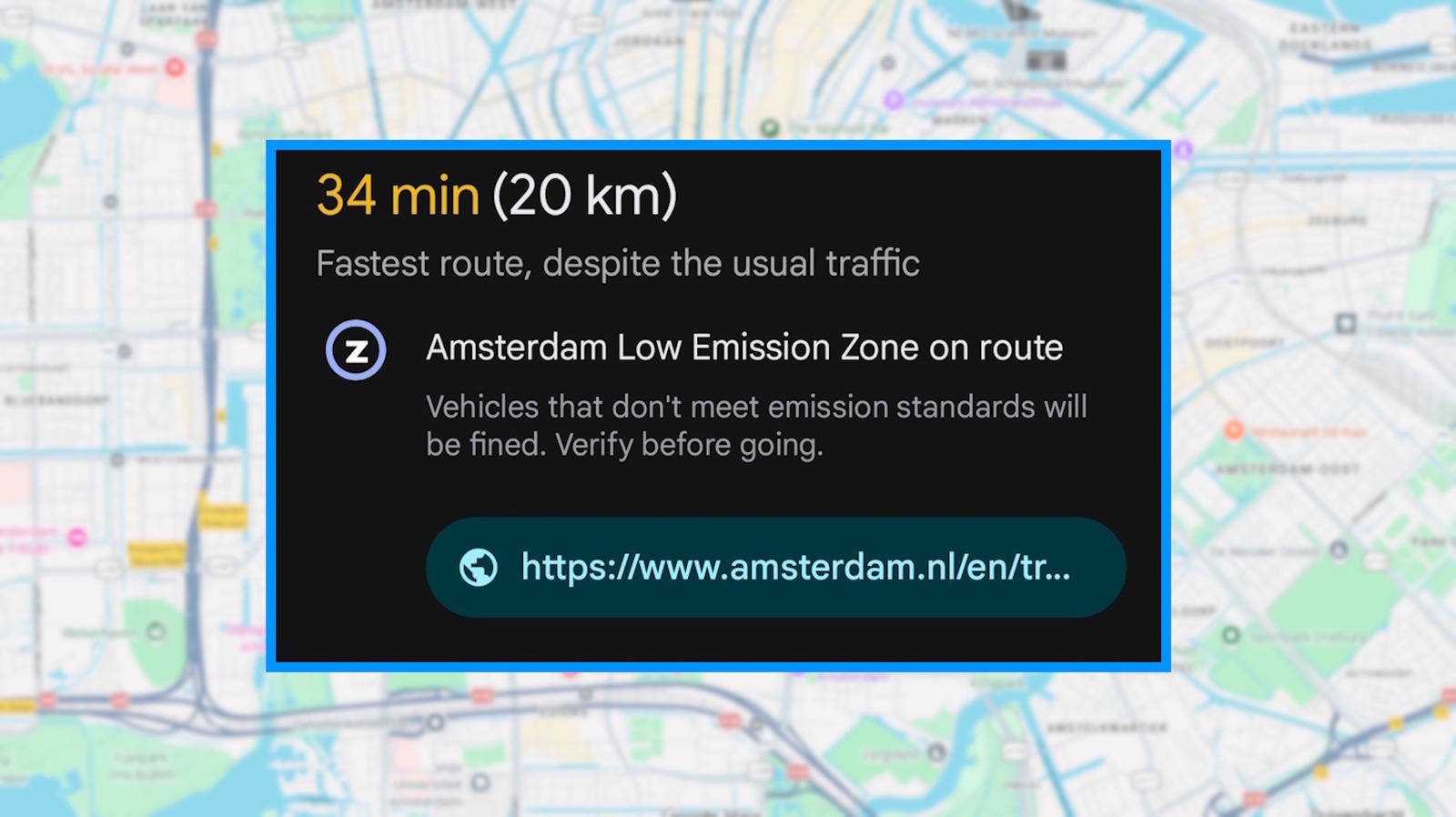
If you have had the chance to drive around Europe lately while using Google Maps, you might have noticed a small "Z" icon in your route details. Some drivers noticed this icon popping up in their route information and went online to ask what it represents. Well, it's not a zebra crossing icon, sadly, and it does not stand for "sleep mode," either. Google Maps is just warning you that your route is going through a low-emission zone.
More than 2 billion people use Google Maps every month to navigate around the globe. But with so many different countries having their own separate rules regarding driving, it's no wonder people are encountering icons that are completely new to them. Disregarding this icon, however, could bring with it a fine, so do not ignore it.
What does the Z symbol on Google Maps mean?
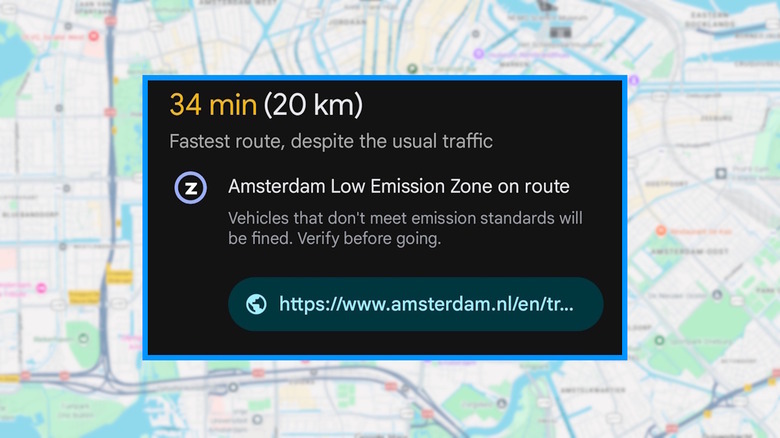
The "Z" marks a low-emission zone (LEZ) on your route. When planning a drive into the center of Amsterdam, for example, the icon appears under the trip time, right next to the line "Amsterdam Low Emission Zone on route." The app warns that vehicles that don't meet the emission standards will be fined, tells drivers to check if their car meets those standards and adds a link to the city's official page.
These alerts were added to Google Maps back in 2021, and they covered low-emission zones in Germany, the Netherlands, France, Spain and the UK on both Android and iOS. When it first came out, the icon was a circled lowercase "i" but has since been changed to a capital Z. In 2025, Google said that it would expand the alerts to cover more than 1,000 low-emission and low-traffic zones across Europe, including Italy, Sweden and Austria.
A low-emission zone is an area, usually a city center, where older and more polluting vehicles are restricted in some way. This could mean a ban on certain diesel cars, a special charge on cars above a certain pollution level or a requirement to display a specific sticker on your windshield indicating your car's emissions class.
What should you do if the Z shows up?
Alex Photo Stock/Shutterstock
The rules differ from city to city. If you are planning a trip around Europe, it would be wise to check in advance whether you will be driving through a low-emission zone so you can get the correct sticker in advance or plan a different route around the city.
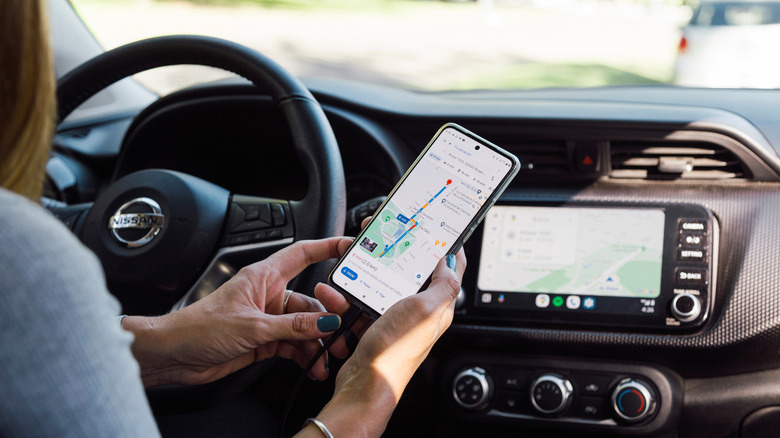
When entering your destination, Google Maps will alert you if you will be going through a low-emission zone. Before starting the drive, click the link to see if your car qualifies. Google Maps does not know your car's emissions class. It only tells you that the zone is there. The city's page will tell you what your car needs.
If your car doesn't qualify, look at the alternative routes Google Maps offers, or park outside the LEZ limits and finish the trip by public transit. If you are driving a rental car, be sure to ask the rental company whether the car is cleared to drive through low-emission zones.
KioskNews shows a cleaned-up reading view extracted from the publisher’s page — the original always lives on their site, not ours.