US to livestream firing squad execution of Fort Hood shooter
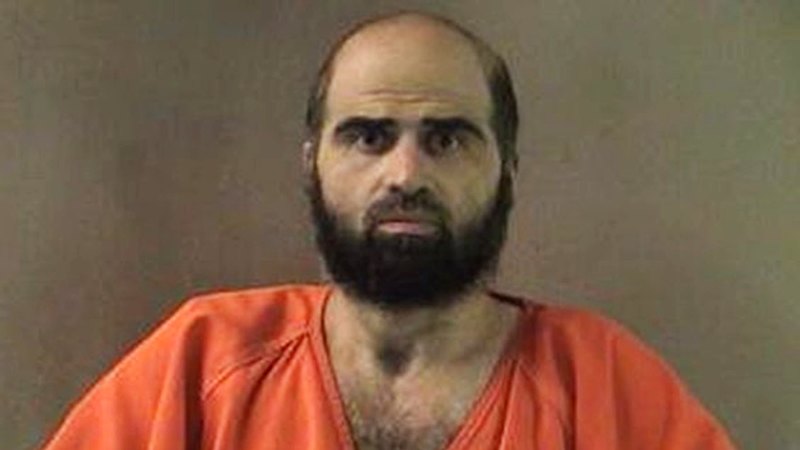
Washington: The firing squad execution of Fort Hood shooter Nidal Malik Hasan will be livestreamed, the Pentagon said, a stunning revelation about plans for the first military execution in more than 65 years after Defence Secretary Pete Hegseth had described it as being “public”.
The Army announced this week that the execution would take place at Fort Hood on December 3 after Hasan was convicted of killing 13 people and injuring 32 others in a shooting at the military base in 2009.
Hegseth, speaking to the conservative TV outlet Real America’s Voice News this week, said, “We’ll make sure that people are able to watch it, that it’s public.” Officials in the Pentagon clarified on Thursday (US time) that the execution would be livestreamed and that more details would follow.
The revelation from Hegseth about the public nature of an execution – let alone one as violent as a firing squad – has raised further questions about how the death penalty is carried out in the United States, especially after the botched lethal injection of Christa Pike in Tennessee.
Hasan could choose to resist execution and file a habeas petition in civilian court, which is a legal request for a court to review the legality of someone’s detention, and could significantly delay the execution, experts on military law said.
“It frankly might outlast the current administration, and who knows if the next one will have the same penchant for executions,” said Eugene R. Fidell, a visiting lecturer at Yale Law School specialising in military law.
Deborah Denno, a death penalty expert and law professor at Fordham University, said livestreaming an execution could make the process “much more transparent” and inform the public about all that capital punishment entails.
Those are benefits that she said would be useful at a time when Pike’s botched execution has raised fresh questions about the manner by which criminal defendants are put to death for their crimes.
“I think it could possibly be a good idea because it would be transparent and the public would be fully aware that it’s happening,” she said.
When many states have had difficulty carrying out lethal injections due to difficulty accessing drugs or finding medical professionals willing to participate in executions, firing squads are coming to be seen as a less inhumane alternative, said Brenner Fissell, a professor at Villanova Law and vice president of the National Institute of Military Justice.
“Firing squads can be a quicker, cleaner, more precise way to execute a prisoner,” he said. “I don’t think that’s what’s motivating this. There’s a perceived masculinity and militaryness to firing squads that is part of the aura Hegseth is trying to emphasise – the ‘lethality culture.’”
Elisabeth Semel, co-director of the Death Penalty Clinic at UC Berkeley Law, said Hegseth’s announcement raised a host of legal and public policy questions, including concerns for the dignity of the defendant, who will be eligible to view the execution and what the Trump administration has in mind in opting for an unusual spectacle.
Though there has been long-running discussion about the idea of televising an execution, “I don’t recall a situation in which it was instituted by the government. I think that also raises serious questions about what is the motivation of the government,” she said.
“This is a president who’s about spectacle and that’s, I think, precisely the message that he intends to deliver,” Semel said, adding that she was sceptical that the administration had given second thought to the legal and social questions being presented by the decision.
Trump, who approved Hasan’s execution, has previously been critical of public executions in Iran, at times using the possibility of protesters being killed by the Iranian government as a possible rationale for military action. Those warnings preceded his ultimate choice to attack Iran at the end of February.
“We’ve been told that the killing in Iran is stopping,” Trump told reporters on January 14. “It’s stopping, and there’s no plan for executions.”
He repeated that on January 20 at a White House press briefing. Slightly more than a month later in his State of the Union address, Trump said, “We stopped them from hanging a lot of them with the threat of serious violence”.
The White House on Thursday referred questions about the plans for the livestreamed execution to the Pentagon.
Hegseth was asked Wednesday if Hasan had made any final requests or reached out to the Trump administration. The Pentagon chief simply replied: “Don’t care. We’ll see him on December 3.”
Hasan, an Army psychiatrist who held the rank of major, walked into a medical building on November 5, 2009, where soldiers were waiting in long lines to receive immunisations and medical clearance for deployment. He shouted “Allahu akbar” — Arabic for “God is great!” — and opened fire with a laser-sighted handgun. He also shot at the backs of soldiers fleeing toward the parking lot.
Hasan said it was an effort to stop them from going to Afghanistan and killing his fellow Muslims. A military judge barred him from presenting that as a defence during his 2013 trial. Hasan was left paralysed from the waist down after being shot in the back by law enforcement, and he now uses a wheelchair.
Hasan could seek a lengthy delay of his execution, though given his behaviour at trial, he may not want to.
After firing his lawyers and representing himself, Hasan began his portion of the trial by telling jurors he was the gunman. He said little else over the next three weeks, which convinced his court-appointed standby lawyers that Hasan’s only goal was to get a death sentence.
As the trial progressed, those suspicions grew. The military called nearly 90 witnesses, but Hasan rested his case without calling a single person to testify in his defence and made no closing argument. Yet he leaked documents during the trial to journalists that revealed him telling military mental health workers that he could “still be a martyr” if executed.
Attorney John Galligan, a former military judge who had represented Hasan in several civil matters following his criminal trial, spoke with Hasan on Wednesday but is barred from offering much detail about that conversation. He is not representing Hasan in his criminal case but said he’s worried about his physical health under the plan laid out by officials, and that Hasan has not yet had access to legal counsel.
Galligan said that according to Hasan, the commandant of the facility brought a chaplain but no attorney from either the Trial Defence Service or from his civilian defence when he was notified that Trump had signed off on his execution. Galligan called that a breach of Army regulations.
A spokeswoman for the Army said on Thursday that multiple attempts were made to contact Trial Defence Service attorneys, saying they made every reasonable effort and adhered to policy.
The spokeswoman also said Hasan has not been kept from contacting and communicating with his counsel.
Hegseth said the military had not executed a service member by firing squad since World War II. The last military execution took place on April 13, 1961, when Army Private John Bennett was executed by hanging.
The last known executions by US military firing squads were in 1945, the Death Penalty Information Centre reported.
Amnesty International said in its report on executions in 2025 that it knew of at least 17 public executions – 11 in Iran and 6 in Afghanistan.
AP
Get a note directly from our foreign correspondents on what’s making headlines around the world. Sign up for our weekly What in the World newsletter.
More:
KioskNews shows a cleaned-up reading view extracted from the publisher’s page — the original always lives on their site, not ours.