NEW AUDIENCES: How women’s sport is becoming one of sport’s biggest growth drivers
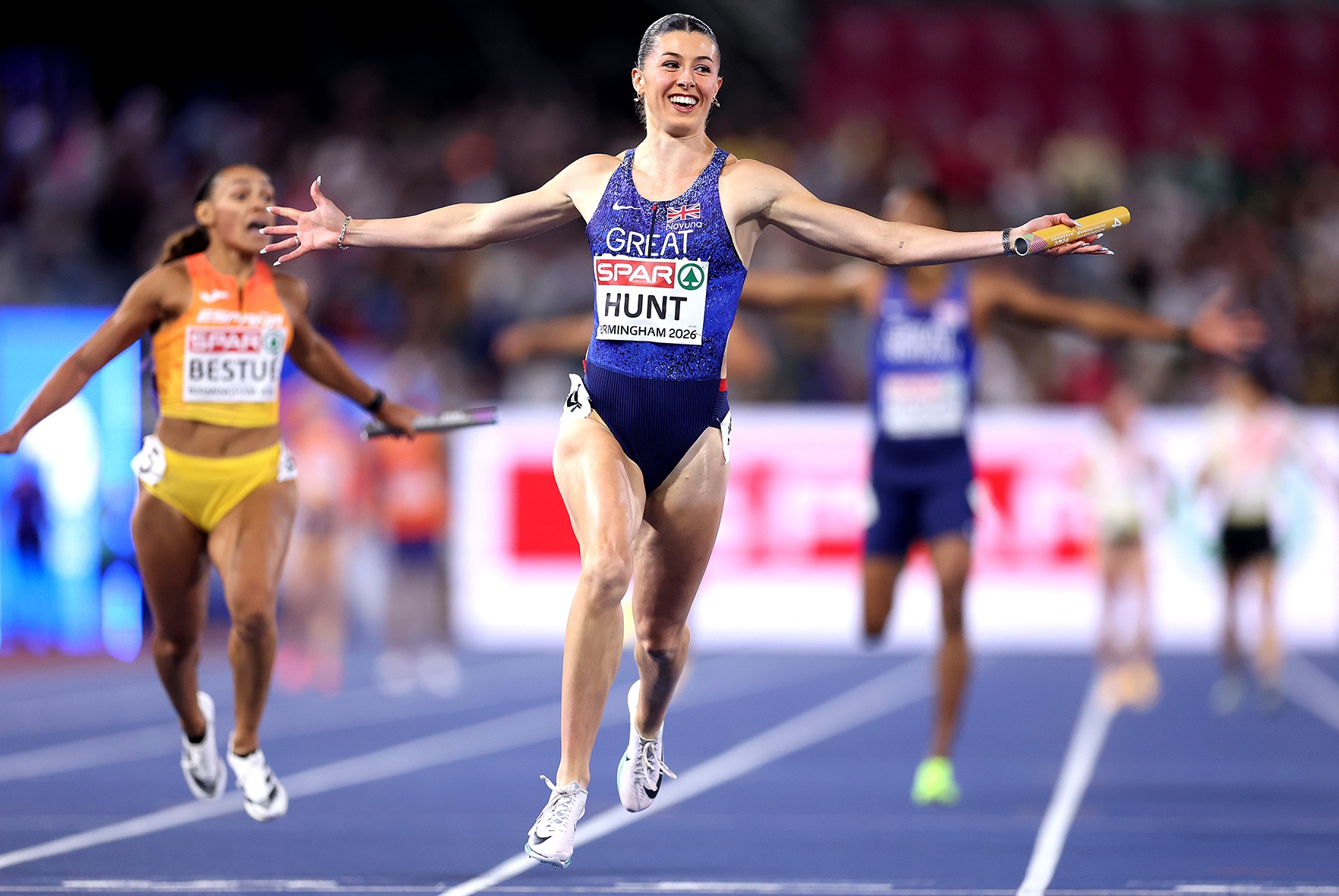
In its 2026 Sports for People and Planet report, the World Economic Forum (WEF) identified four major growth drivers that are reshaping the future of the global sports economy.
The first three include sports tourism, sport as an asset class and the rebalancing of sports growth towards emerging economies.
The fourth, the mainstreaming of women’s sport, is perhaps the most striking.
In 2025, women’s professional sport revenues were projected to reach $2.35-billion, more than triple the 2022 figure.
Moreover, the past few years have been full of lasting images of women in sport that have reshaped their visibility.
Recently, Amy Hunt dominated British headlines after becoming the first athlete, male or female, to win four gold medals at a single European Championships.
Earlier this year, South Africa’s Gerda Steyn claimed a seventh Two Oceans title before beating her own Comrades Marathon record.
In tennis, an average of 1.9 million viewers watched the Wimbledon final between Linda Noskova and Karolina Muchova, delivering ESPN’s most-watched women’s championship match of the tournament.
/file/attachments/orphans/GettyImages-2285657033_108727.jpg "LONDON, ENGLAND - JULY 11: Linda Noskova of Czechia plays a forehand against Karolina Muchova of Czechia during their Ladies' Singles final match on day thirteen of The Championships Wimbledon 2026 at All England Lawn Tennis and Croquet Club on July 11, 2026 in London, England. (Photo by Cameron Spencer/Getty Images)")
The growth of women’s sport was also marked by new franchises, bigger television audiences and greater advertising impact.
The Women’s T20 World Cup this year officially became the biggest edition in the competition’s history, with 245,815 fans attending across 25 match days, breaking the previous tournament record by more than 100,000.
Furthermore, it was the most watched Women’s T20 World Cup to date in the United Kingdom, with more than 15 million viewer hours recorded across Sky channels. The final, which saw Australia thrash England by seven wickets, was watched by 678,000 people across the Sky network with spectators filling 90% of Lord’s Cricket Stadium.
While this signals a major shift, barriers still remain, especially as the uncertainty surrounding the Women’s Africa Cup of Nations (Wafcon) and sparse crowds that followed sit in stark contrast to the above anecdotes.
What does mainstreaming actually mean?
The WEF argued that women’s sport has evolved from a niche category into a major economic opportunity.
According to its report, soccer and basketball account for 80% of women’s sport revenues, while investors are increasingly viewing the sector as a serious commercial proposition.
The report points to dedicated investment funds, professional leagues and growing media exposure as evidence that women’s sport is becoming embedded in the global sports economy rather than existing on its margins.
For Rendani Ramovha, Canal+ senior vice-president of sport content in English and Portuguese-speaking Africa, the growth trajectory is clear, although different regions are progressing at different rates.
/file/attachments/orphans/TL_2252776_613564.jpg "Supersport CEO Rendani Ramovha speaking during the SA Rugby major announcement press conference at Sandton Sun on August 30, 2024 in Johannesburg, South Africa. (Photo: Sharon Seretlo / Gallo Images)")
He said true mainstreaming went beyond television audiences.
“The challenge is you need resources and funding. It can’t just be broadcaster led, it has to be federation led,” Ramovha told Daily Maverick.
“I don’t think in Africa we are at a point where we can call it mainstream. We still need significant investment from sponsors and federations to put the right systems and professional structures in place.
“We can only do so much. We can broadcast, but it’s also important that federation rights holders, sponsors and investors are actually also putting money behind the positive trend.”
SuperSport had tried to drive that growth, said Ramovha. During the 2023 Netball World Cup hosted in Cape Town, SuperSport deployed an all-female production crew of 120 women, something SuperSport described as a world first for a broadcaster covering a major international sporting event.
At the time, Ramovha said the initiative was viewed as innovation rather than normal practice.
“But back then it wasn’t mainstream. Back then it was disruption, it was innovation, it was out-the-box thinking,” he said.
The numbers behind the boom
The WEF report is backed by significant audience growth – at least in the United States – according to Nielsen’s latest report.
According to the market research and data analytics firm, women’s sports attracted 28.6 billion minutes of viewing time in the US during the first half of 2026, an 18% increase on the same period last year.
More than half of Americans – 122.5 million people – now express an interest in women’s sport, while advertising spending has increased by 120% since 2022.
/file/attachments/orphans/GettyImages-2284782184_536567.jpg "Australia players celebrate after Australia won the ICC Women's T20 World Cup England & Wales 2026 Final between England and Australia at Lord's Cricket Ground on July 05, 2026 in London, England. (Photo: Philip Brown / Getty Images)")
At the same time, the traditional sports fan base is changing.
Among the estimated 16 million new fans, approximately seven million new fans were men, while roughly 9 million new fans were women. Women viewership of men’s leagues is also rising, with NBA audiences among women increasing by 55% between 2024 and 2026.
“This isn’t just a fleeting trend; it is a cultural realignment in which women are simultaneously taking centre stage on the courts and fields, as well as command of the seats and remotes, changing the economy and energy of global sports,” said the report.
Ramovha said similar trends were visible in Africa, although direct comparisons with Europe and North America remained difficult due to differences in audience measurement and market size.
“What we’re seeing in Africa is there is a positive trend in the right direction, but to compare like for like would be hard because audience data is different, the panels are different, reporting methods are different. The sheer scale and size of women’s sport in the US and in Europe versus Africa is different,” he said.
One of the main reasons cited in the report is the increase in ease of access. When women’s sports content is easy to find, more people engage.
/file/attachments/orphans/2240034653_257662.jpg "Jackie Young #0 of the Las Vegas Aces shoots the ball between Alyssa Thomas #25 and DeWanna Bonner #14 of the Phoenix Mercury in the fourth quarter of Game Three of the 2025 WNBA Playoffs finals at Mortgage Matchup Center on October 08, 2025 in Phoenix, Arizona. NOTE TO USER: User expressly acknowledges and agrees that, by downloading and or using this photograph, User is consenting to the terms and conditions of the Getty Images License Agreement. (Photo: Christian Petersen / Getty Images)")
It was also increasingly about storytelling and brand activation, said Ramovha.
“One thing about broadcast is that we’ve got the privilege of being able to broadcast, showcase and build heroes. We then automatically see how the more people see themselves on screen, the more it drives into participation,” he said. “Our job is to continue to be a mouthpiece, to build the stories and broadcast where possible the events that are on offer.”
Wafcon as a reality check
Yet, for all the talk of growth and investment, this year’s Wafcon with minimal marketing and sparse stadiums provided a reality check of sorts.
Originally scheduled to start on 17 March, the tournament was postponed, and uncertainty grew over whether Morocco would host it at all. This is also not the first time Wafcon has been postponed. It was moved from 2024 to July 2025 to avoid a clash with the Paris Olympics.
Additionally, television distribution via Channel Four in the UK and Canal+ was only announced by the Confederation of African Football two days before the tournament kicked off.
/file/attachments/orphans/TL_2600350_644320.jpg "Chantelle Louise of Ghana during the Women's Africa Cup of Nations Quarter Final match between Malawi and Ghana at Stade El Barid Stadium on August 09, 2026 in Rabat, Morocco. (Photo: Zamani Makautsi / Gallo Images)
<br>")
Sports journalist and presenter Robert Marawa believes the problem runs deeper than marketing.
He told CNBC Africa that a lingering lack of respect for the women’s game was reflected in the sparse crowds, weak broadcast treatment as well as limited professional structures.
“There is only so much marketing that can be done. At the end of the day, the lack of respect for the women’s game still lingers long and hard, and if you don’t respect the women’s game, then you don’t give it everything,” he said.
One solution Marawa proposed for women’s soccer to reach its full potential was to start much earlier, with stronger leagues and greater grassroots investment.
Similarly, Ramovha said that women’s sport should not be treated like a trend, and that began with providing exposure to professionalised structures before reaching the national level.
“At a grassroots level, the players are not necessarily getting the exposure and the practice on a regular basis to make sure the transition between league and national teams is smooth,” he said.
On the sparse stadiums, Ramovha said that while stadium attendance for women’s sport was growing, even mainstream men’s sports were struggling with stadium attendance.
“The truth of the matter is that the trend is positive, but positive to what point? The key takeout for me is, will corporates, federations, sponsors and the government rally behind making sure that it’s not just positive metrics of viewership, but positive metrics of heroes, of stars, of bursaries, infrastructure, education?
“The building blocks need to be clearly defined,” he added. “We need to be very clear on what that proposition is and what the USP (unique selling point) is.
“When the fundamentals aren’t in place, it often shows in the packaging. Too often, things are rushed and end up feeling like a rush job.”
Ramovha said the trajectory of women’s sport toward the mainstream was positive, but in Africa there was “still a lot more that everyone can do”. And Wafcon spotlighted this.
Ultimately, women’s sport is attracting larger audiences and unprecedented investment. For the momentum to continue, however, and for women’s sport to truly be a factor in the growth of the sports economy requires sustained investment, particularly at grassroots level, and collaboration between various stakeholders. DM
KioskNews shows a cleaned-up reading view extracted from the publisher’s page — the original always lives on their site, not ours.