Looking to the stars: Planetarium Negara seeks to inspire a new generation of space explorers
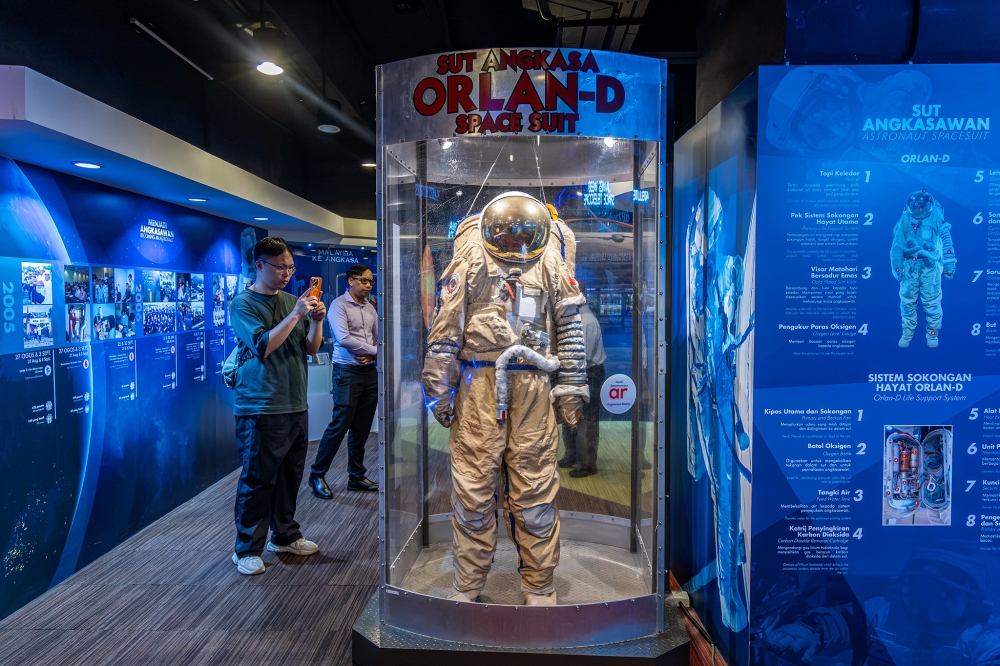

An Orlan space suit, designed for spacewalks and used by cosmonauts aboard the International Space Station, is on display at Planetarium Negara. — Pictures by Firdaus Latif
By Kenneth Tee
First Published: Saturday, 19 Sep 2026 7:00 AM MYT
KUALA LUMPUR, Sept 19 — As mankind looks towards the wider solar system, Planetarium Negara is seeing renewed public interest in space exploration, with immersive exhibits and experiential programmes bringing a new generation closer to the final frontier, three decades after it first opened its doors.
The renewed interest comes as major global space initiatives, including plans to return humans to the Moon and eventually venture to Mars, bring space exploration closer to the public imagination.
For Planetarium Negara, these developments offer an opportunity to help Malaysians understand how they connect to and potentially contribute to humanity’s next journey beyond Earth.
Planetarium Negara director Mohd Zamri Shah Mastor said that while its core mission — to raise public awareness and spark interest in astronomy and space science — has remained unchanged since 1994, today’s visitors seek more engaging and experiential ways to connect with the subjects.
“Lately, the initiatives by major global space players are being heard by people in Malaysia.
“These include the National Aeronautics and Space Administration’s ongoing Artemis programme to return humans to the Moon by 2028, as well as its Mars Sample Return effort to bring Martian rock and soil samples back to Earth.
“In fact, Planetarium Negara itself hosted a programme in March focused on the Moon, while also marking Malaysia’s commitment to the Artemis Accords — a set of principles guiding the peaceful and sustainable exploration of the Moon, Mars and beyond.
“So perhaps they see Planetarium Negara as the closest place where they can associate themselves with these initiatives and learn more about them.
“And we hope that we can fulfil the public’s interest or what they want to find out about space,” he told Malay Mail in a recent interview here.
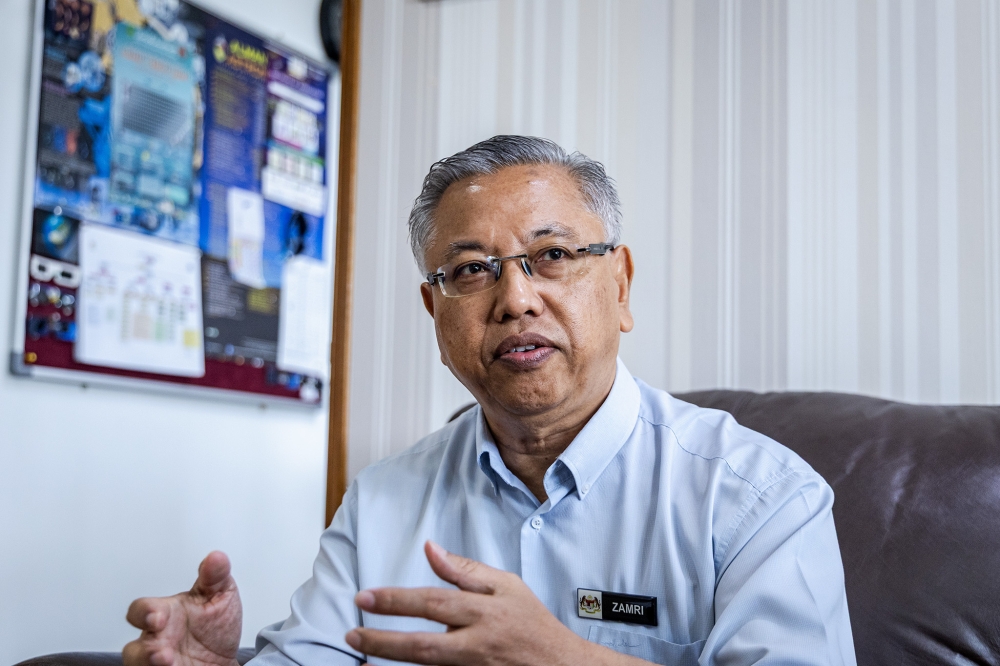
Mohd Zamri Shah said Planetarium Negara also hopes to reach more students in higher learning institutions and encourage them to consider careers in the space sector.
Mohd Zamri Shah said the recent introduction of new immersive exhibits had helped drive a noticeable increase in visitors to the institution from the second half of 2025 through the first half of 2026, with roughly 300,000 people visiting annually.
“Maybe the exhibits we had in the past were not as immersive as they are now, and people started coming after we introduced something new here.
“We also started engaging people through social media, encouraging them to take part in activities like stargazing, which they really liked, with many asking questions and requesting more such programmes.
“So we found that experiential learning is highly requested by the general public,” he said.
Mohd Zamri Shah said schoolchildren in tour groups made up the overwhelming majority of visitors, accounting for roughly 80 per cent, followed by families and individuals.
Interesting exhibits
In an age where images and information about space are just a few clicks away, Mohd Zamri Shah said planetariums, including Planetarium Negara, still have a role to play in the digital age.
For starters, he pointed to Planetarium Negara’s space theatre, a dome-shaped cinema that seats up to 200 visitors and uses a fulldome digital system, 270° panoramic projection, six-channel surround sound and two fulldome immersive 4K projectors to recreate the night sky and universe in an immersive experience akin to that of an observatory.
Among the notable exhibits is a 10kg iron meteorite fragment from the Campo del Cielo meteorites, first discovered in a crater field in northern Argentina in 1576.
“You can touch it, it is the real thing — a 5,000-year-old meteorite fragment right here at Planetarium Negara that has been travelling in outer space for thousands of years, telling the story of our solar system’s early stages.”
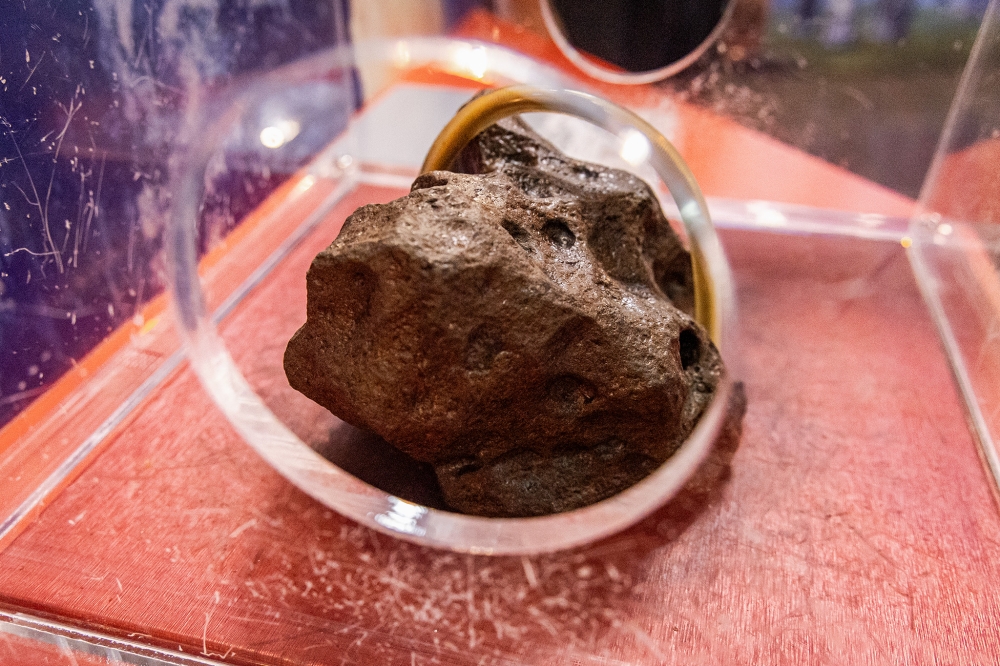
A space rock recovered from the Campo del Cielo crater field on display at Planetarium Negara.
He also pointed to exhibits featuring fossils of prehistoric life, which tell the story of Earth’s evolution and its place in the cosmos.
Other exhibits include two real astronaut suits — the Russian-made Orlan and Sokol spacesuits — worn by Russian cosmonauts and Malaysia’s first astronaut, Datuk Dr Sheikh Muszaphar Shukor Al Masrie, respectively.
“Visitors can see for themselves how they are made, what they are made of and the materials used.
“While they may not be able to touch the fabric, they can look closely at the suits, including their interiors, as we want visitors to feel that space technology is not something beyond their reach.
“By seeing the real thing up close, I hope they realise that we can do this too. That is important because it gives them the confidence to believe that Malaysians can go into space again,” he said.
Also on display is a real Viking rocket engine, alongside a replica cockpit of the Soyuz spacecraft used to dock with the International Space Station, an interactive Astronaut Working Environment Module and two Malaysian satellites — TiungSAT-1 (Malaysia’s first microsatellite) and RazakSAT, an Earth observation satellite.
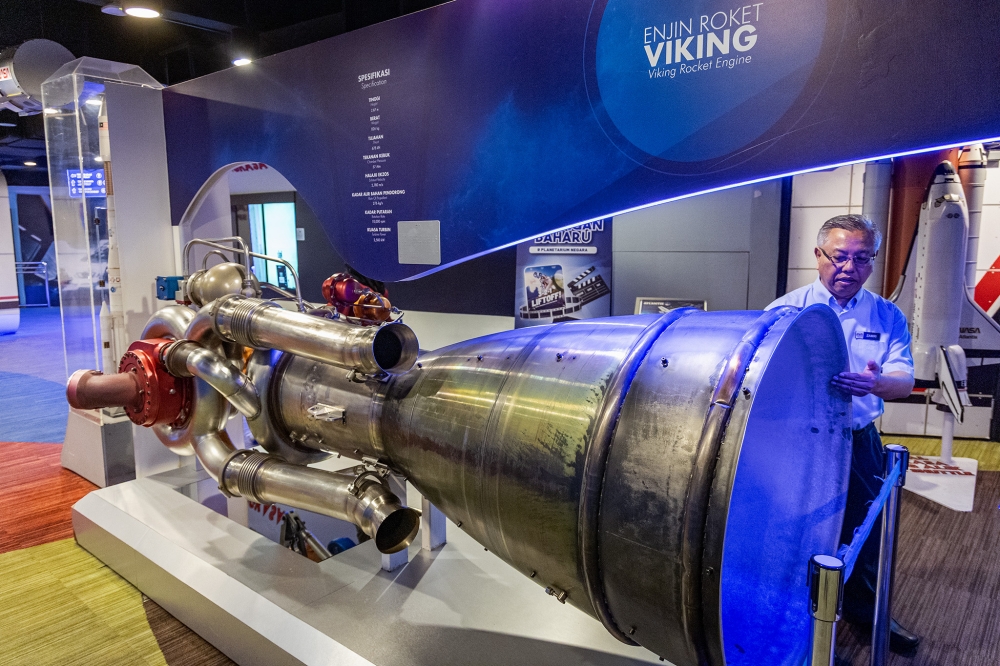
The Viking, a liquid-fuelled rocket engine used on Europe’s Ariane rockets to power ascent into space, is on display here at Planetarium Negara.
More work to be done
Mohd Zamri Shah said efforts are currently underway to enhance the institution’s experiential learning exhibits, including offering more observation experiences and, if possible, future demonstrations to enhance the overall visitor experience.
“Rather than limiting these activities indoors, we want to demonstrate things outside as well, such as observing the surface of the Sun during the daytime.
“Perhaps we could have a simple rocket launch with a small rocket and parachute,” he said.
He added that rotating gallery content is also in the works, with plans to introduce changes gradually, including possible indoor demonstrations using available technologies to simulate aspects of space exploration on planets.
He said they are also considering extending operating hours into the early evening to allow visitors to observe planets visible in Kuala Lumpur’s night sky, as well as resuming direct communications with astronauts aboard the ISS when it passes over Malaysia — a programme that was halted several years ago.
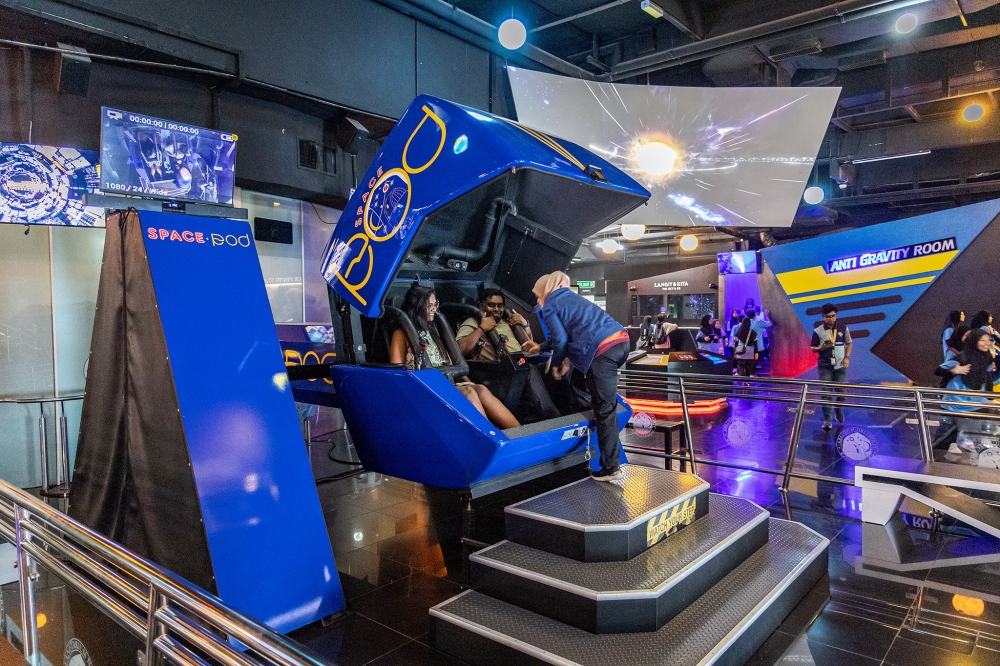
Visitors experiencing the Spacepod, a two-seater cockpit simulator that provides screenings offering an exploration and flight experience into outer space, with three-axis movement and 360-degree freedom of movement.
With renewed interest in space, Mohd Zamri Shah said Planetarium Negara also hopes to reach more students in higher learning institutions and encourage them to consider careers in the space sector.
“People sometimes think that if you want to work in space, you have to study space.
“But that is not necessarily the case. Space needs people with many different skills and expertise from other fields can also contribute to space technology,” he said.
He also said plans are underway to replace the existing projection system in the dome-shaped cinema, which has been in place for more than 15 years and is nearing the end of its lifespan.
“It is a bit dated and I am very sorry about that but we are in the process of changing to a new system. Hopefully, within a year or two, we will have a new projection system with higher resolution and a better experience,” he said.
For Planetarium Negara, the goal is not simply to tell Malaysians about space, but to make them believe they can be part of its future, Mohd Zamri Shah said.
“Generation by generation, new visitors will always come.
“Even though the older generation has experienced Planetarium Negara, every new generation still needs that experience. So we are still here, and we will continue to welcome them,” he said.
KioskNews shows a cleaned-up reading view extracted from the publisher’s page — the original always lives on their site, not ours.