The great moth revival: how bogongs have bounced back
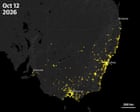
If you live anywhere on the eastern side of Australia, you’ve probably noticed that bogong moths are back in a big way.
While we don’t yet have figures from ecologist-led surveys to compare with previous years, there is a wealth of data on the great moth revival being generated by citizen scientists across the eastern states.
In this animated map you can see bogong moth observations posted to the citizen science platform iNaturalist via the Bogong Watch project. Every dot is a sighting, which may include one or more moths.
While there are some caveats to keep in mind with citizen science data (observation numbers over time can be skewed because of differences in effort and participation, for example) it does clearly show how the moth population has exploded this year.
A rise from a great fall
Bogongs were once so common they numbered in the billions, according to researchers, with as many as 4 billion moths migrating to the Australian Alps in summer to aestivate in cool caves. The moths famously caused panic at the Sydney Olympics closing ceremony in 2000, and were known to invade Parliament House in Canberra each year.
But the bogong population declined slowly between 1980 and 2016, then crashed dramatically in the summer of 2017.
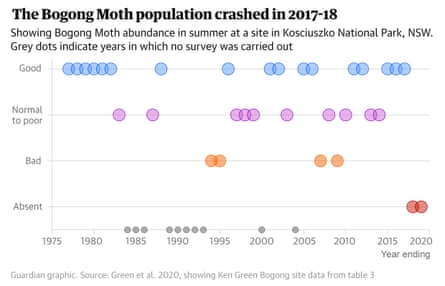
Moth numbers were so low the species was described as “undetectable” in the alpine regions.
Ken Green, an ecologist who has been monitoring bogong moths for more than 40 years, previously told the Guardian that Australia’s drought through 2017, 2018 and 2019 was probably the largest contributor to the population crash, with pesticides and urban light pollution contributing to the slower decline from the 80s.
After those years of catastrophic decline, the explosion of bogongs across the skies of eastern Australia this spring is great news for the plants the moths pollinate and the endangered species that rely on them for food, including the mountain pygmy possum.
KioskNews shows a cleaned-up reading view extracted from the publisher’s page — the original always lives on their site, not ours.