China touts AI milestone: models generate more tokens than used in training
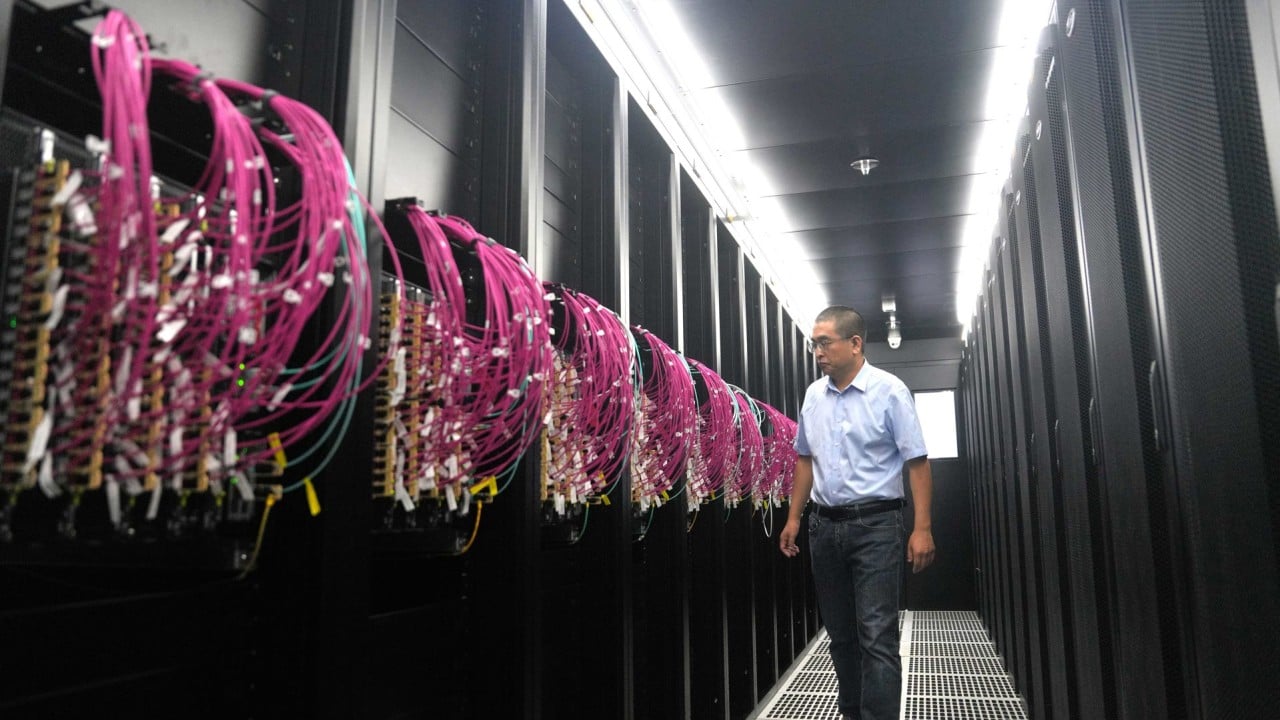
For the first time, the amount of inference data generated by artificial intelligence systems in China has surpassed the amount of data used to train those systems, according to a new government-backed report, illustrating how the country is increasingly adopting AI at scale.
The report released on Saturday by the China Centre for Information Industry Development (CCID), which operates under China’s Ministry of Industry and Information Technology (MIIT), cited recent official data showing that China’s average daily token calls exceeded 175 trillion, an increase of more than 1,000 times from early 2024.
Inference refers to the process of running trained AI models to respond to user requests, which involves processing units of data known as tokens. As AI adoption accelerates, the volume of token calls, which refers to AI usage through public cloud service providers, provides an indication of growing demand for AI services.
The report did not disclose how much data is being used to train AI systems in China.
Including estimated AI usage through private cloud deployments, China’s average daily token consumption as of June was around 500 trillion tokens, another MIIT-affiliated think tank, the China Academy of Information and Communications Technology, said in a report released on October 23.
China’s National Data Administration estimated in April that demand for computing power to provide AI inference could eventually reach three times that needed for training AI models, underscoring the growing need for infrastructure to support the application of AI across many different industries.
Beijing has emphasised the importance of tokens in the AI era, with growing use of new phrases such as “token economy” in official policy language.
Local governments, including Beijing’s, have announced plans to roll out development policies for the token economy, including measures to boost token consumption through token factories and token distribution platforms.
Beijing-headquartered think tank CCID included the token-use milestone as part of its report, which listed 10 key trends in “new domains and new-quality capabilities”, a nod to the high-level government strategy of developing “new productive forces” to drive economic growth.
The report stressed the growing importance of these new domains – especially AI but also sectors such as quantum computing and aerospace technology – for great power competition, contrasting China’s progress with the approaches of the United States, European Union and India.
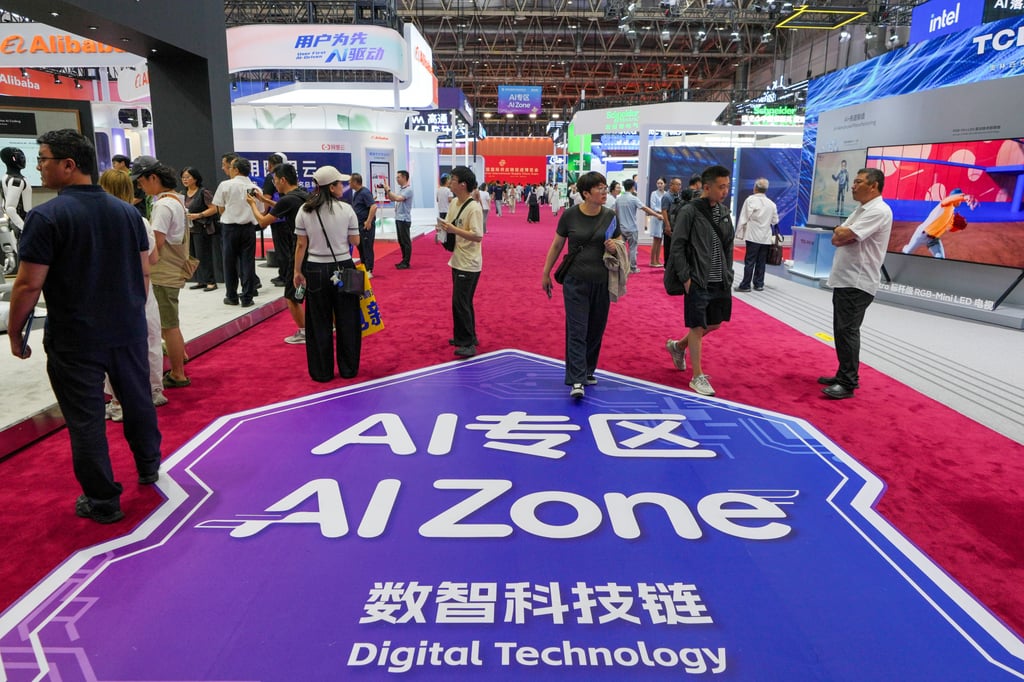
“We must place new domains and new qualities in a more prominent strategic position,” the report said. “He who does not advance falls back, and even slow advancement is equivalent to falling back.”
To keep pace with demand, Chinese technology companies have been investing heavily in AI infrastructure. Capital expenditure among 13 major Chinese companies on AI infrastructure is projected to more than double to 932 billion yuan (US$139 billion) this year, before exceeding 1.2 trillion yuan in 2027, according to a September report by research firm Rhodium Group.
Some developers have focused on making inference more cost-efficient. Last month, DeepSeek open-sourced DeepInfer, a framework designed to run its AI models more efficiently and reduce computing costs, allowing competitors and downstream users to also benefit from their innovations.
Meanwhile, Alibaba Group Holding’s move to set up a new unit called the “Token Foundry” in June coincided with a push to boost internal token consumption as well as external commercialisation.
The Hangzhou-based tech giant reported that revenue from its AI cloud and computing services surged 45 per cent year on year to US$7.1 billion in the quarter ended June, reflecting growing demand for AI services. Alibaba owns the South China Morning Post.
However, the surge in AI demand has come alongside mounting financial pressures, as companies spend heavily on the infrastructure needed to support it.
Highlighting the cost, Alibaba, Tencent Holdings and Baidu swung to a combined negative 16 billion yuan in free cash flow in the first half of 2026, from a combined positive free cash flow of 170 billion yuan in 2025, according to Rhodium.
KioskNews shows a cleaned-up reading view extracted from the publisher’s page — the original always lives on their site, not ours.