Juan Atkins built a cybernetic future for music – but invested it with humanity
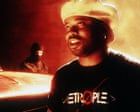
Juan Atkins, the originator of techno who died on 31 October, spent his lifetime translating a fascination with the future into sound.
He was the oldest of the founding fathers of techno known as the “Belleville Three”, along with his junior high school friends Kevin Saunderson and Derrick May. He was the first of the trio to buy a Korg MS-10 synthesiser, and also taught the others how to DJ on turntables. His work in the duo Cybotron alongside Rik Davis was the sonic blueprint that sketched out what later became known as techno – indeed, he is the one who gave the genre its name. Without Atkins, and the way he empowered those around him, electronic music certainly would not exist in its current form today.
After moving from his birthplace of Detroit to nearby Belleville, Michigan, Atkins holed himself up in his bedroom, toiling away for hours creating drum kicks. “I more or less knew I was doing stuff that was not the normal thing to do,” he said in a Red Bull Music Academy interview in 2017.

As a teenager in the 1970s he wouldd listen to The Midnight Funk Association, a five-hour late-night radio programme by DJ Charles “The Electrifying Mojo” Johnson, which opened with the space-age introduction of The Landing of the Mothership before braiding together selections from Prince, Michael Jackson, Parliament-Funkadelic, the B-52s, the Human League and Atkins’s biggest influences, Yellow Magic Orchestra and Kraftwerk. Atkins was a conduit for a particular moment in musical and technological history: able to draw from this increasingly accessible globalised pool of music, and put those influences to bear on musical hardware that just a few years earlier would have been the wildly expensive preserve of universities or computing companies.
Atkins also loved anything about space, time travel, UFOs, religiously consuming TV shows such as Star Trek and Lost in Space, and the books of HP Lovecraft and Isaac Asimov. Three texts in particular defined the extraterrestrial reach of his sound: Childhood’s End by Arthur C Clarke, and Future Shock and The Third Wave by Alvin Toffler. The latter two were how he initially developed a bond with Davis at Washtenaw Community College in Ann Arbor, Michigan, as they discussed Toffler’s idea of the third wave, a way of living that would come after agrarian and industrial societies. Inspired by Toffler, Atkins deployed words such as Metroplex, the name of his record label which evokes a sprawling future city, and Cybotron, the name of his duo with Davis which calls to mind a brutally efficient robot who may or may not be benign.
He also applied Toffler’s idea of “techno rebels” to music – those people who wield technology for their own creative empowerment; a third option between destructive luddites and uncritical techno-optimists. Atkins reportedly rejected Derrick May’s suggestion to label their music “hi-tech soul” on the Virgin Records compilation that introduced the propulsive Detroit sound to the UK. Instead, the compilation was titled after one of Atkins’ tracks on it, Techno Music, and that became the name of a whole global movement.
Crucially, and like his hero Toffler, Atkins wasn’t naive or needlessly optimistic about the impact technology would have on the future, even if it was giving him the means to make a totally new style of music. Living in and near Detroit, where the city’s car manufacturing industries had badly decayed by the 1980s, Atkins had a front row seat to see how an industrial society could become obsolete and end up far from a techno-utopia.
In the 1996 Arté documentary Universal Techno, he is filmed against the backdrop of post-industrial Detroit, explaining: “The general attitude here with the powers that be is that industry must die to make way for technology … I think that we probably wouldn’t have developed this sound in any other city in America … There is a certain atmosphere here that you can’t find in any other city that lends to the technological movement.” Detroit’s mayor Mary Sheffield paid tribute after his death: “Today, millions of people dance to music that traces back to him and to our city. That is a Detroit story: genius, grit, and invention, from neighbourhoods the world too often overlooked.”
Atkins’ music, born from Detroit’s urban discord, found a shared spiritual home in 90s Berlin after the fall of the Wall. Dimitri Hegemann, founder of the Berlin club and record label Tresor, tells me that Atkins – alongside other US midwest visionaries such as Jeff Mills and Robert Hood – gifted the then fragile German capital a new soundtrack for the reunification of east and west. “His music was actually the sound of freedom,” Hegemann says.
For more than four decades after his earliest innovations, Atkins produced and performed his music worldwide, most recently in 2026 at the 30th anniversary of Amsterdam Dance Event and the Motor City’s own home-grown electronic celebration Movement festival. Laurens Von Oswald, nephew of Moritz Von Oswald – one half of Borderlands, the 2013 duo with Atkins – collaborated with Atkins to revive Cybotron in 2023 after 28 years away, resulting in the singles Maintain the Golden Ratio and Parallel Shift. In remembering Atkins, he says: “It’s particularly heartbreaking losing a man who gave the future its sound, knowing how much of his own future was still unwritten.”
Von Oswald emphasises the “magnitude” of the oeuvre Atkins created, saying it was “as though he’d travelled somewhere the rest of us hadn’t been and returned with something to show us”.
Atkins was a prophet of modern music. Thirty years ago, he foresaw both the overwhelming challenges and endless possibilities of an era he deemed the impending “techno age”. The key, as he found, was not relentless technology for its own sake, but a means of returning to emotion and finding our way back to what makes us human. “They make these synthesisers and keyboards with functions to allow you to get as close to a human feel as they possibly can,” he once said. “I think this is the beauty of Detroit: we were able to put that emotion into our music.”
KioskNews shows a cleaned-up reading view extracted from the publisher’s page — the original always lives on their site, not ours.