10 Greatest Opening Lines In Fantasy Movie History, Ranked
“Once upon a time” might be the hardest-working four words in storytelling. They promise witches, curses, true love, and the occasional talking donkey. But the greatest fantasy movies know when to honor that invitation and when to tear it to pieces.
A great opening line can make an entire kingdom feel centuries old, turn a familiar fairy tale on its head, or make an ordinary conversation seem extraordinary in hindsight. Even the fantasy movies with the best worldbuilding have to begin somewhere. Whether the setting is a distant kingdom or the recognizable world of low fantasy, the first words establish a relationship between the storyteller and the audience. Get them right, and we're listening.
These 10 fantasy movies understood the assignment. Ranked by the impact of their actual first spoken lines, including opening narration, they prove that sometimes the most important words in a story are the very first.
10 Harry Potter And The Sorcerer's Stone (2001)
“I should have known that you would be here, Professor McGonagall.”

The first words spoken in Harry Potter and the Sorcerer's Stone belong to Albus Dumbledore, who addresses what appears to be an ordinary cat sitting on a wall in suburban England. It's a wonderfully understated introduction to a world where appearances are frequently deceiving. The audience knows almost nothing about magic, Hogwarts, or the boy who lived, yet Dumbledore speaks as though transforming into a cat is perfectly routine.
There's something particularly charming about beginning one of cinema's most elaborate fantasy franchises with a quiet conversation between two old colleagues. While the books offer considerably more background, and there's plenty to debate about which Harry Potter storylines the movies were right to cut, this opening understands the appeal of discovering magic rather than having it explained. The extraordinary slips into the ordinary without so much as knocking.
9 The Nightmare Before Christmas (1993)
“'Twas a long time ago, longer now than it seems, in a place perhaps you've seen in your dreams.”

Tim Burton's The Nightmare Before Christmas, directed by Henry Selick, begins like a bedtime story recited by someone who may have spent a little too much time in a graveyard. The rhyming narration immediately establishes the movie's wonderfully peculiar personality, with language that sounds reassuringly familiar even as it prepares audiences for a world populated by monsters.
The phrase “perhaps you've seen in your dreams” is especially clever because dreams are precisely where the delightful and the disturbing coexist. The opening promises a traditional fairy tale while quietly suggesting that this particular story might have a few skeletons in its closet. Before Jack Skellington appears, the movie has already found its voice: playful, theatrical, and just macabre enough to make Christmas seem positively conventional.
8 Labyrinth (1986)
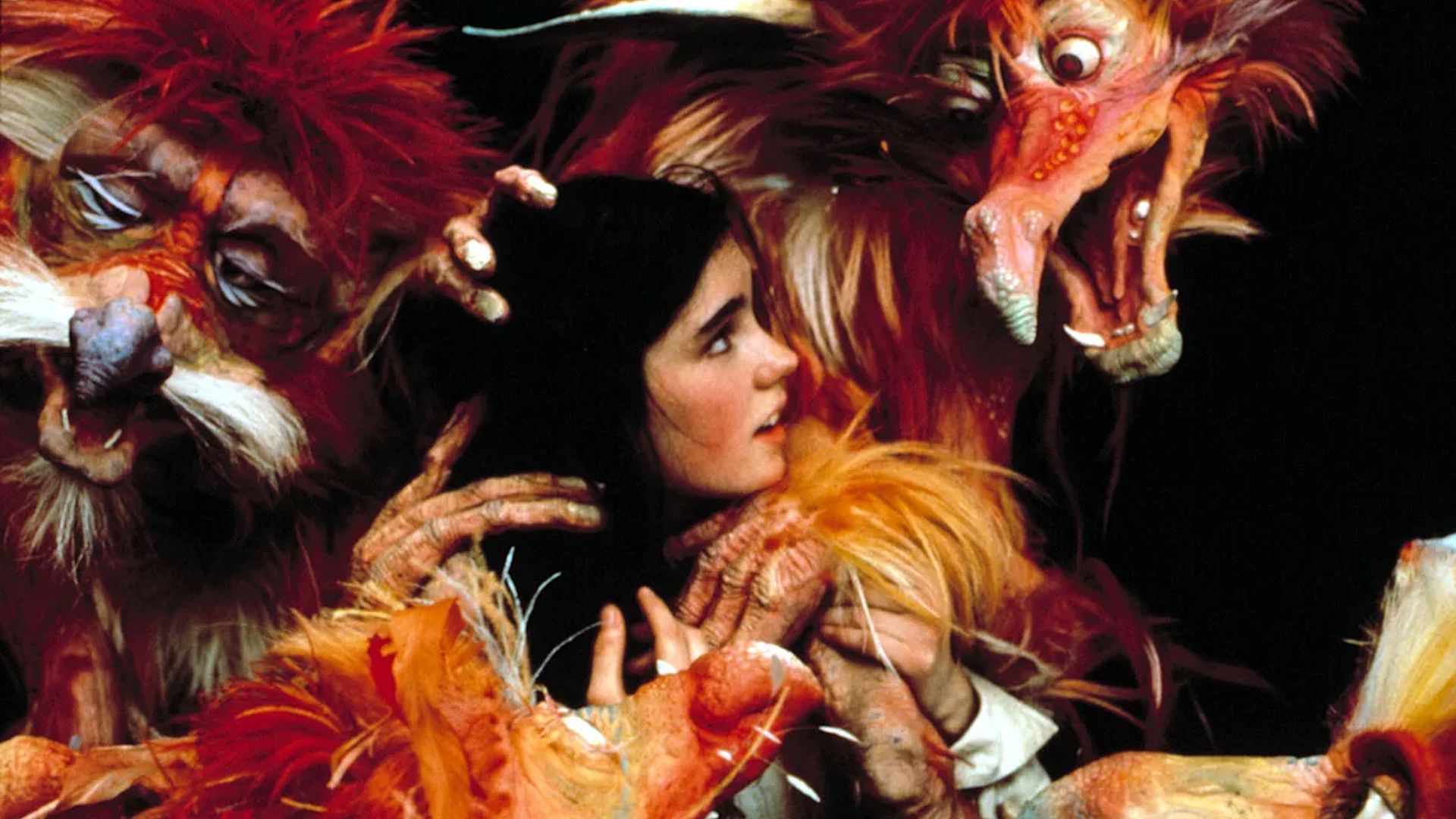
“Give me the child.”

There are more elaborate ways to begin a fantasy adventure, but Labyrinth wastes no time establishing the confrontation at its center. Jennifer Connelly's Sarah delivers the command with enormous dramatic conviction, rehearsing a grand speech about overcoming impossible dangers and reclaiming a stolen child. She sounds like a heroine preparing for the final confrontation of an epic quest.
The joke, of course, is that she's a teenage girl practicing lines from a book. What initially appears to be theatrical adolescent daydreaming becomes disturbingly real when Jareth, played by David Bowie, enters her life. The opening also plants the words Sarah will eventually need to confront him, giving the story a satisfying circular structure. Jim Henson's fantasy understands something essential about growing up: sometimes pretending to be brave is the first step toward actually becoming brave.

Rearrange the covers into the correct US release order.
7 Pan's Labyrinth (2006)
“A long time ago, in the Underground Realm, where there are no lies or pain, there lived a princess who dreamed of the human world.”
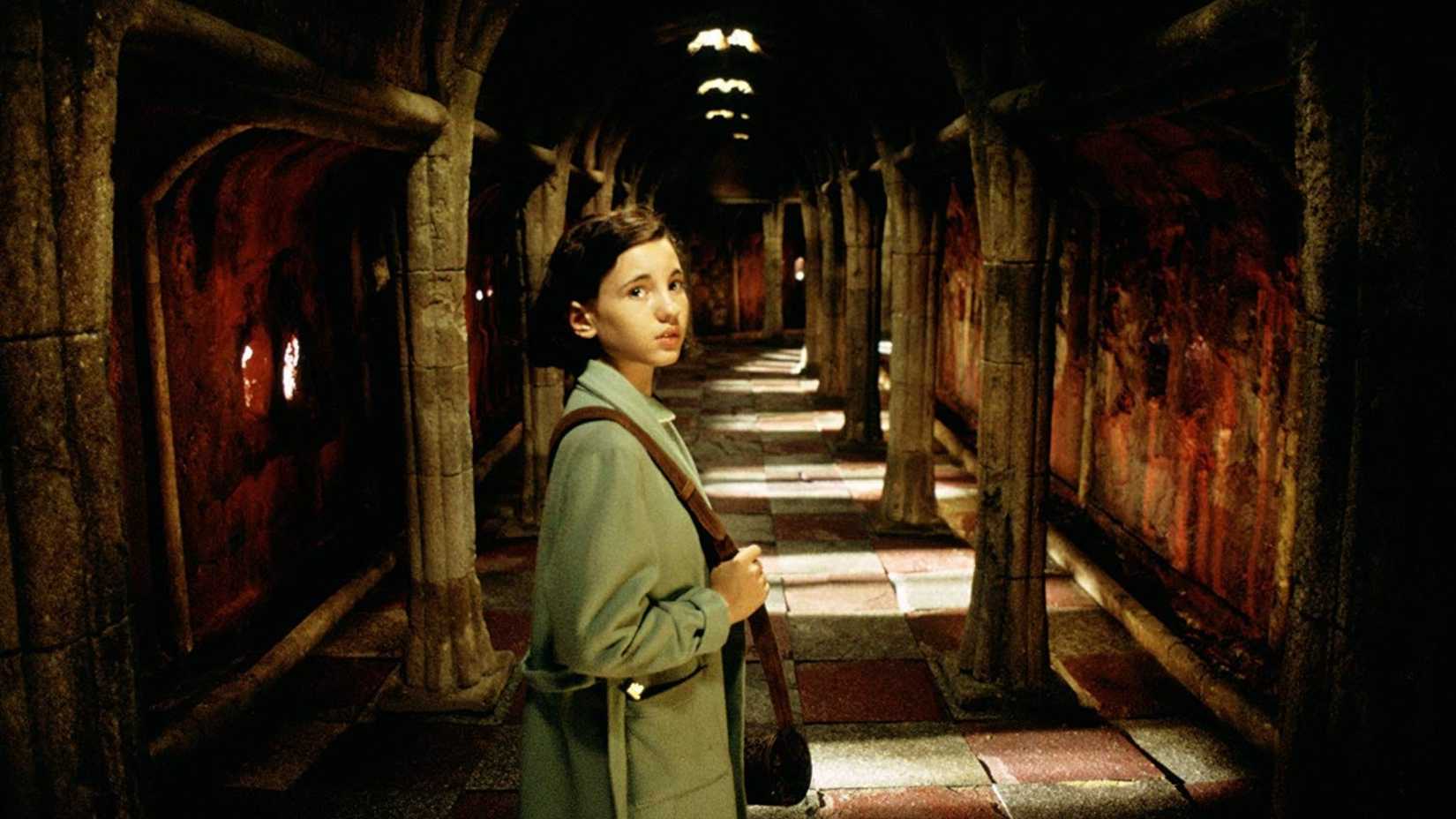
Guillermo del Toro opens Pan's Labyrinth with the comforting language of an old fairy tale, then places it against one of the cruelest possible historical backdrops. Set in Francoist Spain in 1944, the film follows young Ofelia as she retreats into a fantastical world filled with unsettling creatures, dangerous tasks, and the possibility of a different destiny.
The opening narration describes a kingdom without suffering, which becomes increasingly heartbreaking as the realities of Ofelia's life emerge. Its apparent simplicity conceals a devastating question: Is the fantasy world an escape from unbearable reality, or does it represent something genuinely beyond it? Del Toro doesn't rush to provide an answer. Instead, those first words establish the emotional contradiction that makes Pan's Labyrinth so haunting. The promise of a world without pain becomes more powerful because the film refuses to spare its heroine from suffering.
6 Stardust (2007)
“A philosopher once asked: Are we human because we gaze at the stars or do we gaze at them because we are human?”

Most fantasy films begin by explaining the rules of their imaginary worlds. Stardust opens with a philosophical question about humanity's relationship with the stars, then promptly dismisses it in favor of something far more interesting: whether the stars might be looking back. It's an irresistibly charming introduction that establishes the movie's romantic and mischievous sensibility.
Adapted from Neil Gaiman's novel, Matthew Vaughn's Stardust transforms a seemingly abstract question into the foundation of its entire adventure. The idea that stars might possess thoughts, feelings, and identities becomes literal when Tristan encounters Yvaine. The opening also demonstrates how effortlessly the film moves between whimsical humor and genuine emotion. In a few sentences, the narrator makes the impossible sound both perfectly reasonable and rather lovely.
5 Tangled (2010)
“This is the story of how I died.”

For a Disney princess movie, Tangled begins with a spectacularly morbid announcement. Flynn Rider, a thief with an inflated opinion of his own charm, introduces Rapunzel's story by apparently revealing his own death. It's hardly the traditional invitation to a fairy tale, and that's precisely why it works.
Flynn immediately reassures viewers that the story is considerably more enjoyable than his opening might suggest, establishing the irreverent humor that makes Tangled such an appealing reinvention of Rapunzel. For a film that belongs comfortably among the greatest cozy fantasy movies, it has a surprisingly grim sense of humor. The opening also cleverly reframes the narrator's importance. Flynn initially presents himself as the central figure, only to admit that the story really belongs to someone else. It's a beautifully economical introduction to his eventual transformation from self-absorbed rogue to devoted romantic hero.
4 The Dark Crystal (1982)
“Another world, another time, in the age of wonder.”

Few fantasy movies establish such an immediate sense of distance from ordinary reality. The opening words of Jim Henson and Frank Oz's The Dark Crystal sound as though they've been recovered from an ancient civilization, introducing a place with its own history, mythology, and devastating conflicts. There's a solemnity to the narration that distinguishes the film from more conventional children's fantasies.
The line is particularly effective because it suggests that the audience is arriving long after the world's greatest age has passed. The wonder described in those first words already belongs to history, and the story that follows concerns a fractured civilization struggling toward restoration. Henson's extraordinary creatures and Brian Froud's designs provide the visual spectacle, but the narration supplies something equally important: the impression that this strange world existed long before the cameras arrived.
3 Kubo And The Two Strings (2016)
“If you must blink, do it now.”

That's quite an opening demand to make of an audience. Kubo and the Two Strings begins by instructing viewers to pay attention, suggesting that even the smallest distraction could mean missing something extraordinary. It's an unusually confident first sentence, particularly for an animated fantasy that places so much emphasis on the relationship between storytelling and memory.
The brilliance becomes clearer as the film unfolds. Kubo is himself a storyteller, using music and origami to bring his elaborate tales to life. His opening words establish the audience as active participants, drawing them into a narrative where stories preserve the people and experiences that might otherwise disappear. The warning also creates instant suspense before the full nature of Kubo's predicament has been revealed. Rather than patiently inviting viewers into its world, the film demands their attention and immediately earns it.
Question 1 of 3
2 Shrek (2001)
“Once upon a time there was a lovely princess.”

Nothing about the first spoken line of Shrek initially suggests that DreamWorks is about to dismantle decades of fairy-tale conventions. The movie opens with a storybook, an enchanted princess, and the familiar promise of true love's kiss. It's the sort of introduction audiences have heard countless times, particularly in Disney movies.
Then Shrek tears a page from the book, mocks the entire premise, and emerges from an outhouse. The joke lands because the opening words are so deliberately conventional. Mike Myers' disgruntled ogre immediately announces that this particular fairy tale has no intention of behaving itself, establishing the franchise's irreverent humor in one perfectly executed reversal. With Shrek 5 among the biggest non-Marvel movies arriving in 2027, it's worth remembering how effectively the original introduced its wonderfully cynical perspective. The film begins with the most familiar opening in storytelling, then essentially flushes it down the toilet.
1 The Lord Of The Rings: The Fellowship Of The Ring (2001)
“The world is changed.”
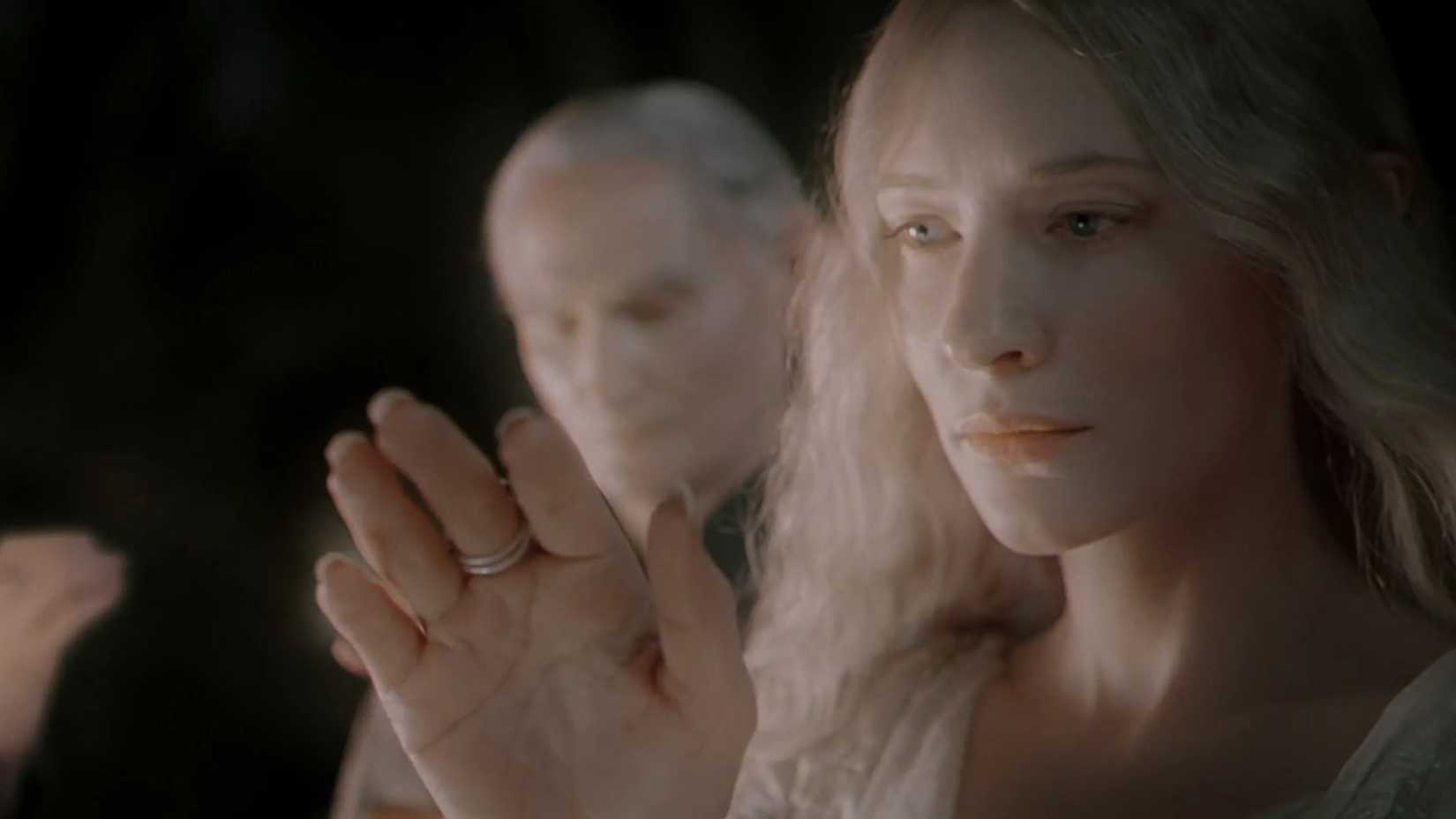
Four words. That's all Peter Jackson's The Lord of the Rings: The Fellowship of the Ring needs to establish the monumental scope of its story. Spoken by Galadriel, voiced by Cate Blanchett, the opening immediately suggests a civilization haunted by memories of something irretrievably lost. The audience hasn't yet encountered Frodo, the Shire, or the Fellowship, but Middle-earth already feels impossibly ancient.
What makes the line extraordinary is its combination of simplicity and consequence. Galadriel speaks as someone who has witnessed the passage of centuries, and her words carry the sorrow of a world that can never return to what it once was. The subsequent narration introduces the Rings of Power and Sauron's influence, but those first four words establish the emotional foundation of the entire trilogy. Change is inevitable, history is never truly buried, and even the smallest individual may find themselves responsible for what comes next. It's a breathtaking introduction to a fantasy epic, and an enduring reminder that the best storytelling rarely requires an elaborate opening speech when four perfectly chosen words will do.
KioskNews shows a cleaned-up reading view extracted from the publisher’s page — the original always lives on their site, not ours.