‘Overnight, everything was dead’: the Teesside fisherman turned activist dubbed the Mr Bates of the seas
It was an otherwise typical day on 25 September 2021 when thousands of dead and dying crustaceans washed up on beaches in Yorkshire and the north-east of England. Early morning walkers and swimmers were aghast to find a sickening carpet of twitching, fitting crabs.
It would be the first but not the last die-off, which would see the disappearance of vast swathes of integral native sea life along an extended stretch of coast, including seal pups. It would also see the decimation of the local fishing industry and, with that, a way of life.
Environmentalists, fishers and ordinary local people wondered what could have possibly caused such a rare catastrophic incident. Meanwhile, hours before – completely coincidentally, the authorities said – a major dredging operation was carried out in the mouth of the River Tees, disturbing sediment where decades earlier highly toxic pollutants from heavy industry had been pumped.
The authorities, after carrying out a series of their own tests, denied there was a causal link, blaming an algae bloom and then, later, a novel pathogen. But those who live and work around the Tees estuary disagreed.
In All Rivers Spill Their Stories to the Sea, the critically acclaimed documentary film-maker Jeanie Finlay is not setting out to find out what killed the crabs and lobsters. “I can’t offer an easy answer to what happened,” she says. “There isn’t an official cause. But what I can do is show the audience what that feels like.”
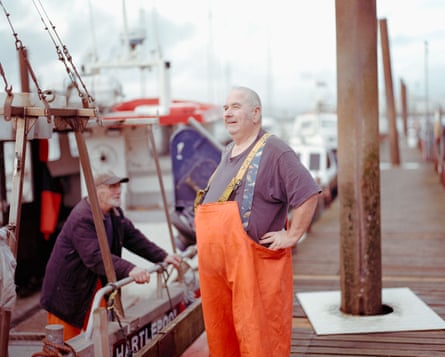
To do so, Finlay followed Stan Rennie, a fisher off the Teesside coast, over four years. What emerges is not an investigation into what destroyed precious marine life along a whole coastline but a story about the people searching for those answers. And it has won critics over. Mark Kermode called the film “a life-affirming treat – funny, poignant and profound”, and it was awarded early film festival gongs at Bristol and the Mediterrane.
Rennie is, according to Tina Brown, “the next Mr Bates”, and much like the Horizon Post Office scandal, it is a story of ordinary working people whose livelihoods have been destroyed, who are doggedly trying to get to the truth amid cold, uncaring powers that be.
In fact, it was the ITV series Mr Bates vs The Post Office that helped Finlay gain the trust of the group of jaded fishers, who by then had begun to believe nothing would change and resisted having their first meeting filmed. “After that came out, they were like, yeah you can film it,” says Finlay, who plays down her own role in endearing herself to the men, none of whom had seen – or, she says, had a particular interest in seeing – her 10 previous films.
They include Seahorse (2019), following Freddy McConnell, a transgender man who gave birth, and, the same year, a documentary following the filming of the final series of Game of Thrones, lauded by critics as better than the season it documented.
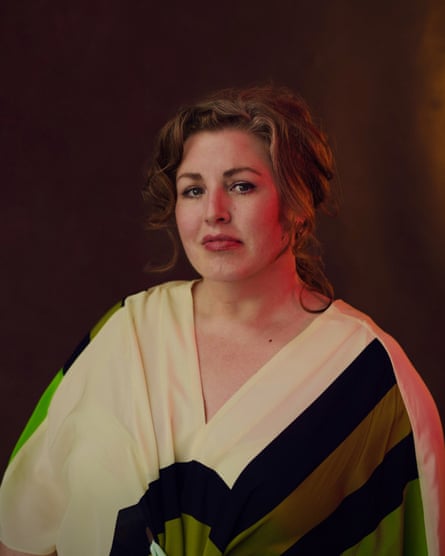
But it was important too that Finlay is a local lass, having grown up in Stockton-on-Tees. When she first came across the story, it “made me think about the coastline that I knew and loved, the place that made me”. “I didn’t have to research it because I knew them. I knew them really, really well because this is my home,” she says.
We are introduced to Rennie in the opening scenes, as he explains from his boat, “All my life’s just been about fishing.” This is palpable over a video call from his home in Teesside, as he rattles off fishing jargon, in among complex scientific explanations and legal and bureaucratic terms in a whirlwind, telling the story of the past five years of his life.
He had pulled in some lobster pots that day in 2021 to find only dead lobsters in there. “We just knew that there was something wrong. Within a couple of days, the life had disappeared totally.”
It was disturbing, he says, to speak to his friends and realise they too had seen the devastation. “I got involved from then onwards, doing everything I could to campaign to get to the truth.”
Rennie has spent decades caring profoundly about the sealife on his doorstep. He would fish a mile away from the entrance of the Tees, in what had been some of the richest lobster grounds in the UK, thanks to sustainable fishing practices. “In all my life I’ve never kept a big lobster,” he says, explaining the process of cutting a v-shaped notch in the tails of large females and returning them to the sea. V-notched lobsters are illegal to sell in parts of the UK, so this act prevents them from ever being eaten, protecting them their entire 50-year lifespans.
“We could have landed thousands of lobsters, but we thought we were doing our bit and it certainly seemed to be working. And then overnight, all of them years, you think, what have we achieved? Because everything was dead.”
He is both the natural and reluctant leader of the North East Fishing Collective (NEFC), a group made up of about 60 fishers, many of whom found themselves swamped with debt and unable to take care of their families. Rennie is joined in his quest by Dr Sue Wilson from Tara Seal Research, who watched all the seal pups born along that same coastline perish, , chemist Dr Simon Gibbon and marine biologist Dr Gary Caldwell.
Another key figure, snippets of whom we see interspersed throughout, is the Tees Valley mayor Ben Houchen, now the Conservative Lord Houchen. He led the concerningly fast demolition of the old steelworks – featuring the largest UK explosion in 75 years – and rapid construction of the Teesside Freeport project in its place.
His denials, as evidence grows that this work may be what caused the die-offs, are a constant frustration for Rennie and the gang. Many of them believe he was involved in corruption and a cover-up, while Houchen denies this, labelling the fishers “activists” and refusing contact with them.
“You can say it’s done,” says Finlay. “It’s not done for Stan. It’s not done for Sue. It’s not done for the scientists … or for Simon Gibbon, the chemist who’s trying to get the dredge licence put on hold.”
That is something the viewers have understood better than the authorities, as money has poured into an NEFC £100,000 fundraiser for the next round of scientific testing. “Someone in Glasgow donated £1,000 during the Q&A on the night, and people have been putting £5 in the pot, it’s pretty amazing.”
Rennie says audience members have been angry on their behalf, and some have cried. “For strangers who aren’t from the area to have that same reaction, it blows your mind.”
Finlay says: “People are becoming infuriated by elected officials who use their enormous platform, their enormous loudhailer, to tell you stories that are greatly at odds with lived experience. Our lives are dominated by tech bros and platforms and conglomerates and people that shout very loudly. And that can often feel disconnected from real life.”
On top of that, Finlay says, people are simply disgusted by the state of the UK’s waterways. “You can sell off all the utilities in the country, and now we’re living with the consequences of that. You can make as many promises as you like, you can promise as many jobs as you like. But the reality is, the trains aren’t working and there’s poo in the river and everyone’s pissed off with that.”
-
All Rivers Spill Their Stories to the Sea is in cinemas from 23 October.
KioskNews shows a cleaned-up reading view extracted from the publisher’s page — the original always lives on their site, not ours.