Energy bills: what to do as prices head for £2,000 a year, from switching deals to insulating

Household energy prices are set to soar in January, with a typical bill forecast to jump by £276 to the equivalent of nearly £2,000 year.
It is a worrying outlook but there are practical steps you can take to mitigate the predicted price shock.
Fixed energy deals
“Switching energy tariff to a well-priced fixed deal is the biggest lever households on the price cap can pull to bring their costs down right now,” says Richard Neudegg, the director of regulation at Uswitch.
About 20 million households in England, Scotland and Wales are on variable tariffs set by Ofgem’s price cap, which increases by 4% from Thursday, equivalent to taking the typical annual dual-fuel bill up by £60 to £1,723.
The cap is due to rise 16% further to £1,999 in January, according to the latest forecast from the consultancy Cornwall Insight. “The cheapest deal on the market is currently £324 less than this,” says Neudegg.
The number of cap-beating deals has been steadily declining in recent weeks but there are still 34 deals below the January forecast, with some cheaper than October’s rates. At the moment the cheapest is Fuse Energy’s 12-month fix at £1,675, beating the October price cap by £48, and potentially January’s by as much as £324.
Check your boiler and hot water settings
Combi boilers work best when they heat radiators to 60C or below. But in many homes the “flow temperature” is often set much too high at 70C- 80C. It only takes a few minutes to turn it down and this alone could save you about £60 a year. With some people reluctant to fiddle with their boiler settings, the charity Nesta has a step-by-step guide on its website.
Combi boilers allow users also to control the temperature of hot water supplied to taps and showers. Reducing the hot water temperature to 42C reduces the amount of fuel needed to heat the water and doing this could shave 2% off your gas bill, it suggests.
Block draughts ... then turn down the thermostat

Installing inexpensive draught-proofing strips around windows and doors is a quick and easy DIY job that could shave £25 a year off your energy bill.
You can buy foam, metal or plastic draught strips, or brush seals for sash windows, cut them to size and attach around opening casements. Use a thicker option for doors. Flues can be plugged easily with a chimney balloon or a draught excluder.
Curtains are another easy way of reducing draughts and retaining heat. You could invest in some heavy-duty thermal-lined curtains, or alternatively buy a thermal lining for your existing ones.
According to the World Health Organization, the lowest comfortable temperature for most people is between 18C and 21C so if you’re warm enough, try turning your thermostat down by 1C – this could save you about £120 a year, according to the Energy Saving Trust.
Turn down radiators
If you have thermostatic radiator valves (TRVs), the dial that controls how much hot water enters the radiator it is attached to, you will be able to adjust the temperature separately in each room. TRVs usually have a scale from 0 to 6, where 0 is off and 6 is fully open.
The Energy Saving Trust recommends putting it on the lowest setting that keeps the room at a comfortable temperature, which could be 3 or 4 for rooms you use the most and 2 or 3 for others. It says adding TRVs to a system that already has a programmer and thermostat can save a household about £30 a year.
Insulate your hot water tank and pipes
Most modern hot water tanks have plenty of insulation, but an older tank might have only a small amount. Adding an 80mm jacket to a tank with 25mm foam built-in can save homeowners in Great Britain about £45 a year, it says. The jackets cost about £20 and are widely available from DIY retailers.
Insulating (or lagging) pipes helps keep in the heat and prevent damage during cold winter months. There are several different types of material used for lagging but the most popular is polyethylene foam mainly because of how affordable and easy it is to install.
Insulate your loft (and walls)
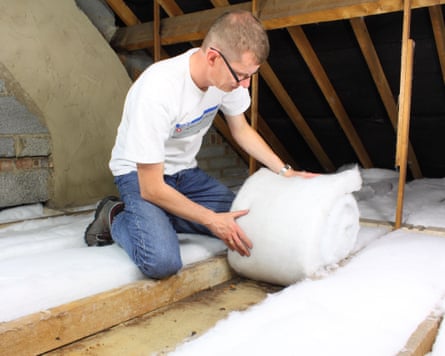
Homes can lose about 25% of their heat through an uninsulated roof. Many already have some loft insulation but topping it up can help retain more heat. If your current setup is about 120mm thick, increasing it to the 270mm (the minimum recommendation for new builds) could save you in the region of £20 a year.
There are plenty of online tutorials showing you how to do this yourself. DIY stores sell rolls of mineral wool insulation, with a roll of standard “top-up” insulation £27 at Wickes, for example.
Most homes built between 1920 and 1990 were constructed with uninsulated cavity walls, and the Energy Saving Trust estimates adding cavity wall insulation (where an installer injects insulation material from the outside) could save £200 a year.
Get a heat pump
If your boiler needs replacing it might be time to explore a green alternative. The government’s boiler upgrade scheme offers grants of £7,500 to help homeowners in England and Wales with the cost of installing an air-to-water or ground-to-water heat pump system.
Households not connected to the gas grid qualify for an additional £1,500 in support, increasing the grant to £9,000. If you live in Scotland, you may be able to get an interest-free loan or a grant to make your home more energy efficient.
When it comes to bills, the Energy Saving Trust says the biggest saving comes in homes that switch to a dedicated heat pump energy tariff and add other green technologies such as solar panels.
The tariff is vital because heat pumps run on electricity, which is generally more expensive per unit than gas. On a standard tariff, this can lead to substantial energy bills, negating some of the efficiency benefits. Heat pump users moving on to a time-of-use tariff can save about £330 a year compared with sitting on a flat-rate tariff, the trust says. This rises to about £800 with extras such as solar, although these add to the upfront costs.
KioskNews shows a cleaned-up reading view extracted from the publisher’s page — the original always lives on their site, not ours.