From Lizzie Borden to Myra Hindley, why are we still so fascinated with female killers? | Rebecca Rideal
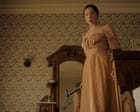
On 20 June 1893, in New Bedford, Massachusetts, a packed courtroom waited with bated breath for the jury to return its verdict following a gruelling double-murder trial. Against a backdrop of intense media interest, they had heard the prosecution argue that the accused had hacked to death their own parents with a hatchet, had burned their clothing to hide evidence of blood, and had done so out of hatred. The question the jury was asked to answer was simple – was Lizzie Andrew Borden guilty of murdering her father and stepmother? Jurors took just one hour to reach a decision: not guilty.
Yet, almost as soon as the trial came to an end, the mythmaking around Borden began – from fevered speculation about her motives and the infamous nursery rhyme to the many film and TV retellings of the story. The latest incarnation, Netflix’s Monster: The Lizzie Borden Story, opens with an axe-wielding Borden committing the murders, and frames the crimes around a fictionalised queer romance between her and the family’s housemaid, Bridget Sullivan.
Why, after 130 years, are we still enthralled by the Borden murders? Part of the answer, I think, speaks to a wider obsession with female killers (or alleged female killers in Borden’s case) and the way in which society ties itself in knots to try to explain, excuse or justify violent women. Statistically, globally and historically, homicide is a largely male crime – in terms of both perpetrators and victims. Female killers are rare: they represented just 7% of convicted homicide suspects in England and Wales between 2019 and 2022. It is precisely this rarity that sees homicides with female perpetrators (or alleged perpetrators) disproportionately sensationalised, mythologised and forced into recognisable tropes – the femme fatale, the wrongfully accused, the passive victim or the monstrosity.
That is not to say there isn’t some truth in each of these ideas. But very often a female perpetrator of a violent crime will also trigger or become the face of wider societal debates about crime, punishment, justice and womanhood. History is littered with examples.
The execution of Marie Manning in 1849, alongside her husband, for the murder of her lover, Patrick O’Connor, was followed by tens of thousands of Londoners, including Charles Dickens, and spawned close to 2.5m broadsheet sales. The shock of seeing a woman hanged triggered a nationwide debate about the ethics of public executions (they were abolished in Britain less than 20 years later). So notorious did Manning become that Madame Tussauds created a wax model of her, dressed in the black satin dress the killer supposedly wore at her execution. The statue remained in its chamber of horrors until 1971.
Similarly, the trial of the chocolate poisoner, Christiana Edmunds, forced Victorian society to confront the idea that a single middle-class woman could intentionally cause indiscriminate harm. When an attempted plea of insanity failed and she was found guilty of the murder of Sidney Barker and attempted murder of Mrs Beard, she was sentenced to death. But the home secretary stepped in, asked for her to be reassessed and granted her a reprieve. She spent the rest of her days at Broadmoor psychiatric hospital.
As the historian Jill Newton Ainsley attests, “Declaring her insane and therefore not responsible for her actions provided a bizarre and unprecedented crime with a relatively simple explanation.” This reluctance to acknowledge women’s agency when it comes to violent crime plays out in statistics too. Newton Ainsley has shown that between 1832 and 1901 women were twice as likely as men to be granted an acquittal on the grounds of insanity – even when charged with similar crimes.
For very different reasons, the acquittal of Beatrice Pace in 1928 captured public attention. She had been accused of murdering her abusive husband by arsenic poisoning, only to become the poster girl for wronged women. Upon her acquittal, newspapers reported emotional scenes where “women clasped one another by the hands and some cried”. Hundreds of women later wrote to her expressing their well wishes for her future. A few decades later, in 1955, after shooting her abusive lover, David Blakely, five times with a revolver, there was no such sympathy for Ruth Ellis at her trial. She was found guilty of murder, but her subsequent execution shone a spotlight on the ethics of capital punishment.
after newsletter promotion
Perhaps the most chilling manifestation of female violence in the 20th century comes in the person of the child killer Myra Hindley. Despite conducting the crimes alongside Ian Brady, the criminologist Mark Pettigrew has noted that the press coverage of Hindley, with the infamous mugshot, far exceeded that of Brady. Additionally, her unsuccessful parole attempts opened a wider debate about whether “life” should mean life. More recently, the case of the convicted murderer Lucy Letby has become deeply political with regard to whistleblowing, medical care and the role of expert witnesses.
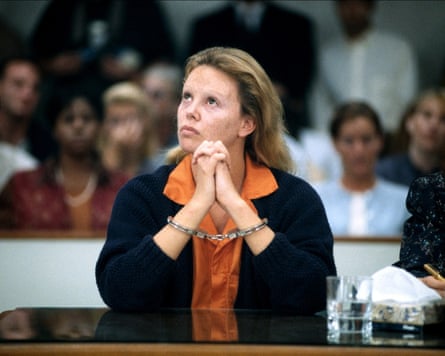
When it comes to this latest iteration of the Lizzie Borden story, the Netflix show appears to make a connection between Borden and 20th-century serial killer Aileen Wuornos, who received her own Hollywood treatment in a film starring Charlize Theron, also called Monster. This seems designed to, as the publicity materials state, tap into a “legacy of female rage” and provide an “exploration of why women kill”. From the opening episode, the show takes a highly sexualised and graphic approach to the story of the killings.
Was Borden guilty? We may never know. What we do know is that there were four people in the Borden household on the morning of 4 August 1892: Andrew Borden, Abby Borden, Lizzie Borden and Bridget Sullivan. By lunchtime, Andrew and Abby were hacked to death; Abby’s body was abandoned face-down on a bedroom floor and Andrew’s lay on a blood-drenched sofa. The brutal reality is that this was a horrific crime – whether a result of “female rage” or not.
-
Rebecca Rideal is a historian and the author of 1666: Plague, War and Hellfire. She co-hosts the historical true-crime podcast series Buried Evidence, and writes on history, true crime and culture
KioskNews shows a cleaned-up reading view extracted from the publisher’s page — the original always lives on their site, not ours.