Why Rani Ran: A tigress and a hasty plan to introduce her into a new home

Before their delta wings appear above West Bengal’s Rajabhat Khawa town, the deep, twin-engine rumble bouncing off the Bhutan hills announces the Rafale fighter jets flying in pairs from Hasimara Air Force Station, just 20 km away. That display of power and precision in the sky was meant to be matched on the ground. Just beyond Rajabhat Khawa, the gateway to Buxa Tiger Reserve, India’s growing prowess in wildlife science held out the promise of bringing the big cat back to a forest that had lost its resident tigers more than two decades earlier.
Since 2008, several Indian states have attempted tiger reintroductions with mixed results. The roaring success at Panna in Madhya Pradesh and the disaster at Satkosia in Odisha offered lessons in how to do it right. But Buxa was in a hurry.
EXPRESS INFOGENIE · IMMERSIVE
The Big Picture
Why Rani ran: A pregnant tigress and an ill-judged relocation plan

Inside the immersive story: tap a chapter to jump in
Created by Chandrashekar Srinivasan
Express InfoGenIE
The full Cabinet under West Bengal’s first BJP Chief Minister, Suvendu Adhikari, took oath on June 1. At a Kolkata event on June 30, Union Environment Minister Bhupender Yadav announced that the government was exploring tiger reintroduction in the state. On July 25, state Forest Minister Manoj Oraon set October 2 for Buxa’s tryst with the tiger.
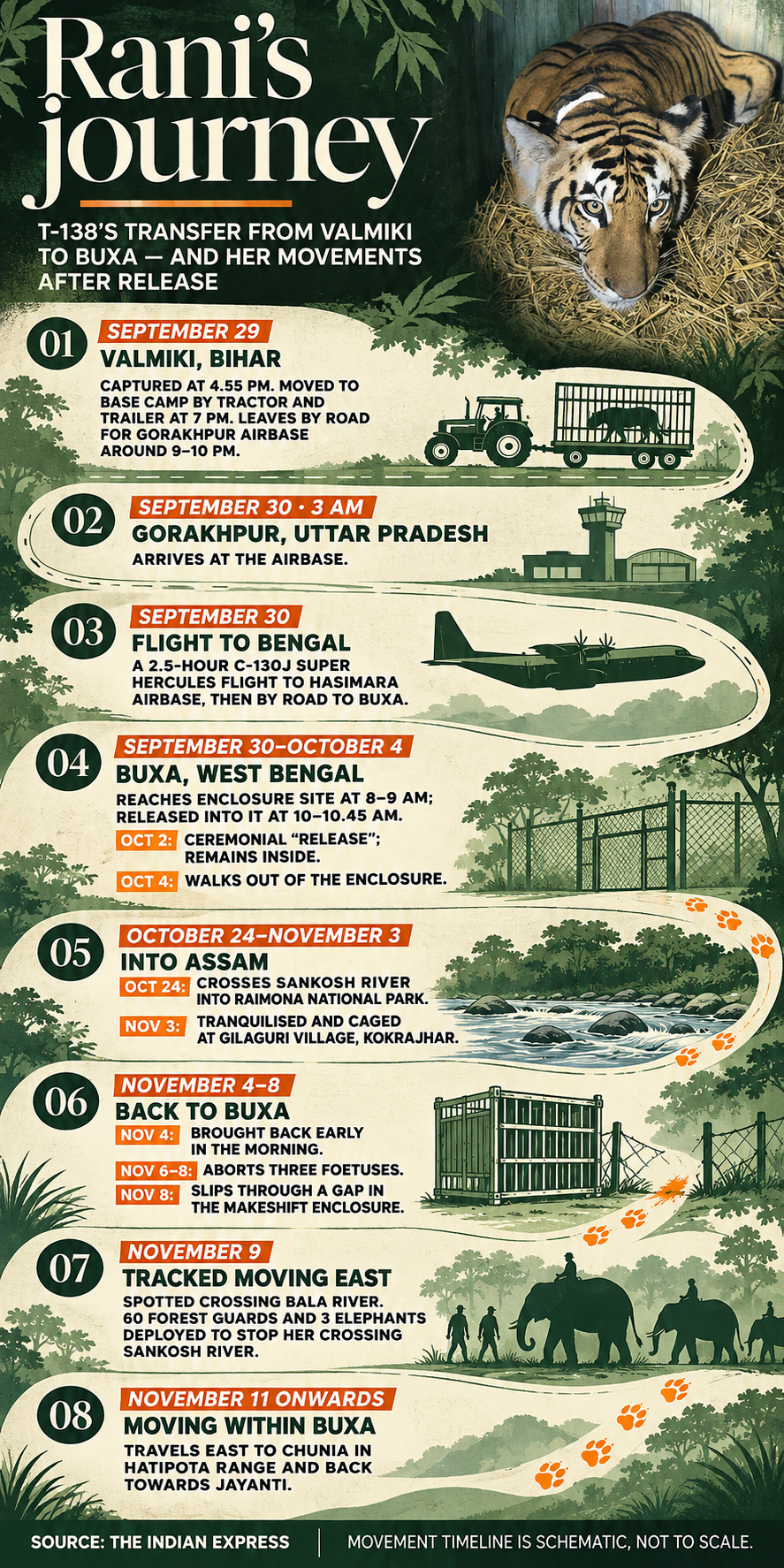
By early September, a few tigresses had been shortlisted in Bihar’s Valmiki Tiger Reserve. An expert team arrived on September 20 to make the final selection, and the chosen one was captured on September 29.
The tigress, who grew up as T138 in the Valmiki forests and has come to be known as “Dooars-Rani” since her translocation, landed at Hasimara airbase on September 30, just in time to reach Buxa for the October 2 ceremony. Yadav and Adhikari were due to release her and kick off National Wildlife Week.
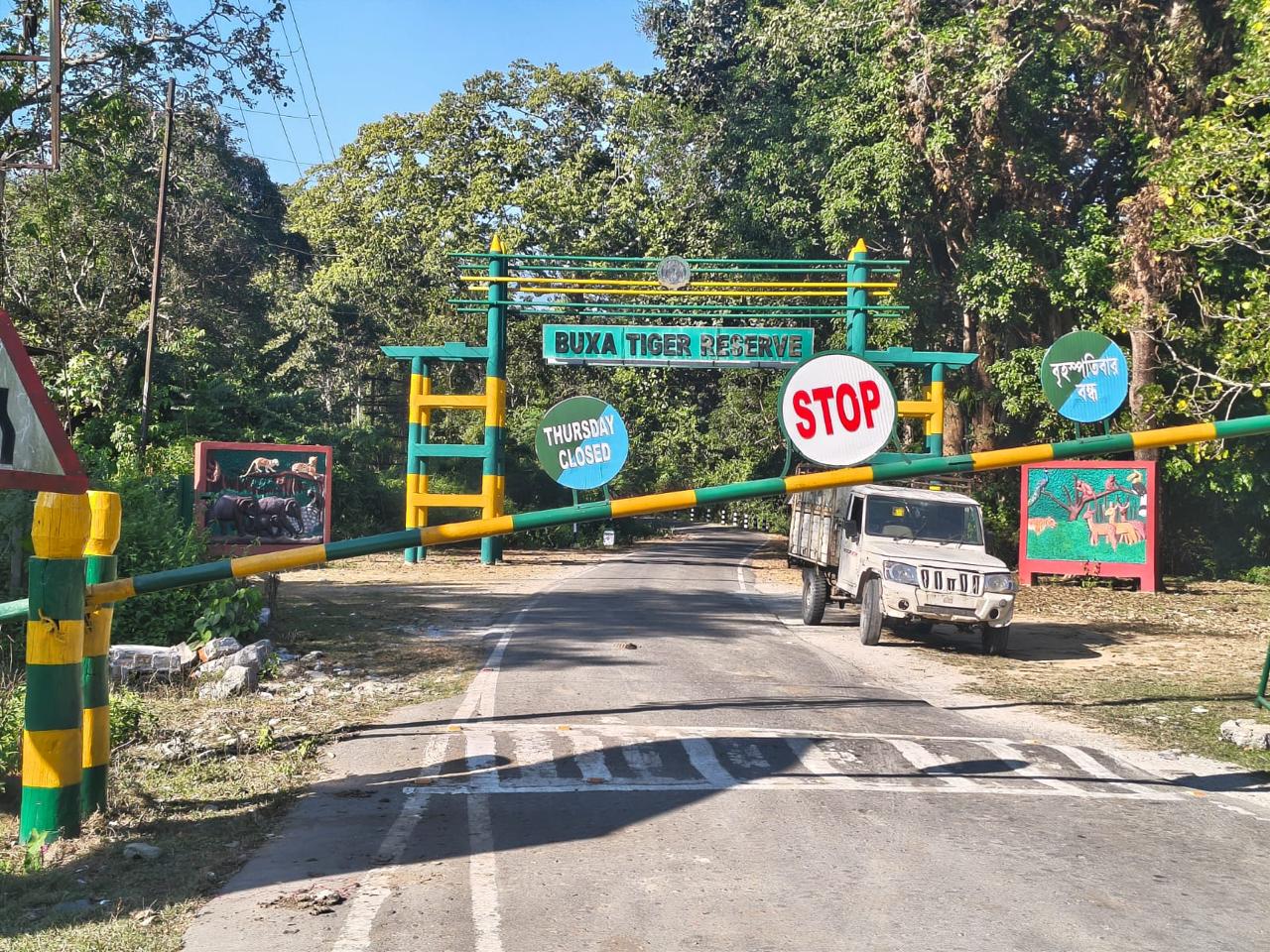 Rani was brought to the Buxa Tiger Reserve on September 30 (Express Photo by Jay Mazoomdaar)
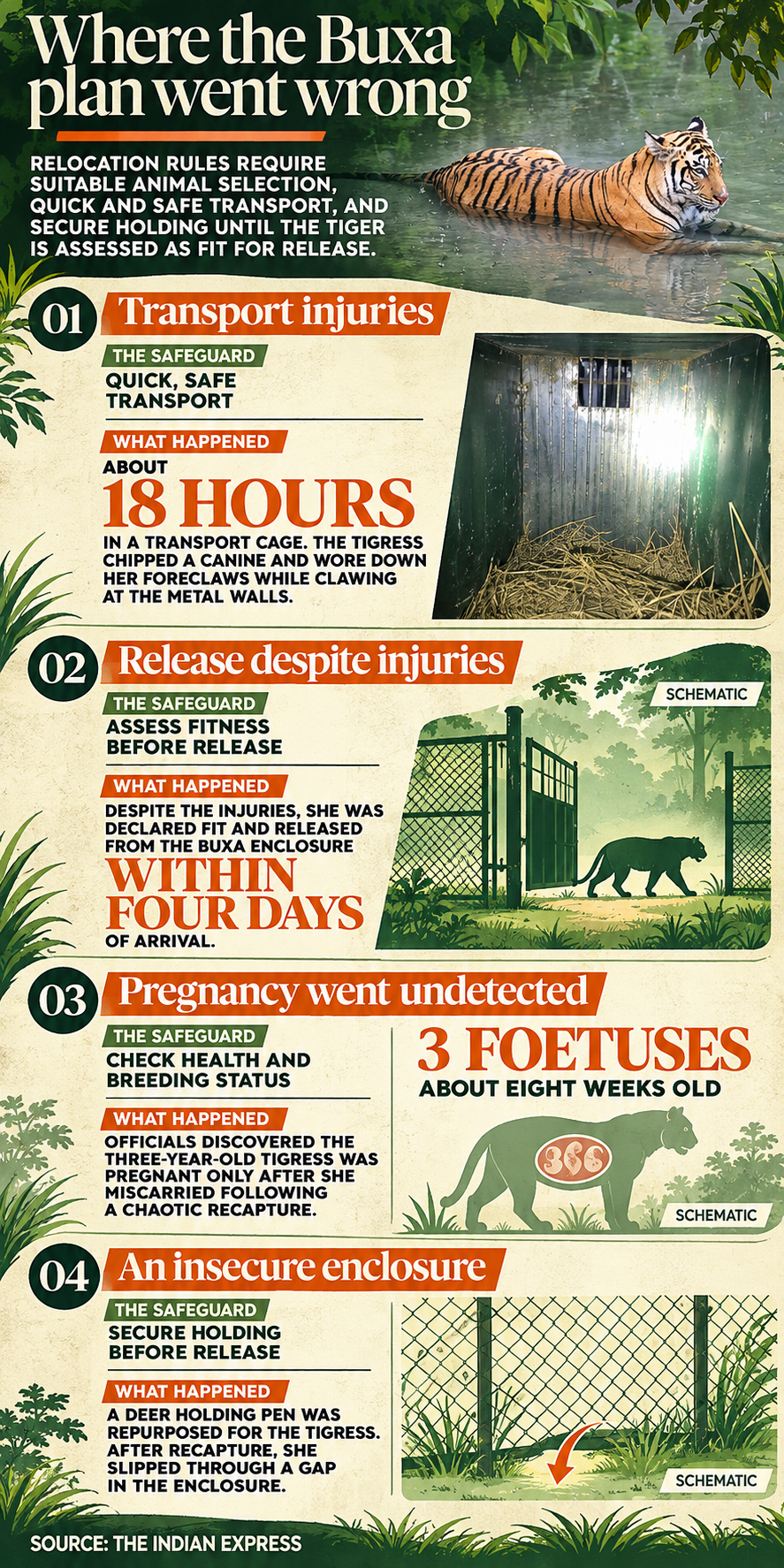
Standard operating procedure required officials to select the tigress based on age, health, breeding status and behavioural suitability, transfer her quickly and safely, hold her in a secure enclosure and release her only if she was fit after the journey.
The Buxa translocation programme erred on all four counts.
She was confined for around 18 hours as she was moved from Valmiki to Buxa on September 29-30 in a late-night road and air journey, during which the agonised tigress chipped a canine by chewing on a water saucer and wore down her foreclaws by scratching against the metal cage walls.
Story continues below this ad
 ⠀
On the morning of September 30, she was released into her enclosure at Buxa, and on October 3, a fitness certificate was issued by programme veterinarians at the management’s instruction. The ceremony went ahead as planned on October 2, but the tigress did not walk out of her enclosure until two days later. When she did, she moved eastward and, within weeks, crossed the state boundary into Assam.
A traumatic recapture followed on November 3, involving four trained elephants and several excavators in a crowded village near Assam’s Kokrajhar town. Officials learnt the tigress was pregnant only after she aborted her eight-week-old foetuses following the sedation and recapture.
Back in the Buxa enclosure, the tigress needed time to recover, but the repurposed holding pen, originally built for chital, was too weak to contain her. She slipped out, ostensibly through a “tunnel” she “burrowed” under the pen wall. Since then, vets and forest staff have been on her tail, trying to assess if the tigress needs to be recaptured for treatment.
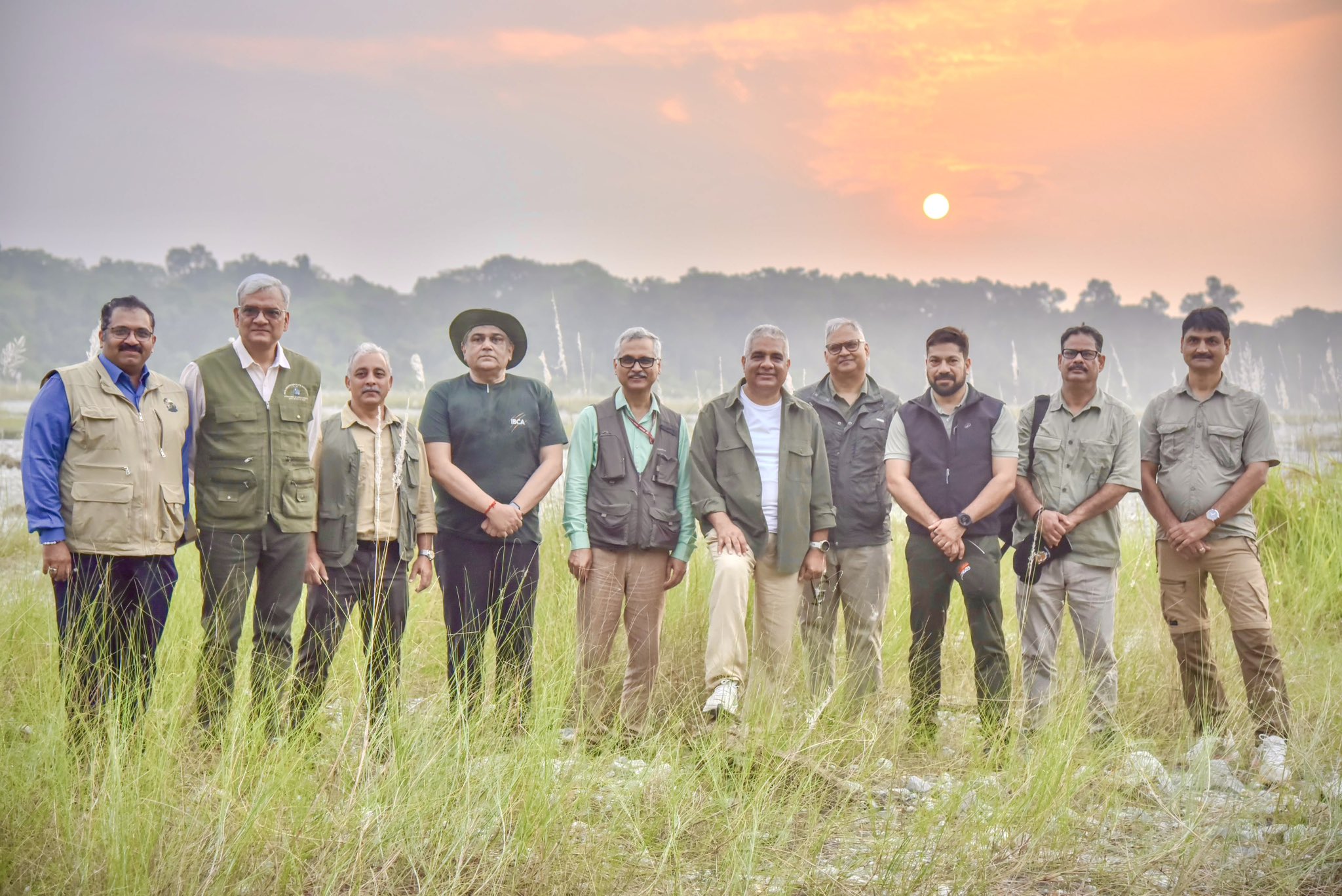 Union Environment Minister Bhupender Yadav (sixth from left) during the October 2 ceremonial release of Rani, but the tigress did not walk out of her enclosure until two days later (Source: MoEF)
Until then, with injuries that could hamper her hunting, the tigress has to fend for herself and avoid conflict with people in a landscape hemmed in by villages.
Story continues below this ad
That was how, in just six weeks, the world of a young expectant mother, once secure in her natal territory, was turned upside down.
Runaway Rani
There is no consensus on who came up with the moniker “Dooars-Rani” or Queen of the Dooars, the sub-Himalayan alluvial floodplains that are split between West Bengal and Assam. But the name has stuck and now triggers a range of reactions.
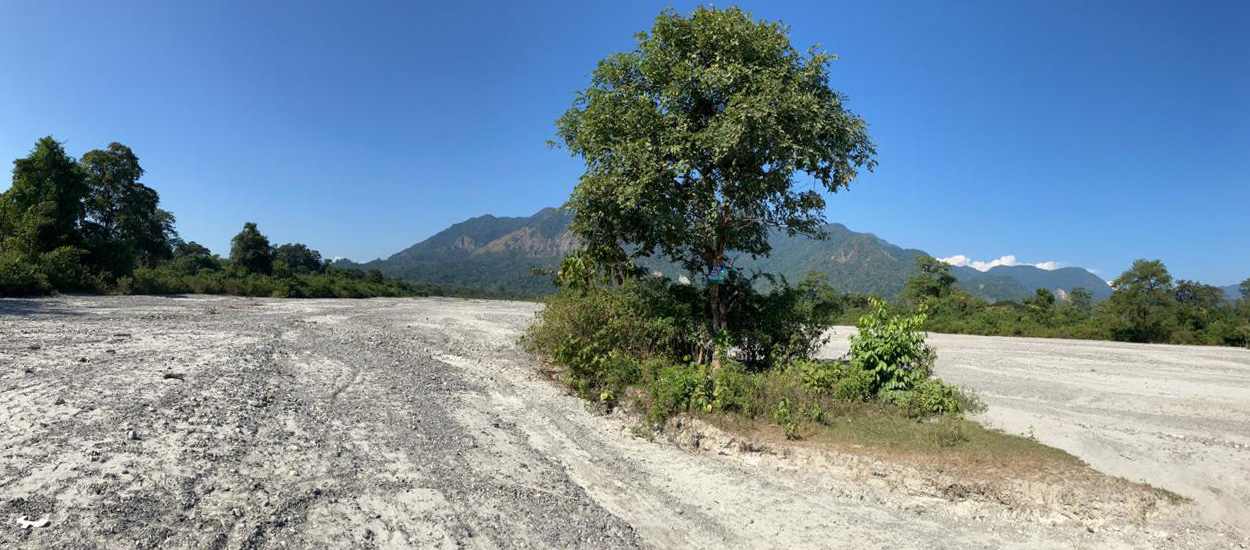 Both times, Rani crossed the Bala River (above) after leaving her enclosure (Express Photo by Jay Mazoomdaar)
A group of middle-aged men gathered by the roadside in Jayanti village, in the heart of Buxa Tiger Reserve, laugh off the question of whether people should linger outdoors after sundown now that there is a tiger in the forest.
“This tigress, they call her Dooars-Rani, will not stay here anyway. She will again run away to Assam, or Bhutan. She is running Rani (runaway Rani),” sneers one of them.
Story continues below this ad
Satellite data showed that the tigress slipped out and approached Jayanti before turning away around the time the village erupted with crackers on Diwali day. But surely, the tigress will have more room to roam and may settle if Jayanti, long earmarked for relocation, moves out?
The suggestion changes the mood. “This is our home. Tigers lived around us before this place became a reserve,” mutters the oldest in the group. Then everyone looks away.
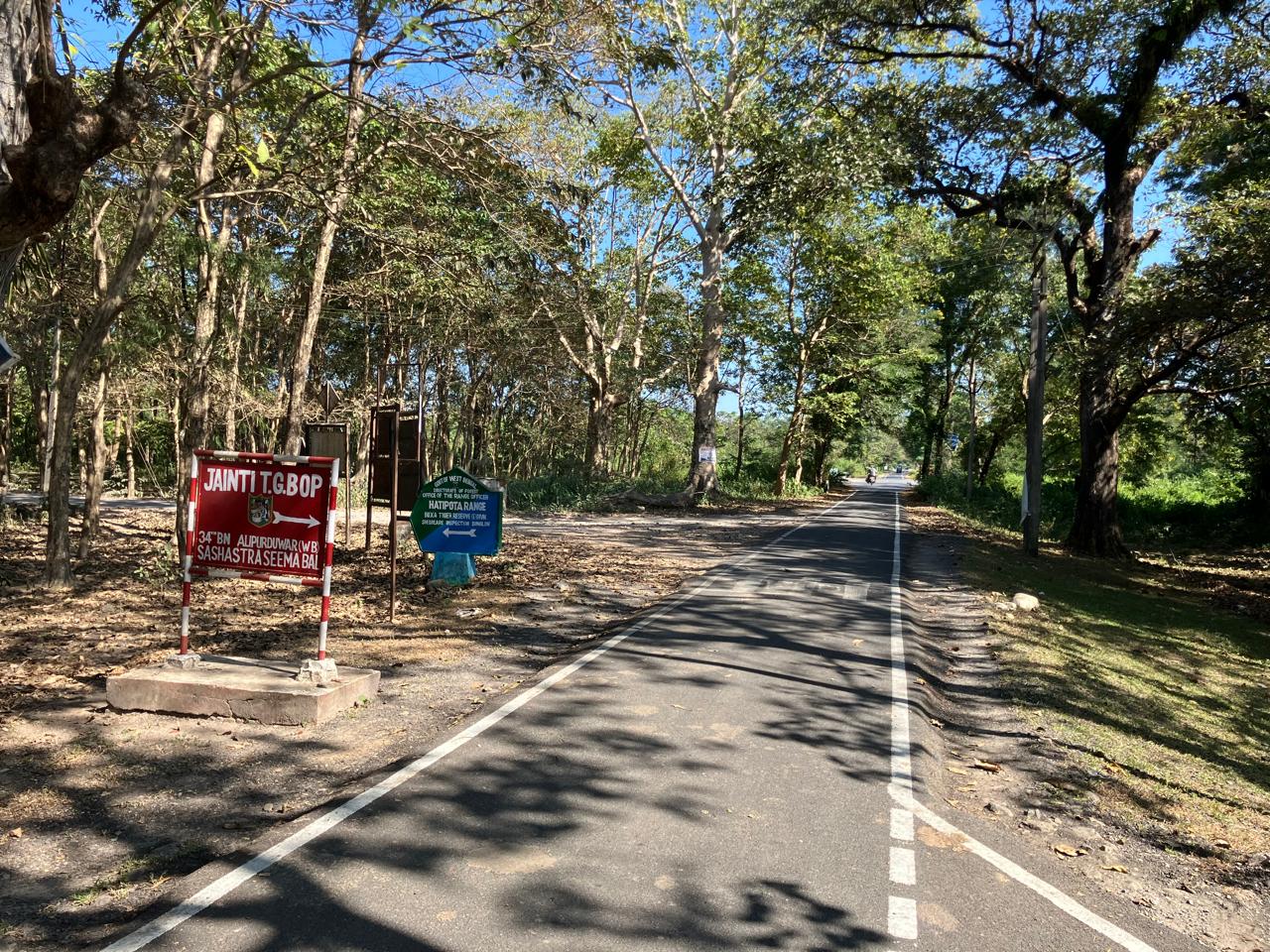 Rani headed towards Buxa’s Hatipota Range (above) after crossing the Bala River (Express Photo by Jay Mazoomdaar)
A young Sashastra Seema Bal trooper at the Hatipota camp, on the eastern edge of the reserve, seems more fascinated by the kunki elephants going up and down the road than by the elusive tigress they have been trying to track. “The (forest) department people are working hard these days,” she says with a grin.
A few kilometres to the west, the tea garden workers’ settlement at Phaskowa sits right on the route the tigress took to cross the Sankosh River into Assam in October. “We have livestock but she went around the village without bothering us. Hope she stays away this time,” says Avinash Biswakarma, who runs an all-purpose shop.
Story continues below this ad
Near Rajabhat Khawa, giant hoardings along highways leading to Buxa still proclaim the “king’s return”.
 ⠀
While the “Royal” tag has been inseparable from everyday lexicon since the days of the Raj, the cat is simply the Bengal tiger (Panthera tigris tigris) in scientific nomenclature. But the Dooars-Rani traces her lineage to “royalty” anyway, thanks to a cross-border dalliance. Her father roamed the forests of a former hunting reserve of Nepal’s king, later carved into Royal Chitwan National Park and Parsa Wildlife Reserve. A young “T138” grew up with her mother in neighbouring Valmiki, south of the international boundary, in Bihar, and struck out on her own last year, claiming a territory that overlapped with her mother’s.
The tigress had found her niche in the grasslands east of the Pandai River, amid tall stands of kash with their feathery, white autumn plumes. Sometime in August, she would have begun marking her territory more frequently with pheromone-rich urine and calling with roars and moans until the resident male or an opportunistic visitor showed up.
A tigress is an induced ovulator. Repeated mating stimulates the release of eggs. During a receptive window of three to six days, a pair can stay together and mate up to 100 times a day, in bouts lasting 15 to 30 seconds. In a tiger reserve, forest guards are supposed to keep a daily watch. Yet, nobody involved in the relocation appears to have had reason to suspect that the three-year-old tigress was pregnant.
Story continues below this ad
Doing the basics right
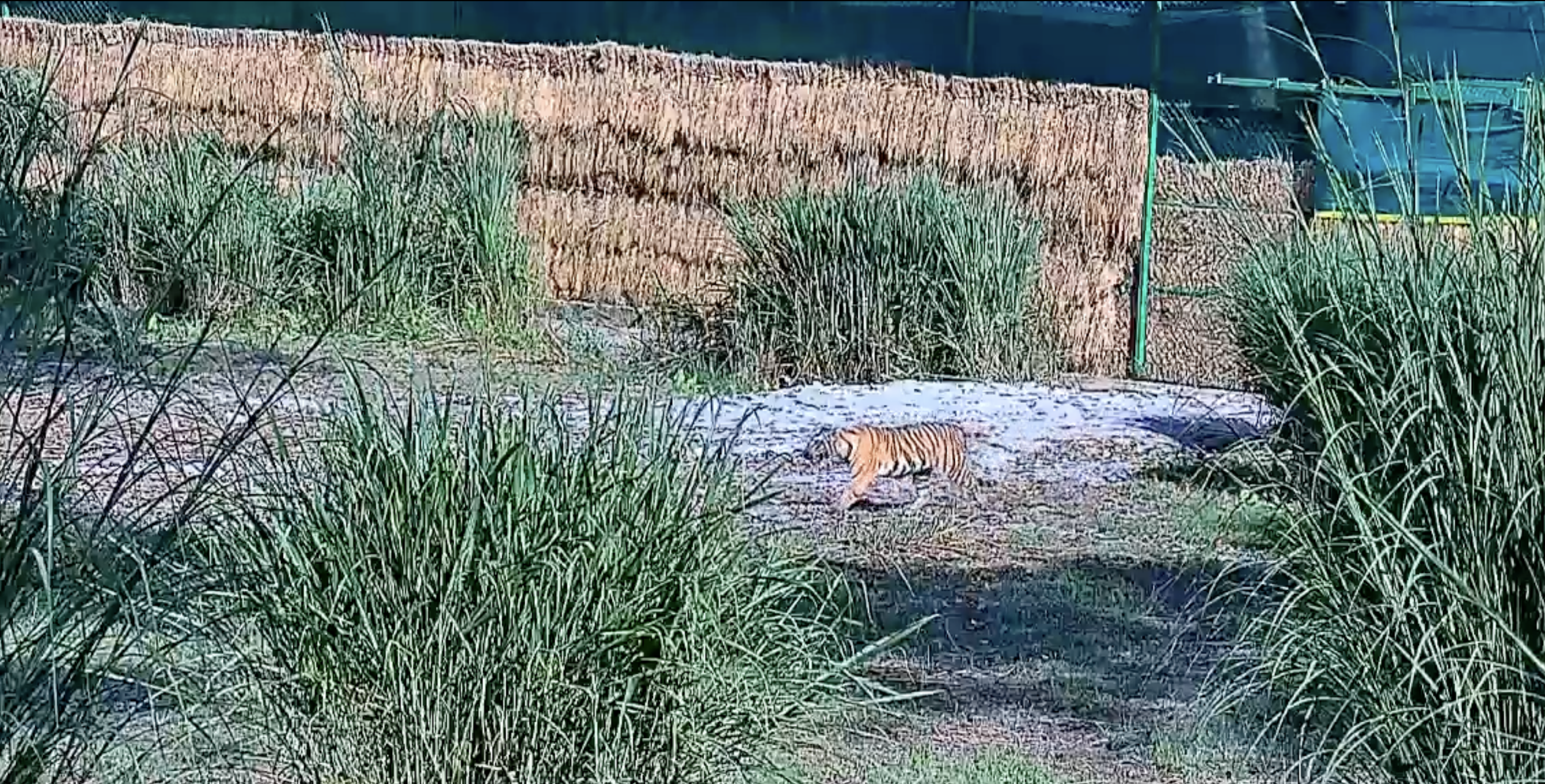 Rani inside her enclosure in Buxa (Source: MoEF)
According to a seasoned wildlife veterinarian who asked to remain anonymous, a portable ultrasound scanner can detect foetal sacs from around Day 20 of gestation in a tigress, while an on-site blood serum relaxin test turns positive around Day 25.
“Even if field monitoring failed to spot her pre-estrus signalling (courting) or mating, there was enough opportunity to determine the tigress’s breeding status once she was tranquillised before packing her off to Buxa, where she lost her foetuses,” he said.
Wildlife Institute of India Director Dr G S Bhardwaj, said that while anaesthesia, transport and stress in the new environment could have had a combined effect, it was not uncommon for young tigresses to give birth prematurely in their first pregnancy. “Gradually, they learn to safeguard their cubs,” he explained.
Dr Dharmendra Khandal of the Ranthambhore-based non-profit TigerWatch disagreed. “A first-time mother may struggle to raise her cubs due to inexperience. But conceiving, carrying the foetuses for about 15 weeks, and giving birth are driven entirely by hormones and instinct — it requires no training. This miscarriage was avoidable,” he pointed out.
Story continues below this ad
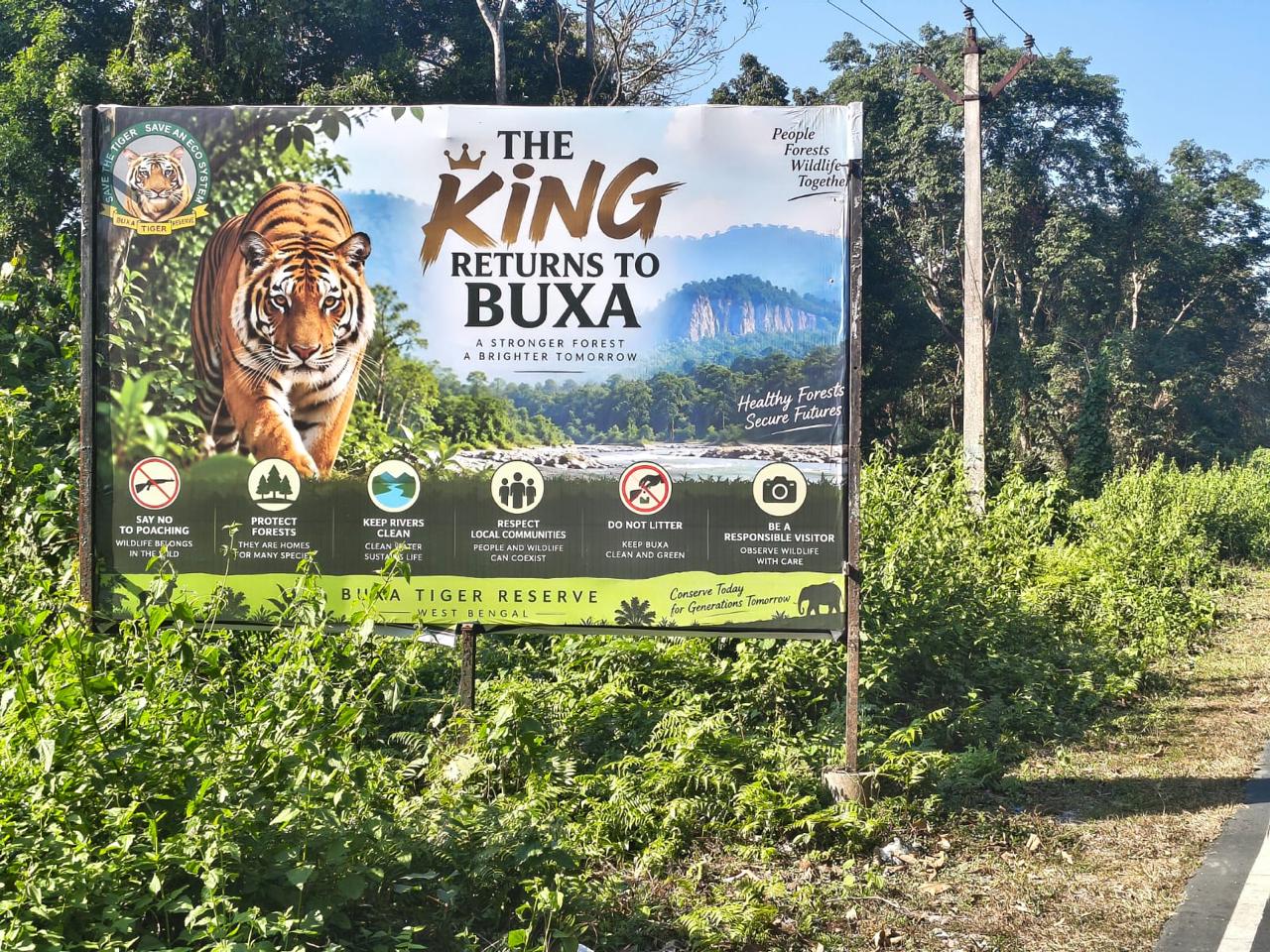 Giant hoardings along highways leading to Buxa still proclaim the “king’s return” (Express Photo by Jay Mazoomdaar)
A former Bengal forest official said shifting the pregnant tigress was a “death sentence” for her cubs that would have been due early- to mid-December. “In December-January, Buxa gets occasional transient males from Bhutan and Assam. They would have eliminated the cubs because a tigress does not mate from the time she conceives until the cubs are with her. Imagine, our so-called tiger experts were speculating that a pregnant tigress with zero mating drive was going to Assam looking for a male.”
As field director of Panna, R Sreenivasa Murthy led India’s most successful tiger reintroduction programme, reviving the reserve’s tiger population from zero to more than 30 in less than five years. He had faced a similar dilemma with a potentially pregnant tigress.
A tigress was translocated to Panna in March 2011. Her radio collar came off in mid-September. Under the monitoring protocol, she would have had to be tranquilised to fit a new collar. But Murthy and his team had recorded her mating with Panna’s founder male tiger in July. This put them in a tight spot because sedating the tigress could risk a miscarriage if she was pregnant.
 ⠀
“After much deliberation and field inspection, we as a team took up the challenge of monitoring her round the clock without the help of a radio collar. The hard work paid off when the tigress delivered mid-November. It was a moment of great joy when our prediction came true and the tracking teams sighted the cub in December,” he recalled.
Story continues below this ad
Buxa does not have the field strength, resources or perhaps even the motivation to match. “The entire state forest department is in shambles. There is no money and little recognition. Last week, Kolkata took away the powers of the forest bosses to even transfer rangers and beat officers,” said the former Bengal forest officer.
As of January 1, 2026, West Bengal had 94 Indian Forest Service officers against a sanctioned strength of 126. Of the 38 posts earmarked for promotion from the West Bengal Forest Service, 22 lay vacant. With few senior posts and irregular cadre reviews, officers often wait years for vacancies to open up after they become eligible, delaying pay raises.
‘Tiger? What tiger?’
When Buxa lost all its resident tigers in 2005-06, then field director L G Lepcha claimed that militancy had pushed Buxa’s tigers en masse into the adjoining Phibsoo Wildlife Sanctuary in Bhutan. Speaking to this correspondent, he had defended Buxa’s creative bookkeeping as a way to reduce the inflated tiger count gradually, since he could not do so “at one go”.
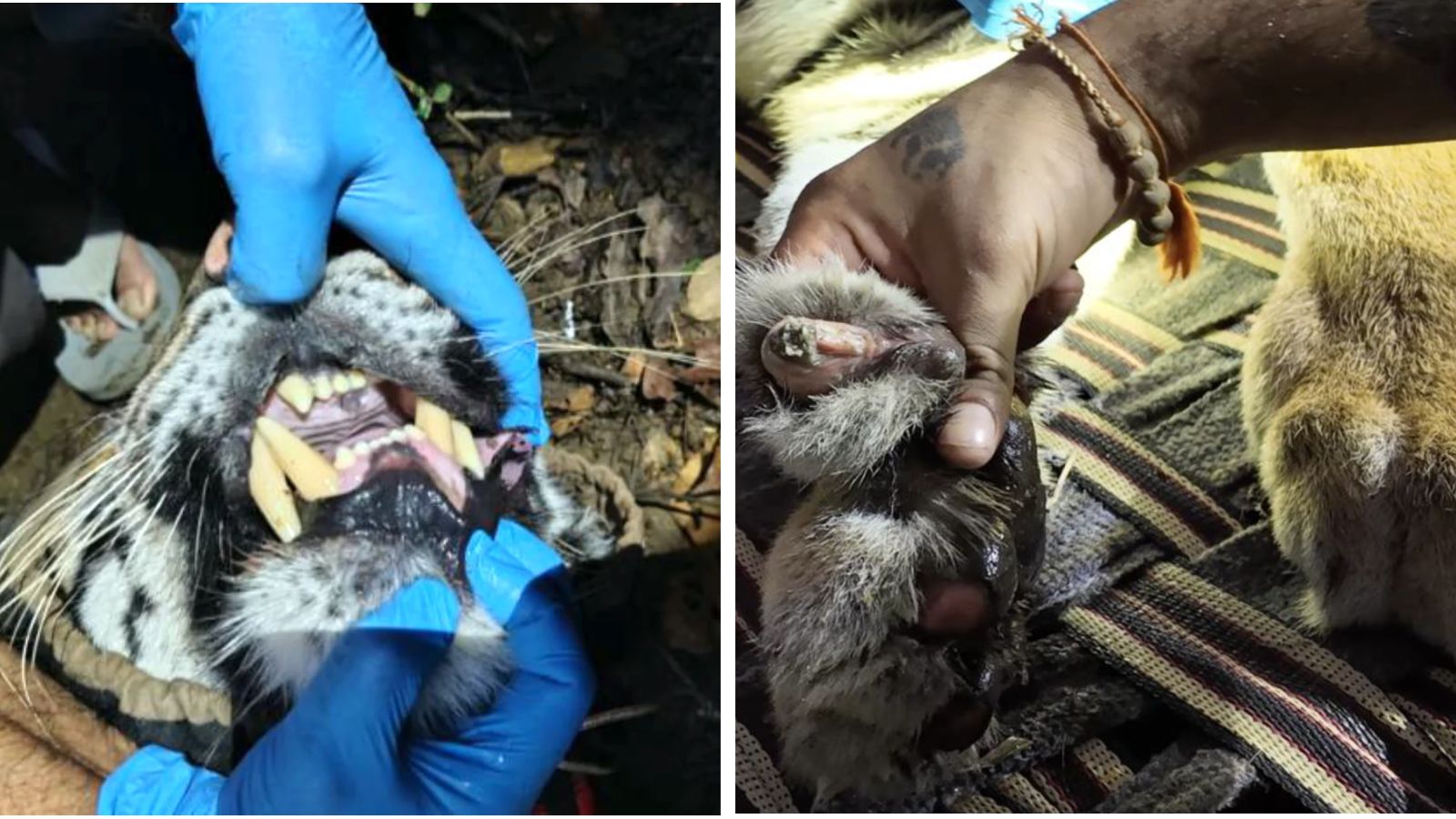 The tigress inside a transport cage; foreclaws worn down by scratching the cage wall; lower canine chipped from biting the wall (Source: MoEF)
Two decades on, those memories of spin-doctoring lingered as Buxa struggled to explain what had gone wrong.
Last week, this correspondent stopped at a forest checkpoint on the east-west road connecting Hatipota and Jayanti. The tigress, already on the loose again, was moving eastward towards Chunia in the Hatipota range. A forest range officer sat nearby in the shade of the only tree on that patch of the Jayanti riverbed. Asked about her movement eastward, he stared blankly: “Tiger? What tiger?”
An hour earlier, at a forest guest house in Hatipota, Buxa field director Kumar Vimal refused to answer when asked if a tiger could burrow a two-foot-deep tunnel. Pressed further, he said, “The honourable minister has already spoken to the media. I have nothing to say.”
On November 11, when asked about the tigress’s miscarriage, state Forest Minister Oraon, who has largely been the face of the Buxa reintroduction programme, denied any knowledge of the incident.
On November 14, speaking to reporters, Oraon said questions regarding the tigress’s injuries and pregnancy fell strictly under the jurisdiction of the Central Government. “Action would be taken if lapses are found,” he said.
On November 12, the day The Indian Express reported the tigress’s miscarriage and debunked the burrowing theory, senior officials of the National Tiger Conservation Authority (NTCA) rushed to Buxa. On November 13, NTCA Member-Secretary Sanjay Pathak was quoted in the media as confirming that foetuses had been found in the enclosure and that the tigress had slipped out through a gap. Further tiger reintroductions were on hold pending the construction of two new tiger enclosures and the training of Buxa staff, he said.
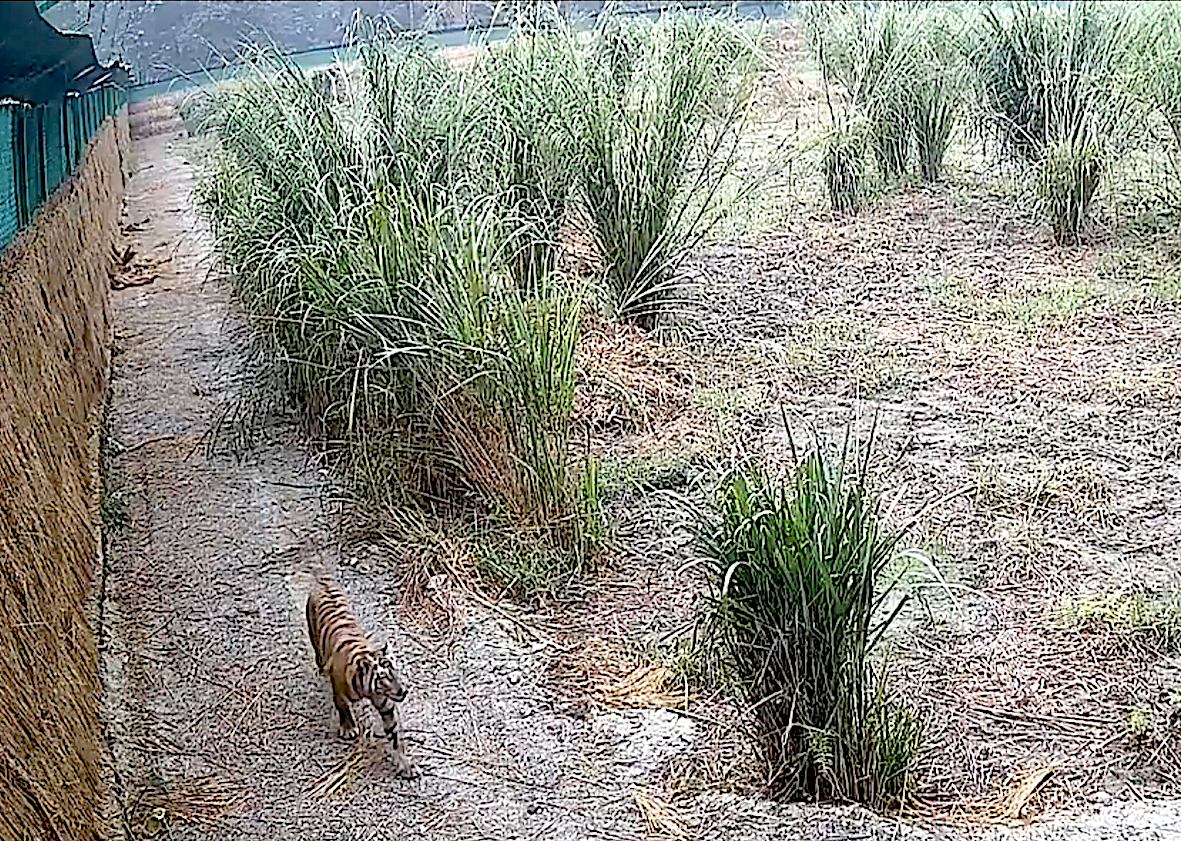 After leaving her enclosure (above), Rani is moving eastward again (Source: MoEF)
Since then, senior NTCA officials have not responded to phone calls and messages seeking an update. On November 19, a top Environment Ministry official declined to comment. A senior official privy to the developments said, “Though there is no visual confirmation of the tigress on a kill yet, she appears to be well-fed and a sambar carcass was spotted. There were certain gaps (in the programme) which are being rectified. The NTCA probe report is awaited.”
A former Madhya Pradesh forest officer questioned the “new culture” of tailoring conservation to suit VIP convenience. “There is a clear shift in priority when an injured tiger is released because a VIP event can’t be postponed. In Madhav Tiger Reserve, they did the opposite — held a tiger in captivity to get a VIP date.”
Khandal, of the non-profit TigerWatch, stressed that technical decisions should be left to the professionals. “Wildlife managers should have a free hand. The biologists and vets should make critical decisions.”
The veterinarian quoted earlier pointed to India’s nearly two decades of experience in relocating tigers. “Shifting wildlife is a sensitive and unpredictable task involving too many variables. Things can go wrong. But we have the knowledge, skill set and the hindsight of best practices. We will get good results more often if we do not reduce such events to spectacles. Wildlife deserves care and respect.”
As Buxa desperately hangs on to the promise of its first resident tiger in two decades, Dooars-Rani carries the burden of reviving the forests of Bengal Dooars to bridge the tiger populations to the east and west. A lot is riding on the queen of the Dooars. But she is only a tiger.
KioskNews shows a cleaned-up reading view extracted from the publisher’s page — the original always lives on their site, not ours.