Oscar-Nominated Director Rachid Bouchareb on the Challenges of Shooting ‘Reggane’: ‘We’re Making a Period Film in the Depths of the Sahara’
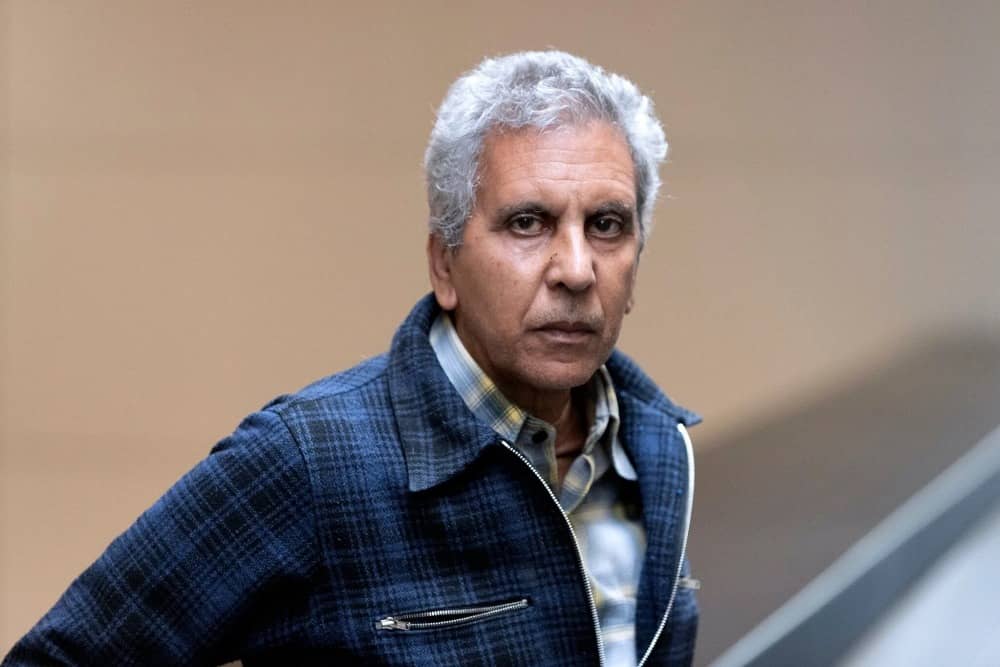
Among the challenges facing Franco-Algerian filmmaker Rachid Bouchareb as he prepares to shoot his next feature, “Reggane,” are rebuilding a French military base in the Algerian Sahara, sourcing military vehicles dating back to the final years of French colonial rule and dressing some 2,000 extras.
The three-time Oscar-nominated director, whose companion documentary short “Boomerang Atomic” is screening in the Ajyal Short Film Competition at the Doha Film Festival, tells Variety that the feature is now gearing up for an April 2027 shoot. “Each time, I discover that the scale of the production means preparation takes a little longer,” Bouchareb says. “We’re making a period film in the depths of the Sahara. There are surprises.”
Set in 1960, two years before Algeria gained independence from France, the film follows an Algerian shepherd who dreams of becoming a fisherman but finds himself stuck on a French military base after the army requisitions him and his livestock.
Originally slated to begin shooting in September, the period drama is in preparation across a vast stretch of the Algerian Sahara, from south-central Timimoun, to Tamanrasset in the deep south and Djanet in the southeast. Some production locations are more than 1,200 miles from the coastal capital of Algiers, necessitating particularly complex logistical planning.
Algerian state-owned companies specializing in desert construction are working alongside the film’s art department to recreate the military base, while the Algerian army is supplying period vehicles.
Variety can exclusively reveal that French actor Samir Guesmi (“District B13”) is attached to the project. Further casting is underway to bring together professional Algerian and French actors alongside nonprofessional performers drawn from local communities.
Since Bouchareb unveiled the project to Variety last year, its financing structure has changed considerably. The feature is now financed entirely by Algerian partners, including the Ministry of Culture and Arts and the Algerian Center for Cinema Development (CADC), a public entity tasked with developing the country’s film industry. U.S.-based Cohen Media Group and Japan’s Kingyo Films are on board as co-production partners.
“What’s most important for me, because I’m not in a hurry, is that I’m reassured that the film will be made. That’s one less source of anxiety for a filmmaker,” he says. “I haven’t had to go looking for financing here and there. Everything is secure.”
Bouchareb’s research for “Boomerang Atomic,” which revisits France’s first atomic bomb detonation in Algeria on Feb. 13, 1960, has also shaped his approach to the feature. He intends to move between fiction and archival footage, juxtaposing official declarations with images of the people living in the Sahara.
“It’s interesting to show these images, particularly to contradict what was being said, namely that there was no risk, that everything was fine, that they chose this place because there was nobody there,” he explains. “And then to show some faces, the few that I found, of Algerian workers at the time.”
The documentary has already forged connections between communities affected by nuclear testing. Its presentation by the United Nations Institute for Training and Research (UNITAR) in Hiroshima this past August brought together members of the film’s team, survivors of the atomic bombing and attendees from French Polynesia, where France conducted 193 nuclear tests between 1966 and 1996.
“The commemoration in Hiroshima was a really important moment,” he reflects. “All of a sudden, these memories were connected, between the survivors of Hiroshima, the Polynesians and Algeria, through the documentary.”
With potential school and festival screenings in French Polynesia, Bouchareb is particularly moved by the documentary’s reach. “Sometimes we don’t know where our films travel,” he says. “Having brought these memories together is wonderful.”
He recalls a similarly powerful experience touring France with his Oscar-nominated 2006 war drama “Days of Glory,” which follows North African soldiers fighting for France during World War II.
“The film allowed people to say to themselves, ‘Our ancestors participated in the liberation of France and Europe. They died by the thousands. They were heroes. So my place here is legitimate,’” he recalls. “Half the room was made up of children of immigrants. I felt that they had found something.”
The desire to tell such stories led Bouchareb to establish his own production company, 3B Productions, in 1990. “I’m very happy to produce my own films because today I can tackle any subject,” he says. “I don’t think I would have had the career I have today if I hadn’t been my own producer. It simply would have been impossible.”
“Boomerang Atomic” has been submitted for consideration in the documentary short film category at the 2027 Academy Awards, with Bouchareb hoping to bring greater attention to this little-known chapter of history. “The Oscar qualification opens up a few more possibilities for the film,” he says. “It allows me to talk about it through the press and make it better known.”
Bouchareb remains open to collaborating on “Reggane” with Forest Whitaker, who boarded “Boomerang Atomic” as executive producer in October. Whitaker previously starred in Bouchareb’s 2014 drama “Two Men in Town.”
“This important documentary made an indelible impact on me and needs to be seen,” Whitaker said in a statement.
The director is also in discussions with Goodfellas for international distribution of the feature and is particularly keen to reach audiences in France, the U.S. and Japan. Though receptive to streaming platforms giving his films a second life, Bouchareb is adamant about where that life should begin.
“For me, first and foremost, it’s the cinema,” he says. “The movie theater is something magical.”
KioskNews shows a cleaned-up reading view extracted from the publisher’s page — the original always lives on their site, not ours.