Most Americans think AI is doing more harm than good in schools
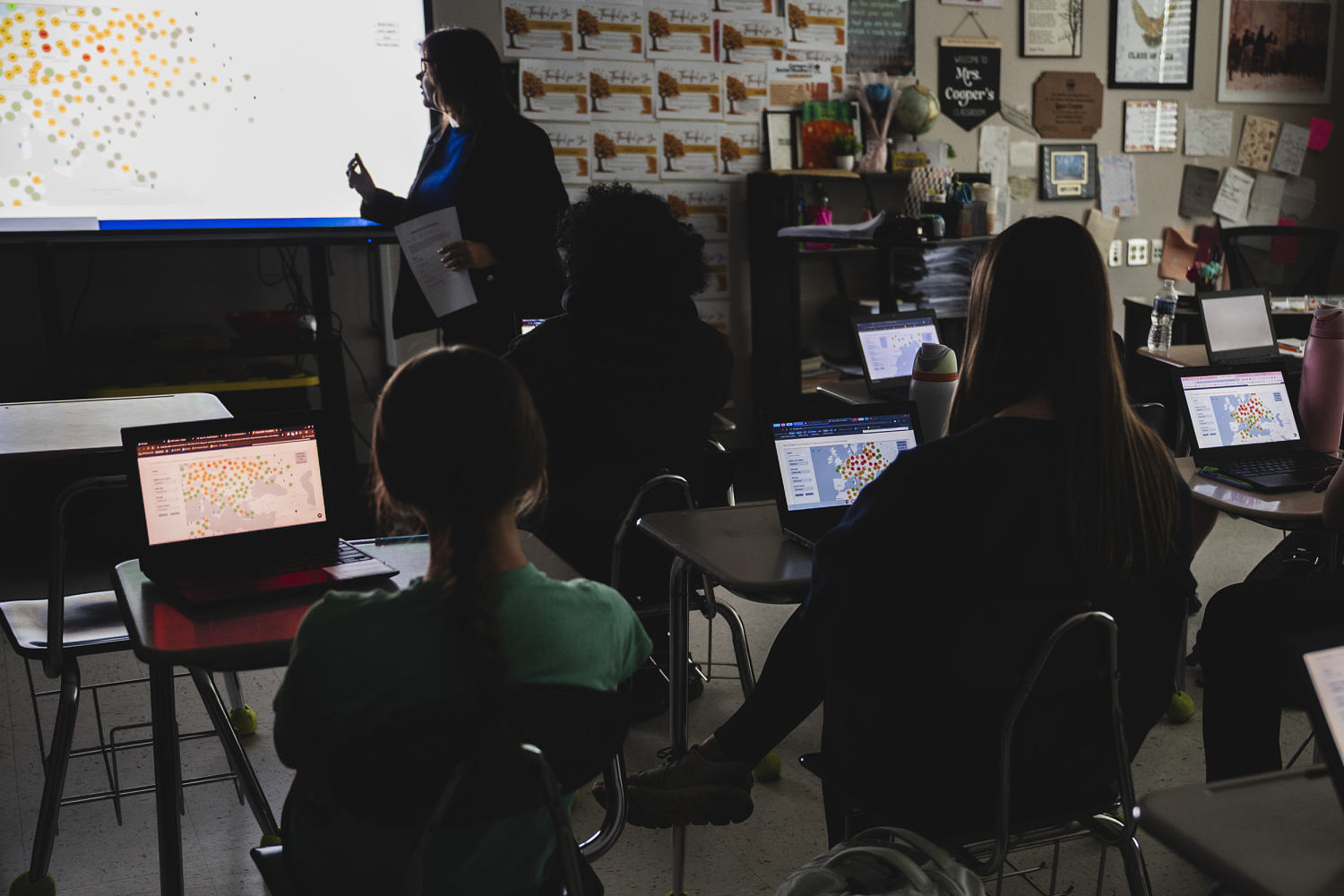
Most American adults think artificial intelligence is going to do more good than harm in education, according to this month’s NBC News Decision Desk Poll powered by SurveyMonkey.
And a growing share of U.S. adults believe schools that shun the technology will better help students grow than schools that embrace it.
The survey found that 53% of adults believe AI does more harm than good in K-12 education, compared with 27% who believe it does more good than harm. That’s similar to the 54% who said it does more harm than good in colleges and universities, while 24% said they believed it did more good than harm in higher education.
When it comes to preparing students for the future, 44% of respondents said a school that integrates AI tools into the classroom will better help students than a school that bans using it — down 9 percentage points from June 2025.
On the flip side, 56% of respondents said they believe a school that prohibits using AI will better help prepare students for the future, up 9 points since the June 2025 survey.
Respondents were mixed on what — if any — ways of using AI were acceptable for a student completing a school assignment.
Proofreading and editing was seen as the most acceptable use case among those tested, with 49% of adults saying that was OK. That was followed by 41% who said it is acceptable for students to use AI to help with researching and brainstorming and 38% who believed it is OK to use AI to organize or outline ideas.
About a third of respondents, 31%, said no AI use was acceptable for schoolwork. Just 7% said it was OK for students to have AI do writing and generate content for them.
The subject of AI use in the classroom is raging in school districts and on campuses across the country. Parents and advocates nationwide have raised concerns about AI use, saying it has stunted students’ educational growth, and some school districts have enacted restrictions.
New York City announced this month that the use of AI for students will be restricted until high school, with only limited use cases allowed then.
00:40
Melania Trump says young students 'need to learn' about AI
00:0000:00
On Tuesday, first lady Melania Trump told NBC News that she believes it is important for students to get hands-on experience with AI, a technology that is likely to shape their futures far beyond the classroom.
“Of course, they need to be vigilant, as well,” she said. “But this is our future, and we need to guide them and teach them what is available. If not, they will stay behind, and we need to be the first, in [the] United States, to lead.”
The NBC News Decision Desk Poll powered by SurveyMonkey surveyed 7,105 adults online from Aug. 20 to Sept. 1 and has a margin of error of plus or minus 3.3 percentage points.
KioskNews shows a cleaned-up reading view extracted from the publisher’s page — the original always lives on their site, not ours.