Trash to power: Councils to send rubbish to Kwinana as leachate takes over Tamala Park
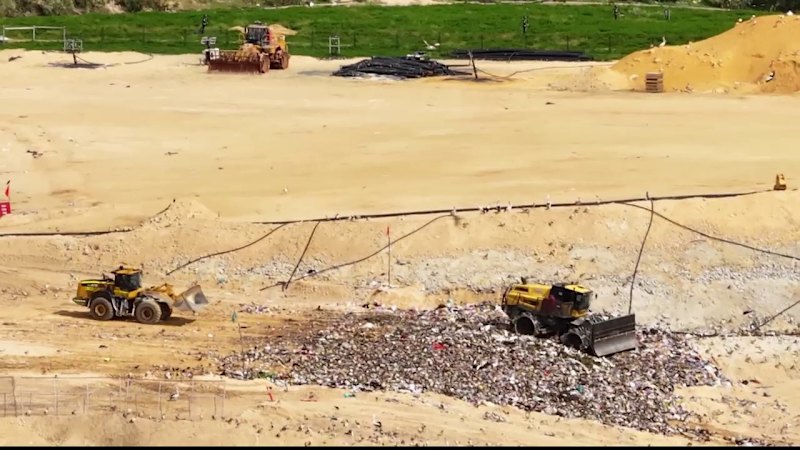
Five Perth councils have been given the green light to take their household trash to a waste-to-energy plant in Kwinana instead of the problematic Tamala Park Waste Facility.
The Mindarie Regional Council decided at a behind closed doors meeting on Thursday night to allow the Cities of Perth, Stirling, Vincent, and the towns of Cambridge and Victoria Park, to take their red-bin waste to ACCIONA’s Kwinana Energy Recovery.
The facility integrates the recovery and reuse of waste to generate electricity that can power more than 50,000 households.
MRC chairperson and Town of Cambridge mayor Gary Mack told 9 News Perth the council voted to allow five of its seven member local governments to send their waste to the alternative site.
But it doesn’t mean they will take up the offer.
“The councils must endorse that proposition themselves and what will happen is that the red bin curbside waste will be collected as usual, but instead of going up to Tamala Park for those five councils, it will be taken down to the gate at the Kwinana waste-to-energy plant to be incinerated to create electricity,” Mack said.
For the past five years the MRC, with member councils, have been working on where they will take their waste once the tip reaches “completion”.
The rough plan was to secure a contract with the Kwinana waste-to-energy site to ensure red bin household waste from each local government area would continue to be accepted and managed once landfill reached capacity.
But in June, the cities of Joondalup and Wanneroo said they were no longer willing to back the waste-to-energy proposal, so none of the member councils could benefit from the MRC’s plan.
The five member councils that initially supported the plan were granted exemptions to enter into a waste-to-energy contract or another alternative to the Tamala Park landfill.
This ensures the Kwinana Energy Recovery plant will accept the waste from the five local government areas which accounts for 481,000 Perth residents.
Mack said he expects the first of the smaller councils will make the move in the coming months in a phased transition.
The announcement comes after new City of Perth council agenda data this week revealed leachate levels in the landfill were significantly higher than expected.
The report revealed the MRC provided the Department of Water and Environment Regulation with a revised estimate of leachate stored within Stage 2 of the landfill.
That revised estimate found leachate levels had risen from “approximately 417,000 [cubic metres] to approximately 2.07 million m³, or about 2.07 billion litres, after incorporating measurements from internal landfill-gas wells”.
A DWER spokesperson said the MRC provided the leachate volume estimate to them in October 2025, during the department’s assessment of the proposed piggyback liner and leachate management area.
Mack said he wasn’t aware of the estimated leachate figure, but acknowledged the MRC has been aware the leachate was a problem.
“The landfill site itself is coming almost to the end of its life, and like all landfills, has leachate,” he said.
“The leachate levels are elevated, and the issue with that is that makes the extraction of landfill gasses more difficult, and those gasses are the ones which actually make the odour that the local residents have objected to.”
Gases include methane, hydrogen sulfide and ammonia.
“We’re actually measuring that now, and we’ll be working very closely with DWER once we understand the accurate measurement of leachate in that site to actually work to reduce it, not to eliminate it altogether, but reduce it to a safe level that’ll be sustainable for the next 30 years that the landfill site will need to be monitored,” he said.
Mack said all the leachates won’t be removed as it is a “natural part of a landfill site”.
“It’s where the decomposition of matter, together with precipitation and groundwater, and also the moisture itself in the landfill, actually forms part of that leachate. The concern for the residents and us is making the gas collection more effective,” he said.
At its Tuesday night meeting, the City of Perth voted to request Lord Mayor Bruce Reynolds to advocate to the state government for a “balanced regulatory response” that enables a practical closure pathway for Tamala Park.
Councillors also unanimously supported acting chief executive to monitor the Tamala Park landfill closure, leachate management, community amenity and financial implications and provide them with reports on the status.
A state government spokesperson said the responsibility of the Tamala Park facility remained with the Mindarie Regional Council.
“The site has been subject to close monitoring from DWER for several years and these investigations identified a range of issues, including highly elevated levels of leachate and landfill gas emissions,” they said.
“MRC’s recent applications to mitigate the issues at Tamala Park were deemed insufficient to resolve the current issues, as well as holding unacceptable environmental and community risks and thus were rejected.”
The spokesperson said the government’s primary focus was to protect “human health and the environment.”
“The State Government will continue to work with local councils on long-term solutions to waste management in a growing Perth-Peel metropolitan area,” they said.
“While waste management continues to be the responsibility of local government, as the regulator, DWER will continue to work with the relevant parties to find the best outcome for the local community.”
KioskNews shows a cleaned-up reading view extracted from the publisher’s page — the original always lives on their site, not ours.