The Best Comedy Movie From Each Of The Last 10 Decades

Comedy has a cruel relationship with time. A joke that brings down the house on opening night can become painfully dated within a few years. Then there are movies that somehow get funnier as the world changes around them. Watching those is like discovering that someone from 90 years ago had an alarmingly accurate understanding of human stupidity.
The best comedy movies have never followed one set of rules. The Marx Brothers made nonsense out of political authority before Hollywood had quite figured out what to do with sound. Decades later, a disaster movie parody could get a laugh simply by having Leslie Nielsen deliver a completely ridiculous line with absolute conviction. What audiences find funny has changed dramatically, but the pleasure of watching a filmmaker land the perfect joke hasn't gone anywhere.
Choosing one comedy from each of the last 10 decades means deciding what makes a funny movie great in the first place. The number of laughs matters. So do the performances, the writing, and whether the film introduced something other comedies spent years trying to imitate. Most important is the question of whether it still works when watched today. A movie can be hugely influential and still be a bit of a chore; these selections should be worth putting on right now.
That leaves room for argument, particularly in decades crowded with classics. The 1970s alone could sustain a furious debate between Monty Python and Mel Brooks fans. And the 2020s haven't finished making their case yet. Rather than pit films from wildly different eras against one another, here's a chronological look at the comedy that best captures each decade's peculiar genius.
1930s: Duck Soup (1933)

Groucho Marx became president of a fictional country. Naturally, things went downhill from there.
In Duck Soup, Groucho's Rufus T. Firefly takes charge of Freedonia and promptly treats international diplomacy as an opportunity to insult everyone in the room. The plot, involving a wealthy benefactor and an increasingly absurd conflict with a neighboring country, barely matters. That's part of the joke. The Marx Brothers have more pressing business, including the famous mirror routine, which is still astonishingly funny without a word being spoken.
Plenty of early sound comedies now feel trapped by the stage conventions they inherited. Duck Soup seems determined to destroy them. Director Leo McCarey gives the brothers room to interrupt the story whenever they see an opening, and the resulting film has no interest in respecting political leaders or narrative logic. Its mockery of nationalism has lost little of its sting. Nearly a century later, the speed and sheer nerve of the comedy make Duck Soup feel less like a museum piece than a warning that nobody in charge should be taken too seriously.
1940s: His Girl Friday (1940)


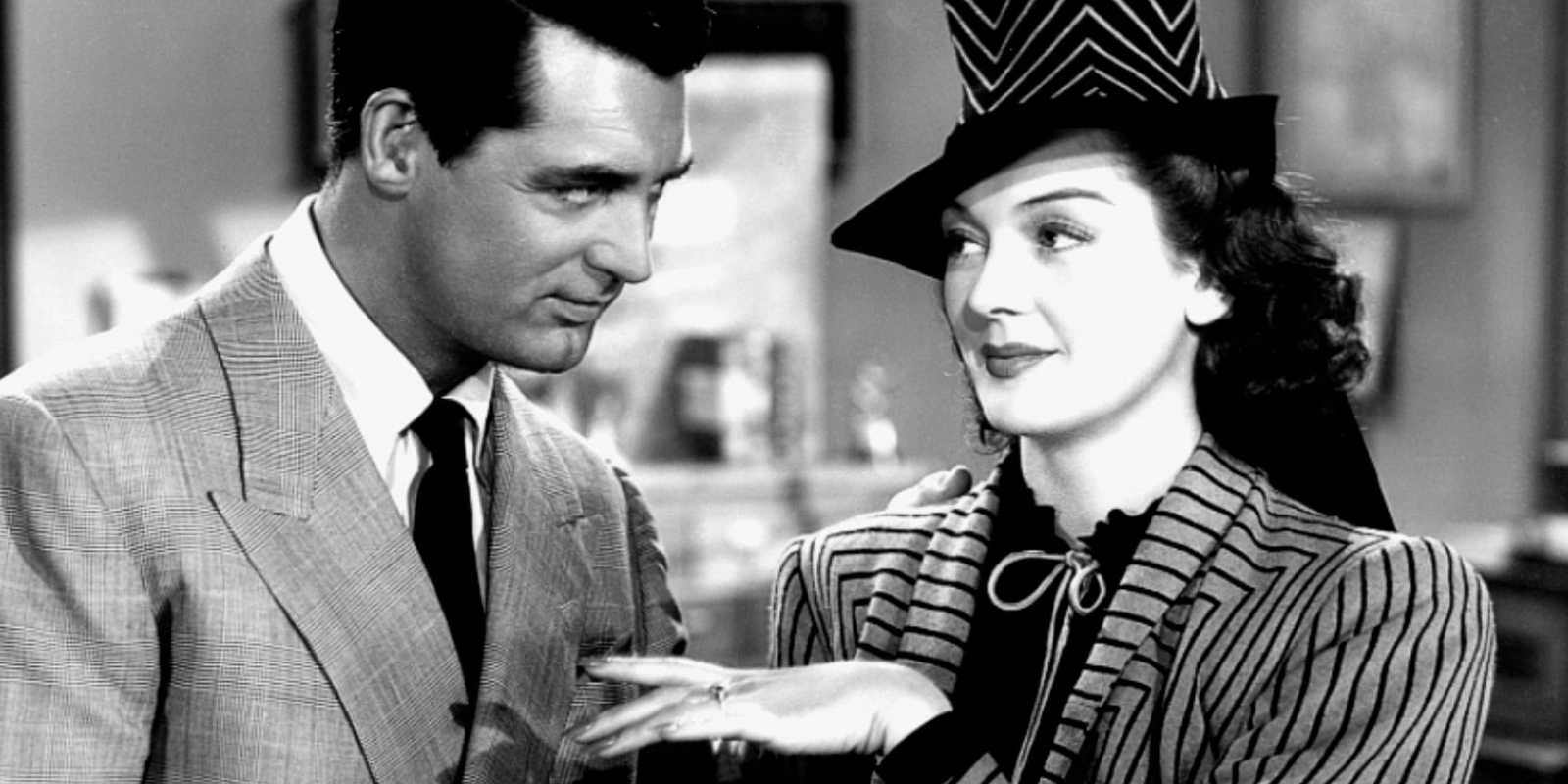
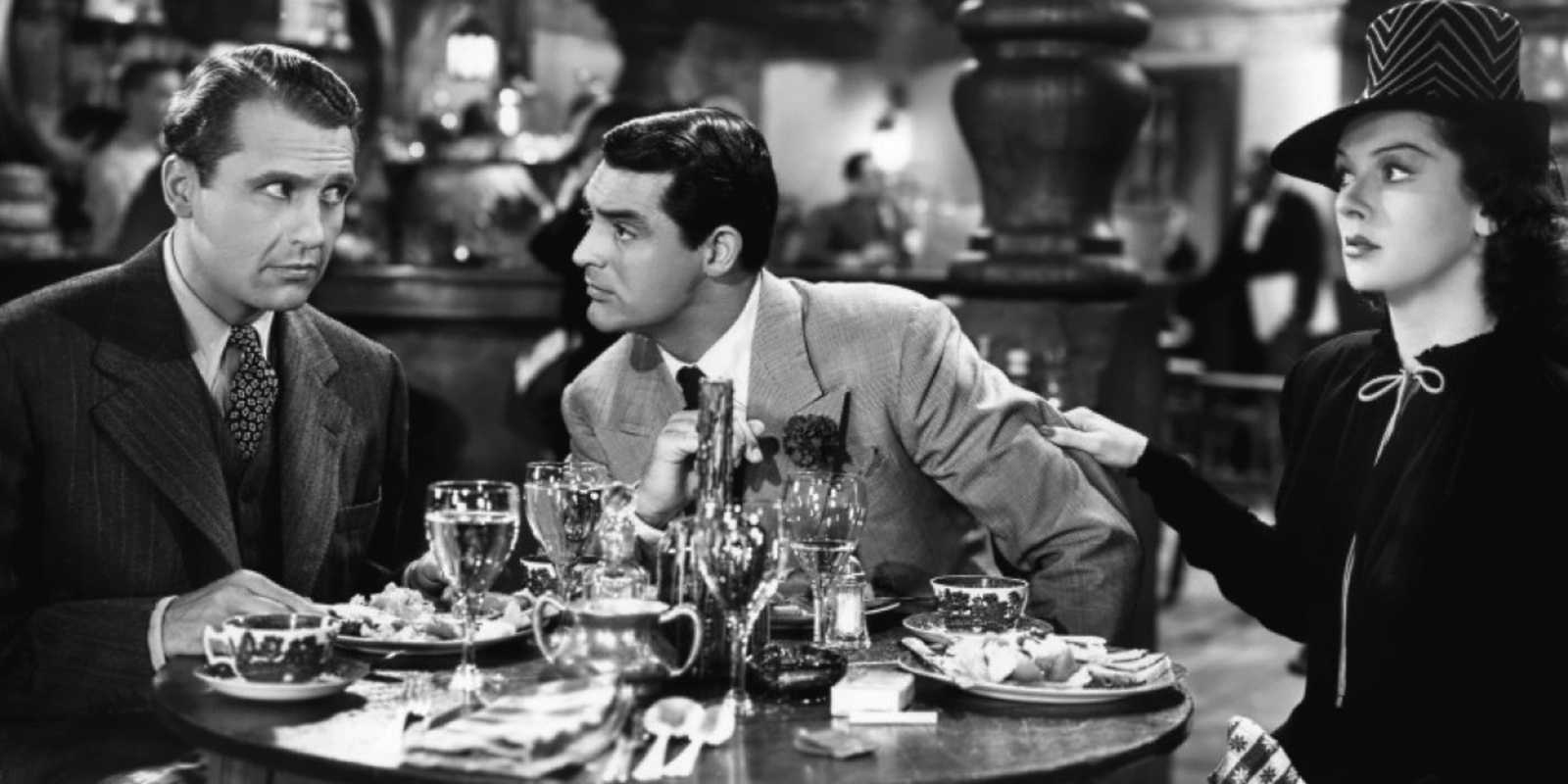
Try keeping up with Cary Grant and Rosalind Russell. In Howard Hawks's His Girl Friday, a newspaper office becomes a verbal racetrack, with editor Walter Burns (Grant) scheming to keep his brilliant ex-wife, reporter Hildy Johnson (Russell), from leaving journalism to get married. Every conversation becomes a contest, and Russell more than holds her own against an actor who made a profession out of charming his way through trouble. Hawks even lets the dialogue overlap without losing the joke.
The film grew out of the stage play The Front Page, but changing Hildy into Walter's former wife gives the newsroom battle an entirely different charge. There are uncomfortable aspects to Walter's manipulation, especially viewed today; the movie is too sharp to pretend otherwise. Yet Hildy remains the smartest person in almost every scene. Many romantic comedies depend on their leads falling for each other. Here, the fun comes from watching two people who already know exactly how to get under each other's skin.
1950s: Some Like It Hot (1959)

Nobody handled scandal quite like Billy Wilder, who made an outrageous premise look effortless.
Jack Lemmon and Tony Curtis play musicians who witness a gangland murder and disguise themselves as women to escape Chicago. Once they join an all-female band, the situation becomes complicated by Curtis's attraction to Sugar, played by Marilyn Monroe, and Lemmon's accidental acquisition of a millionaire suitor. A weaker film might have wrung a few jokes out of the disguises before running out of ideas. Wilder keeps finding new ways for his characters' lies to collide.
The performances are half the miracle. Lemmon's panic is infectious, Curtis shifts personalities with remarkable ease, and Monroe makes Sugar far more affecting than a simple object of desire. Some Like It Hot also gets away with an unusually sly treatment of gender and sexual conventions for a major Hollywood comedy of its era. The famous final exchange, ending in “Nobody's perfect,” works because the film has spent two hours making a compelling case that perfection would be terribly boring anyway.
1960s: Dr. Strangelove (1964)
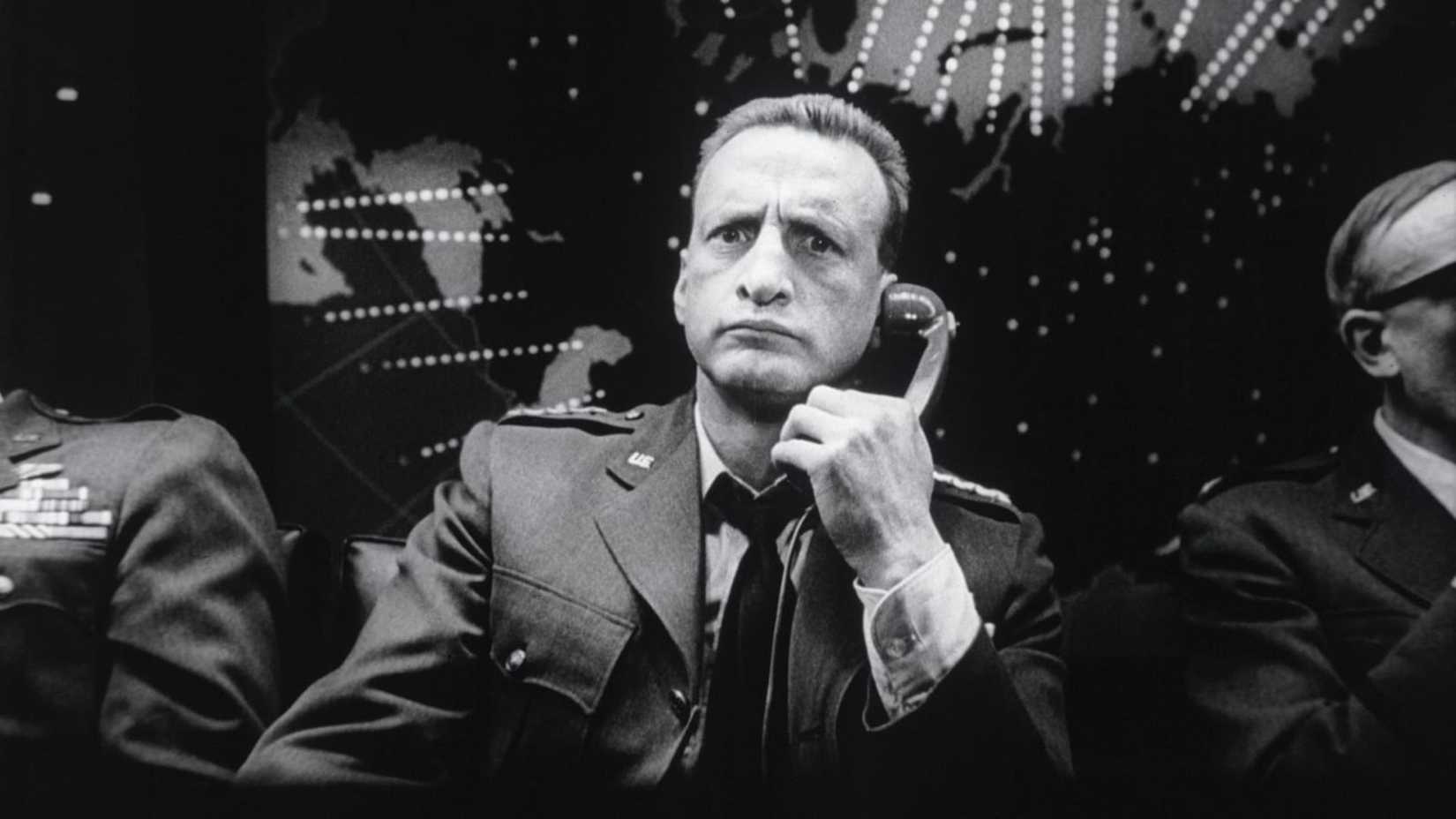
Stanley Kubrick found the funniest possible subject: the end of civilization. In Dr. Strangelove, a deranged American general sets a nuclear attack in motion, leaving politicians and military officials scrambling to prevent catastrophe. The people responsible for handling it are frequently ridiculous. Peter Sellers plays three characters, including the increasingly exasperated U.S. president, while George C. Scott makes the war room's swaggering military logic sound even more insane by treating it as perfectly reasonable.
Kubrick's great insight is that he doesn't need to exaggerate the machinery of nuclear deterrence very much to expose its absurdity. The comedy comes from bureaucratic politeness in the face of annihilation and powerful men more concerned with their egos than survival. Some of the Cold War details belong to the 1960s, but the film's suspicion of leaders who mistake confidence for competence remains painfully current. Other comedies of the decade have aged like fine wine. Few have a sharper mind—or a nastier punchline.
1970s: Monty Python And The Holy Grail (1975)

The horses weren't in the budget. The coconuts made the movie.
Made with wonderfully little money, Monty Python and the Holy Grail follows King Arthur and his knights on a quest that repeatedly collapses under the weight of its own stupidity. A supposedly fearsome Black Knight refuses to acknowledge his missing limbs. A rabbit turns out to be an appalling military threat. The cast's habit of treating every nonsensical development with medieval seriousness is what keeps the whole thing from becoming an extended sketch with costumes.
It's tempting to call the 1970s for Blazing Saddles or Young Frankenstein, and Mel Brooks has a strong claim either way. Python's achievement is different. Terry Gilliam and Terry Jones build a complete comic world in which no respectable institution, heroic convention, or even the film's own ending is safe from ridicule. Its scrappy production gives the jokes character, while its influence on absurdist comedy is difficult to overstate. Watching it now, the most impressive thing is how much of the nonsense still feels genuinely surprising.
1980s: Airplane! (1980)
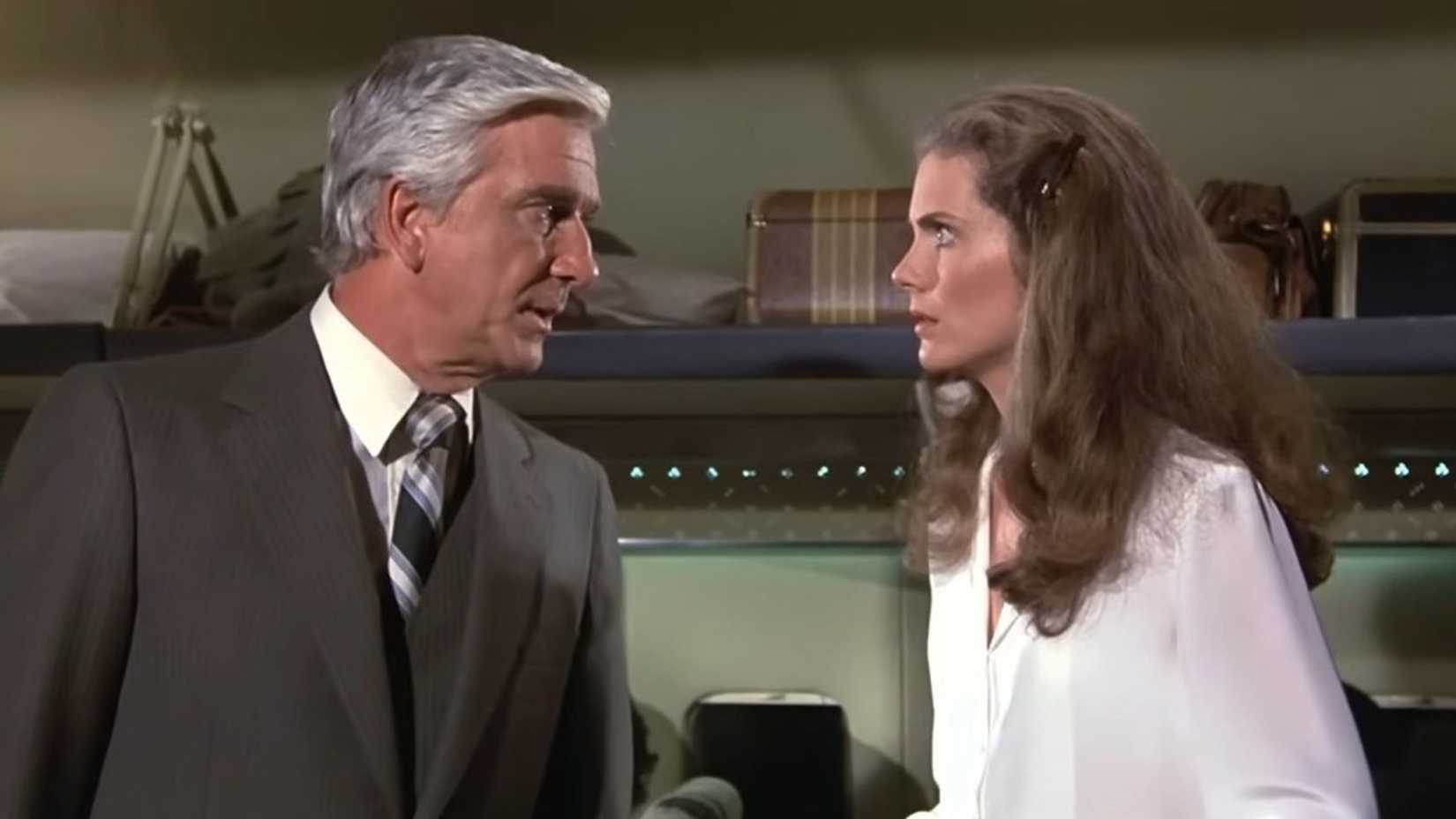
There may be no more exhausting comedy to laugh through than Airplane!. Jim Abrahams and brothers David and Jerry Zucker take the framework of an airline disaster movie and attack it from every direction. The haunted former pilot and the people trying to talk him through an emergency belong in a serious thriller. Here, they're surrounded by sight gags and dialogue so foolish that blinking can mean missing the next punchline. Even the background is usually up to something.
Its casting is every bit as important as the script. Leslie Nielsen had spent years playing dramatic roles, which made his perfectly straight delivery a comic revelation. The movie understands that a ridiculous line gets funnier when the actor saying it seems utterly unaware of the joke. Some material has aged less gracefully than the rest, but the hit rate remains extraordinary. The many spoofs that followed often copied the barrage of gags; very few understood how much restraint was required from the people delivering them.

Choose the movie with the higher Rotten Tomatoes score.
1990s: Groundhog Day (1993)

Bill Murray plays a man forced to live the same terrible day until he stops being a terrible man.
Phil Connors is a self-important television weatherman who arrives in Punxsutawney, Pennsylvania, and discovers that every morning resets to February 2. At first, the premise provides an excuse for wonderfully selfish behavior. Phil learns everyone's secrets, takes advantage of his foreknowledge, and eventually grows sick of a universe that refuses to let him move forward. Murray makes the transitions from smug amusement to genuine despair seem almost casual, which only makes them hit harder.
The reason Groundhog Day endures is that Harold Ramis knows when to stop chasing the next gag and let the character change. The time loop becomes a test of what someone might do if consequences stopped working the usual way. Exactly how long Phil spends trapped in the loop has inspired endless debate, but the emotional mathematics are clear. By the end, the funniest man in the room has learned to pay attention to someone other than himself, and the movie has earned its sweetness.
2000s: Superbad (2007)
Few teenage boys have worked harder to look cool while demonstrating so little aptitude for it. Superbad follows Seth (Jonah Hill) and Evan (Michael Cera) through a disastrous attempt to secure alcohol for a party before graduation. Their friend Fogell's magnificently unconvincing fake ID identifies him simply as McLovin. Director Greg Mottola gives the film the loose, profane energy of kids who have spent years trying to impress each other, even when their efforts are making everything worse.
What makes Superbad special isn't the outrageousness of its set pieces, although it has plenty. Beneath all the swearing lies a very recognizable fear: Seth and Evan are about to go their separate ways, and neither knows how to say that he's terrified. The movie lets their friendship be needy, affectionate, and embarrassingly sincere without cleaning up their behavior. The result is a teen comedy that understands adolescence as a series of humiliations interrupted, if you're lucky, by someone who still wants to be your friend afterward.
2010s: Bridesmaids (2011)

Kristen Wiig makes falling apart look painfully, magnificently funny.
In Bridesmaids, Annie (Wiig) is already struggling when her best friend Lillian (Maya Rudolph) asks her to be maid of honor. Then she meets Helen (Rose Byrne), a wealthy, seemingly flawless rival for Lillian's affection. The escalating competition produces some of Bridesmaids' funniest scenes, including a spectacularly ill-advised trip to a bridal boutique. Wiig sells every disastrous decision because Annie's jealousy feels unpleasantly familiar.
The film's commercial success helped blow apart the tired assumption that audiences wouldn't turn out for a raunchy comedy centered on women. More importantly, it gave its characters room to be petty without treating their flaws as the whole joke. Melissa McCarthy, Oscar-nominated for her supporting performance, can steal a scene with startling confidence, but Wiig's unraveling holds everything together. There's real sadness beneath the humiliations, and the movie doesn't hurry to tidy it away. Sometimes friendship is funny precisely because people can be so spectacularly bad at it.
Question 1 of 3
2020s: Palm Springs (2020)

The timing was almost rude. Palm Springs arrived in 2020 with a story about being trapped in the same day, just as millions of people were discovering how that felt. Andy Samberg plays Nyles, a wedding guest who has been reliving the celebration long enough to stop worrying about consequences. When another guest, Sarah (Cristin Milioti), gets caught in the loop with him, his cheerful surrender meets someone who refuses to accept the situation. Their increasingly ridiculous attempts to cope give the familiar premise some welcome bite.
The comparison to Groundhog Day is unavoidable, especially with that film already representing the 1990s. But where Bill Murray's Phil Connors has to become a better person on his own, Nyles and Sarah must decide whether sharing eternity sounds like romance or a particularly elaborate punishment. Samberg and Milioti make that question worth caring about, and J.K. Simmons is a gloriously deranged complication. The movie lets its existential questions creep in between the jokes instead of stopping everything to explain them. For a film about doing the same thing forever, Palm Springs feels remarkably fresh.
KioskNews shows a cleaned-up reading view extracted from the publisher’s page — the original always lives on their site, not ours.