Farage poll slump is ‘curse’ for his ‘shameful’ remarks about migrants, says Albania’s PM
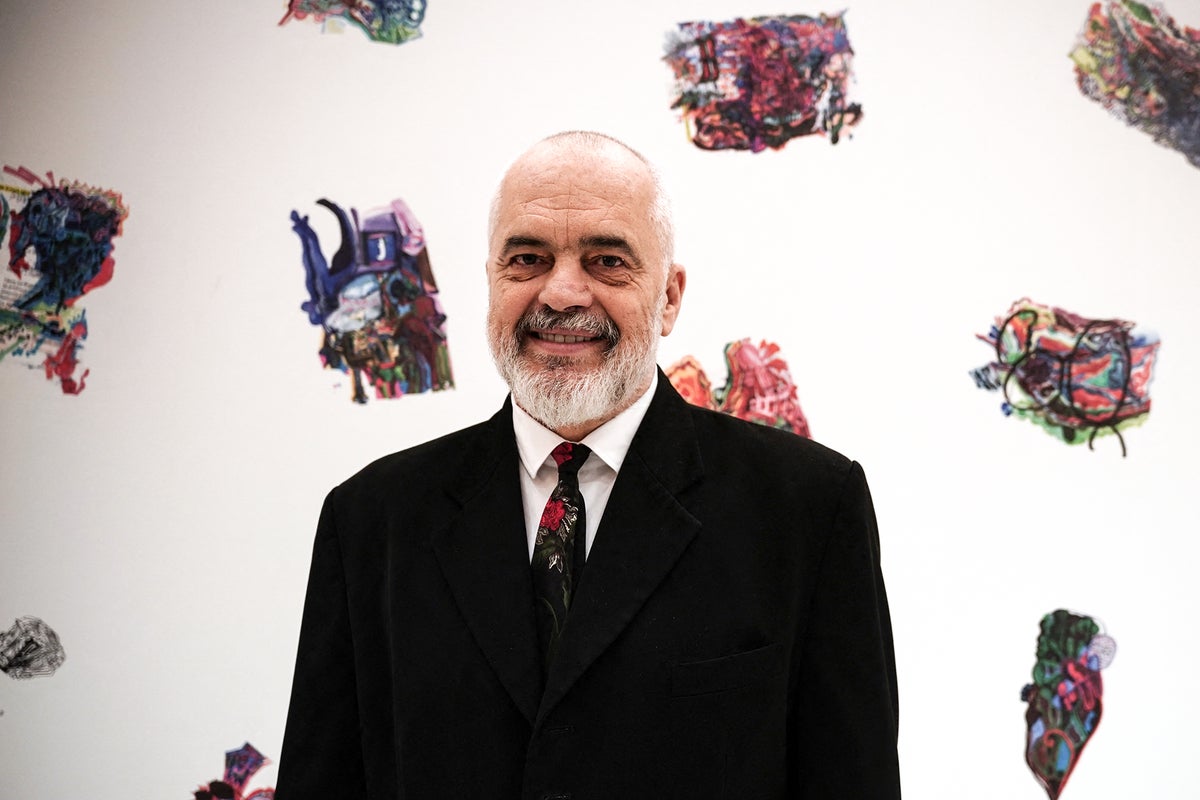
Nigel Farage has been told by Albania’s prime minister that he risks falling victim to an “Albanian curse” for labelling its citizens criminals.
Edi Rama’s mockery of the embattled Reform leader follows a series of outspoken remarks about Albanian immigrants in Britain by Reform politicians.
Farage claimed last year that “one in 50 Albanians in Britain are in prison”, prompting a furious response from the Albanian leader, who challenged him over the figures and invited him to visit Albania. Now Mr Rama has accused “shameful” Farage of ratting on a pledge to visit Albania to check the facts.
And he has launched a new broadside, making fun of Farage’s slump in the polls by claiming it is the product of an “Albanian curse” and Reform leader’s hopes of winning power are “going nowhere”.
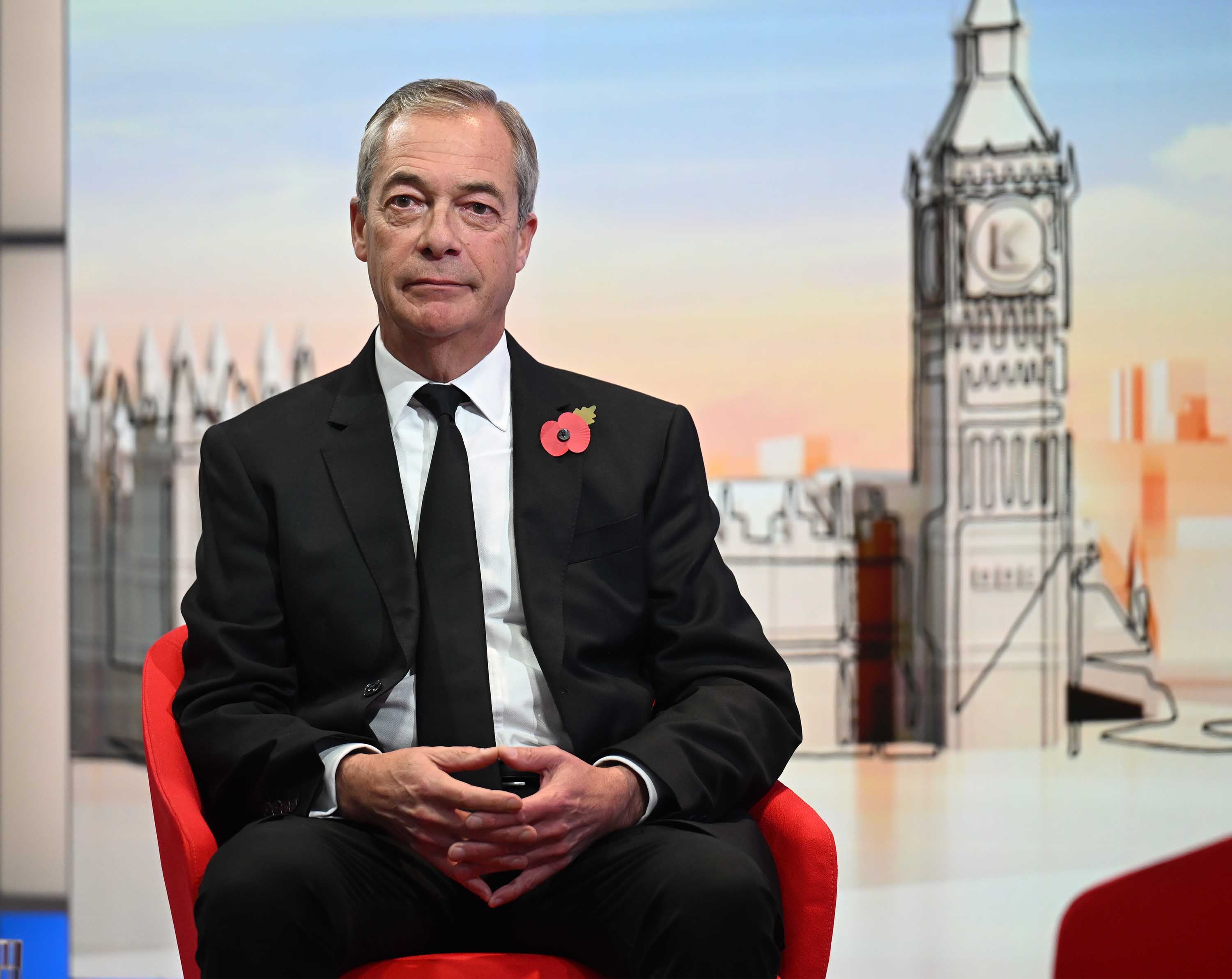
Fellow Reform politician Suella Braverman is another victim of the “Albanian curse”, Mr Rama claims in an exclusive interview with The Independent.
Braverman, who also made derogatory comments about Albanians, was sacked twice as Tory home secretary. And she has been criticised over her latest career move in which she reportedly received £100,000 to be handcuffed to glamour model Katie Price on the celebrity reality television show Celebrity Handcuffed.
“The Albanian curse is something to be careful of because who goes after the Albanians doesn’t end well politically,” says Mr Rama.
“Suella Braverman – she’s nowhere now, right? A few other guys, they are nowhere. I have told my ‘friend’ Nigel Farage, ‘be careful because there is an Albanian curse.’”
Mr Rama, Europe’s longest-serving prime minister, says Mr Farage accepted his invitation to visit Albania but has not delivered on the promise.
“He is great in making promises, but he doesn’t look as great in keeping promises.”
It’s shameful to single out communities, ethnicities, colours of skin, languages and different cultures for political purposes
Mr Rama’s remarks about an “Albanian curse” are not intended literally, but reflect his contempt for politicians like Mr Farage and Ms Braverman, who he claims use an entire nationality – the Albanian people – as a political target. “It’s shameful to single out communities, ethnicities, colours of skin, languages and different cultures for political purposes,” he says.
Does he regard it as racism? “It might be racist. It might not be racist. But it’s shameful in both ways.”
In a wide-ranging discussion, Anglophile Rama, who has run Albania for 13 years in the aftermath of the fall of its former hard-line Communist regime, says democracy is being “eaten alive by the evil of social media”, which has given a platform to “Nazis and paedophiles”.
He praises Andy Burnham as a “great force of nature”; says he was inspired to enter politics by Tony Blair and his “fantastic” New Labour administration – and talks of his admiration for Margaret Thatcher. He claims the UK is in a “desperate” state after the “self-destruction” of Brexit.
He describes suffering a fractured skull in a vicious assassination attempt by political enemies who left him like “a piece of dog sh*t in the rain”. And he rejects allegations of corruption over a multi-billion-dollar marina project in Albania involving Donald Trump’s daughter Ivanka and husband Jared Kushner.
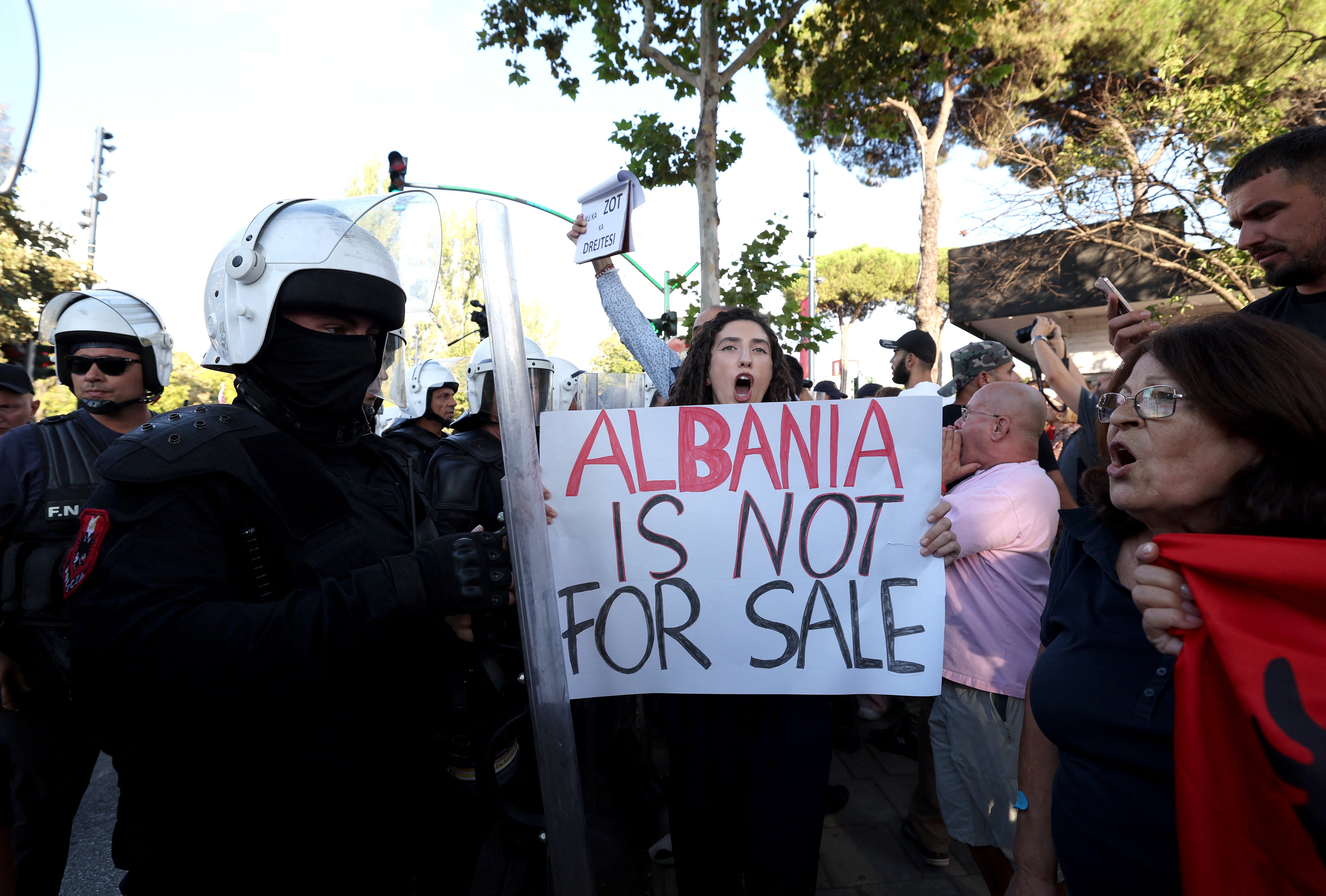
Socialist Rama dismisses the so-called “Flamingo Revolution” – widespread protests by students and environmentalists against his government triggered by foreign-funded projects like the Ivanka Trump scheme and the alleged threat to flamingos and other wildlife.
Mr Rama’s comments about Farage and “an Albanian curse” are a characteristically provocative intervention from a leader whose country has undergone one of Europe’s most extraordinary transformations: from fascist invasions and one of the most repressive communist dictatorships in modern history to a country embracing elections, capitalism, tourism and international investment.
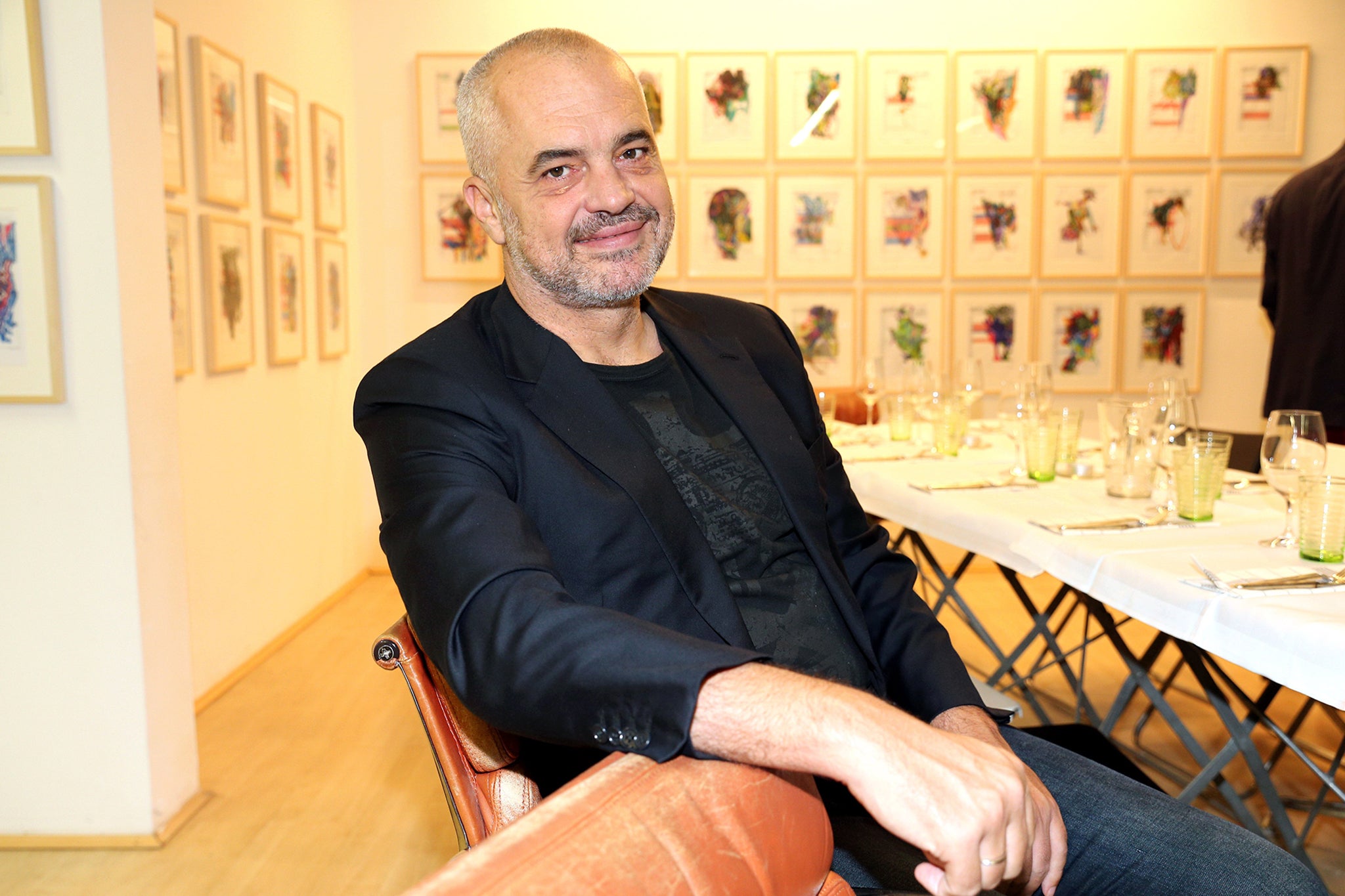
In his office in Tirana, crayons scattered across his desk provide the first clue that Mr Rama is not quite like other prime ministers: he is a talented artist whose work has featured in exhibitions.
The second is the man himself. At 6ft 8ins, he is a towering bear of a man, with an artist’s hands, an appetite for argument and a theatricality to match his extraordinary height. He has just flown in from Dublin, where he has been attending an EU summit, and is in an expansive mood.
To understand his pride in Albania’s progress, it helps to understand where the country started.
Italy invaded in 1939, and Nazi Germany occupied it in 1943. When the Germans withdrew, the communist resistance took power under Enver Hoxha, who imposed four decades of Stalinist dictatorship.
Private enterprise was forbidden, religion outlawed and political opponents imprisoned or executed. Having broken successively with Yugoslavia, the Soviet Union and China, Hoxha turned Albania inwards, leaving it almost entirely cut off from the outside world. Thousands of concrete bunkers were built against an invasion that never came.
The country’s isolation was so extreme that Albania was frequently compared with North Korea. Foreign travel was severely restricted, outside influences were regarded with suspicion, and the economy was impoverished by rigid central planning.
Hoxha died in 1985, but communism survived until 1991. Its collapse brought a chaotic transition to capitalism, mass emigration and, in 1997, the collapse of fraudulent investment schemes that plunged the country into near anarchy.
Today, Albania has competitive elections, a growing private economy, international investment and a flourishing tourism industry. It joined NATO in 2009 and is negotiating membership of the European Union.
There are still serious concerns about corruption, media freedom and the independence of institutions. But the distance travelled from the Albania of Hoxha is remarkable.
Mr Rama has been one of the principal architects and beneficiaries of that transformation.
Since he became prime minister, Britain has had seven occupants of Downing Street. He regards this not as a source of amusement but as evidence of a wider political malaise.
“The UK is a case even more desperate than Europe,” he says, expressing the hope that Britain’s new prime minister can reverse its Brexit-led “path of self-destruction”.
He met Andy Burnham for the first time the previous day and is considerably more enthusiastic about him than he is about Farage.
“Great force of nature,” he says. Burnham’s appeal, he explains, is rooted in his experience of local government, what Mr Rama calls the real battlefield of politics, where apparently small problems matter enormously to ordinary people.
“He has huge fans in my cabinet because they are young, and they are still Instagrammable, which I am not,” he says, laughing. “I told him I admire what you are doing, but I’m too old to be Instagrammable.”
We democracies have allowed freedom of speech to be replaced by freedom of reach
Mr Rama is far from a conventional technocrat. Long before entering government, he was an outspoken intellectual, artist and professor at the Academy of Arts in Tirana. He describes himself as a “professional troublemaker”, a characteristic that nearly cost him his life.
In January 1997, he says, two men attacked him as he walked home with his girlfriend. Armed with metal pipes and gloves fitted with nails, they left him with a fractured skull and a nose broken in five places. He points to a deep scar on the crown of his head.
“I was completely vulnerable, open to welcome the hits,” he recalls. He believes the men had been sent by the regime of the time and that the intention was to kill him. One of the attackers has since died. Mr Rama says he never confronted him.
At the time, he had little interest in party politics. An independent liberal, he divided his time between Albania and France and believed intellectuals had a duty to speak independently to society.
After the attack, he decided he would never return to Albania.
“I felt like a piece of sh*t under the rain and dog sh*t,’ he says. “And I said I’m not going to go back.” But he did. The artist who had challenged the state eventually became its most powerful representative. Art remains central to his identity. Under communism, artistic expression was tightly controlled, with the regime dictating what could be painted and how the world should be represented. Mr Rama was drawn instead to modern European art, abstraction and colour.
One of his most vivid acts of defiance was to paint the drab apartment blocks of Tirana in bright pastel colours, transforming the appearance of a city emerging from decades of communist rule.
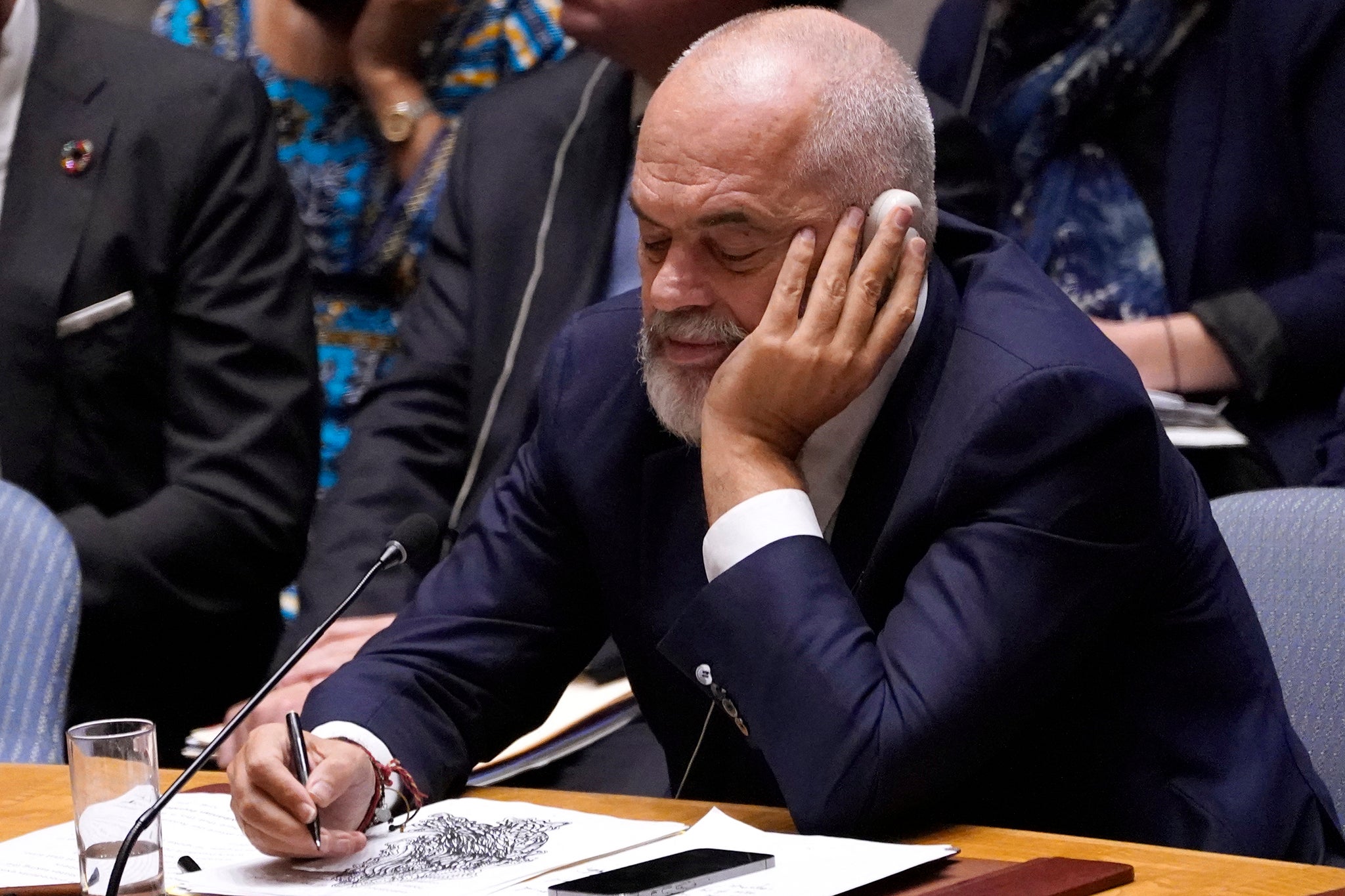
After the collapse of communism, he helped lead the student revolution at the Academy of Arts, demanding intellectual freedom.
“I was not interested in party politics,” he says. “I was independent, liberal.” The irony is considerable. The man who once regarded government as an instrument of oppression now occupies the country’s most powerful office. Whether he has retained enough of the young dissident’s scepticism to question his own power is a more difficult question.
Albania has recently witnessed some of its largest protests since the fall of communism. Demonstrations have focused on corruption, the cost of living and a proposed luxury development on Sazan Island involving Jared Kushner, Donald Trump’s son-in-law, and other international investors.
The island, home to important wildlife habitats including flamingoes, has become a symbol of wider anxieties about the direction of the country. Protesters have even erected and subsequently torn down a bust of Mr Rama, an unmistakable echo of the 1991 toppling of Hoxha’s statue.
Mr Rama believes social media has distorted the argument and turned it into something more damaging: an assault on democratic conversation.
“This is how we became the stage for an outrage that brought Albania to every computer screen all over the world.” He says the experience has left him deeply unsettled.
“It was unsettling because I felt in my burning skin what a disaster social media is. I saw how our democracies are being eaten alive by the evil of social media.”
He argues that democratic societies once understood that publication carried responsibilities. Newspapers could disagree fiercely, but editors and publishers exercised some control over what reached the public.
“Nazis and radicals and paedophiles and all the scum of society couldn’t have the freedom to reach out and have a status of citizenship in this world,” he says. “Today, all Nazis of the world are connected and are together and are proud, and all conspiracy theorists and all bullsh*t.”
His chilling description of the change:
“We democracies have allowed freedom of speech to be replaced by freedom of reach.”
It is a compelling phrase, particularly from someone who grew up in a country where freedom of expression was virtually non-existent. But the challenge for any democratic leader is to distinguish between threats to democratic institutions and legitimate criticism of the government.
The Sazan Island dispute is a case in point.
When I met Jared Kushner, and when Jared Kushner asked me if he could consider a potential investment in Albania, Donald Trump was not President of the United States
The proposed development of the former military island, at the entrance to the Bay of Vlorë, has attracted international attention because of its extraordinary natural landscape and the scale of the investment being contemplated. But he also says it is primarily because of the Trump connection. Ivanka Trump has described being captivated by its beauty, recalling a barefoot hike to the top of its mountain. But the involvement of the Trump family has raised questions about powerful investors, political connections and the environmental consequences of the project.
Mr Rama is visibly irritated by what he regards as a distorted account of events.
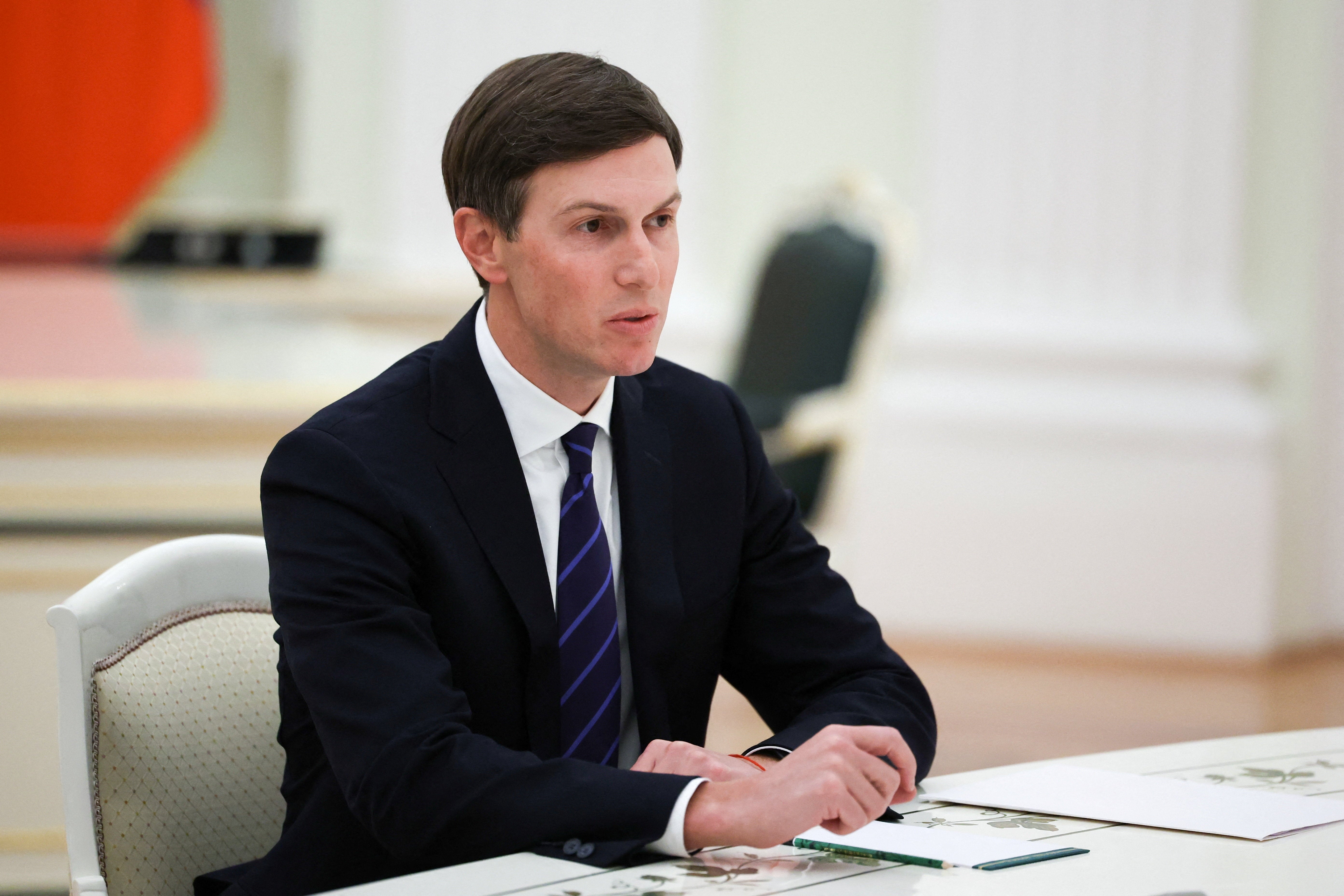
“When I met Jared Kushner, and when Jared Kushner asked me if he could consider a potential investment in Albania, Donald Trump was not President of the United States,” he says. “He was a subject of the criminal justice system in the United States, and it looked at that time that his chances to go to jail were much higher than the chances to go to the White House.”
“I said to Jared Kushner, ‘Yes, please, you are welcome.’ Why? Because he is an American investor with other great investors, and I see the interests of my country. Why should I care about who his father-in-law is?”
It is a defence rooted in the ambition of a country that has spent decades trying to attract investment.
Mr Rama insists there is no concluded deal and that negotiations have been continuing for years. He says the Albanian state is negotiating its share of the project and that environmental assessments must determine whether it proceeds. He rejects the assumption that environmental protection and development are necessarily incompatible.
“It can be very harmful to think that you are conserving a natural area and letting it degrade and letting it become polluted. It can be very harmful to make bad development, but it can be very good to regenerate a protected area through development.”
He cites his government’s environmental record, including an expansion of protected areas to more than 20 per cent of the country, a 10-year ban on hunting and restrictions on forest exploitation.
He argues that Albania needs investment, employment and infrastructure after decades of deprivation. But its coastline and natural landscapes are also among its greatest assets. The safeguards for Sazan’s wildlife and the arrangements for public access make pivotal the promises from either the government or its investors.
The tourism boom is already transforming the country.
When Mr Rama came to power, fewer than two million tourists were crossing Albania’s borders annually. Today, he says, the figure is more than 12 million.
Visitors are drawn by the beaches, mountains, relatively affordable prices and the sense of discovering somewhere not yet entirely consumed by mass tourism.
The economy has also expanded. Mr Rama says GDP has risen from less than €10bn (£8.3bn) to around €30bn in a decade. Cost of living, alongside corruption and human rights deprivations, fuels protest.
Yet he recognises that economic transformation brings rising expectations. People, he says, who once wanted a new road now want the road that is still missing.
Mr Rama cites Alexis de Tocqueville to explain why economic progress does not necessarily produce contentment. The 19th-century French political thinker observed how improving conditions can make people increasingly conscious not of what they have gained but of what they still lack.
“People have not anymore the question: Has Albania changed? People have today the question: ‘Where am I in this change? What is in it for me?’”
The transformational steps for Britain were fantastic. Especially the language of New Labour, the pragmatic approach, the novelty of going beyond left and beyond right, the overcoming of ideology
He acknowledges that a country can become wealthier and more attractive to foreign investors while some of its citizens feel they have not shared sufficiently in the rewards. Growth, he recognises, must eventually translate into more widely shared prosperity.
Corruption, media freedom, judicial independence and the rights of vulnerable groups also remain legitimate concerns. Political competition is real, but polarisation and the dominance of established political personalities have sometimes made it difficult for institutions to develop the independence expected of a mature European democracy.
For Mr Rama, the larger ambition remains joining the European Union by 2030.
“We want to be part of the European Union,” he says. “We want to join now, but we’ll never change our mind about joining, even if the European Union will disappear. We’ll make it in Tirana.”
He sees Europe as a project of peace, security and cooperation rather than simply a financial arrangement.
“We come from history where we were obliged to live under forces and under empires and under regimes. We were never able to choose.”
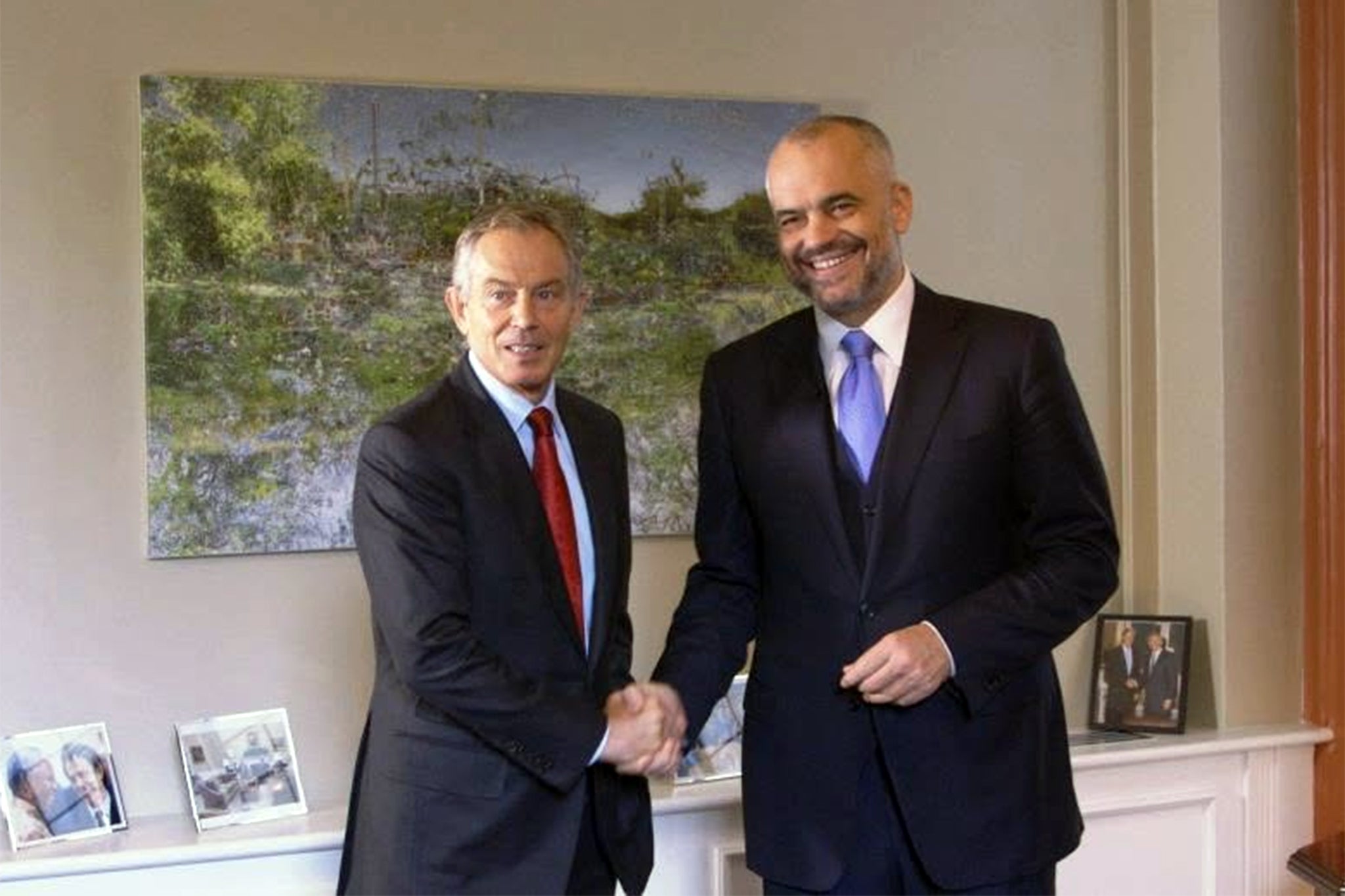
His views on Brexit are unsurprisingly uncompromising. He quotes Tony Blair, whom he regards as a crucial influence on his own political development. He believes Britain voted to leave without having a credible idea of what would replace membership.
“It’s not that I think,” he says when asked whether Brexit was a mistake. “It’s what happened next that is proving it every day.” Mr Rama credits New Labour with inspiring him to become a party leader. “If Tony Blair and New Labour didn’t exist, most probably I would not have been inspired to become a party leader.”
He cites Blair’s reinvention of Labour, its pragmatic approach and its attempt to move beyond traditional divisions of left and right.
“The transformational steps for Britain were fantastic,” he says. “Especially the language of New Labour, the pragmatic approach, the novelty of going beyond left and beyond right, the overcoming of ideology.”
Eventually, the two men became friends. Mr Rama recalls travelling to London with his young communications director to meet Alastair Campbell, whom they had contacted through Facebook.
The taxi journey seemed to go on forever. Mr Rama began to fear they were being taken for a ride, quite literally. Instead, they arrived at Campbell’s door. He affectionately calls him the “Prince of Darkness” – the sobriquet usually applied to Campbell’s fellow master of the dark arts of political campaigning, Peter Mandelson.
“The most beautiful part of politics is that it made me get to know incredible people and to make friendships with people like Tony Blair, like Alastair Campbell, that I would have paid to just see and not to become friends.”
Mr Rama is proud of the relationship. He also believes that long periods in office can benefit democratic countries, allowing governments to pursue projects that might otherwise be abandoned by successive administrations. He cites Thatcher, Helmut Kohl and Angela Merkel as examples. He jokes that as a socialist maybe he should not praise them all. And his humour and his art again and again rise to the surface.
“I am the best artist among prime ministers, and nobody can take that from me,” he says. “And I am the best prime minister among artists, and nobody can not tell me that.”
The crayons on his desk are a reminder that, even amid the grind and bureaucracy of government, he wants the freedom to draw, experiment and think visually.
There is a remarkable change in the Albania of his childhood from the country he leads today. A nation once sealed off from the world is now attracting millions of visitors, international investment and the attention of some of the world’s wealthiest individuals. Its citizens vote, debate, protest, establish businesses and travel freely.
The transformation is far from complete and almost everyone cites corruption. Whether the next phase can deliver prosperity more widely, protect the country’s natural inheritance and strengthen democratic institutions will be the real measure of Mr Rama’s legacy.
For now, the crayons remain on his desk. Outside, Albania is changing at extraordinary speed. Mr Rama is determined to shape that change, and to ensure that his country finally takes its place in Europe.
As for Nigel Farage, he has already been warned. Some political curses, apparently, are not to be taken lightly.
KioskNews shows a cleaned-up reading view extracted from the publisher’s page — the original always lives on their site, not ours.