‘Orders becoming a mockery’: Supreme Court pulls up Delhi govt over firecracker curbs
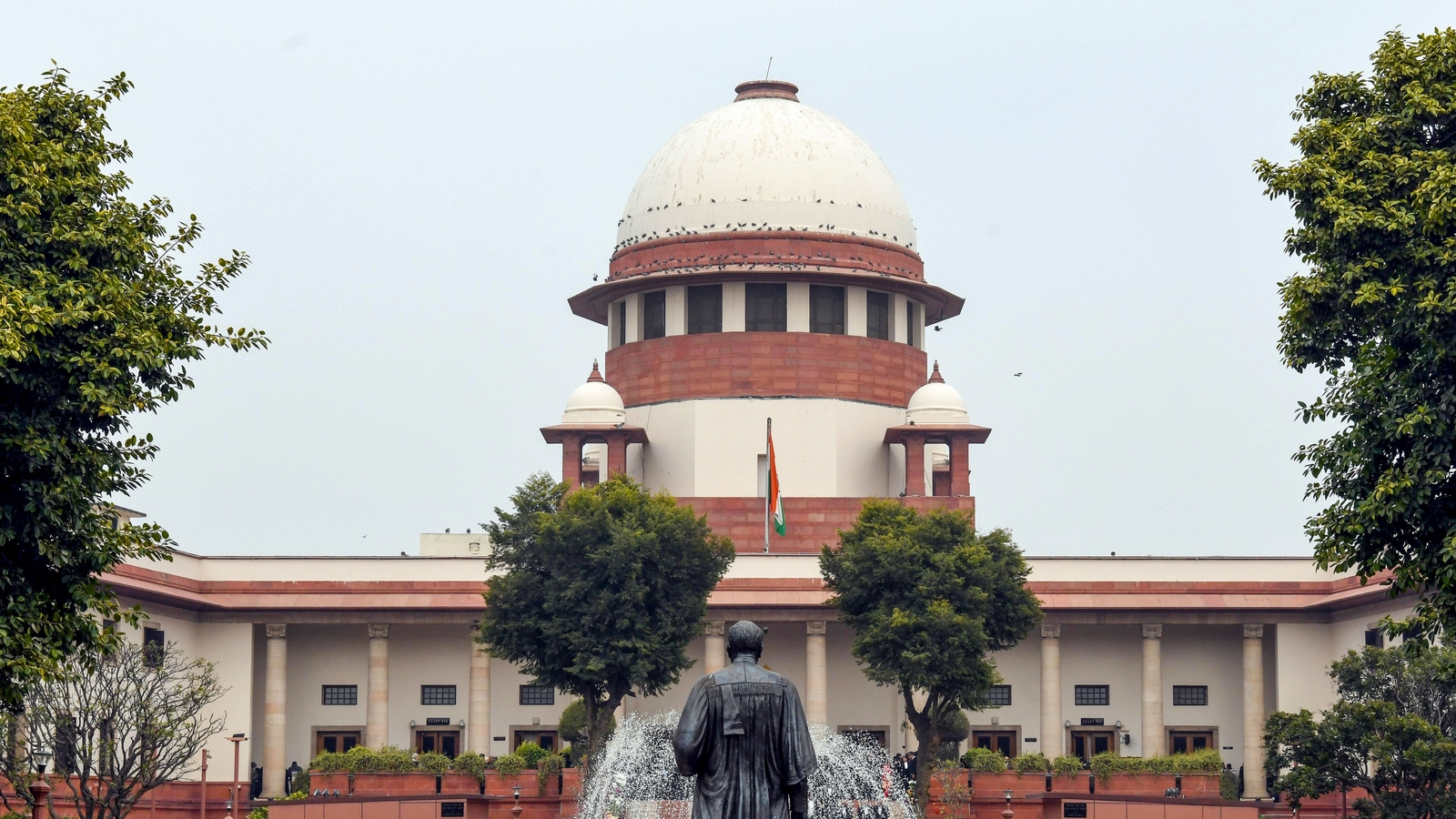
The Supreme Court on Thursday criticised the Delhi government and the Commission for Air Quality Management (CAQM) for failing to enforce its firecracker rules during festivals. Repeated violations had made its orders seem “academic” and amounted to a “mockery”, the top court reportedly said.
The top court was hearing the impact of firecrackers on Delhi-NCR’s air quality. A bench of Justices MM Sundresh and PB Varale questioned the authorities over the lack of concrete data on enforcement and the impact of measures taken to curb pollution in the region.
“What did you actually do? Unless you can tell us what you have done, what is the point of passing orders? It becomes a mockery then,” the bench asked Delhi government, as per news agency ANI. Additional solicitor general Aishwarya Singh Bhati, appearing for the Union government, told the bench that an enforcement mechanism was in place but had not been presented to the court.
The top court reportedly asked whether enforcement teams had visited the identified areas, when they went and what data they collected. It also sought data comparing areas where the AQI rose with those where it did not.
“Next year you will make a similar submission when we will not be there, to another bench,” the court observed, asking the authorities to “think now at a higher level”. The bench said that air pollution was not an adversarial issue but one that affected “every living being”.
The court-appointed adviser said authorities had not properly assessed the impact of last year’s relaxation of firecracker rules. Despite permission for green crackers, banned firecrackers were allegedly used, while enforcement teams failed to provide clear data on violations. The bench said bursting firecrackers would inevitably worsen air pollution.
ALSO READ | ‘Delhi's air will be very bad after Diwali’: SC judge on request to defer a hearing
“Obviously when you burn crackers it goes without saying, it’s going to happen,” the judges said. When the amicus curiae raised concerns about violations, the court asked whether the submission implied that firecrackers should be completely banned. “So what you’re saying is it should be closed (a compete ban on firecrackers)?” the court asked.
SC seeks balance between celebrations and public health
The Supreme Court said it wanted to balance religious sentiments with public health concerns, clarifying that it was not seeking a complete ban on firecrackers but wanted to curb pollution.
“We are not for absolute ban, we have been trying to balance it,” the court said, asking authorities to monitor compliance on the two days when firecrackers were permitted.
“Obviously as a trader, they will always go with supply and demand. They’ll do maximum business as possible,” the bench said, questioning whether regulating sales alone was enough. It suggested involving prominent public figures and celebrities to discourage people from bursting firecrackers. The bench said authorities should focus on implementing its orders rather than prosecuting people celebrating festivals.
ALSO READ | Gurugram police form several teams to crack down on illegal firecracker sale ahead of Diwali
“We also understand sentiment of the public. We are not on religion. But we are on the logical thing. How will we actually celebrate a festival without causing any harm to anybody?” the court said.
“It’s a festival of light. It was not there originally a problem. Problem came when firecrackers came. Otherwise we used to light lamps and it was beautiful. Ultimately problem is fire, not light,” the bench observed.
It also suggested using prominent personalities to spread awareness. “In an attempt, use prominent personality, somebody like Virat Kohli, to spread awareness,” it said.
Court questions pollution-control measures
The authorities presented measures for the coming winter pollution season, including 608 anti-smog guns, EV charging infrastructure, greening initiatives and enhanced monitoring. Additional solicitor general Aishwarya Bhati told the court that the Delhi government had prepared an action plan for the pollution season, ANI reported.
The bench, though, cited a report saying that only nine of CAQM’s 29 units were functioning. It also questioned the lack of reports showing whether the authorities had followed its directions and whether their measures had reduced pollution.
ALSO READ | Lawyers can work from home, we can’t: Supreme Court judge on post-Diwali air in Delhi
Separate bench to hear Diwali firecracker issue
The Supreme Court has taken up Delhi's air pollution issue through suo motu proceedings arising from a petition filed by advocate MC Mehta. A separate petition filed in 2015 by three toddlers sought a complete ban on firecrackers, citing their harmful effects on children, older people and those with health conditions, HT reported earlier.
Last year, the court allowed a limited window for the sale and use of firecrackers during Diwali in an attempt to balance public health concerns with religious and festive sentiments.
Firecracker retailers have sought a similar arrangement this year, asking the court to permit sales and regulate the use of fireworks on specified dates and during designated hours. A separate bench will consider the firecracker issue.
Earlier this month, the court called for a “practical and pragmatic” approach that balances public health concerns with religious sentiments. The Centre has also submitted formulations for less-polluting firecrackers developed with scientific and regulatory agencies.
KioskNews shows a cleaned-up reading view extracted from the publisher’s page — the original always lives on their site, not ours.