In Michigan Senate race, Trump’s softer China tone gives candidates room to look elsewhere
Mary Gallagher, dean of the University of Notre Dame’s Keough School of Global Affairs, said Trump’s less confrontational tone with China had reduced its political salience, allowing candidates to concentrate on concerns voters felt more immediately, including energy costs and trade friction with Canada.
David Dulio, a political scientist at Oakland University in Michigan, agreed that Trump’s approach had given candidates more room to focus elsewhere.
The domestic economy, the war with Iran and tariffs on Canada had become more immediate concerns for voters, he said. “I think it’s just a matter of there are bigger fish to fry.”
Yet China remains central to the industrial choices facing Michigan, the historic heart of American carmaking, where Ford Motor, General Motors and Chrysler helped build the industry.
Both candidates advocate protection against Chinese carmakers, while Ford is advancing a battery plant using technology licensed from CATL, the Chinese battery giant. Their contest raises a question that restrictions on Chinese cars alone cannot answer: what role should Chinese technology play in sustaining American manufacturing?
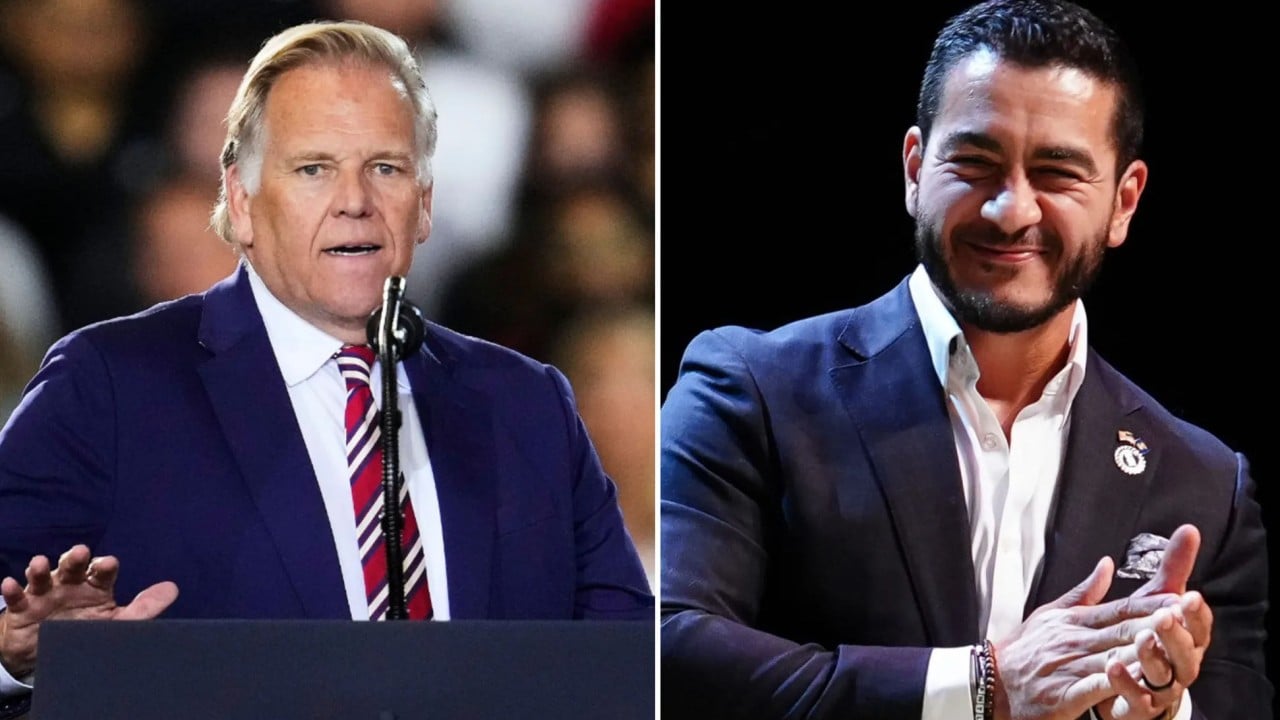
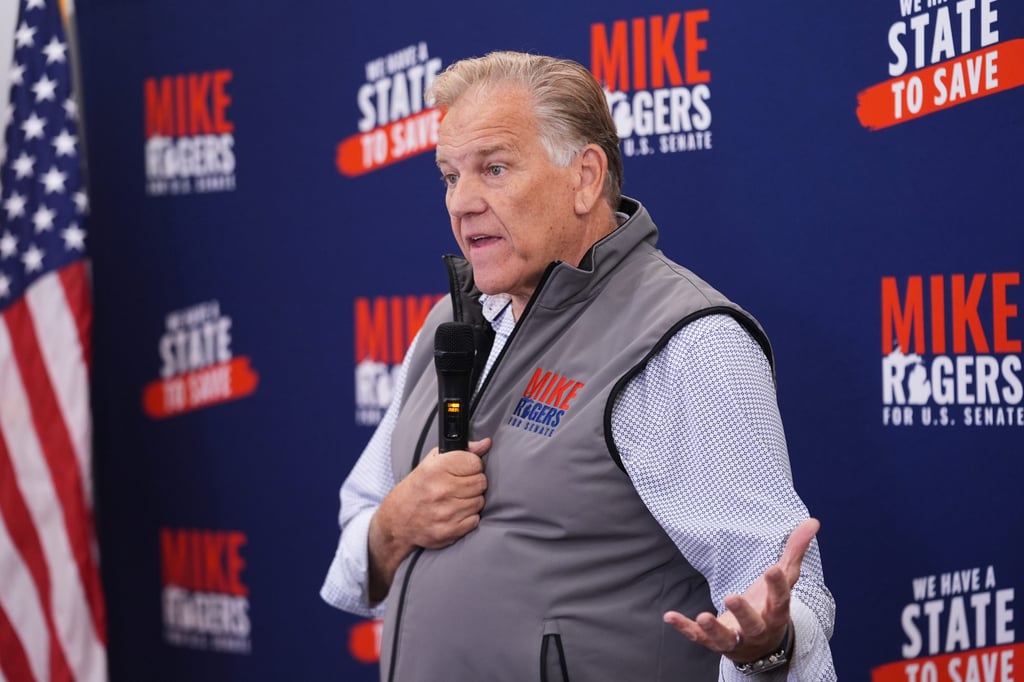
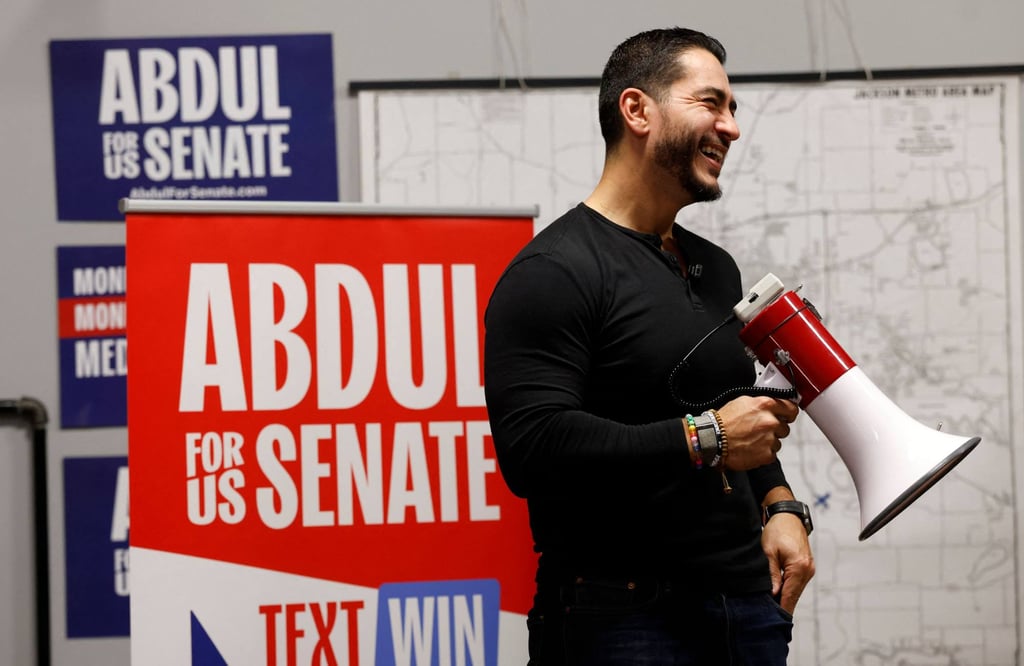
Rogers and El-Sayed are competing for the seat being vacated by retiring Democratic Senator Gary Peters, in a race that carries weight beyond Michigan.
Republicans hold a 53-47 Senate majority going into the November 3 election, and the seat is one of two Democrats are defending in states Trump won in 2024.
Trump carried Michigan by 1.4 percentage points, yet Republicans have not won a Senate race there since 1994. Independent analysts rate the contest a toss-up, though El-Sayed has led narrowly in most recent polls.
SCMP Plus is a new premium news platform that gives you an
all-inclusive edge to stay ahead on China news.
To access our exclusive content you’ll need to subscribe.
Already a subscriber?
LOG IN
The race is also a test for the Democratic Party’s left wing. El-Sayed, who was endorsed by progressive Senator Bernie Sanders, backs Medicare for All and higher taxes on the wealthy. Rogers has sought to tie El-Sayed to the Democratic Socialists of America. El-Sayed rejects the socialist label, saying he believes in capitalism but that it “has to be regulated”.
Their advertising runs on separate tracks.
Rogers’ spots focus on energy prices, the Middle East and the tariff dispute with Canada, and attack El-Sayed on national security.
El-Sayed’s ads draw on his medical and public-health record and attack Rogers over corporate donors, drug-company money and his Florida home. In one, a United Auto Workers member asks: “Who needs two yachts?”
The ads converge on the war with Iran. Rogers called for it to end quickly in a late-September spot, while an El-Sayed ad posted on October 11 says the war “costs taxpayers a billion dollars a day” and accuses Rogers of “advocating for war after war”.
Matt Grossmann, a political-science professor at Michigan State University, offered a complementary explanation for China’s absence: campaigns emphasise issues that distinguish candidates and persuade voters, and other concerns can displace issues that featured in earlier campaigns.
Agreement on protecting the car industry can leave China less prominent in advertising without making it less important to the state, he said.
Grossmann pointed to Canada’s direct connections to Michigan through families, travel and cross-border car production.
Dulio said Rogers’ criticism of tariffs on Canada served two purposes: addressing Michigan’s economic interests and showing independence from Trump.
El-Sayed had sought to tie Rogers to the president, he said, while Rogers was trying to reassure voters who disapproved of Trump that he was willing to disagree with him.
Gallagher also suggested that uncertainty over Chinese involvement in American supply chains gave candidates room to avoid categorical positions while companies and policymakers weighed the risks and benefits.
The debate stage nevertheless showed how strongly both candidates continued to frame China as an industrial competitor.
At their second and final debate, in Detroit on October 21, Rogers said the first federal policy he would pursue was a ban on Chinese companies building cars in the United States.
“That is the single number one existential threat to our automobile industry here,” he said, according to a debate transcript.
But El-Sayed, too, said the country could not cede the future of its car industry to China. He proposed protecting and subsidising a US-built electric vehicle with a 300-mile range (483km) that would cost US$25,000.
Both candidates also address China on their campaign websites. In a May 7 statement supporting legislation to ban Chinese cars and auto parts, Rogers described China as the biggest threat to Michigan manufacturing.
El-Sayed’s foreign-policy platform advocates competition through research, development and economic strength, alongside cooperation with Beijing and enforcement of trade and intellectual-property rules.
“Our competition with China is not fated toward kinetic war,” it says.
A changed landscape
The two candidates are debating China against a different industrial backdrop from the one Rogers campaigned on two years ago.
Michigan’s economic development agency declared it dead in October 2025 and moved to recover US$23.6 million in state funding.
The dispute had upended politics in Green Charter Township, where residents raised concerns about the project’s scale, environmental impact and the company’s ties to China.
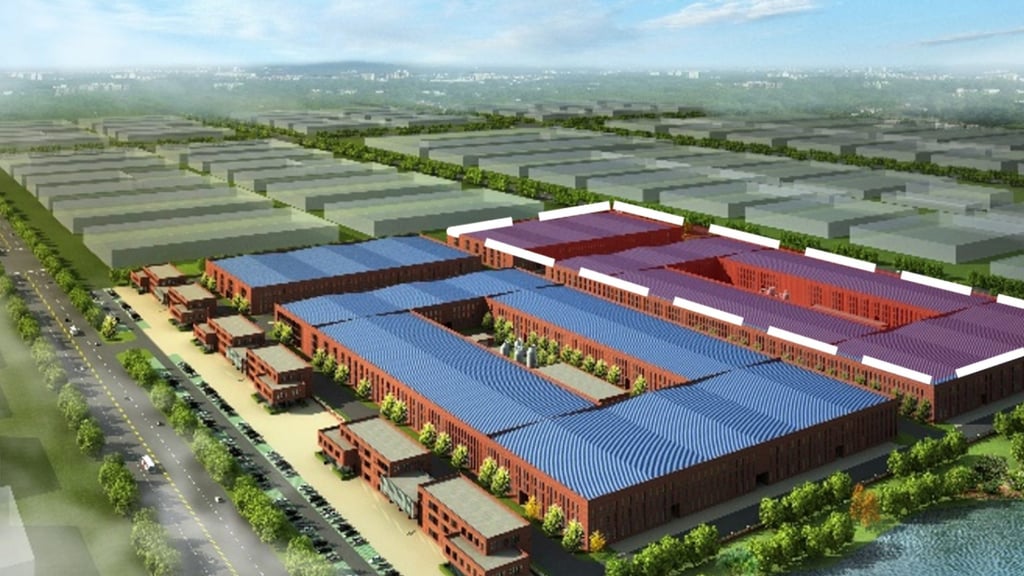
A different model has since gone ahead. Ford owns and operates its BlueOval Battery Park in Marshall, but the plant runs on technology licensed from CATL.
Ford began making pre-production lithium iron phosphate cells at the plant in June and has said it expects to produce market-ready cells before the end of this year, according to The Detroit News. The cells are intended to power Ford’s forthcoming lower-cost electric pickup truck.
The plant’s future depends on demand for electric vehicles, and it is on EVs, along with Trump’s broader trade policy, that the candidates’ differences are clearest.
Rogers’ “Beating Heart” advertisement attacks El-Sayed’s position on petrol-powered cars and declares: “No EV mandates, ever.” China is not mentioned.
El-Sayed has backed tariffs on Chinese electric vehicles, a policy supported by the United Auto Workers union, which endorsed him in June.
At a Detroit Economic Club forum on October 20, he said he was “not against tariffs per se” but described the administration’s approach as chaotic and self-serving. He argued that tariffs should be tied to an industrial policy.
Rogers called Trump’s tariffs a mixed bag. He credited them with bringing car production back to Michigan from China and Mexico, but said tariffs on Canada may not have been well thought through.
Grossmann placed the campaign in the context of a broader national shift towards more positive views of trade.
He pointed to Gallup polling showing that 82 per cent of American adults viewed foreign trade as an opportunity for economic growth in February 2026, compared with 61 per cent in February 2024.
Grossmann described a “thermostatic” response in which public opinion can move against a policy direction as government pursues it more aggressively.
He suggested that fatigue with trade restrictions could make arguments used in earlier campaigns less effective.
For Michigan, the car industry’s political importance extends beyond those directly employed in it, Grossmann said. Family connections and its place in the state’s identity give its future a resonance that reaches beyond the factory floor.
In Marshall, the choices carry the prospect of new jobs. Ford said in June that it expected to employ 800 people at its battery plant by the end of the year, eventually rising to 1,700.
Yet the choices facing the industry are not necessarily the issues driving the campaign. Dulio said concerns about the domestic economy, petrol prices and trade with neighbouring Canada had pushed China down the voters’ agenda.
“It’s not that those issues aren’t important. It’s just that they have been superseded by more proximate and salient issues,” he said.
KioskNews shows a cleaned-up reading view extracted from the publisher’s page — the original always lives on their site, not ours.