BUSHVELD LUNACY: Dig first, find water later: Limpopo’s industrial insanity
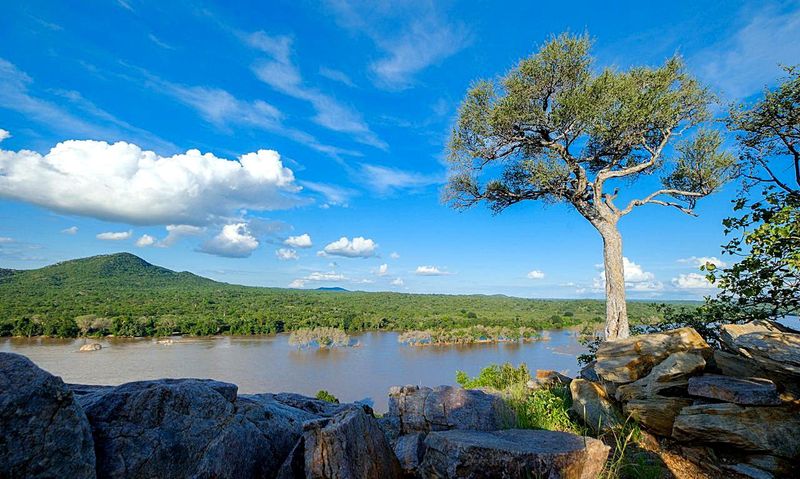
The world has more steelmaking capacity than it needs. Northern Limpopo has less water than its industrial planners would like.
South Africa’s proposed solution is to build a vast coal-based industrial complex in a beautiful Bushveld biosphere reserve to suck up limited water and make steel.
You might think this combination would give someone in government pause. Apparently, they simply see an investment opportunity.
Around the Musina-Makhado Special Economic Zone (SEZ), Chinese-controlled mining and industrial giant Kinetic Development Group is advancing towards a future of coal pits, coke ovens, power generation and smelters.
The government’s wider ambitions are steelmaking in a local and global market already struggling with excess capacity. The international Organisation for Economic Co-operation and Development’s latest outlook warns that the surplus will continue growing amid sluggish demand.
Meanwhile, the reliable, sustainable water supply needed to make this industrial vision work remains, according to a 22 September report by the Department of Water and Sanitation, unproven.
The digging, however, has begun.
At Makhado, the first mine in this advancing industrial chain, is already being opened. The question of whether the connected industries can obtain enough water has not prevented the destruction required to feed them.
Dig first. Resolve the fundamentals later. That is an extraordinary gamble to take with someone else’s landscape.
In an extensive interview, Lauren Liebenberg of Living Limpopo insisted that the public needs to see the whole enterprise.
“This is not about one plant or one coal mine,” she said. “This is an entire coal mining and industrial frontier.”
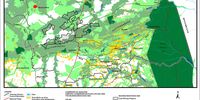
What’s unfolding is a proposed transformation of northern Limpopo, within the wider Vhembe Biosphere Reserve, into a coal-based manufacturing region. Its impacts would extend through catchments draining into the seasonal Limpopo River, across wildlife routes and into communities dependent on groundwater.
A river that periodically runs low cannot be persuaded to increase production by an investment prospectus.
Yet proposed dams, pipelines and transfers are offered as future answers while individual developments acquire momentum. In their objection to the proposed coke and heat-recovery plant, six environmental organisations argue that sufficient water has not been shown to be lawfully and sustainably available.
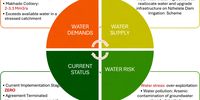
For people relying on boreholes, this uncertainty is existential. An industrial customer’s supplementary supply may be a village’s only supply.
If the grand scheme eventually fails, its investors may lose money. Residents can lose water, livelihoods and a functioning landscape before that failure becomes apparent.
A single machine disassembled
How has this been allowed to advance? Part of the answer, the objectors argue, lies in how the development is presented.
Commercially, the connections are compelling: mines produce coal, coke plants process it, power plants and furnaces consume it. Chinese group Kinetic Development Group controls MC Mining and its portfolio of mining rights in the Greater Soutpansberg Coalfield, and has interests in the industrial facilities intended to use the resource.

China gets to offshore surplus capacity in steel production under the Framework Agreement on China-South Africa Production Capacity Cooperation and further its Belt & Road Initiative in Africa.
For investors, an integrated operation. For environmental scrutiny, a succession of separate applications.
Multiple appeals and judicial reviews launched against environmental authorisations already granted for the Special Economic Zone (SEZ) establishment, its ferrochrome smelter and the coal mines all argue substantially the same thing – that cumulative impact assessment has been systematically avoided.

Whether this fragmentation was designed to evade scrutiny is not established. Its practical advantage to the developers is obvious: each component can be defended within a smaller frame.
The public is asked to inspect each carriage while the train rolls over the landscape.
Who stands to gain out of all this? Ownership, physical proximity and industrial dependence connect the projects. Why should their environmental consequences become disconnected at the licensing counter?
Groundwater does not stop at a company boundary. Neither does pollution.
Long-term effects
Genuine environmental impact assessments should expose these problems before irreversible decisions are made. The objections suggest something alarmingly different.
Reports disagree over whether the proposed coke plant will operate for 15 years or 64. The climate assessment allegedly omits combustion emissions from the coke ovens themselves.
The objectors calculate that this omission would increase the plant’s estimated direct emissions dramatically. Their calculation needs independent examination, but the allegation demands an immediate answer.
An emissions assessment that misses the ovens in a coke plant is rather like a fire inspection that overlooks the flames.
For the wider industrial zone, the submission cites earlier modelling in the 2022 EIA for the MMSEZ energy-metallurgical zone projecting annual greenhouse-gas emissions of 33 million tons a year – a gigaton of carbon over the zone’s 30-year lifespan.
South Africa cannot credibly promise to reduce its carbon pollution while treating a vast new source of it as an assortment of provincial paperwork. The atmosphere receives the total.
Where’s national government?
Liebenberg describes repeated attempts to persuade the Department of Forestry, Fisheries and the Environment to intervene. A recent parliamentary briefing is particularly disturbing: the department concentrated on explaining why environmental decision-making rested elsewhere – in this case the Limpopo Department of Economic Development, Environment and Tourism (Ledet) – rather than confronting whether this development made ecological sense.
What is a national environment department for if a development with consequences, international agreements, shared water resources and an internationally recognised biosphere can be waved towards a provincial counter?
Liebenberg also challenges Ledet’s overlapping roles as promoter of the development and environmental decision-maker.
A government department cannot expect unquestioning public confidence when it helps sell a project and then judges the environmental case for allowing it.
Parliament, meanwhile, must do more than receive presentations. Calling officials to explain themselves is a start. Accepting explanations that leave the central questions unanswered would be abdication of oversight.
Who made the decisions that brought this scheme here? Which officials and political office-holders supported them? What evidence satisfied them that water, markets and public benefits justified the risks?
Follow the benefits
There’s no need to invent a secret conspiracy. The visible distribution of benefits and liabilities deserves investigation.
Investors seek returns. Construction companies seek contracts. Industrial customers seek coal and coke. Politicians seek announcements carrying impressive numbers.
But a project that benefits its participants does not automatically benefit the country hosting it.
South Africa pays for the infrastructure needed to make the scheme viable. South Africa carries the risk if steel markets crash. South Africa pays to restore damaged land or replace lost water supplies. No one will compensate neighbouring communities for the damage.
Employment promises cannot substitute for this accounting. Neither can billions of rands attached to an investment announcement. Those billions are precisely why the scrutiny should be tougher.
This development should be stopped in its tracks while its combined impacts, water supply, economic rationale and public liabilities are independently examined. Existing excavation must not become an argument that it is now too late to reconsider.
South Africa owes investors fair treatment. It owes its people something more fundamental: protection against being left with the pollution, depleted resources and abandoned promises resulting from a foreign investor seeking our resources. And a ripped-up biosphere.
A hole in the Bushveld is not proof of progress. It may simply be proof that somebody was allowed to start digging before anybody answered the questions.
In preparation for this analysis, MEC for Limpopo Economic Development, Environment and Tourism Tshitereke Matibe, Dr Sabelo Malaza of the Department of Forestry, Fisheries and the Environment and Chris Huang of Kinetico were approached for comment. None was forthcoming.
KioskNews shows a cleaned-up reading view extracted from the publisher’s page — the original always lives on their site, not ours.